

Key energy industry upholds nation's role as global decarbonization leader
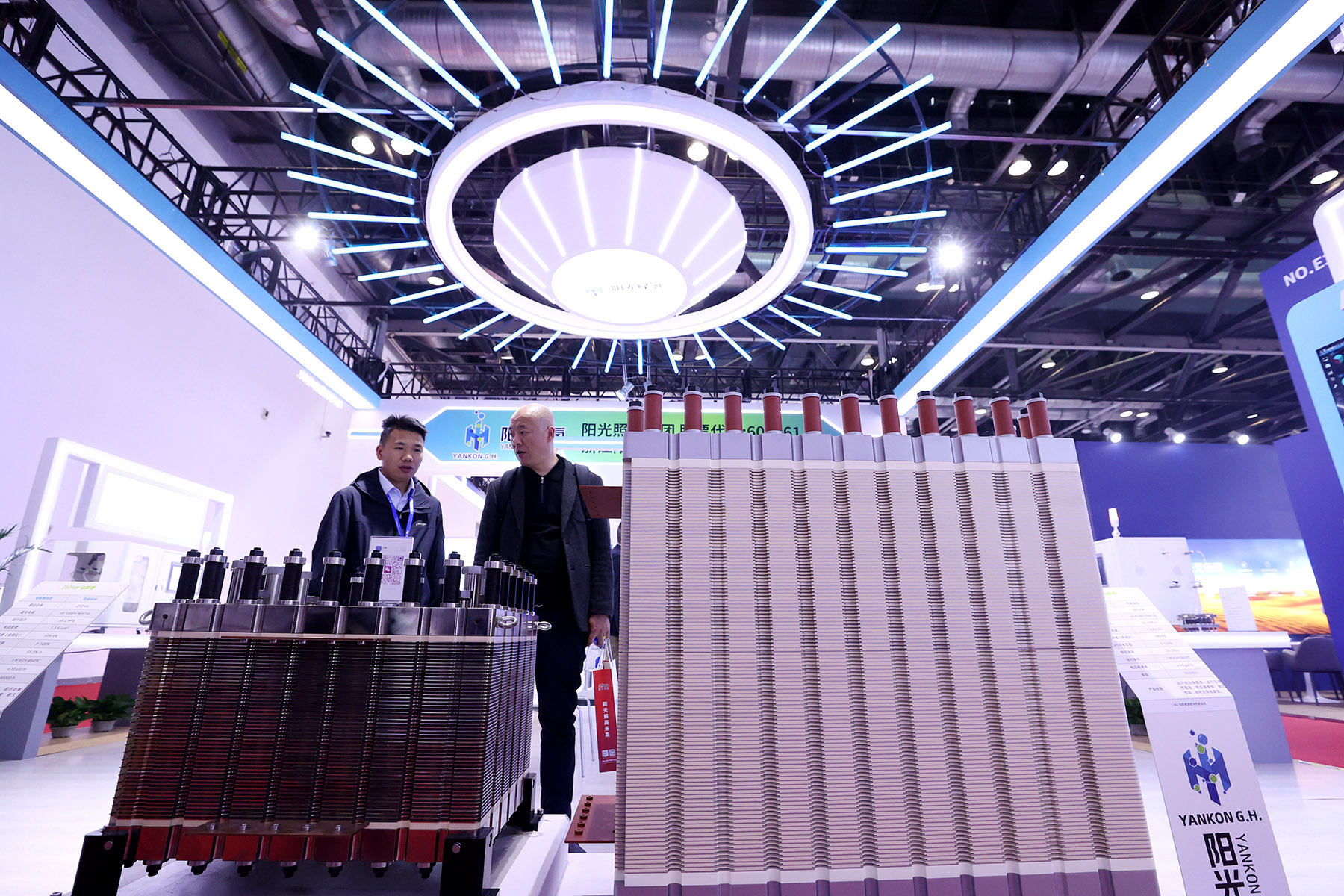
Catalyzed by high-level national strategies and major commercial achievements, China's hydrogen energy sector is rapidly scaling from localized pilot programs into a trillion-yuan industrial ecosystem, cementing the country's position as a primary driver of global decarbonization.
Designated as a strategic priority in both the 15th Five-Year Plan (2026-30) and the latest Government Work Report, the clean fuel has transitioned from a futuristic concept to an active driver of industrial growth.
Industry analysts and government officials view 2026 as a critical turning point for the sector as it pivots from relying on government policy to competing on market fundamentals.
READ MORE: China's five-year blueprint set to fast-track tech adoption on factory floor
"The 15th Five-Year Plan period is a crucial stage for building a modern industrial system, as well as a key point for the hydrogen industry to transition from being policy-driven to market-driven," said Bian Guangqi, deputy director-general of the National Energy Administration's science and technology department.
Furthermore, core equipment such as electrolyzers have been successfully exported to over 30 countries, deeply integrating hydrogen into the nation's dual-carbon goals and future industrial development, the NEA said.
The NEA aims to continue integrating hydrogen into national energy planning through large-scale "wind-solar-hydrogen-ammonia-alcohol" bases, accelerating technological innovation, building a comprehensive standard and regulatory system and expanding high-level global cooperation.
This commercial leap is backed by exponential capacity growth over the past five years, with China consistently leading the world in total hydrogen output.
Annual green hydrogen production capacity, powered entirely by renewable energy, has surged more than tenfold to 250,000 metric tons, up from just 23,000 tons, aided by megaprojects in regions like Northwest China's Xinjiang Uygur autonomous region, according to data from the administration.
This rapid expansion is underpinned by massive leaps in manufacturing and innovation.
Latest data from the Ministry of Industry and Information Technology show that China leads in manufacturing capacity for water electrolysis equipment worldwide, with domestic electrolyzer production capacity now accounting for nearly 60 percent of the global total.
By the end of last year, domestic patent applications in the hydrogen sector climbed to 100,000, jumping to first place globally, it said.
Many enterprises have also developed full-process system integration capabilities, including new containerized alkaline electrolysis equipment — which integrate the electrolyzer, pure water, and separation/purification systems into flexible, easy-to-transport containers, thus drastically saving land and shortening construction cycles.
"More importantly, the cost of core industrial technologies has entered a channel of rapid decline," said Yu Zhuoping, director of the expert committee for China Hydrogen Alliance as well as a professor at Tongji University.
He added that the costs of alkaline electrolyzers and proton exchange membrane electrolyzers have dropped by more than 30 percent and 60 percent, respectively.
To facilitate this massive industrial leap, the country has rolled out a series of robust financial and infrastructural measures, including national low-carbon transition funds and integrated zero-carbon industrial parks.
These initiatives are designed to lower the "green premium", bridging the gap between technological innovation and large-scale commercial application.
This strategic pivot is already yielding historic dividends, spearheaded by industry leaders such as Envision Energy.
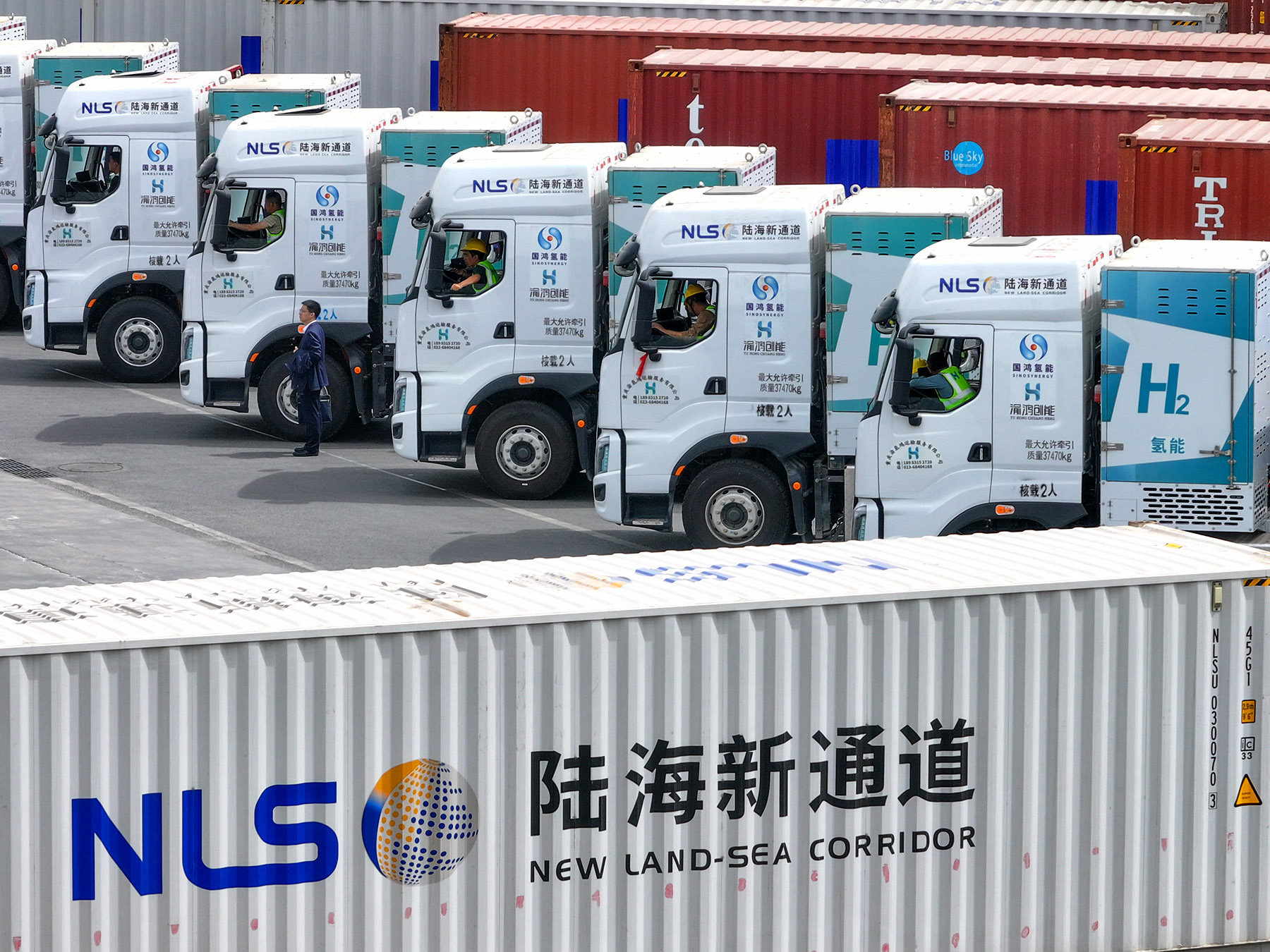
In a landmark achievement, Envision has commissioned the first phase (320,000-ton capacity) of its hydrogen-ammonia project in Chifeng, Inner Mongolia autonomous region — the largest facility of its kind in the world. Furthermore, the company has successfully executed China's first-ever foreign trade export of green ammonia.
"A core pain point of the hydrogen industry lies in its technology-intensive and asset-heavy nature, coupled with extended return-on-investment cycles," said Lou Yimin, senior vice-president and chief product officer of Envision Energy.
"The establishment of dedicated low-carbon transition funds at the national level signals that hydrogen energy will be incorporated into the country's long-term, strategic capital allocation framework."
Lou highlighted that the ability to "tame" volatile wind and solar power through AI-driven systems is critical for turning green hydrogen into scalable and competitive "green petroleum".
Global consultancy Rystad Energy emphasized that green hydrogen — alongside solar, wind and biomass — will play a pivotal role in shifting China from a coal-reliant nation to a global clean energy powerhouse.
For hard-to-abate sectors such as steel, chemicals and heavy transport, this commercially viable supply offers a vital lifeline to meet increasingly stringent global carbon mandates, such as the European Union's Carbon Border Adjustment Mechanism.
While the momentum is strong, experts note there is still work to be done.
Zheng Nanfeng, an academician at the Chinese Academy of Sciences, pointed out that hydrogen development still faces challenges such as long supply chains and relatively high costs.
Zheng emphasized the need for a multipronged approach — including standard innovation, technological breakthroughs and intelligent operations and maintenance. "It is essential to build a collaborative ecosystem where green hydrogen technologies, standards and industries are deeply integrated," Zheng said.
Despite these hurdles, the international community recognizes China's trajectory.
Vineet Bhatia, senior adviser to UNDP China, noted that while green hydrogen accounted for less than 1 percent of global hydrogen production as of 2025, according to the International Energy Agency, China has demonstrated massive potential in advancing green hydrogen as a global leader in the hydrogen sector.
China has built the world's largest fleet of fuel-cell vehicles and the most extensive refueling network, he said.
"China places green development and renewable energy at the very heart of national progress. There remains immense potential to scale up green hydrogen solutions, and China, as a global leader in hydrogen technology, can continue to pave the way."
Bhatia highlighted the upcoming initiation of the Ordos UNDP green hydrogen sustainable development demonstration project. Located in the Inner Mongolia autonomous region, the collaboration aims to integrate green hydrogen into energy, transport and industrial systems, serving as a replicable model both domestically and globally.
Beyond decarbonization, the transition to hydrogen is fundamentally tied to national resilience.
"Energy transition is not only a requirement for achieving carbon emission targets, but more importantly, a safeguard for our national energy security," said Yu.
"Hydrogen has become a strategic choice for China, serving as an inevitable step to overcome resource constraints. Because wind, solar and other renewable energies are unstable, a carrier that enables long-duration and cross-regional storage is required, and hydrogen is recognized as the optimal solution."
To achieve commercial scale, Yu said the industry must slash high supply chain costs and clear structural bottlenecks, including inadequate infrastructure, a persistent disconnect between production sites and end-users, and inefficient energy storage.
ALSO READ: Key role for green hydrogen foreseen
He advised anchoring green hydrogen production to the country's massive wind and solar hubs, integrating renewable energy megacomplexes in resource-rich regions, to elevate hydrogen from a niche, policy-driven sector into a robust, market-driven pillar of the economy.
Yu also suggested prioritizing the adaptive reuse of existing infrastructure. By leveraging established oil and gas pipelines, major railway lines, and shipping channels — and supplementing them with dedicated hydrogen pipeline networks built along those same transport corridors — the industry can establish a highly efficient, nationwide distribution grid, he said.
Looking ahead, Bian from the NEA noted that the administration will further strengthen industrial planning to guide the integration of hydrogen with large-scale wind and solar bases.
As the world's largest energy producer and consumer, China's trillion-yuan hydrogen blueprint is swiftly becoming a reality. By moving beyond isolated pilot projects to a deeply interconnected industrial ecosystem, China is proving that zero-carbon trade is not just an environmental imperative, but a highly competitive economic reality.
Contact the writers at zhengxin@chinadaily.com.cn
