

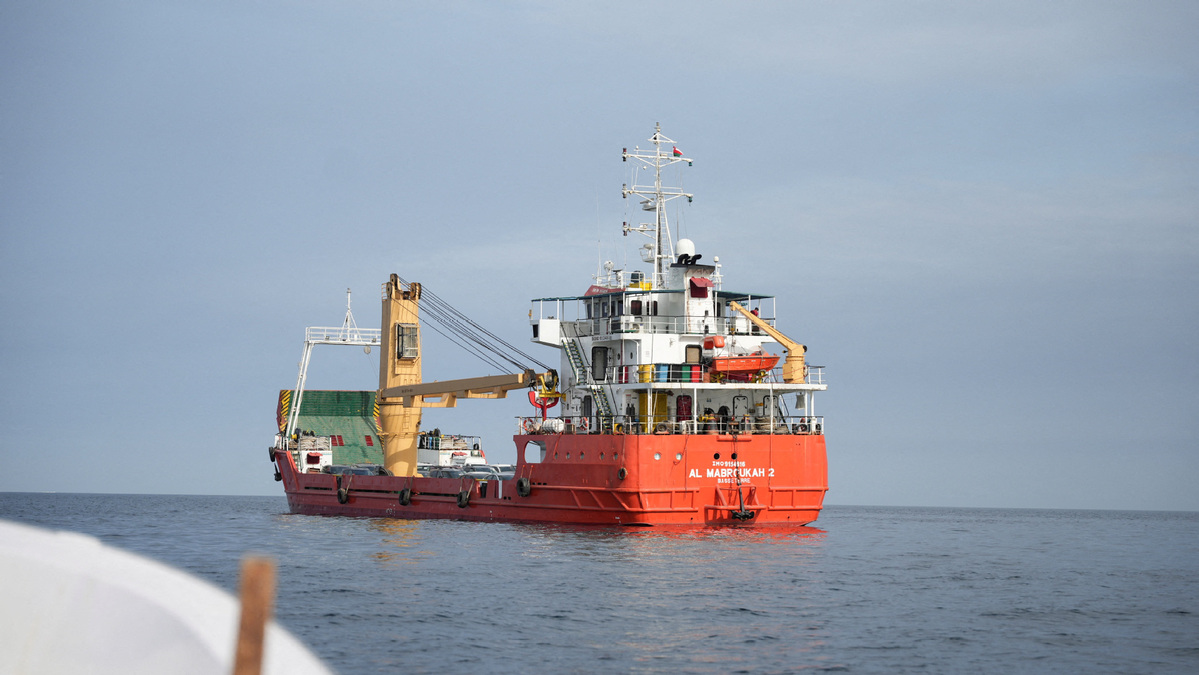
Washington's announcement of a naval blockade targeting maritime traffic to and from Iranian ports — halting "all passage" linked to Iran — marks a new escalation in a crisis already teetering on the edge. Although the US Central Command insists that freedom of navigation for non-Iranian ports remains intact, such distinctions collapse quickly in a narrow waterway. Reports describe a near standstill in shipping.
The result is a paradox: a waterway Washington vowed to reopen for the world is now closed even tighter by the US itself.
This escalation comes at a delicate moment. The first round of face-to-face talks between Washington and Tehran in Islamabad seems to have yielded little tangible progress, despite neither side wanting, or able to afford, an indefinite conflict. That shared reluctance is the thin thread holding the current process together. It is also what makes the latest US move so counterproductive.
READ MORE: Trump announces Strait of Hormuz blockade after peace talks fail
Washington's approach reflects a transactional style of diplomacy — one that treats geopolitical crises as high-stakes negotiations to be accelerated through pressure, unpredictability and economic leverage. In this framework, escalation is not seen for what it is — a failure of diplomacy — but a tool of it. The belief being: Apply enough pressure, be it military, financial, or psychological, and the other side will eventually succumb.
There is, however, a misjudgment in this logic when applied to the Middle East. It assumes that the other side shares the same cost calculus. Tehran does not. If anything, Iran has demonstrated a greater tolerance for pain and a longer time horizon.
The blockade risks achieving the opposite of its intended effect. Rather than forcing a quicker deal, it hardens positions and increases the likelihood of miscalculation. Naval maneuvers in confined waters, warnings of "deadly whirlpools", and the ever-present risk of an incident spiraling out of control all point to a dangerous feedback loop.
In the meantime, the outcome is not leverage but paralysis, with the global economy bracing for further shocks. As Chinese Foreign Minister Wang Yi said in his meeting with the presidential special envoy of the United Arab Emirates to China in Beijing on Monday, blocking the Strait of Hormuz does not serve the common interests of the international community. Political and diplomatic means are the fundamental ways to resolve the issue and achieve a comprehensive and lasting ceasefire.
Yet compounding the US-Iran dynamic is the role of Israel. The Israeli government has shown little enthusiasm for de-escalation, continuing operations in Lebanon. This introduces a third variable into what is already a complex negotiation process. Even if Washington and Tehran were to find common ground, actions elsewhere could have the potential to quickly unravel it.
This creates an impasse. Neither the US nor Iran can fully trust the other's commitments. Add a third party with its own agenda, and the scope for misjudgment multiplies. The danger is not that diplomacy will fail outright, but that it will be repeatedly derailed. Each escalation narrowing the space for compromise.
There is, however, an alternative path. The five-point initiative jointly proposed by China and Pakistan offers a framework that addresses the structural risks now on display. Its call for an immediate cessation of hostilities, the protection of civilians and infrastructure, and — crucially — the safeguarding of shipping lanes speaks directly to the current crisis. Its emphasis on dialogue and the primacy of international law provides a counterweight to unilateral action.
ALSO READ: Commitment required for ceasefire traction
It is precisely the kind of steady, rules-based approach that is needed when brinkmanship begins to dominate. For all the talk of leverage, the reality is that neither Washington nor Tehran will be able to achieve its objectives quickly through force alone. Instead, that will further raise the eventual cost of settlement.
The Strait of Hormuz is both a symptom and a warning. When a global commons becomes a bargaining chip, temporary disruption risks becoming lasting instability. The belligerents should recognize that some levers are too important to pull. As Beijing has urged, all parties concerned should exercise calm and restraint. China stands ready to continue playing a positive and constructive role in this regard.
Diplomacy rarely delivers instant results. It requires patience, credibility and a willingness to accept imperfect outcomes. The talks in Islamabad may yet produce such an outcome — but only if they are given the space to do so.
