

Renewable capacity overtakes coal amid stronger clean energy push
China's total electricity consumption more than doubled that of the United States in 2025, surging to a record 10.4 trillion kilowatt-hours, underscoring China's role as the engine of global industrial output and the primary driver of the world's energy transition.
The world's second-largest economy further solidified its position as the top global power consumer last year, with its annual consumption now roughly exceeding the combined power usage of the US, Russia, India, Japan, Brazil and Canada, a massive scale that highlights the robust vitality of the nation's economy, said Yang Kun, executive vice-chairman of the China Electricity Council (CEC).
"The industry achieved historic breakthroughs in power security and infrastructure reliability over the past year," he said during a conference on the economic situation and power development analysis and forecast held in Beijing on Thursday.
READ MORE: High-tech sectors drive 6.1% growth in power consumption
CEC data reveal that China's total installed power generation capacity reached 3.89 billion kilowatts by the end of 2025, representing a year-on-year increase of 16.1 percent.
A critical component of this success was the enhanced west-to-east power transmission project, which saw its capacity rise to 340 million kW, it said.
"This massive infrastructure artery proved vital in balancing energy resources, supporting an average annual increase of 80 million kW in load demand within the country's high-growth eastern and coastal economic hubs," said Yang.
The structure of China's electricity consumption underwent a fundamental transformation in 2025, reflecting the rise of "new quality productive forces" and a shift toward high-tech manufacturing, he said.
While the secondary industry remains a foundational consumer, the tertiary industry emerged as a primary engine of growth, with power consumption rising by 8.2 percent to reach 1.99 trillion kWh.
Driven by the massive rollout of electric vehicles, charging piles and next-generation telecommunications infrastructure, power demand in the information technology and software services sector jumped 17 percent year-on-year. This surge vividly illustrates the nation's rapid transition toward a digital economy and intelligent computing.
Notably, electricity consumed by the EV charging and battery-swapping service industry skyrocketed 48.8 percent in 2025. This exceptional growth is supported by the world's largest and most comprehensive charging network, which now comprises over 20 million individual facilities deployed nationwide.
The robust external demand for China's "new three" high-tech exports — EVs, lithium-ion batteries and advanced photovoltaic products — also fueled this energy appetite. Export volumes for these cutting-edge products approached 1.3 trillion yuan ($188.2 billion), driving electricity use in the high-tech and equipment manufacturing sectors up 6.4 percent.
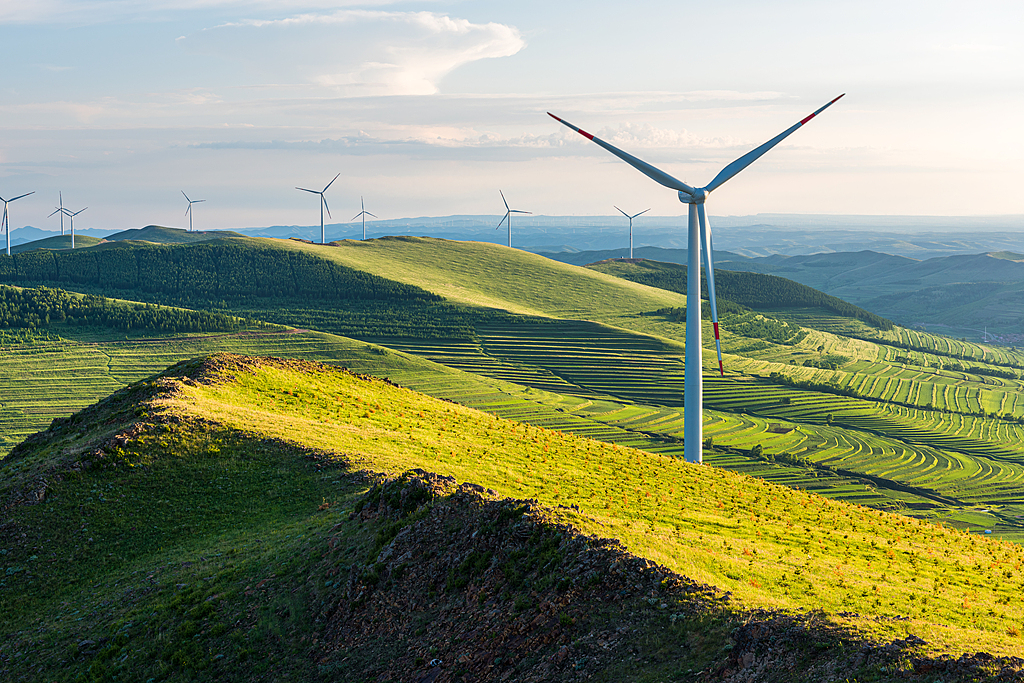
On the sustainability front, the year 2025 marked a pivotal turning point for the country's energy structure as renewable energy capacity broke 1.8 billion kW. This achievement meant that renewable power officially surpassed traditional coal-fired power capacity for the very first time in the nation's history.
Nonfossil energy sources now account for an impressive 61.7 percent of China's total installed capacity. With these renewables generating 4 trillion kWh of electricity over the year, green power has become the absolute backbone of new electricity generation across the entire country.
According to Ye Xiaoning, a senior engineer at the new energy department of the State Grid Energy Research Institute, China's consistent efforts in grid and transmission infrastructure updates are drastically improving the nationwide optimization of renewable resources.
ALSO READ: Solar seen outshining coal in '26
A widespread ultra-high-voltage transmission network, which allows electricity to be transmitted efficiently across vast distances, is at the heart of this transition, significantly altering the nation's overall energy infrastructure, Ye said.
According to the council, the terminal energy electrification in China reached approximately 30 percent by the end of 2025, a figure that far exceeds the global average of 21 percent.
This high rate of electrification provides a solid foundation for nationwide energy conservation and deep carbon emission reductions, it said.
Contact the writers at zhengxin@chinadaily.com.cn
