

China's monetary policy is set to remain on an easing path to support growth and domestic demand as the United States Federal Reserve held rates steady amid rising oil prices driven by geopolitical uncertainties in the Middle East, officials and analysts said.
Potential oil prices-led inflationary pressures facing China's economy are manageable and will be limited compared with many other economies, helping underpin the relative stability and attractiveness of Chinese financial assets and the renminbi amid global market volatility, analysts said.
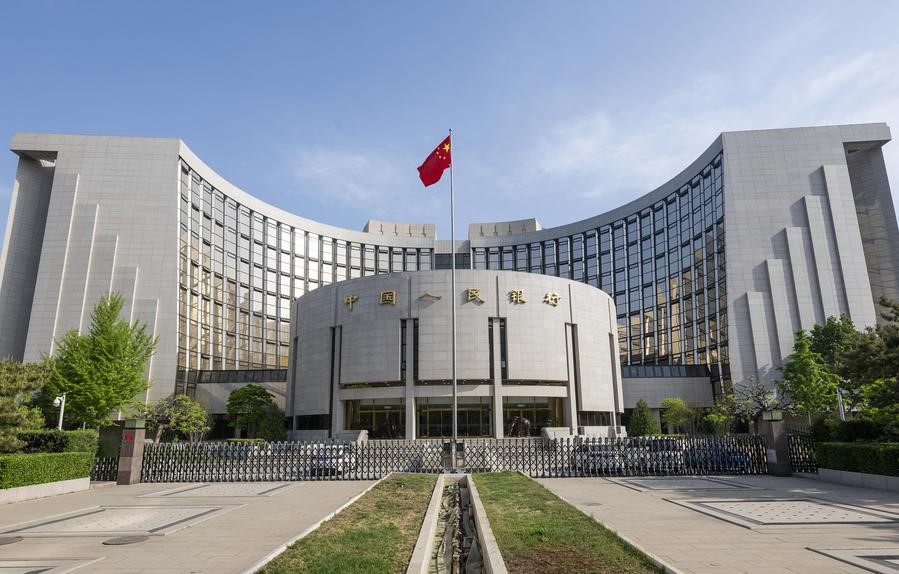
On Thursday, the People's Bank of China, the country's central bank, reiterated an appropriately accommodative monetary policy stance, vowing to use a mix of tools — the reserve requirement ratio, government bond trading, medium-term lending facilities and reverse repos — to ensure ample liquidity.
READ MORE: US Fed leaves interest rates unchanged, expects inflation to climb
This followed the US Fed leaving the federal funds rate unchanged at 3.5 to 3.75 percent on Wednesday amid elevated inflation, highlighting the uncertainties arising from developments in the Middle East for the US economy, as higher energy prices could push up inflation.
Song Yu, chief China economist at UBS Securities, said that despite the US Fed holding rates steady, China maintains an easing stance to support growth and domestic demand, as the potential imported inflationary pressures it faces should be rather limited.
"Oil price spikes may bring some imported inflation pressures to China, but the impact will be relatively limited compared with many other economies, given the country's diversified energy supply, ample reserves and declining reliance on oil," Song said.
In this context, Chinese financial assets could stand out for their relative stability and diversification value, with the RMB also showing upside potential, Song added.
Global stock markets fell following the Fed's rate decision as investors grew concerned about persistent inflation and tighter global liquidity conditions.
Despite Thursday's fall, the Shanghai Composite Index has risen 0.95 percent since the beginning of the year, while the US' Dow Jones Industrial Average has shed 3.82 percent.
"Against heightened geopolitical uncertainty, RMB assets have offered global investors a rare asset class that combines the potential for yield recovery and the attribute of risk hedging," said Cheng Shi, chief economist at ICBC International. Growing stagflation risks in the US could weigh on equities and bonds, while China's monetary easing and fiscal coordination would support stock market liquidity and corporate earnings recovery, Cheng added.
ALSO READ: China set to cut forward foreign exchange risk reserve ratio to zero
Amid the global market turmoil, the PBOC vowed on Thursday to firmly safeguard the stability of the stock, bond and foreign exchange markets.
Song from UBS said that stronger-than-expected economic data, including data for exports, in the first two months of the year, along with potential short-term imported inflationary pressures, suggest that the necessity and magnitude of further rate cuts in China may be smaller than previously anticipated.
According to Cheng, quantity-based tools such as cutting the reserve requirement ratio may be front-loaded this year to help maintain ample liquidity.
Contact the writers at zhoulanxv@chinadaily.com.cn
