

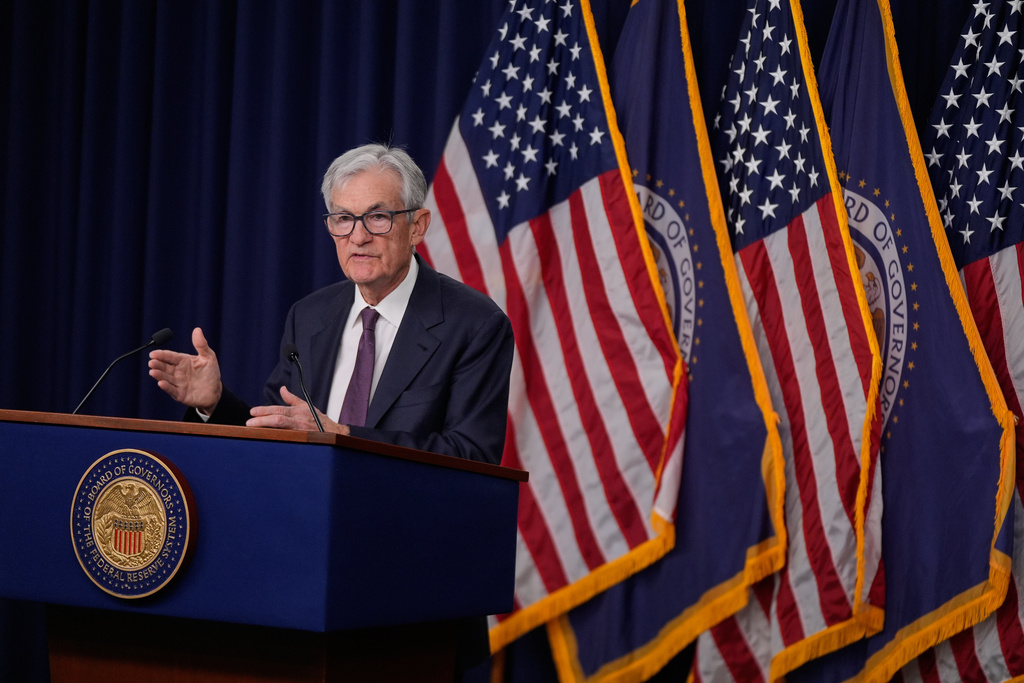
WASHINGTON - The US central bank held interest rates steady on Wednesday and projected higher inflation, steady unemployment and a single reduction in borrowing costs this year, a path that Federal Reserve Chair Jerome Powell said was subject to unusually high uncertainty as policymakers take stock of the impact of the US-Israeli conflict with Iran.
"In the near term, higher energy prices will push up overall inflation, but it is too soon to know the scope and duration of the potential effects on the economy," Powell said in a press conference following the Fed's 11-1 decision to maintain its benchmark overnight interest rate in the 3.50-3.75 percent range.
"The thing I really want to emphasize is that nobody knows: The economic effects could be bigger, they could be smaller; they could be much smaller or much bigger; we just don't know."
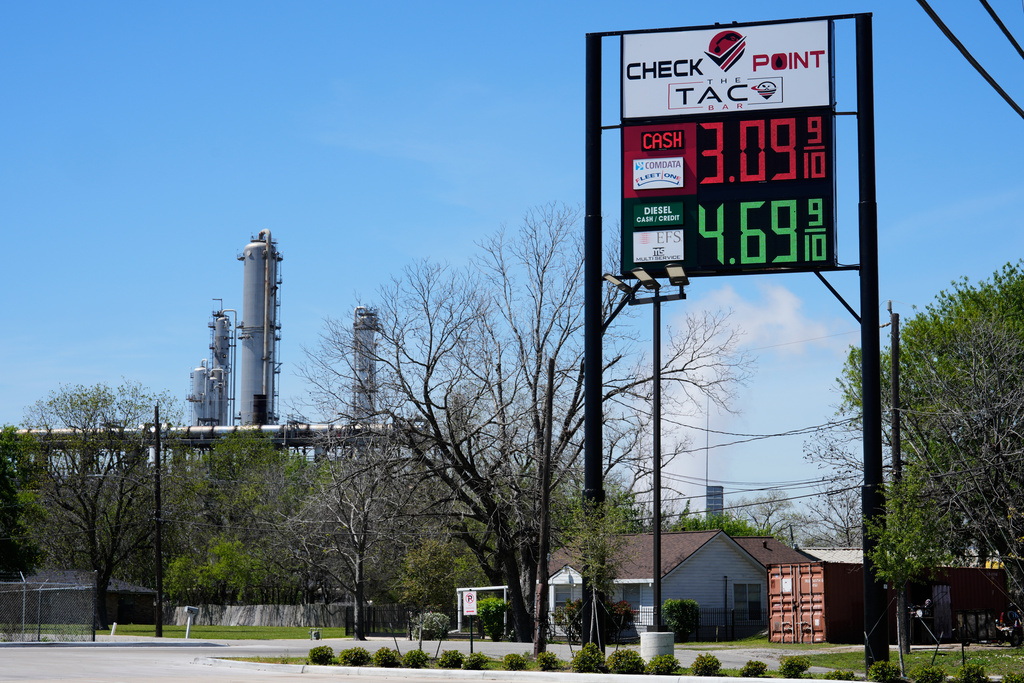
Oil prices closed about 4 percent higher, with Brent futures LCOc1 settling at $107.38 a barrel. Traders fled bets on a Fed rate cut this year, and rate futures now reflect an expectation the central bank will wait until 2027 to ease monetary policy.
New projections showed Fed policymakers as a group expect the central bank's Federal Open Market Committee to cut the policy rate by a quarter of a percentage point by the end of this year, a view that on the surface was unchanged from their last set of projections in December.
Powell noted, however, that individual projections show a "meaningful" number of policymakers are penciling in less easing this year than they did three months ago.
The possibility that the Fed's next move "might be an increase did come up at the meeting as it did at the last meeting", Powell said, though he added that the "vast majority" of the officials don't have that outcome as their base case.
ALSO READ: Trump accuses Fed of not being bullish in lowering interest rates
Monetary policy, he repeated, is "well positioned to determine the extent and timing of additional adjustments to our policy rate based on the incoming data, evolving outlook, and the balance of risks".
The Fed is in the difficult position of needing to balance the risk of higher inflation amid a fresh shock and downside risks to the labor market, said Powell, whose term as Fed chief ends in May.
"I wouldn't say that it's clear at all that one is more at risk than the other."
"Chair Powell was extremely vague on how the FOMC would respond to the war, repeatedly refusing to make conjectures on whether inflation or employment effects would dominate," said Steve Englander, global head of G10 FX research at Standard Chartered. "The hawkish part was the frustration Powell expressed at the slow pace of disinflation, very explicitly conditioning further policy rate cuts on inflation moving closer to target."
One policymaker dissents
Fed policymakers now expect inflation, as measured by the Personal Consumption Expenditures Price Index, to end the year at 2.7 percent, not far below the current rate and higher than the 2.4 percent projected in December, reflecting fallout from the spike in global oil prices that followed the start of the bombing campaign against Iran.
But the higher inflation projections also are due to stickier tariff-driven inflation slowing progress towards the Fed's inflation goal of 2 percent, Powell said.
"The thing that's really important that we see this year is progress on inflation through a reduction in goods inflation," he said.
The new rate and economic projections showed the Fed, for now, largely looking through the oil shock, with policymakers still expecting to lower rates this year and anticipating inflation to be 2.2 percent by the end of 2027.
Notably, no policymakers saw rates needing to move higher by the end of this year, though one official anticipated a rate hike in 2027.
Economic growth was upgraded slightly, to 2.4 percent for 2026 versus 2.3 percent in December, and the projected unemployment rate was unchanged at 4.4 percent.
Fed Governor Stephen Miran continued his string of dissents, voting against the policy decision in favor of a rate cut. Chief among reasons Miran has cited for his dovishness on rates is his view that artificial intelligence is boosting productivity growth, allowing the economy to grow faster without also driving up inflation. That's a view also held by former Fed Governor Kevin Warsh, whom Trump has nominated to be Powell's successor.
Powell told reporters on Wednesday that it is too soon to bet on AI's disinflationary impact, noting that investments in construction of data centers would push up prices in the short term. But he did note the connection between higher productivity and faster economic growth, which he said was reflected in Fed policymakers' rosier projections for GDP growth over the next couple of years.
The Fed's decision to hold its policy rate steady was widely expected in financial markets.
US stocks, however, slumped, with the S&P 500 index falling about 1.4 percent to its lowest close in nearly four months. The dollar jumped against a basket of currencies, while US Treasury yields rose.
