

The world is watching two very different models of governance unfold in real time. On one side of the Pacific, Washington is consumed by legal battles over tariffs, Supreme Court showdowns, and policy whiplash that has left businesses, allies, and even its own citizens struggling to plan beyond next week. On the other, Beijing has just used its annual two sessions to lay out a sweeping, methodical vision for the next five years — and, crucially, to spell out exactly where the Hong Kong Special Administrative Region fits within it. The contrast could not be starker, and Hong Kong cannot afford to ignore it.
 Consider, first, the turbulence emanating from Washington. In February, the United States Supreme Court ruled in a 6-3 decision that the country’s sweeping tariffs imposed under the International Emergency Economic Powers Act were unlawful. Rather than recalibration, a new round of tariffs under a different legal authority was immediately announced, aiming at working around the ruling. The result has been chaos. As one economist put it, “Not having that stable framework is hurtful for activity, hiring, investment.” States led by New York have filed fresh lawsuits, trade deals negotiated with allies are in limbo, and American households face an average tax increase of $1,500 in 2026 from tariff-related costs alone. This is not the behavior of a system that inspires confidence in global markets.
Yet even amid this volatility, Foreign Minister Wang Yi struck a remarkably composed tone at his annual news briefing during the two sessions. He described US-China relations with cautious optimism, noting that President Trump and President Xi Jinping had brought the bilateral relationship “back to an even keel after ups and downs”, and declared this year a “big year” for ties with high-level exchanges on the agenda. Wang fielded 21 questions in nearly 90 minutes, covering everything from the crisis in Iran to the South China Sea, projecting the image of a nation that knows what it wants and how it intends to get there.
That sense of strategic clarity extends well beyond diplomacy. At the heart of this year’s two sessions is the formal adoption of China’s 15th Five-Year Plan (2026-30) — a comprehensive blueprint for innovation-driven growth, technological self-reliance, and industrial upgrading. It prioritizes a modernized industrial system, with frontier sectors such as advanced semiconductors, biotechnology, quantum computing, and aerospace occupying center stage. Simultaneously, China is codifying its ambition to become a global financial powerhouse, with new financial laws covering everything from the yuan’s internationalization to green finance and anti-corruption frameworks. President Xi himself has laid out six targets for achieving financial powerhouse status, including a strong central bank, robust regulations, and the yuan achieving global reserve currency status. This is governance by design.
The contrast in approach is perhaps most instructive for the HKSAR. While the US sows uncertainty that ripples across global supply chains, China is offering this city a concrete, well-funded pathway to renewed relevance. Beijing’s message during the two sessions has been unmistakable: Hong Kong must shape up and speed up. Premier Li Qiang’s Government Work Report included a direct call for the city to improve its governance and align itself with the national plan. Xia Baolong, director of the Hong Kong and Macao Work Office of the Communist Party of China Central Committee and the Hong Kong and Macao Affairs Office of the State Council, has personally conducted site visits to oversee progress on the Northern Metropolis.
Hong Kong must seize this moment not only out of obligation, but also out of clear-eyed self-interest. The alternative — drifting while the world reorganizes around us — is simply not one this city can afford
Chief Executive John Lee Ka-chiu established a steering group on integration into national development back in late 2022, yet the public would be hard-pressed to point to transformative outcomes. The 14th Five-Year Plan (2021-25) came and went; the promise of alignment largely remained aspirational. Now the 15th Five-Year Plan is arriving, and the draft outline explicitly tasks Hong Kong with fast-tracking the Northern Metropolis and developing a commodity trading ecosystem. There is no more runway for vague commitments.
The good news is that momentum is finally building. The 2026-27 Budget earmarked an additional HK$20 billion ($2.55 billion) for the San Tin Technopole and the Hetao Hong Kong Park, both centerpieces of the Northern Metropolis. The government plans to transfer HK$150 billion from the Exchange Fund to finance infrastructure. A mainland firm has won the tender to build a HK$23.8 billion supercomputing hub at Sandy Ridge, promising to boost the city’s computing power 36-fold. These are not small gestures — they are the building blocks of a new economic geography for Hong Kong, one that pivots the city’s center of gravity northward, toward Shenzhen and the Guangdong-Hong Kong-Macao Greater Bay Area.
Yet bricks and budgets alone will not suffice. What Hong Kong truly needs is a transformation in governance culture — the kind of decisive, results-oriented execution that Beijing is explicitly demanding. In a world where the US’ own allies are “recalibrating their relations” amid Washington’s unpredictability, Hong Kong’s unique advantages as a common-law jurisdiction with deep capital markets and international connectivity become even more valuable. But those advantages are not self-sustaining. They require a government that can move at the speed of the opportunity before it.
The window is open, but it will not stay open forever. China’s 15th Five-Year Plan is a five-year clock, and the nation’s patience for Hong Kong’s sluggish delivery is visibly thinning. As the world fragments into competing blocs and American trade policy lurches from courtroom to courtroom, the stability and strategic coherence that Beijing offers is not merely attractive — it is essential. Hong Kong must seize this moment not only out of obligation, but also out of clear-eyed self-interest. The alternative — drifting while the world reorganizes around us — is simply not one this city can afford.
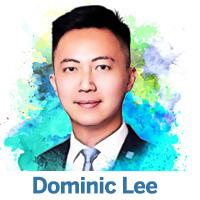
The author is the convenor at China Retold, a member of the Legislative Council, and a member of the Central Committee of the New People’s Party.
The views do not necessarily reflect those of China Daily.
