

Spotting traditional attire at scenic spots, busy airport delights tourists
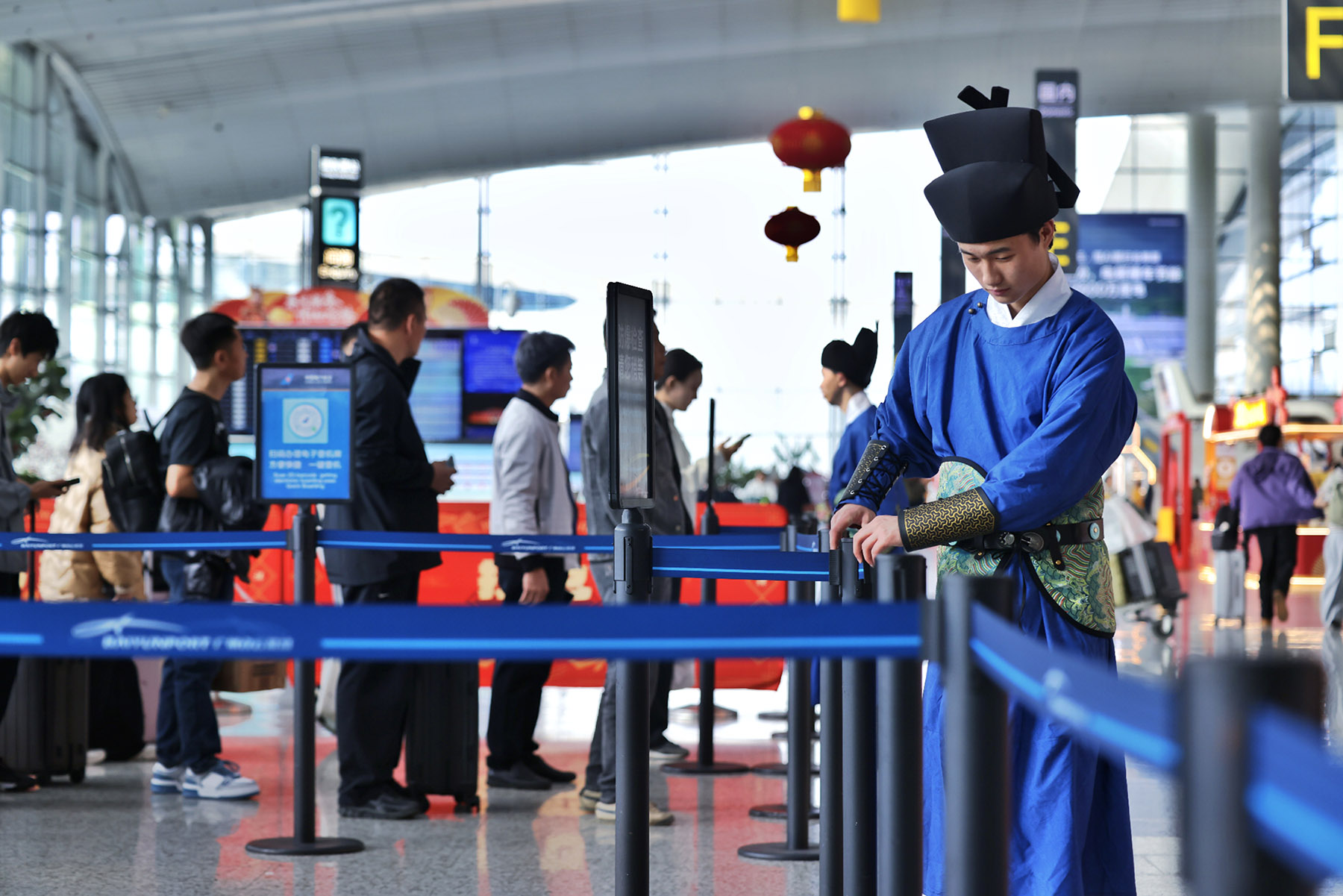
Seeing traditional Chinese hanfu in TV drama series or at scenic spots for snapshots may be a common sight, but not for travelers at the Guangzhou Baiyun International Airport who were treated to the cultural display by airport workers who donned the attire during Spring Festival.
In the days leading up to and during the Spring Festival holiday, the busy airport in South China's Guangdong province hosted a series of activities and performances highlighting traditional Chinese culture, including lion dances and Cantonese opera.
Employees, including security personnel, wore Song-style traditional Chinese hanfu while serving passengers. Their attire adhered strictly to the clothing standards of the Song Dynasty (960-1279).
For instance, female security workers adorned pink peony hairpins in their hats, while male security personnel wore warrior outfits with armor.
READ MORE: A millennia-old grace
Gu Ziqi, a 20-years-old college student from Nanjing, Jiangsu province, praised the events and festive atmosphere at the airport, highlighting the display of cultural pride.
"These events gave passengers an immersive experience of traditional culture, helping people dispel the estrangement from Chinese traditions and fostering closer connections with Chinese culture. People will better recognize traditional culture by seeing, experiencing, and understanding it through these interactive events," she said.
Wang Aoran, an 18-year-old from Shanghai, said he felt hanfu has attracted more public attention in recent years, reflecting growing interest in Chinese culture.
The Guangzhou airport was not the only place using hanfu to provide travelers with an immersive experience into traditional Chinese culture. Similar efforts helped destinations increase their attractiveness to travelers and demonstrated the growing intrigue in Chinese culture both at home and abroad.
Xitang ancient town in East China's Zhejiang province staged traditional Chinese boat weddings during the holiday, with performers wearing hanfu wedding attire.
On the night of Feb 17, the first day of the Chinese New Year, a spectacular Tang Dynasty-style (618-907) hanfu performance at the Huaqing Palace in Xi'an, Shaanxi province, attracted numerous tourists. Performers dressed as Yang Yuhuan, a famous Tang consort, and Emperor Xuanzong of Tang wore hanfu, treating tourists to a colorful show.
"Both Spring Festival and hanfu are essences of traditional Chinese culture, and wearing hanfu perfectly suits the festive mood of the festival," said Qi Chunguang, vice-president of travel portal Tuniu, who was impressed by the hanfu shows at Guangzhou airport and other scenic spots during the holiday.
"The airport staff wearing hanfu while serving passengers were like scenic views on the go for tourists during the Spring Festival holiday. Hanfu shows and other performances combining traditional Chinese culture, like temple fairs and lion dances at scenic spots, are also effective ways to attract tourists, promote Chinese culture, and enhance destinations' reputations," he said.
ALSO READ: Tourists go wild at GBA New Year celebrations
Zhang Jinshan, a researcher at Beijing Union University's tourism planning and development research institute, said the use of hanfu as workwear at Guangzhou airport is an innovative measure to grab public attention, which can help attract interest from both domestic and international tourists.
He also noted the popularity of hanfu at scenic spots and in the travel photo shoot industry, which he said is a way to pursue a more immersive experience of local culture and history.
"The popularity of hanfu and traditional Chinese clothes is of great importance to showcase traditional culture and boost people's cultural confidence," he said.
Data analysis agency iiMedia Research previously released a report indicating that China's hanfu market is projected to reach about 24.2 billion yuan ($3.5 billion) by 2027. Back in 2023, the market was valued at about 14.5 billion yuan.
Wang Nasi and Li Qianya contributed to this story.
Contact the writers at chengsi@chinadaily.com.cn
