

Slow-paced travel allows for natural encounters with southern culture, including martial arts, architecture and delicacies, Li Yingxue reports in Guangzhou.
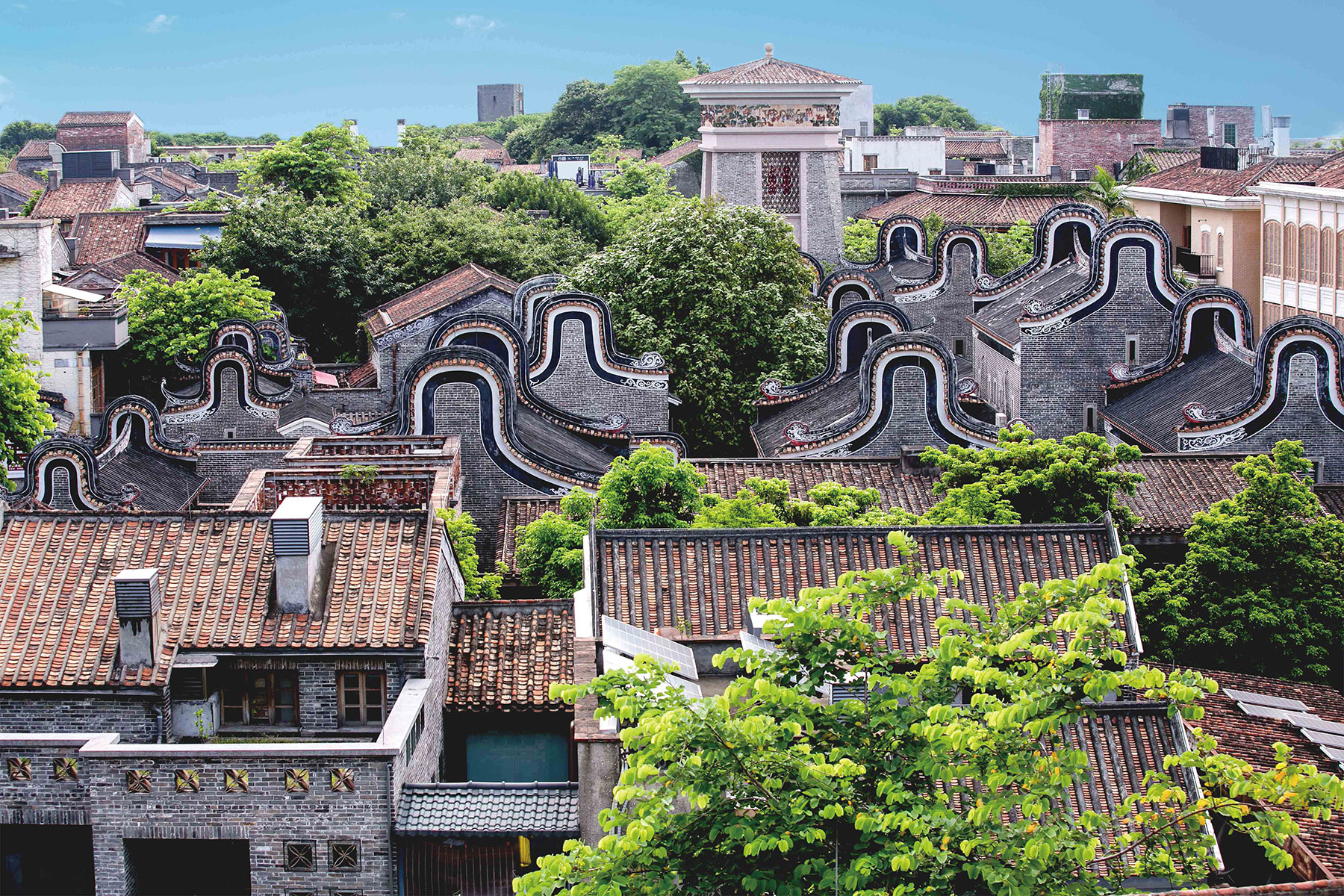
One winter morning, the vermilion gates of the Chen Clan Ancestral Hall have yet to fully open, but the granite-paved street leading to this Guangzhou landmark is already brushed with warmth as the first rays of morning light awaken the city. The silhouettes of wok-ear gables stretch diagonally across the ground, overlapping gently with the scrolling vine motifs carved into the brickwork beneath the eaves.
Nearby, fragments of lilting music drift intermittently from the Cantonese Opera Art Museum, mingling with the steamy aroma rising from roadside teahouses. This is no carefully staged scene. It is simply Lingnan (a term referring to China's southern regions including Guangdong province, Hong Kong and Macao) life, unfolding as it always has — quietly, confidently, and with remarkable depth.
There is no need to rush from one "must-see" landmark to another. Instead, this journey moves at an unhurried pace through Liwan district of Guangzhou and Foshan, Guangdong province, tracing Lingnan culture as it continues to live on — in ancestral halls, old streets, temples, and classical gardens.
READ MORE: China's visa-free policy allows foreign travelers to experience Guangzhou
The journey begins at the Chen Clan Ancestral Hall, widely regarded as a jewel of Lingnan architectural art. First built during the Qing Dynasty (1644-1911), the complex once served as a communal ancestral hall for the Chen lineage — a place to gather kin, honor forebears, and educate younger generations.
Today, it houses the Guangdong Folk Arts Museum, with an extensive collection of Lingnan craft masterpieces, and remains a vital lens through which local culture can be understood.
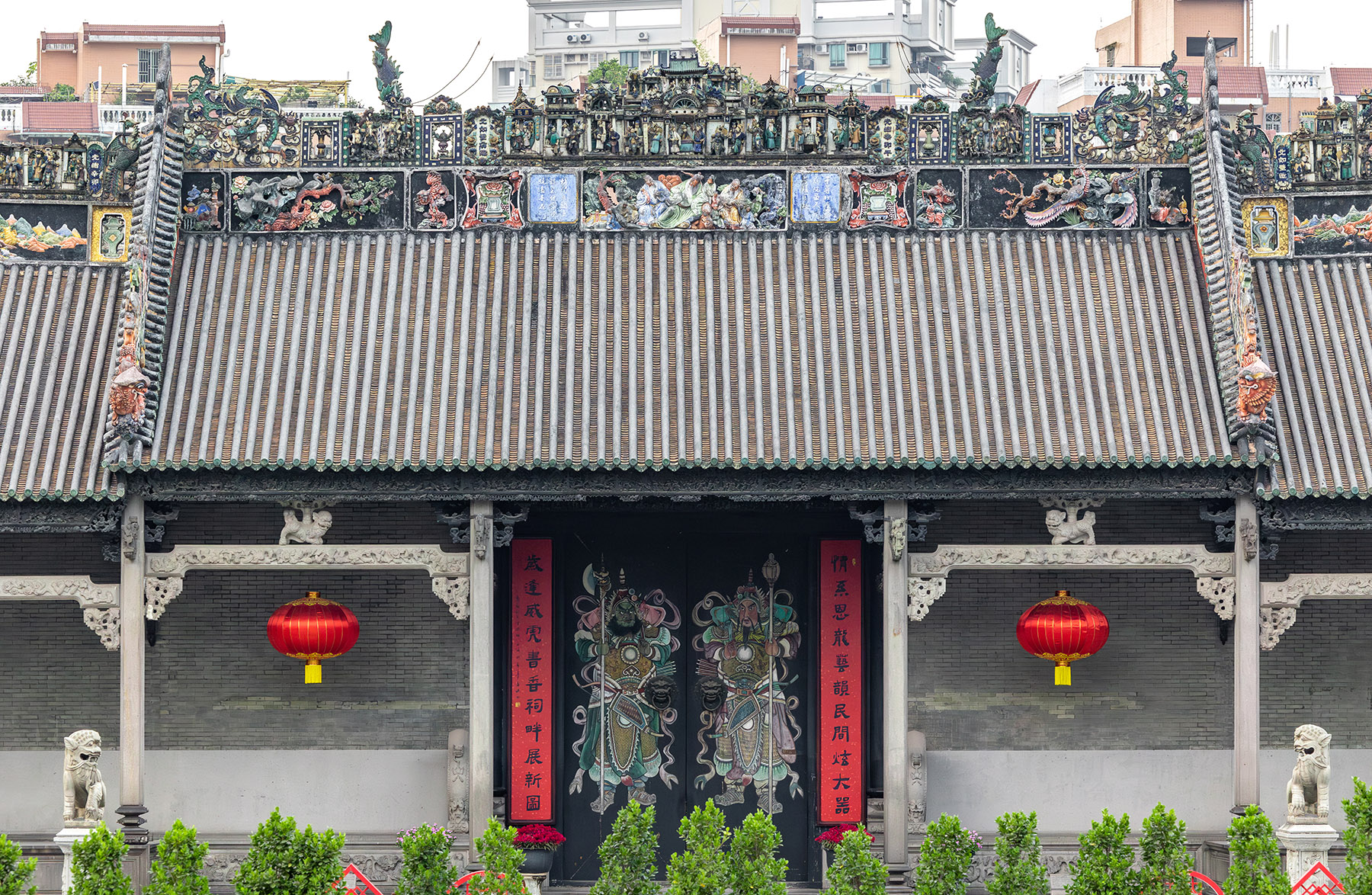
Its three-axis, three-courtyard layout reflects both clan order and openness. What captivates visitors most are the decorations: wood carvings, brick carvings and gray sculptures fill nearly every surface.
Wood carving forms the decorative core, featuring relief and openwork scenes drawn from history, flora and folklore. In the rear hall, 11 wooden shrine canopies — each around 8 meters tall — are carved in layered detail with dragons, phoenixes and narrative scenes. They are considered some of the largest surviving Qing Dynasty wooden carvings in Guangdong.
"These exquisite works embody the spirit of craftsmanship inherent in Lingnan architecture, and this ancestral hall crystallizes a deep sense of belonging among clan members," says Zhang Zikun, a guide at the site.
Zhang points out an unexpected detail: a pair of Western-style cherubs. Unlike their familiar forms, these angels wear topknots and traditional Chinese dudou vests, resembling playful local children.
"They reflect how folk artisans of the time were influenced by the blending of Eastern and Western cultures," Zhang explains.
"They are vivid witnesses to cultural exchange."
Old streets, living rhythms
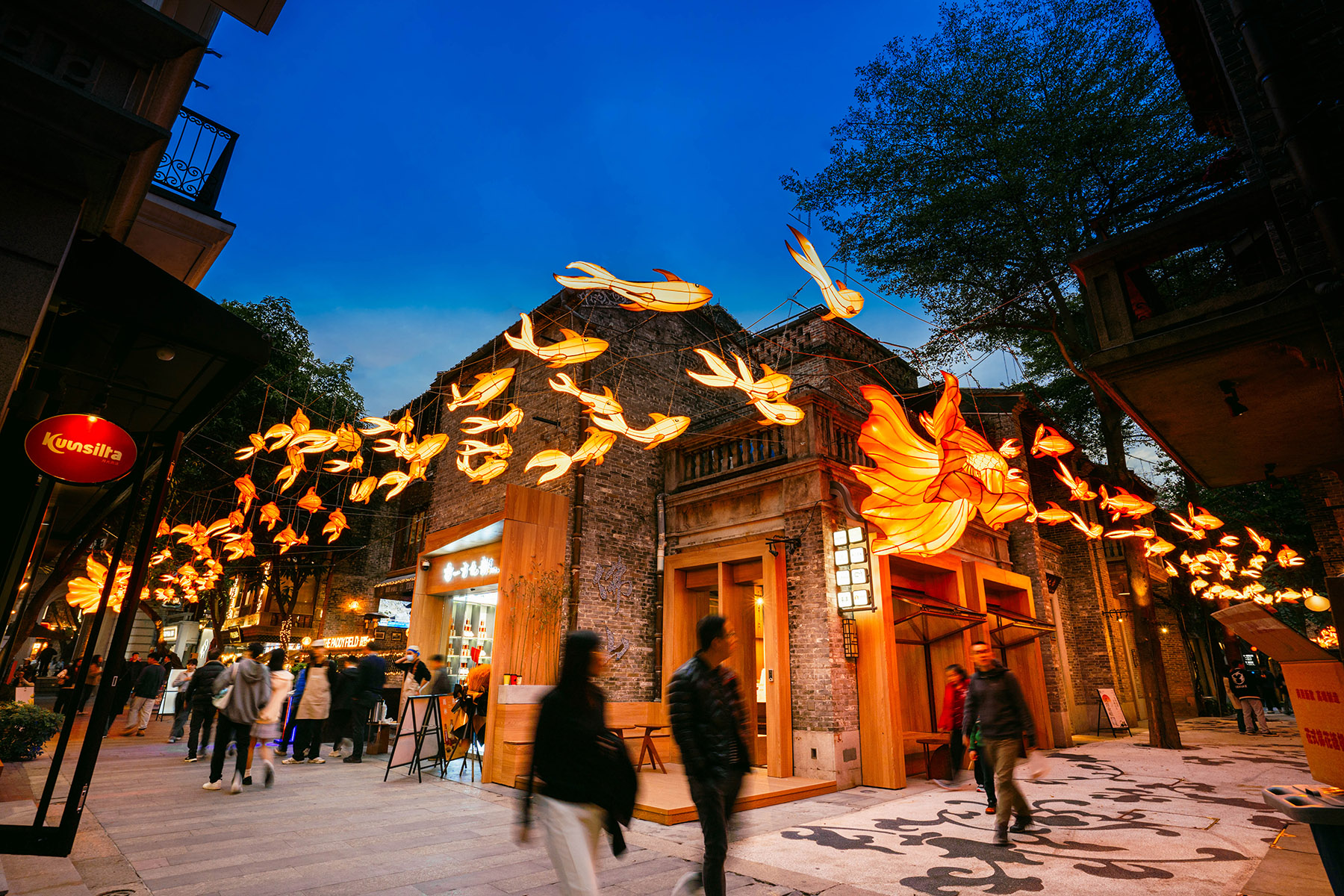
From the ancestral hall, a short journey southwest leads to Yongqingfang, a historical neighborhood that trades grandeur for intimacy. While the Chen Clan Ancestral Hall speaks of lineage and legacy, Yongqingfang pulses with the everyday rhythms of old Guangzhou.
The neighborhood is defined by qilou, or arcade buildings, a hallmark of Lingnan urban design. These two — or three-story structures place shops at street level, while upper floors extend outward to form covered walkways that shelter pedestrians from the sun and rain. Roman columns and carved balustrades coexist with wooden folding doors and Manchurian windows, blending Western influence with local tradition.
Strolling along the bluestone-paved streets, visitors pass beneath weathered arcades flanked by busy storefronts. From the Baihua Dessert Store drifts a gentle sweetness: handmade glutinous rice dumplings coated in fine peanut powder, each bite evoking the flavors of old city life.
Yongqingfang balances preservation with renewal. Heritage craft shops selling Cantonese porcelain painting, embroidery and olive-pit carving sit alongside long-established teahouses, modern cafes and bookstores.
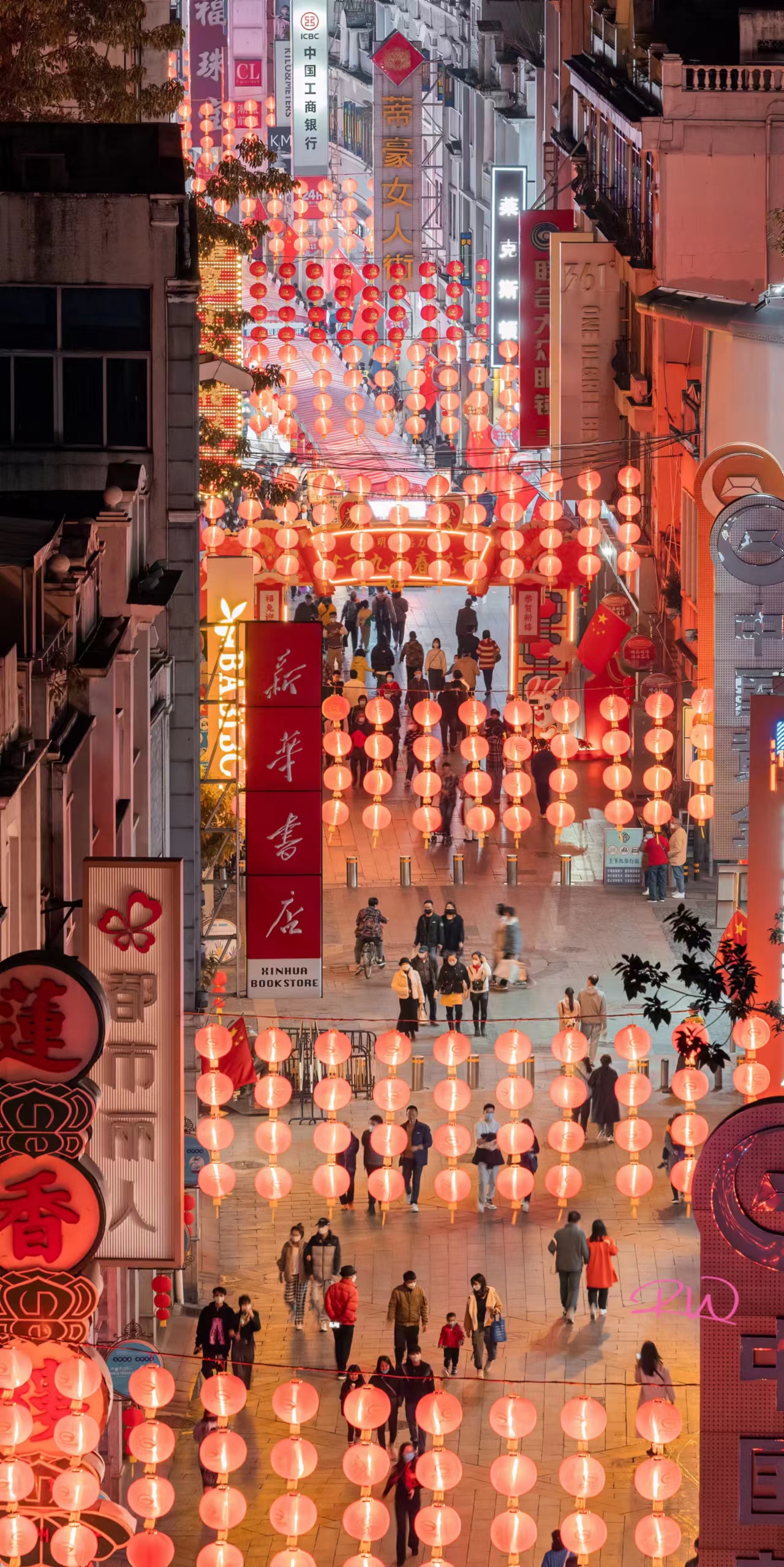
Hidden among the lanes are Xiguan mansions, including the former residence of Bruce Lee's family. With carved beams and stained-glass screens still intact, the house now presents 13 themed sections tracing the Lee family history and the evolution of martial arts, linking domestic architecture with kung fu heritage.
Nearby, the Cantonese Opera Art Museum offers an immersive encounter with the UNESCO-listed intangible cultural heritage. Melodic arias and ornate costumes transport visitors into the elegance of a bygone era.
A half-hour drive west brings the journey to Foshan, widely regarded as one of the birthplaces of Lingnan culture. At its heart stands the Foshan Ancestral Temple, the city's spiritual totem.
First built during the Northern Song Dynasty (960-1127), the temple complex is among the largest and best-preserved ancient architectural ensembles in the region. Over more than a millennium, it has served both as a site for worshipping Emperor Zhenwu and as a core venue for folk traditions such as lion dance and martial arts.
Yet, the true vitality of the temple extends beyond its architecture, residing in the living traditions that have been passed down through generations. Foshan is widely regarded as a cradle of southern lion dance and the hometown of martial arts legends such as Wong Fei-hung and Ip Man. Here, martial arts are not just performances; they are a cultural inheritance.
Each day, in front of the Wong Fei-hung Memorial Hall, Liang Jianbo performs Hung Gar martial arts. With iron rings weighing three kilograms on his wrists, he delivers a 10-minute demonstration that balances explosive power with fluid control.
"Experienced guides bring visitors to secure seats half an hour early," Liang says. "If you arrive late, you will miss the best view. During festivals, especially Chinese New Year, it's always fully packed."
Videos of Liang's practice have attracted attention on the short-video platform Douyin. In one clip, he noticed children imitating his movements as he trained.
"That gave me a strong sense of fulfillment," he says. Many foreign visitors, after watching his performances, have also expressed interest in learning martial arts.
"Hung Gar is highly inclusive," Liang explains.
"It can be practiced gently and fluidly, or with added weight, like iron rings. Its techniques are diverse and practical."
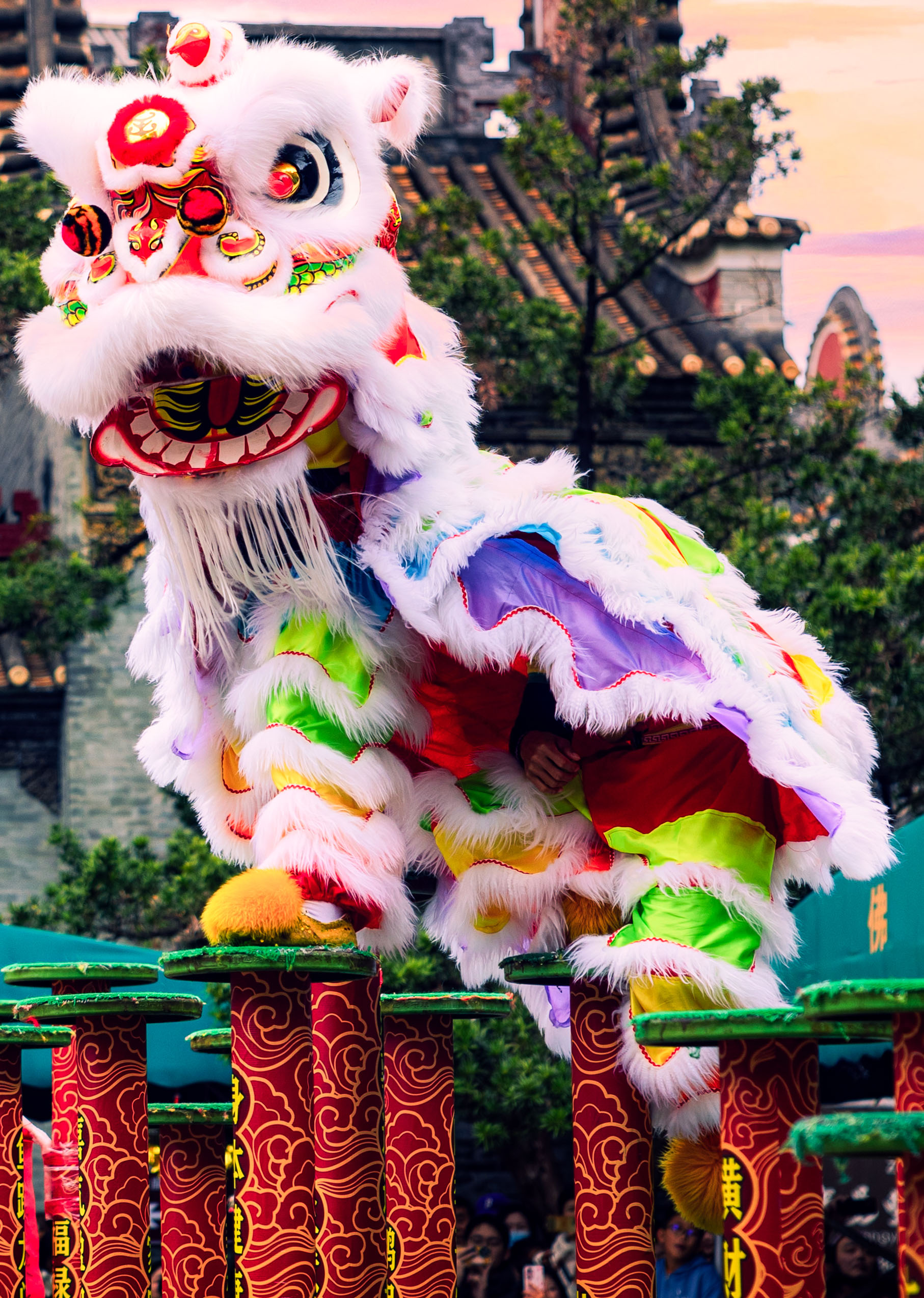
Lion dance performances at the temple are equally compelling. As drums thunder, golden lions leap onto high poles, vaulting and tumbling with thrilling precision. These martial arts lions project strength and momentum, while the civil lions charm audiences with playful gestures — sleeping, scratching and grooming — mirroring the habits of real animals.
To deepen engagement, performances incorporate interactive segments and live explanations, allowing visitors to learn about lion dance traditions. Blending dance, martial arts and music, these displays form the most animated and enduring scenes within the temple grounds.
If the Foshan Ancestral Temple represents the roots of Lingnan folk culture, Lingnan Xintiandi offers its contemporary renewal. Developed from the historical Donghuali area east of the temple, the district preserves the original layout of ancient buildings and lanes while introducing modern energy.
Winding bluestone paths lead past staggered wok-ear houses that bear the marks of time. Historical structures retain their classical elegance, while revitalized heritage brands sit comfortably alongside trendy cafes and boutiques. Here, adaptive reuse gives ancient streets a new rhythm, proving that preservation need not come at the cost of vitality.
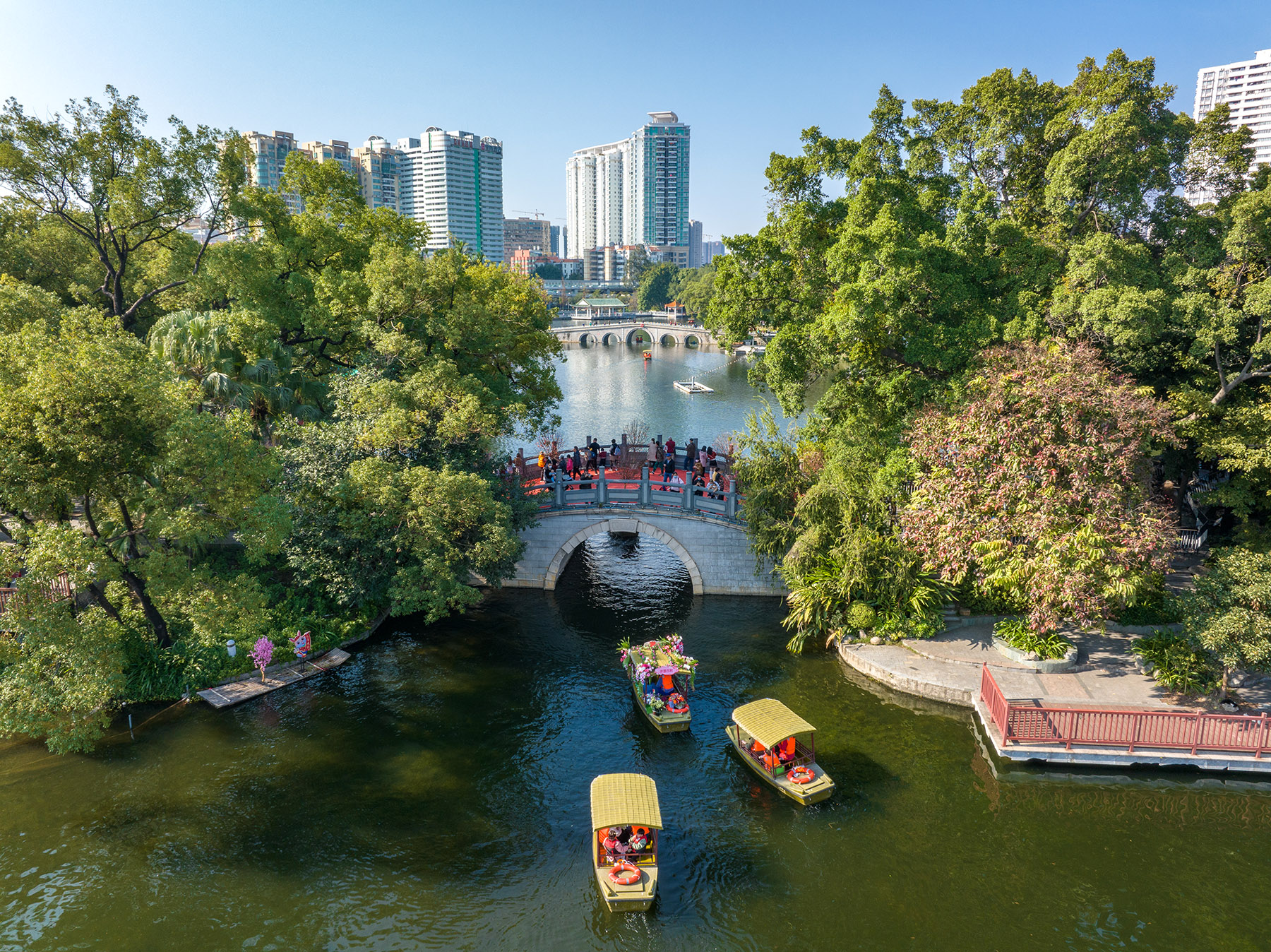
A garden of grace
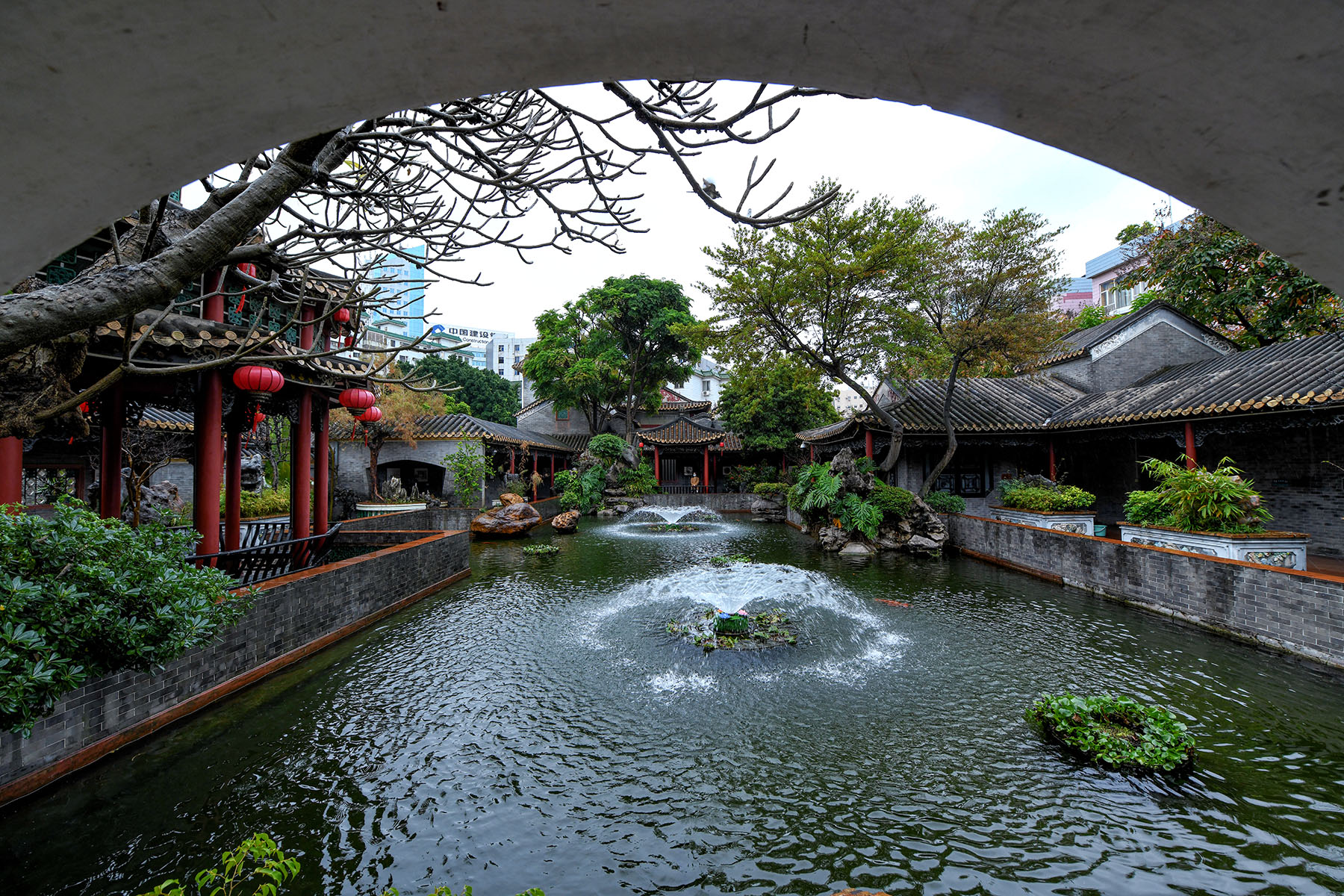
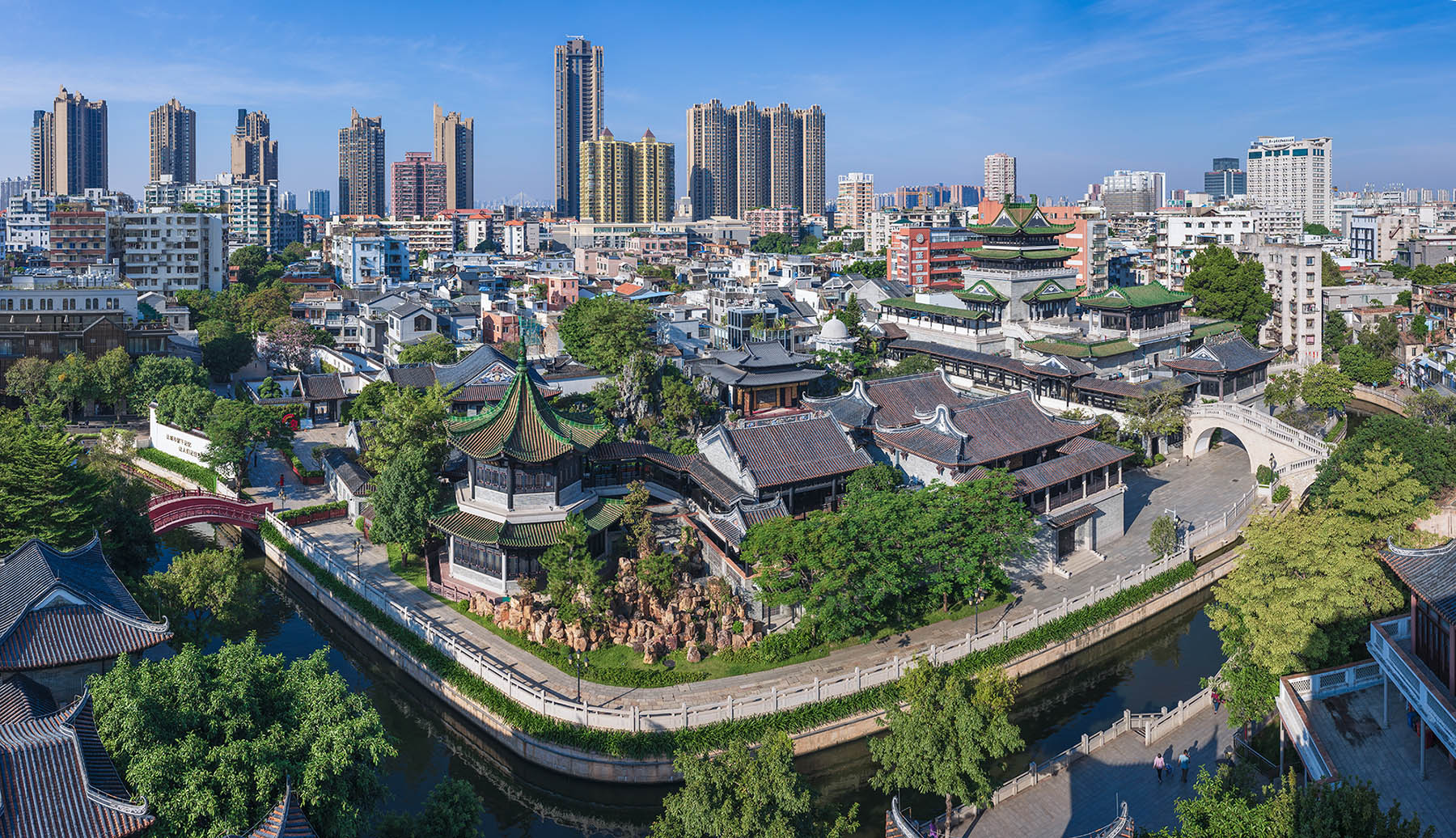
The final stop is Qinghui Garden in Shunde district of Foshan. First built during the Ming Dynasty (1368-1644) and expanded over generations, it presents a Lingnan garden style that blends Chinese tradition with subtle Western influence.
Its ingenious layout — often described as "a large garden enclosing smaller gardens" — weaves pavilions, halls, water features and greenery into an intimate, layered composition. Neither as monumental as northern gardens nor as delicately lyrical as those in eastern China, Qinghui Garden possesses a distinct character of its own.
At its core lies the old garden, centered on a tranquil pond where lotus flowers rise gracefully from the water. Details like shell-inlaid "bright tiles" and carved moon gates of blue brick bear the unmistakable imprint of Lingnan craftsmanship, combining aesthetic refinement with auspicious symbolism.
ALSO READ: Guangzhou, where old meets new
Within the garden, lush greenery and quiet pathways lead to buildings such as the Xiyin Study, which preserves the scholarly legacy of the Long family. The atmosphere is serene, imbued with Shunde's long tradition of learning and literary cultivation.
This journey across Guangzhou and Foshan is not about chasing landmarks, but about discovering Lingnan culture where it remains most authentic. The carvings of ancestral halls, morning light on old streets, echoes of martial rituals, and breezes through classical gardens speak to a tradition shaped by craftsmanship, community and continuity.
Free from excessive commercial packaging, these spaces reveal Lingnan culture in its most grounded form. Step away from the crowds, and its deepest beauty emerges — not in spectacle, but in the quiet richness of an unhurried walk, where Lingnan continues to breathe.
Li Wenfang contributed to this story.
Contact the writer at liyingxue@chinadaily.com.cn
