

New report predicts China's expansion in renewable power generation in 2026
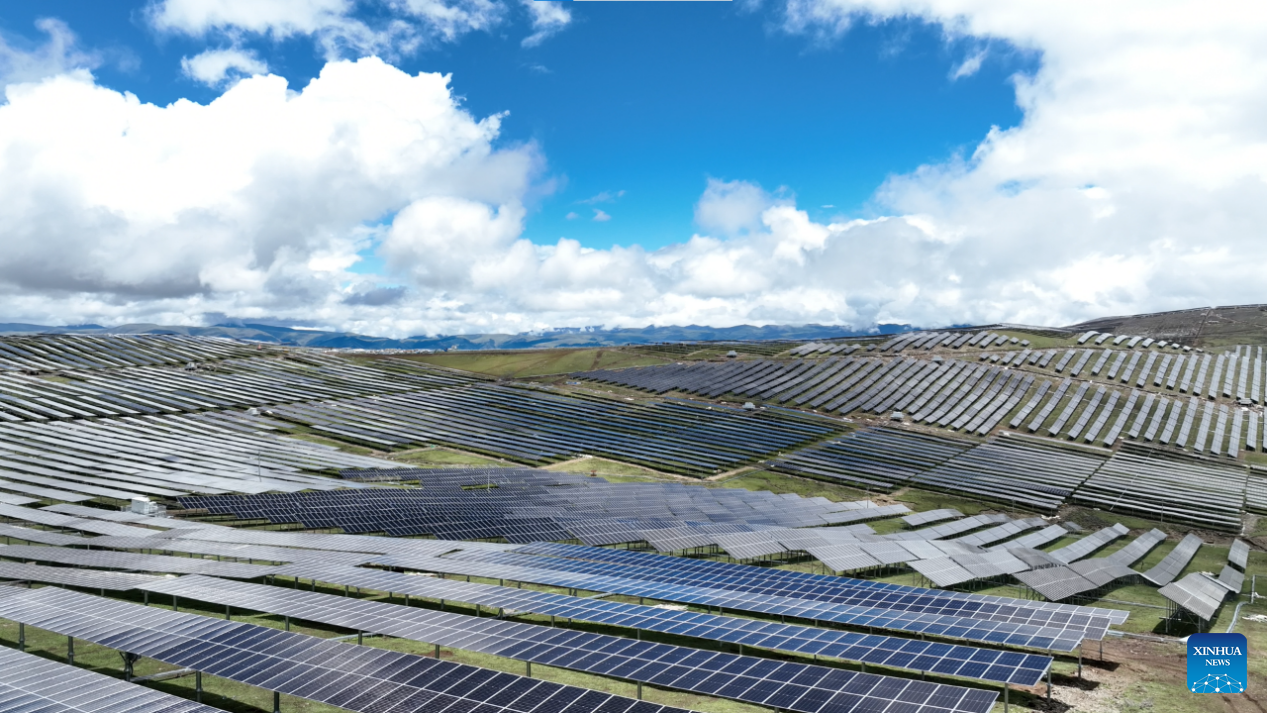
A strong growth in solar power is projected to drive the expansion of China's renewable energy generation capacity in 2026, even as average wind power utilization hours decrease slightly, according to a new report.
The Global Wind, Solar, and Hydropower Capacity Outlook for 2026, released on Thursday, projects that average wind power generation hours in China will reach about 2,100 hours in 2026, slightly lower than in 2025. The indicator measures how effectively wind resources are utilized, with higher hours reflecting better wind conditions and operational efficiency.
Despite the modest decline in utilization, China's total wind power generation is expected to grow by around 2 percent, supported by continued expansion of installed capacity, said Liu Yunyun, a chief expert at the National Climate Center.
Solar power is set to remain the main growth engine, Liu said. Average photovoltaic generation hours are forecast at about 1,320 hours, roughly unchanged from the previous year. "With rapid capacity expansion, total solar power generation is projected to surge by about 25 percent," she said.
Liu noted that hydropower output in 2026 may show clear regional divergence. Water inflows in northwestern China are expected to increase, while southwestern regions may see reduced inflows, potentially reshaping the country's hydropower generation pattern.
Xiong Shaoyuan, deputy director of the China Meteorological Administration, said China's power system has entered a new stage dominated by renewable energy, which now accounts for more than 60 percent of the country's total installed power capacity.
"The new power system has an urgent need for climate resource assessment and early warnings for extreme weather," Xiong said.
The outlook was jointly released by the National Climate Center and the Global Energy Interconnection Development and Cooperation Organization. It will provide scientific support for power planning, market trading and system operation, Xiong said, adding that China will further improve energy-related meteorological monitoring and forecasting.
Meanwhile, global renewable energy development has entered a phase of full acceleration, according to Liu Zehong, vice-chairman of the Global Energy Interconnection Development and Cooperation Organization.
Newly installed renewable energy capacity worldwide is expected to reach about 700 gigawatts for 2025, up 20 percent from 2024.
Globally, average usable wind power generation hours are forecast at about 2,310 hours in 2026, with total wind power generation rising by around 6 percent.
Average global photovoltaic generation hours are expected to reach about 1,340 hours, while total solar power generation is projected to increase by roughly 25 percent.
Global hydropower generation is also expected to post moderate growth, with total output rising by about 7 percent year-on-year, the report said.
Given the inherent intermittency and volatility of wind and solar power, Liu said improving long-term generation forecasting is essential for high-quality development. Building an integrated forecasting system for wind, solar and hydropower is crucial to ensuring power supply security, mitigating risks from extreme weather, and optimizing resource allocation across regions, he added.
