

From 19th-century sailors to the 50th anniversary of diplomatic ties, personal stories continue to define China-Fiji relations.
The past year not only marks 50 years of diplomatic relations between China and the Pacific Island country of Fiji, but also celebrates 170 years of deep personal ties between the peoples of the two countries.
In 1855, Fiji saw the arrival of the first Chinese settler, whose descendants now live throughout the world, including in Fiji, New Zealand, Australia, North America, Europe and Asia, said Fiji's ambassador to China, Robert Lee.
"On a personal note, I too am part of that story as a second-generation Chinese person in Fiji, whose parents migrated to Fiji in the early part of the 20th century," he added.
Lee is no stranger to China. He lived and worked in Beijing and Shanghai for many years before being appointed as Fiji's seventh ambassador to the country.
READ MORE: Fijian acting PM: Fiji-China relationship stands test of time
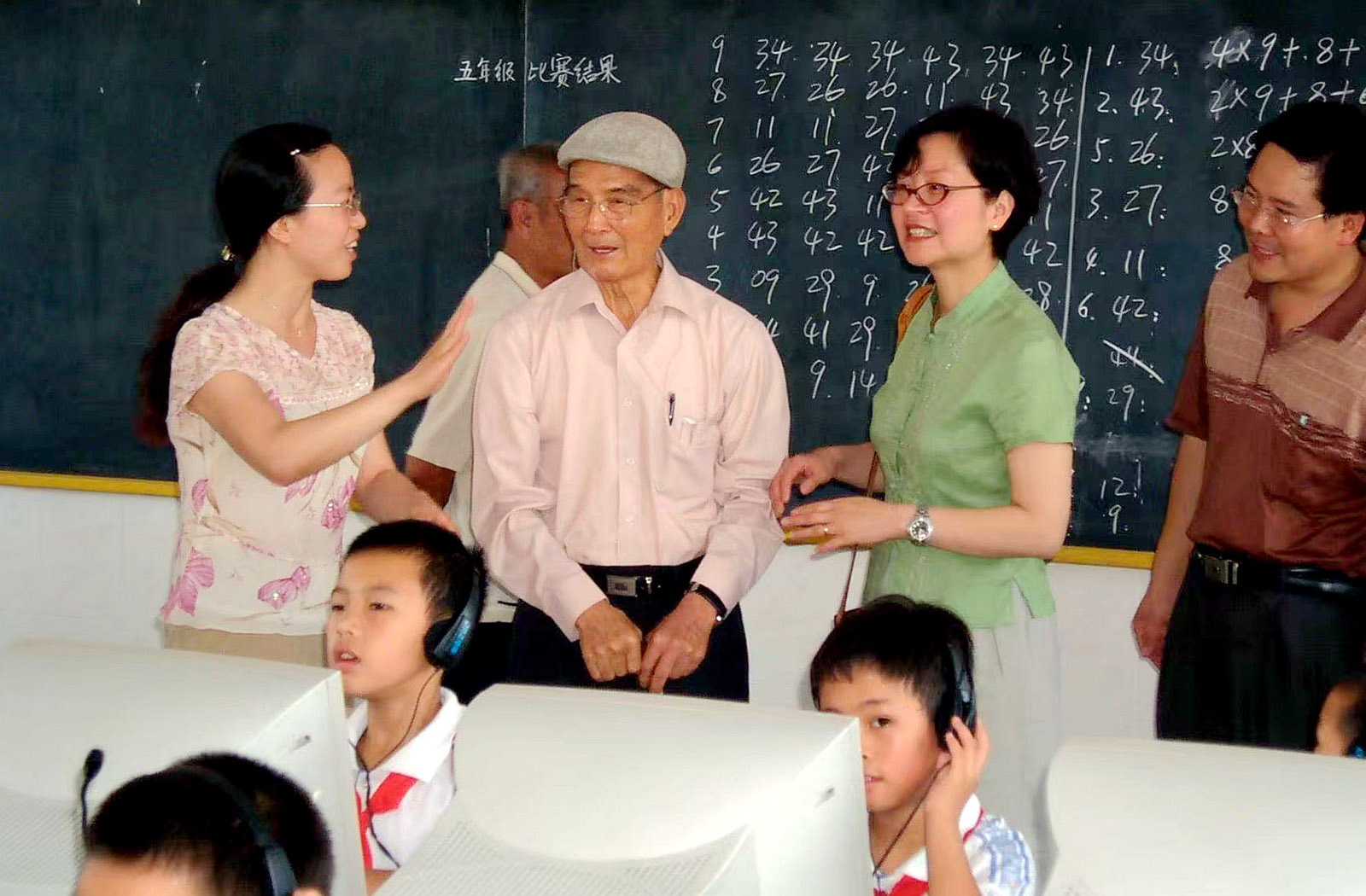
In 1989, he visited his ancestral hometown of Zhongshan in Guangdong province for the first time to trace the origins and roots of his family. His father gave a donation there for the construction of a local elementary school — now Lantian Central Primary School in Dachong town, Zhongshan city — and returned multiple times to watch and oversee it being built.
On July 24, 2025, Ambassador Lee and his family returned to the school, with the local people holding a grand homecoming ceremony. Li Jiaoyan, head teacher of the school, personally greeted him at the entrance.
When Lee's father Lee Wah Yip visited the same school in 2004, accompanied by his daughter-in-law and Ambassador Lee's wife, Jeanette Kai Chan, Li was a teacher there and met and spoke with him.
There are various photos of the Lee family hanging in the school building. "We introduce the school's history to each of our new students," she said.
During the visit, Lee told local media that it was the first time his daughter had returned to their ancestral home.
"I hope to take this opportunity to tell her that this is the root of the family," Lee said.
"The last time I was in Zhongshan was almost 25 years ago, and today the pace of development and how fast Zhongshan has become bear no resemblance to that time," he added.
Over the past two years, Lee and his team at the Fijian embassy have traveled across China, visiting provinces, municipalities, counties and even villages.
"It has been a journey of discovery, as we explored potential areas of opportunity and cooperation between Fiji and China going forward. During that journey we visited the cities of Zhongshan, Jiangmen and Dongguan in Guangdong province," he said.
He referred to those three cities specifically because up until China's opening up to the outside world in 1978, all the Chinese migrants to Fiji came from those three areas.
Lyu Guixia, a researcher at the Institute of World History at the Chinese Academy of Social Sciences and author of the book History of China-Fiji Relations, noted that the early Chinese immigrants arrived in Fiji "with the aim of pursuing better lives, working in sectors such as catering, hairdressing, retail, and tourism".
They "have made significant contributions to Fiji's economic and social development, becoming the facilitators, promoters, and champions of China-Fiji relations", Lyu wrote in an article last year.
Fiji was the first of the Pacific Island countries to build diplomatic ties with China, and this encouraged other Pacific Island nations to develop relations, thus opening a new chapter in China's dealings with the wider world, Lyu noted.
"China-Fiji relations have, to a certain extent, become a trendsetter for the development of China's relations with other Pacific Island countries, and they will continue to influence the evolution of these ties," she said.
Bonded by food
Lee also shared some stories about the immense influence of those Chinese settlers on the cultural, economic and demographic landscape of Fiji, especially in its rural and maritime provinces.
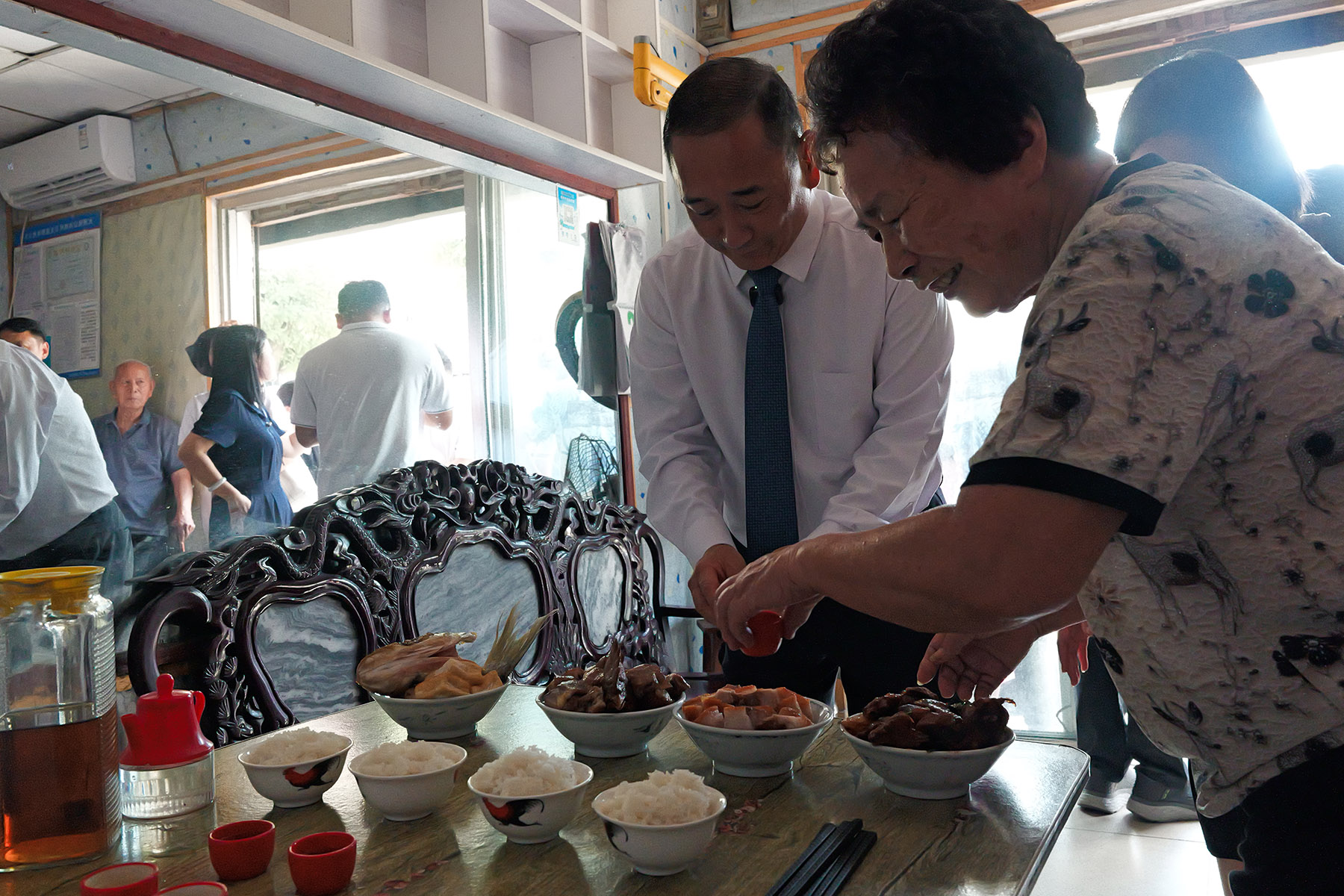
During his visit to his ancestral hometown in Zhongshan in July, the ambassador saw cooking techniques and cultural elements that are similar to those one finds in the Fijian countryside.
"In connecting the dots, we can see that those traditional culinary skills that we took for granted in Fiji as part and parcel of a unique cooking style in some of our rural provinces, actually had their roots in Zhongshan and Jiangmen," Lee said.
For example, "banana" in the Fijian language is the English word "China", according to the ambassador.
He explained that the first Chinese settlers arrived in Fiji in 1855, and bananas arrived in the country around 20 years later. By the early 1900s, the Chinese people were deeply involved in the growing, harvesting and trading of the fruit.
Lee added that a culinary specialty of Fiji is "bila" (a fermented bread), which is wrapped in banana leaves before being cooked.
While bila is now considered a traditional Fijian food, Lee learned during his visits to Guangdong that the use of banana leaves to wrap food before it is cooked is a cooking technique from Guangdong and was brought to Fiji by early Chinese settlers.
"Hence, it is easy to understand why bananas are referred to as 'jaina' in the i-Taukei, or Fijian language," he said.
Another anecdote relates to a recent reception marking the 50th anniversary of bilateral ties between China and Fiji, which was held in Beijing in October.
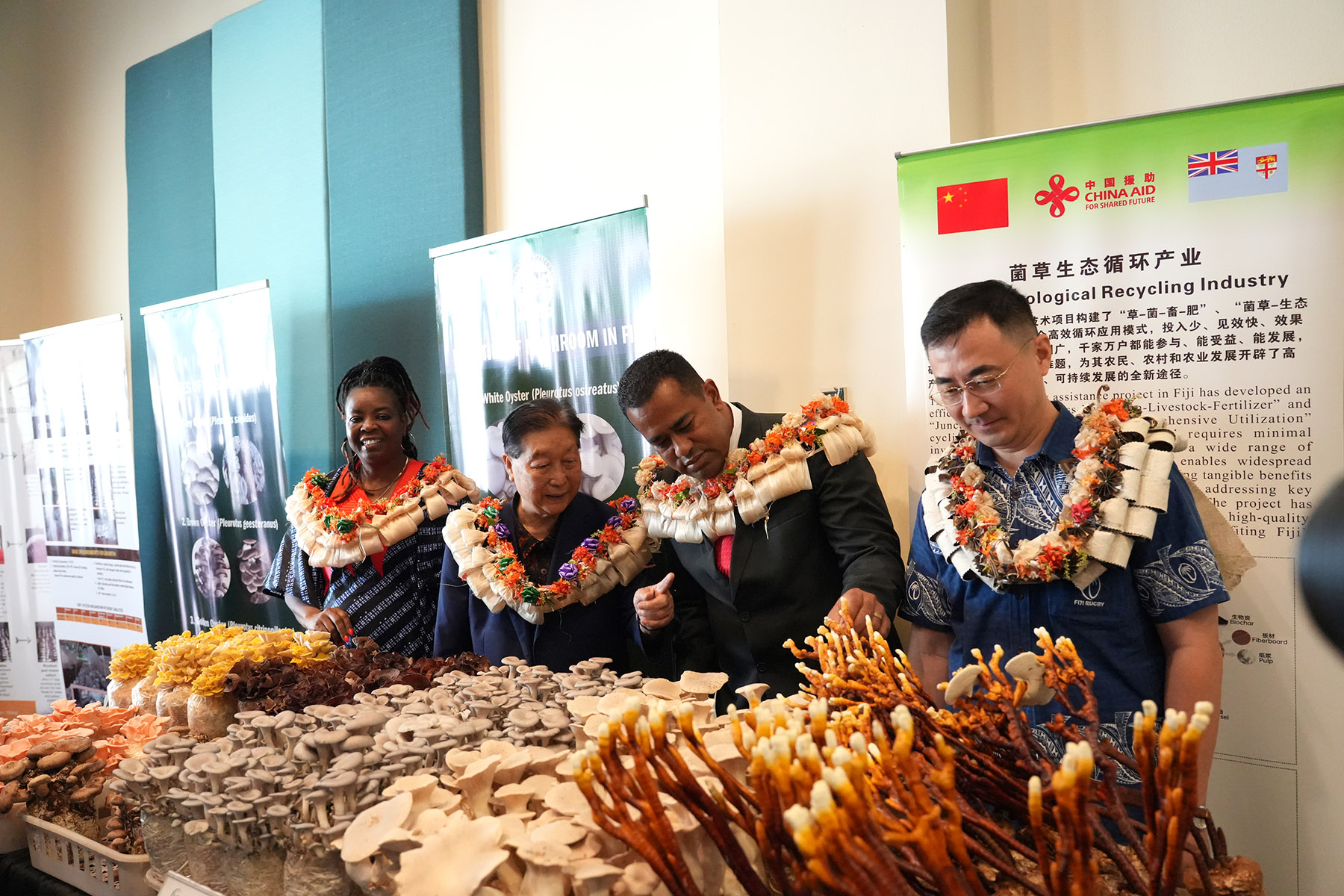
There, the Fijian people performed the country's traditional kava ceremony for Lee and Shen Xin, vice-president of the Chinese People's Association for Friendship with Foreign Countries.
Kava is a traditional drink in Fiji made from the kava plant, and it is served during official events and in social gatherings.
The guests were intrigued by the ceremony as they noticed two small bowls that contained dried salted plums, which are known in Mandarin as huamei, and are a popular snack in China.
Lee said that after drinking a few cups or bowls of kava, a common practice in Fiji is to eat a piece of huamei.
"This practice was introduced by the Chinese settlers from Guangdong province over a hundred years ago. It was a way to re-salivate the mouth from the numbing and drying effect of kava," Lee said, adding that huamei is referred to as "Chinese lolly" in Fiji.
"Imagine and picture this situation: Many a Fijian visiting China is often shocked to find that no one in China understands what they are saying, when asked where they can buy 'Chinese lolly'," he laughed.
Recently, Sitiveni Rabuka, the Fijian prime minister, showcased a book written by Fijian entrepreneur Joe Banivanua Mar. Titled Kai Jaina — A World Between, it is a memoir in which he writes of the complexities of belonging and balancing the rich cultural heritage of his Fijian and Chinese ancestry.
"It is a part of the rich history of the Chinese in Fiji, the stories that have never been fully captured in our written history," Lee said.
Hand in hand
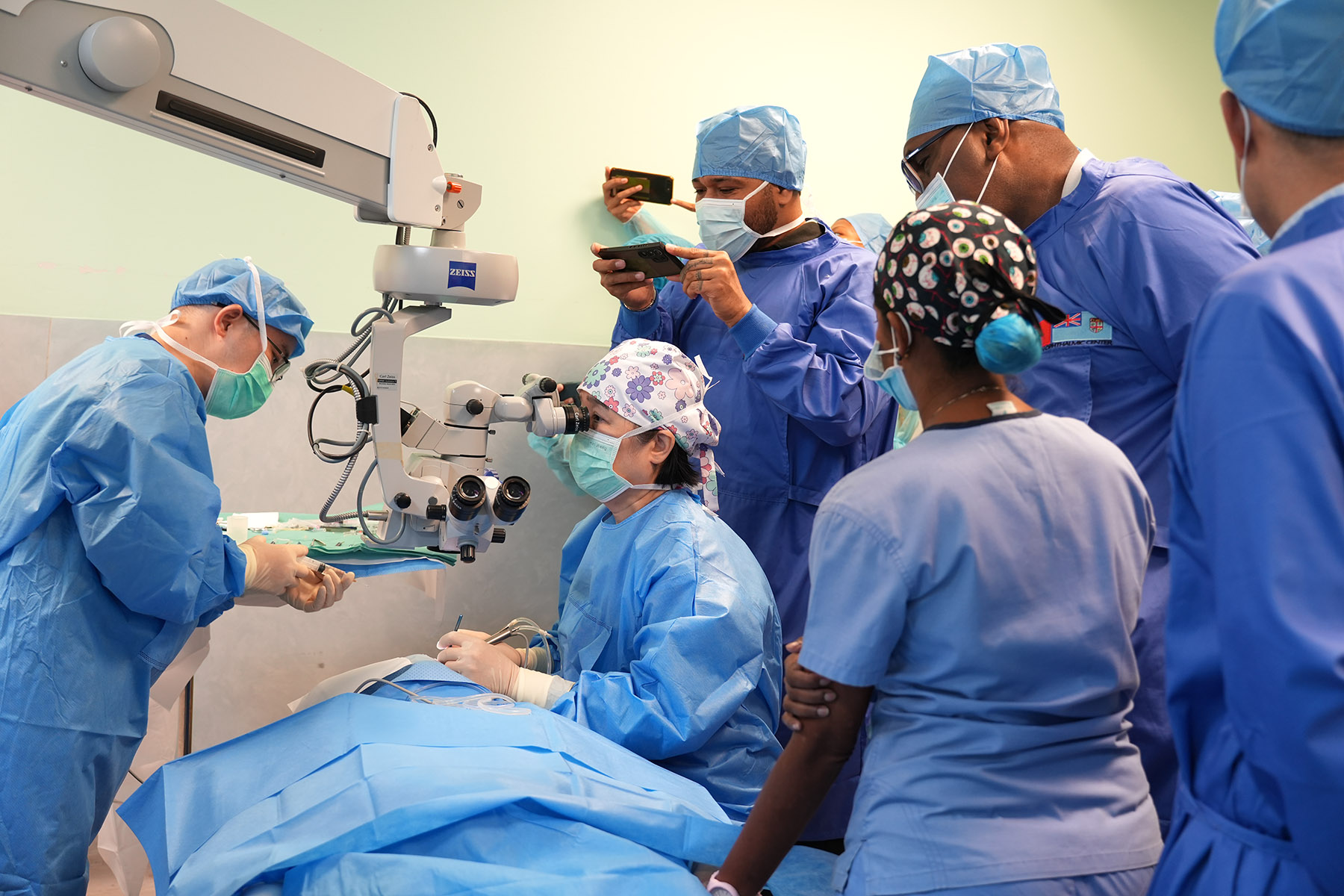
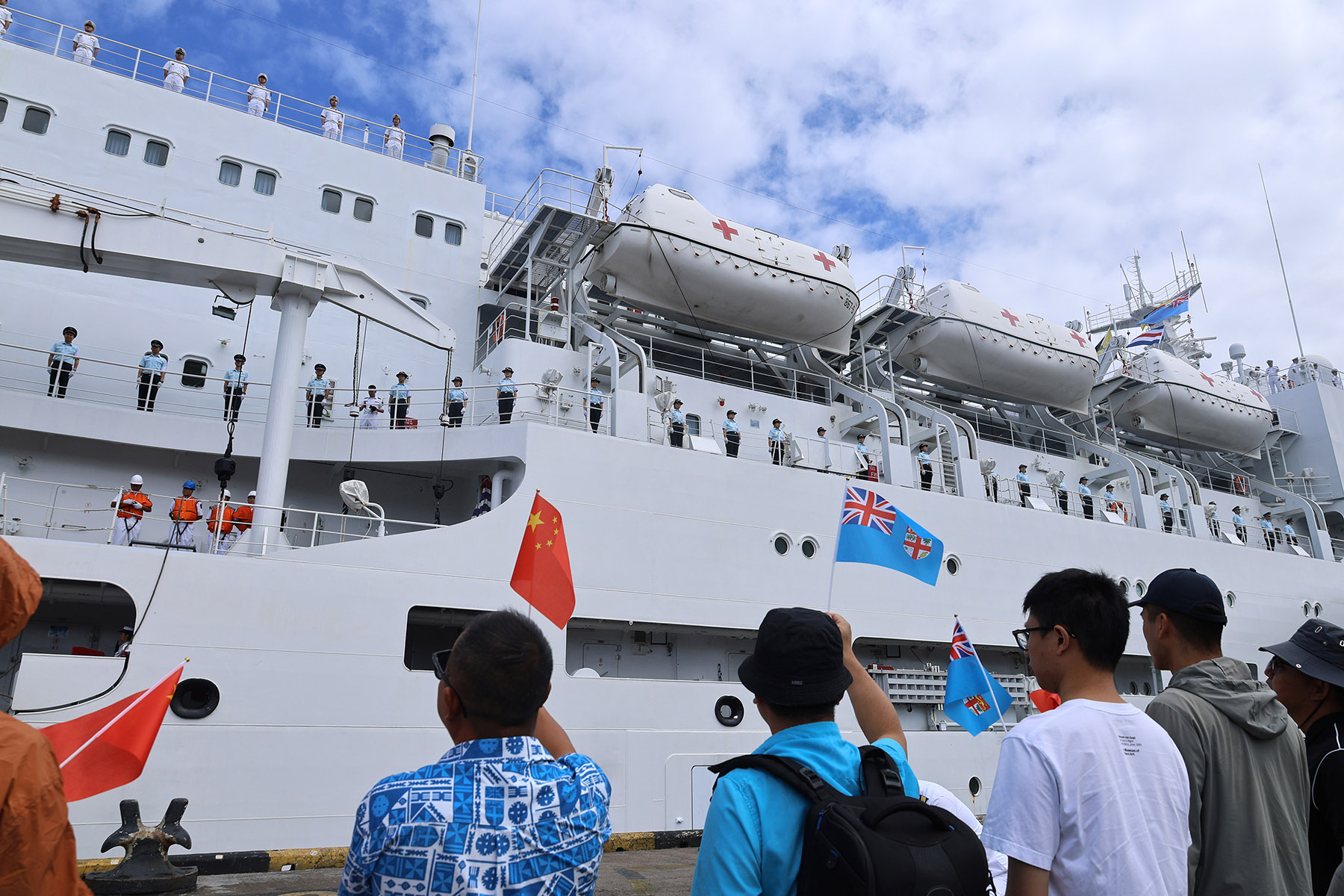
As one of the latest chapters in the two-way friendship between China and Fiji, the Chinese People's Liberation Army's navy hospital ship, the Silk Road Ark, completed a seven-day visit to the country in October to provide medical services, before sailing on to Tonga.
The ship's itinerary has been named "Mission Harmony-2025", and during its stay in Fiji, the Chinese medical personnel provided treatment to 3,330 people, performed 426 surgeries, and carried out 2,531 examinations and tests, Xinhua news agency reported.
Pio Tikoduadua, Fiji's Minister for Defence and Veterans Affairs, said that the Silk Road Ark has delivered tangible benefits to the Fijian community, representing a welcome symbol of care, service, and goodwill.
On Nov 5, the day marking the 50th anniversary of diplomatic ties, President Xi Jinping and Premier Li Qiang exchanged congratulatory messages with Fijian President Ratu Naiqama Lalabalavu and Prime Minister Sitiveni Rabuka respectively to jointly celebrate the historical moment.
Foreign Ministry spokeswoman Mao Ning said, "The China-Fiji friendship has taken deep roots among our peoples.
"In recent years, our high-quality Belt and Road cooperation has produced fruitful results and benefited both peoples."
Ambassador Lee said, "On the 5th of November 1975, our political leaders decided to establish formal diplomatic relations with the People's Republic of China, a step that has proven to be one of the most important strategic decisions for Fiji in the post-independence era."
The ties have matured from their preliminary framework into a multifaceted and vibrant strategic partnership featuring mutual respect and common development, a partnership that links the people, cultures, and shared ambitions, he said.
He emphasized that Fiji adheres to the one-China principle, "a fundamental pillar of our diplomatic ties".
According to China's General Administration of Customs, bilateral trade volume reached $534 million last year, marking a 1.5 percent year-on-year increase.
China is now the second-largest economy in the world as well as "a leading voice for South-South cooperation across many fields, including climate change, green energy, and sustainable development", Lee said.
"China has been a steadfast development partner of Fiji and has made significant contributions to the building of our infrastructure, including the upgrading of hundreds of kilometers of our road network and the construction of bridges and hydroelectric dams," he added.
He also thanked China for playing a major role in the education and training of Fijian people, in its delivery of medical services and supplies — especially during the COVID-19 pandemic — and in climate change adaptation and disaster management.
ALSO READ: Stronger ties with China benefit Pacific island nations
Shen Xin, vice-president of the CPAFFC, noted that both China and Fiji are members of the Global South, and the two countries "have set an example of equality and friendly cooperation between nations of different sizes".
"As good friends, good partners and good brothers, the two sides have supported each other on issues concerning each other's core interests," he said at the October reception.
China stands ready to work with Fiji to strengthen cooperation in development, advance together on their path to modernization, and promote the building of a China-Fiji community with a shared future, he added.
Contact the writers at zhangyunbi@chinadaily.com.cn
