

A student-led cultural festival highlights grassroots diplomacy as Chinese and ASEAN youth build trust through direct cultural exchange.
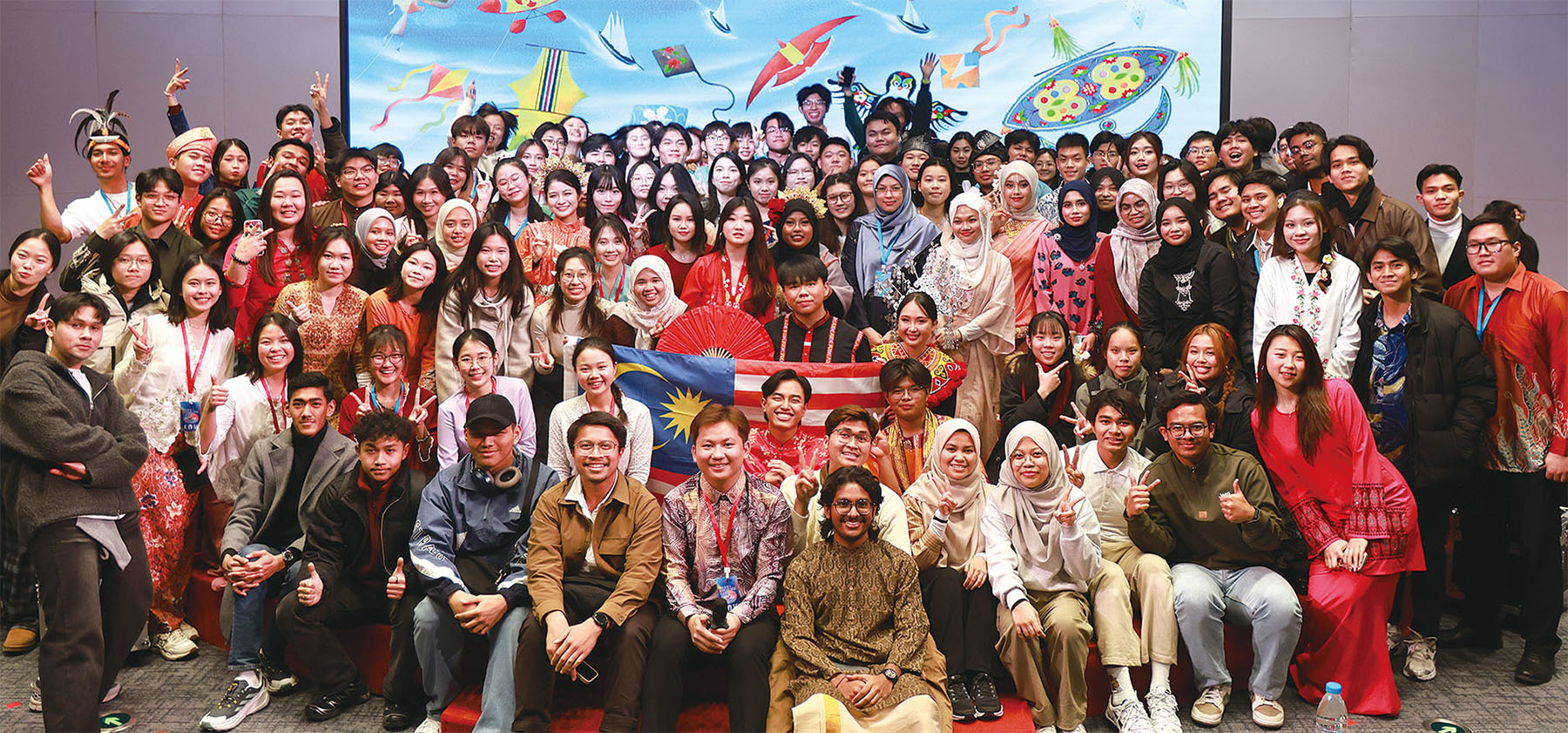
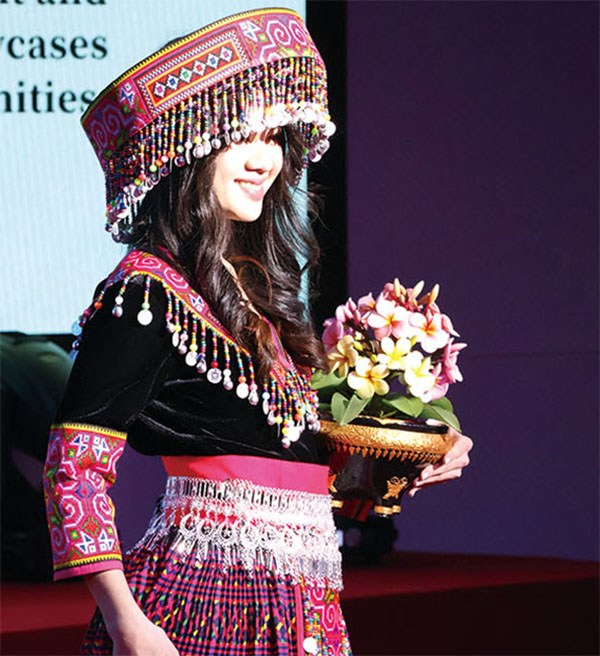
Colorful traditional costumes, handcrafted cultural items, and the aroma of Southeast Asian spices filled a hall at Beijing's Dabeinong Phoenix International Innovation Park as young people from across the region gathered under one roof. Music and animated conversations flowed between exhibition booths, turning the venue into a lively celebration of diversity.
The event was SEA YOU@ASEAN 2025, a youth cultural festival held on Dec 14.
At one of the booths, Vianney Lim, an Indonesian student studying in Beijing, carefully unfolded pieces of batik — a traditional Indonesian fabric made using a wax-resist dyeing technique. The intricate patterns quickly drew a small crowd. "Batik is something Indonesians are very proud of," she said. "Every region has its own designs, and every pattern tells a story about history, nature or daily life."
READ MORE: Youth bond through culture and tech
Lim was one of around 500 students and young professionals from China and ASEAN countries who took part in the festival, which was jointly organized by the Malaysian Students Association in China and the Association of Malaysian Students in Beijing.
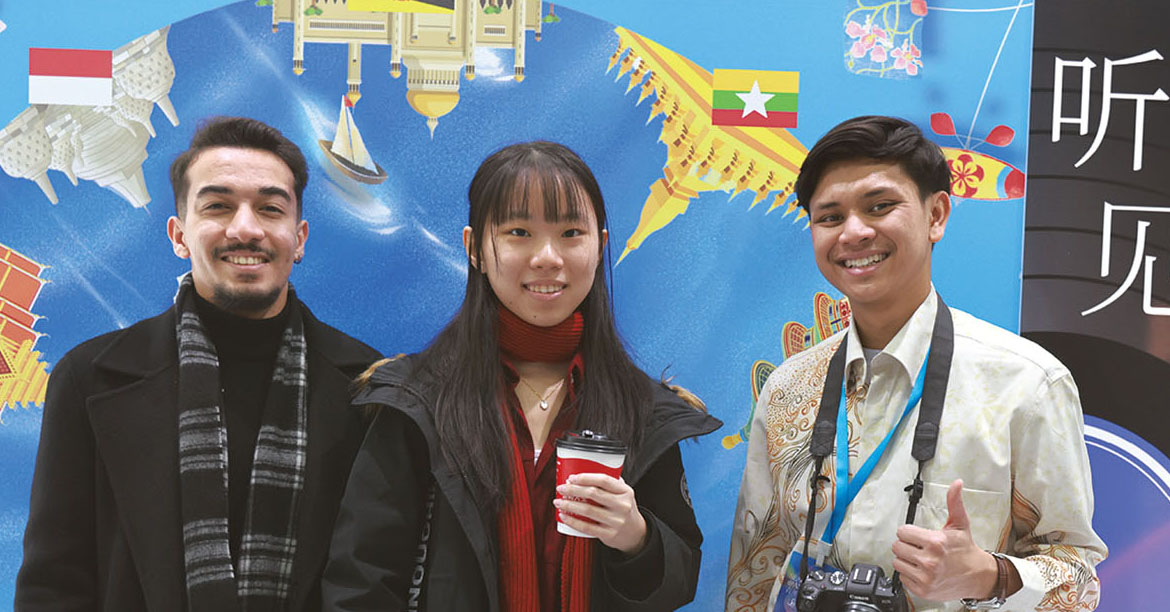
Held as Malaysia serves as ASEAN's rotating chair in 2025, the festival aimed to strengthen people-to-people ties and showcase the region's cultural diversity through exhibitions, performances, and interactive experiences.
For many participants, the event offered a rare opportunity to introduce their cultures to others.
At the Myanmar booth, for example, Paing Soe Hein, a 21-year-old junior at Peking University, demonstrated chinlone, a traditional Burmese sport often compared to China's cuju — an ancient ball game considered an early form of soccer.
"You can see people playing it everywhere in Myanmar," he said. "The goal is to keep the ball from touching the ground, using your feet, head or chest."
Hein said he was especially touched by the moment when participants from different ASEAN countries exchanged small gifts at the end of the event. "It showed how closely connected our cultures are," he said.
Youth leadership
The festival was made even more meaningful by the fact that it was largely initiated and organized by the students themselves.
Behind the vibrant displays were months of preparation led by young volunteers from different countries and academic backgrounds.
Cheah Kai En, one of the main coordinators from Malaysia, said the preparation process was long and demanding. Coordinating student organizations from 11 ASEAN countries required sustained communication and close cooperation, much of which took place online.
"It was not an easy task," she said. "But throughout the process, everyone was very supportive and willing to work together."
What impressed her most, she added, was the participants' level of commitment.
"Students used their spare time to prepare performances and booth displays while managing their studies at the same time. That dedication really highlighted the strength of young people," she said.
Another key organizer, Tan Jiale, a Malaysian student at Peking University, described the festival as a form of grassroots diplomacy driven by youth.
"International relations today can be complex and sometimes tense, but youth can contribute in a different way," she said.
Tan emphasized that the event was designed to give young people a platform to speak for themselves. "We wanted participants to tell their own stories, rather than having their cultures explained for them. Although everyone came from different backgrounds, there was a shared willingness to connect and communicate," she said.
"When young people meet face to face, trust is built naturally," she added.
Beyond cultural performances, the festival also featured a roundtable forum that brought together representatives from embassies, businesses and youth groups. Discussions focused on socioeconomic development, cross-cultural management and youth engagement.
Joshua Chen, a 22-year-old economics major from Laos at Tsinghua University, said the forum provided a space for exploration and personal growth.
"Being here allows me to represent my country, make international friends and broaden my understanding of ASEAN-China relations," he said.
ALSO READ: Young innovators forge global ties
He noted that Laos' economy is closely linked to tourism and said that exchanges like this encourage young people to think more critically about development paths for their home countries.
Many participants spoke of a strong sense of shared belonging. Jonio da Anunciacao, a student from Timor-Leste at Peking University, noted that his country officially joined ASEAN this year.
"Now we are one family," he said."Events like this help people understand one another not only through food or performances, but through meaningful conversation."
For Cao Jiaming, an 18-year-old student from China, the festival offered a vivid lesson in openness and empathy. As he moved between booths, he watched young people from different countries greet one another, explain their traditions and exchange stories with ease.
"When you talk to someone directly, you realize how similar China and ASEAN countries are. Events like this remind me that kindness and respect are universal values," he said.
Contact the writers at guojiatong@i21st.cn
