

UN meeting highlights multilateralism, urges stronger treaties to confront crises
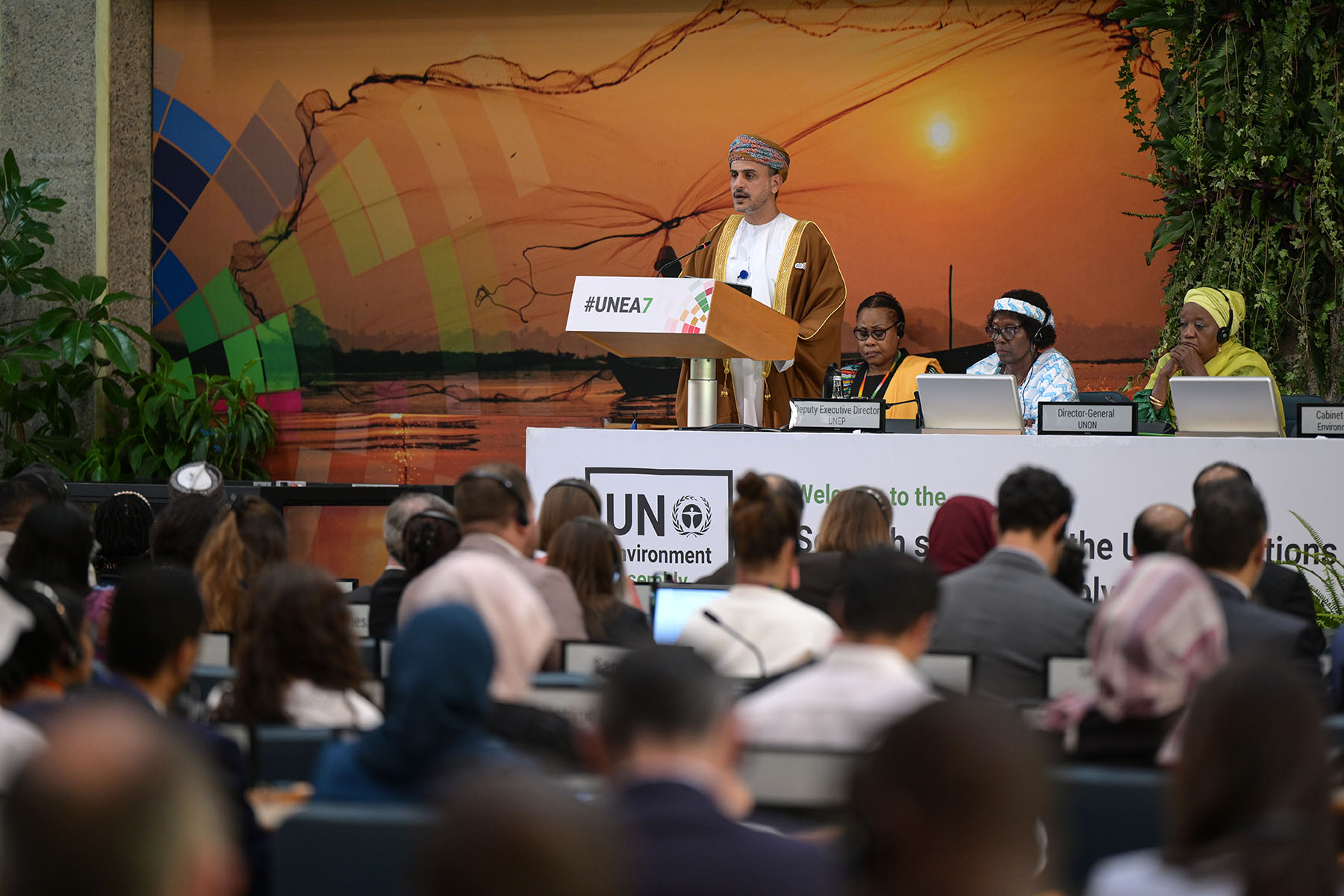
Global leaders have renewed determination to use multilateral cooperation as the cornerstone of the planet's response to interconnected crises such as climate, nature and pollution emergencies.
Environment ministers, scientists, intergovernmental organizations, private sectors and civil society actors who assembled at the seventh session of the United Nations Environment Assembly in Nairobi, Kenya, said it is only through legally binding global commitments, shared frameworks and coordinated actions that tangible gains can be achieved.
Inger Andersen, UN Environment Programme executive director, said global treaties and agreements — collectively known as multilateral environmental agreements — reflect the reality that threats, such as rising temperatures, ocean degradation, biodiversity collapse, plastic pollution or toxic waste, do not respect national borders.
READ MORE: UN climate chief: Climate cooperation holds firm despite turbulent geopolitics
"This assembly is taking place as we look at how to improve inclusive multilateralism and how to increase coordination, efficiencies and synergies to strengthen the implementation of multilateral environmental agreements," Andersen said at the opening of the weeklong assembly on Monday.
She also underlined the need to "take a whole-of-society approach" by putting the needs of the communities and ecosystems most exposed to risk at the core to ensure a truly just transition and deliver on the assembly's theme of "Advancing sustainable solutions for a resilient planet".
"We need diverse perspectives. From business and industry. Children and youth. Farmers. Indigenous peoples and their communities. Local Authorities. Nongovernmental organizations. The scientific and technological community. Women. Workers and Trade Unions," Andersen said.
"In short, we need you all. Not just to shape decisions and solutions. But to take these solutions out into the real world and implement them."
Abdullah Bin Ali Al-Amri, president of the UN Environment Assembly and president of the Environment Authority of Oman, said the assembly reaffirms shared responsibility to transform the determination into tangible results for people, ecosystems and the planet's stability.
"We convene at a decisive moment. Around the world, communities continue to endure the intertwined impacts of climate change; land, nature and biodiversity loss; and pollution and waste — challenges that test not only our economies and societies but the very trust in our collective will," he said.
"Our success this week depends not only on the outcomes we adopt but also on how we reach them, through trust, transparency, the spirit of compromise and inclusiveness."
Considering that environmental challenges are accelerating, Andersen reiterated that the assembly must dig deeper than ever.
"The rise in average global temperatures will likely exceed 1.5 degrees within the next decade, bringing escalating consequences with every fraction of a degree," she said. "Ecosystems are disappearing and land is degrading. Dust storms are intensifying. Toxins continue to pollute our air, water and land."
Emission cuts
To avert the situation, Martin Krause, director of the climate change division at UN Environment Programme, called on governments to dramatically accelerate emission cuts and simultaneously boost investment in climate adaptation.
"Partnerships across governments, private sector, academia and civil society are now crucial for translating high-level commitments into climate-resilient neighborhoods, infrastructure and livelihoods," he said at a side event session.
The session also spotlighted growing threats from sand and dust storms — a hazard affecting billions across continents and carrying both environmental and economic consequences.
Jumaan Al-Qahtani, executive chief of the World Meteorological Organization's Sand and Dust Storm Regional Center in Jeddah, Saudi Arabia, described dust storms as both a cross-border challenge and a potential ecological contributor when mineral dust fertilizes nutrient-poor ecosystems.
ALSO READ: UN climate chief highlights progress at COP30, urges intensified efforts
The World Bank estimates that the region loses $150 billion annually — around 2.5 percent of GDP — because of storm-related damage to health, agriculture, infrastructure and livelihoods.
Al-Qahtani said Saudi Arabia is ramping up efforts under its Vision 2030, the Saudi Green Initiative and the Middle East Green Initiative to combat land degradation through afforestation, rangeland restoration and urban greening, citing projects such as Green Riyadh.
This year's UN Environment Assembly will be negotiating 15 draft resolutions on issues ranging from saving the world's glaciers to reining in massive seaweed blooms and reducing the environmental impact of artificial intelligence.
While not legally binding, UN Environment Assembly resolutions help countries find common ground and, in the past, have laid the groundwork for precedent-setting international agreements.
Contact the writers at victor@chinadailyafrica.com
