

Approaching the 15th Five-Year Plan period, China's fast-growing movie industry trains creators and strengthens global reach, Xu Fan reports.

From an animation major in college to the concept artist behind central characters in Ne Zha — the phenomenal franchise that lifted Chinese filmmaking to unprecedented heights in the global box-office landscape — Shen Wei has witnessed firsthand the rapid expansion of the domestic film industry.
Despite the years that have passed, he still clearly remembers going with four friends to watch Kuiba, a pioneering mythology-inspired animated feature. As they arrived a few minutes late, Shen was shocked to find the screening canceled because the five of them were the only ticket buyers.
For a time, animated films — especially those ambitiously targeting a wider audience beyond just children — struggled to gain recognition. But the tide turned with the game-changing dark horse Monkey King: Hero Is Back. Chinese animated films began to boom, producing more hits such as White Snake and Chang'an, before the genre reached its peak with Ne Zha 2, a record-shattering hit, now the world's fifth highest-grossing film.
READ MORE: 'Ne Zha 2' nears $2.2b global haul as box office run stays strong
Propelled by domestic blockbusters from sci-fi franchise The Wandering Earth to the war epic trilogy The Volunteers, China is advancing toward its goal of becoming a "strong film power "by 2035, a target set in the 14th Five-Year Plan (2021-25) period, issued by the China Film Administration, the industry's top regulator.
The past five years have seen a construction boom that pushed China's total number of cinema screens past 100,000 — the most in the world.
Cutting-edge technologies have also advanced rapidly. Films shot in virtual-reality format — requiring audiences to wear digital headsets — have acquired screening permits from the China Film Administration for the first time, marking a transformative moment in cinema operations.
As of this month, the total box-office revenue since early 2021 has reached over 220 billion yuan ($30.9 billion), with domestic films accounting for around 80 percent of the total revenue, far surpassing the 55-percent goal set in the 14th Five-Year Plan.

Creative pressures
With 2026 — the start of China's 15th Five-Year Plan (2026-30) period — approaching, filmmakers across the country are setting new goals while confronting rising challenges, from competition with short videos to the need for deeper integration of artificial intelligence.
The fourth plenary session of the 20th Central Committee of the Communist Party of China recently adopted the Recommendations of the CPC Central Committee for Formulating the 15th Five-Year Plan for National Economic and Social Development.
"The Recommendations provide a guiding vision for the high-quality development of Chinese cinema over the next five years. Realizing this blueprint will rely on the creativity of domestic filmmakers," said Zhang Ji, vice-chairman of the China Film Association, during a forum at the 2025 China Golden Rooster and Hundred Flowers Film Festival.
"Right now, we are in a period of profound transformation. Audience tastes are evolving rapidly, and traditional models of filmmaking are being reshaped by new demands and technological advances," Zhang added.

AI is already being used in many aspects of filmmaking, including subtitle translation, script research, and enhancing visual effects. But crafting original stories remains an area where the technology still cannot compete, as its output ultimately depends on processing existing texts and images.
Shen, concept artist for Ne Zha 2 — which brought together more than 4,000 animators from 138 companies — notes that some directors now describe their ideas for characters or sets to both AI tools and human designers, and then compare the results. "So, what we need to do," Shen says, "is prove that we can paint and design better than robots."
Actress Wang Likun says that AI is reshaping the entire industry with startling speed. "For performers, we are not only facing competition but also grappling with questions about our own existence. Our new 'colleagues' (virtual actors) are not living humans. They never tire, never get sick, and can even perform actions far beyond human capability," she says.
"Additionally, actors can now be scanned and replicated as 'digital doubles', allowing certain work to be completed without us being physically present. This challenges how irreplaceable we truly are. But what AI cannot replace, I believe, is the improvisational creativity between actors, the unique on-set chemistry, our individual life experiences, and those seemingly imperfect yet profoundly authentic imprints of life we bring to a role."
Audience habits are shifting as well. The younger generation increasingly gravitates toward faster, more fragmented viewing formats.
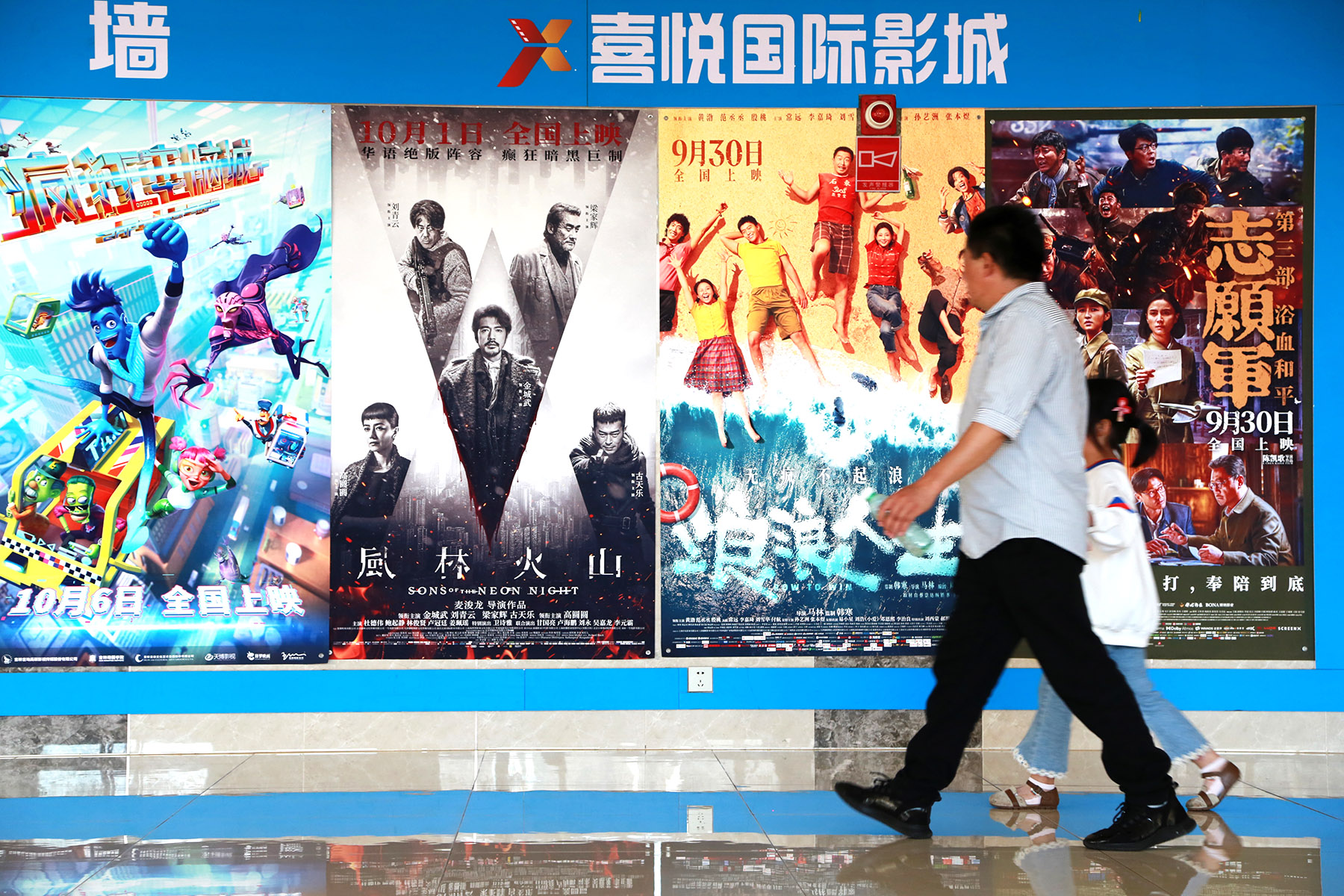
According to Liu Peng, director of the Maoyan Research Institute, China's moviegoing demographic is also aging. Viewers aged 30 to 39 have become the main group, accounting for 40 percent of theater attendance in 2025.
The surge of micro-short dramas — vertically shot episodes only minutes long — has been particularly striking. In 2024, this format reached a market value of 50.5 billion yuan, surpassing the annual box office of the century-old cinema industry for the first time. The once-niche format is expected to leap to 63.4 billion yuan in 2025 and 85.6 billion yuan in 2027, according to a report released by several institutions, including the China Television Drama Production Industry Association.
Scriptwriter A'mei, known for the award-winning film So Long, My Son, said watching a number of short videos recently has made her question whether traditional two-hour films are gradually losing appeal.
"One of my strongest impressions is that the online world and digital communities can sometimes feel more 'real' to young people than real life itself," she says.
As daily behaviors — from shopping to idol fandom — continue to shift from offline to online, A'mei believes it is crucial for storytellers to create soul-touching narratives that help bring audiences back to the real world.

Nurturing talent
The Recommendations emphasize the importance of cultivating talent, aiming to build a large, well-structured, dynamic team of high-level cultural professionals.
Two decades ago, only a few universities, such as the Beijing Film Academy and the Central Academy of Drama, trained film and television talent. Today, around 1,200 colleges and academic institutions offer film and TV programs, creating the foundation of the industry's expansive talent pipeline, according to a report by China Central Television.
Zhou Zhijun, Party secretary of the Beijing Film Academy — a cradle for generations of leading figures including iconic directors Zhang Yimou and Chen Kaige — notes that the academy has undergone a major transformation due to technological advances and industry shifts.
"Multiple new schools have been established to integrate traditional film education with emerging knowledge in digital technologies such as AI," Zhou adds, noting that the academy aims to cultivate students who are better prepared for the future market.
Zhang Chi, director of the Foreign Liaison Department of the China Film Association, observes that an increasing number of talented young people in China are graduates of overseas institutions in Japan, France, and the United States.
"Cinematic education in these countries has a longer history than in China, and their film departments are more closely connected with local industries. Graduates from abroad bring freshness and creativity that differ from those trained in Chinese mainland universities, adding diversity to the domestic film industry," Zhang Chi explains.
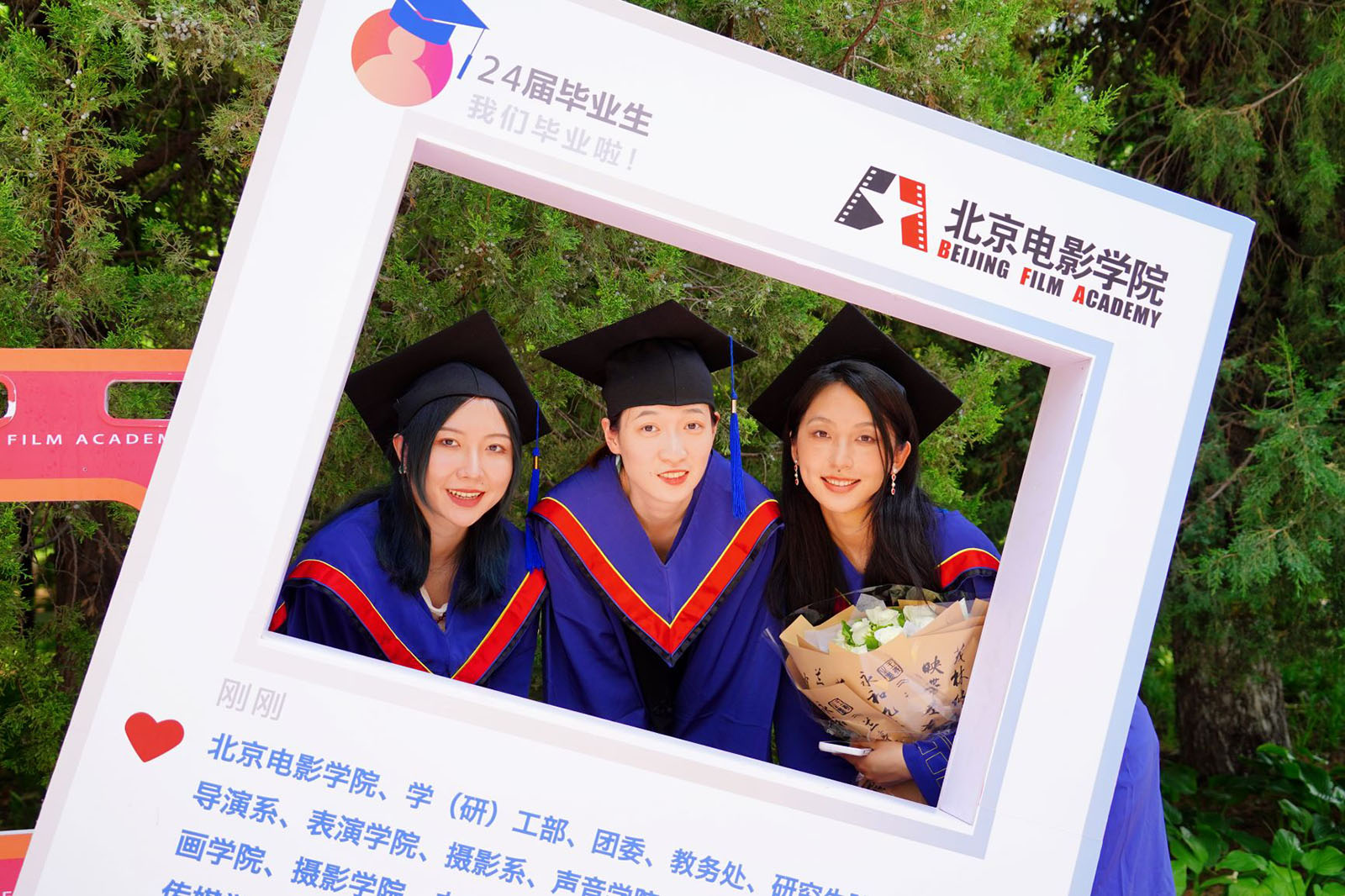
He notes that most young directors begin by making short films — typically under 30 minutes — and it often takes five to 10 years before they get a chance to helm their first feature-length project. "Participating in film festivals has become an effective way for these young talents to gain resources such as investment, and build their careers," Zhang Chi adds.
Interestingly, the friendships and mutual trust formed during university, along with a strong grounding in traditional culture and values in a native-language environment, have become key to many hit productions by young Chinese filmmakers.
ALSO READ: Cashing in on the cinematic view
Shen Ao, director of Dead to Rights, this year's highest-grossing summer film about the Nanjing Massacre, says that the core members of his team are mostly fellow Beijing Film Academy graduates. Years of collaboration have fostered a strong, harmonious working relationship, enabling them to produce films efficiently and with minimal friction.
"Our generation of filmmakers has always carried the mission of bringing Chinese films to the global stage. We must not only showcase Chinese content but also convey the Chinese spirit, continuously integrating and expanding within an international perspective," the director adds proudly.
Contact the writer at xufan@chinadaily.com.cn
