

Contaminated Fukushima nuclear waste discharge tests criticized by environmental experts
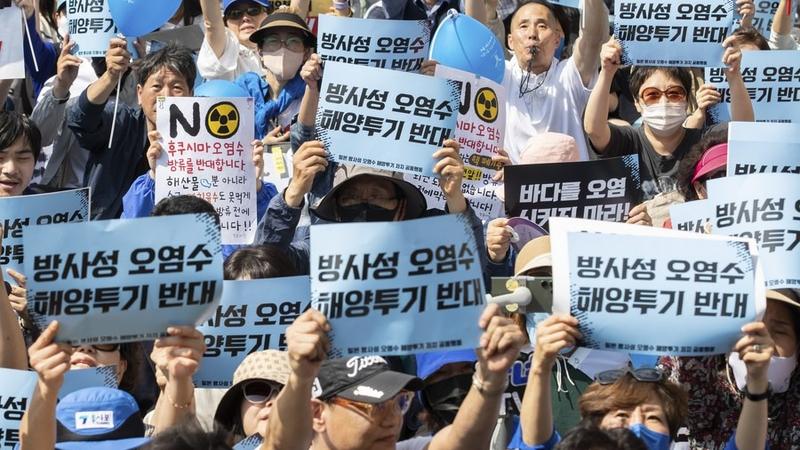 People rally to protest against Japan's planned discharge of radioactive wastewater into the Pacific Ocean in Seoul, South Korea, May 20, 2023. (PHOTO / XINHUA)
Environmental experts in Southeast Asia have expressed concerns over Japan’s plans to release nuclear-contaminated water into the Pacific, noting its possible harmful impact on human health, fisheries, and the livelihood of people living in the Asia-Pacific region.
On June 12, the Tokyo Electric Power Company (TEPCO), operator of the crippled Fukushima Daiichi nuclear power plant, began testing the equipment to discharge nuclear-contaminated wastewater from the plant into the Pacific. This came amid ongoing opposition from domestic experts, civic groups, and fishery organizations.
“Japan’s behavior is a disgrace and their officials seem determined to offer only ‘raw shame’ in response to growing concern over Japanese intentions to turn the ocean into a radioactive sewer,” said Renato Redentor Constantino, deputy chair of the Expert Advisory Group of the Climate Vulnerable Forum (CVF). CVF is a global forum of countries most threatened by climate change.
Constantino said that if Japan wants to keep using nuclear energy it must find a way to properly dispose of nuclear waste. He said Japan is like a neighbor who holds a massive party every week and then dumps everything outside their house, polluting the whole neighborhood.
Rodhial Huda, a long-time member of Indonesia’s Natuna Sea maritime industry, said that if TEPCO dumps the water into the Pacific, “it may also affect our (maritime) area if it is toxic”.
The Natuna Regency is part of Indonesia’s Riau archipelago province in the South China Sea. Fishing is the main livelihood on the islands.
Dwi Sawung, national executive energy and urban campaign manager of the Indonesian Forum for the Environment (WALHI), said her organization is concerned about the potential long-term effect of contaminated water on the maritime food chain.
“Because we don’t know yet, what the long-term effects will be in the food chain cycle. That’s the worry,” Sawung said in an interview with Malaysia’s Sinar Daily.
According to Japan’s national broadcaster NHK, TEPCO started trial operations on June 12, mixing fresh water and seawater that does not contain radioactive substances to confirm whether the discharge equipment can operate reliably. The test run is expected to last for around two weeks.
Shaun Burnie, a senior nuclear specialist with Greenpeace East Asia, said the Japanese government and TEPCO have been giving a “false impression” to the public that significant progress has been made in decommissioning the Fukushima plant.
“But the fact is, the source of the problem — the highly radioactive fuel debris in reactor pressure vessels 1, 2 and 3 — continues to contaminate groundwater,” Burnie said in an earlier interview with China Daily. He said nearly 1,000 cubic meters of water becomes highly contaminated every 10 days.
Burnie added that until the nuclear fuel is isolated from the environment, contaminated groundwater — potentially hundreds of thousands of cubic meters — will continue to accumulate.
Huda, the Natuna fisherman, is hopeful that Japan as a maritime nation and member of the International Maritime Organization “will not carelessly and hurriedly” dump the contaminated water into the ocean.
He said Indonesia, another maritime nation, “should become a leader and not just a follower” in any campaign against the dumping of contaminated wastewater in the Pacific.
Japan’s government has also been criticized by domestic fishermen and neighboring nations.
On June 10, Japanese Industry Minister Yasutoshi Nishimura met with local fisheries representatives to seek their understanding for the planned release in Mito, Ibaraki Prefecture, where representatives expressed grave concerns over the move and said they remain opposed to the release. They said the plan to release the radioactive wastewater over decades is “fueling anxiety about the future and doubts about continuous fishing operations”.
“We stand by our opposition,” Tetsu Nozaki, head of the Fukushima prefectural fisheries association, told Nishimura.
In South Korea, about 2,000 fishermen and civic activists staged a rally in front of the National Assembly in Seoul on June 12 against the plan to release toxic water.
“If the Fukushima contaminated water is safe (as Japan claimed), it can be left in Japan’s soil rather than be released into the ocean,” said Kim Kwang-shik, one of the fishermen who joined the protest rally.
Leaders from Pacific Island countries, including Fiji and Papua New Guinea, are also calling upon the Japanese government to immediately stop its plans for dumping nuclear wastewater into the Pacific.
On March 11, 2011, a massive earthquake and tsunami destroyed the Fukushima nuclear plant’s cooling systems, causing three reactors to melt and release large amounts of radiation. The tanks storing the water used since the accident to cool the reactor cores will reach their capacity in early 2024.
Xinhua and agencies contributed to this story.
Leonardus Jegho is a freelance journalist for China Daily.
Contact the writers at prime@chinadailyapac.com
