

International arts festival kicks off in Shanghai with nearly 400 performances, exhibitions
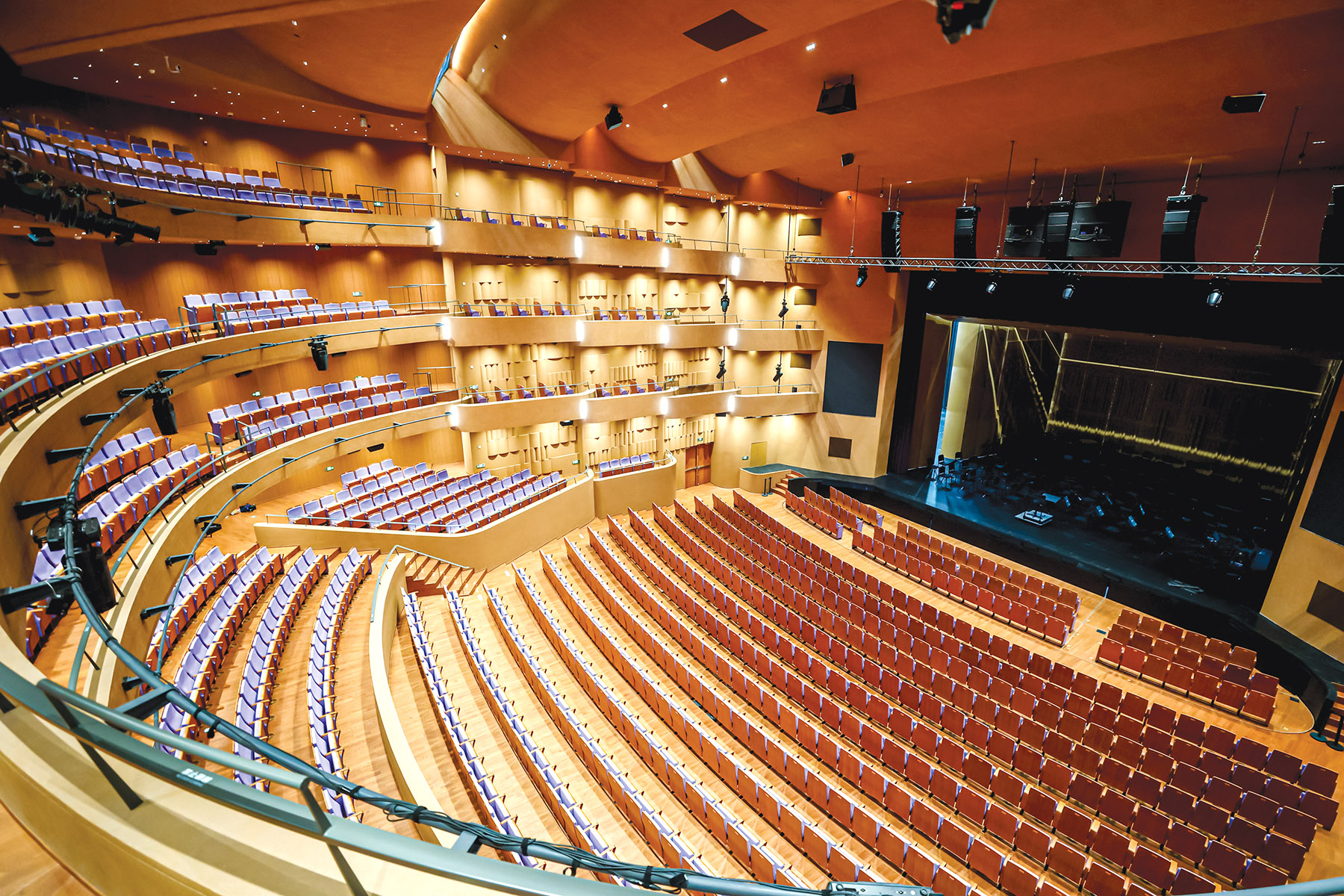
The 25th China Shanghai International Arts Festival (CSIAF) celebrated its launch on the evening of Oct 17 with Shanghai Grand Opera House and Friends, a concert that also marked the new landmark theater’s debut on the eastern bank of the Huangpu River.
Running through Nov 15, the CSIAF will present nearly 400 performances and exhibitions, with around 1,100 events staged citywide. The main program comprises 60 productions across 168 shows, with nearly 90 percent making their Shanghai debut at the festival and 13 staged exclusively in Shanghai.
Among the artists featured at the opening concert was Shi Yijie, president of the Shanghai Opera House, the municipal performance and production opera company.
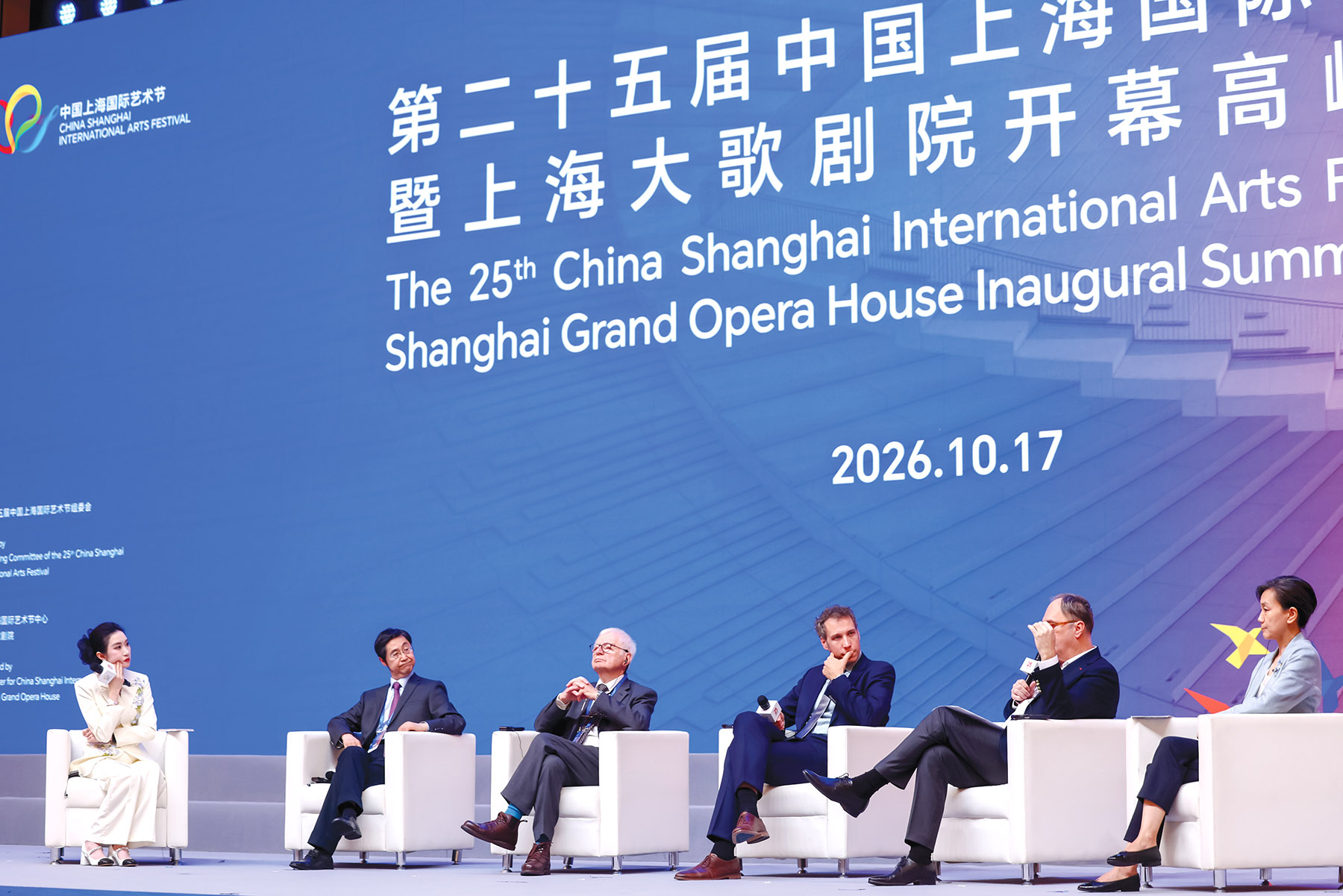
At the 25th China Shanghai International Arts Festival and the Shanghai Grand Opera House Inaugural Summit Dialogue, held earlier the same day, the renowned tenor and Pudong native shared his Shanghai opera memories and excitement for the new opera house’s launch.
He recalled his first encounter with opera in 1999, when the first act of La Traviata was broadcast on television as part of the closing concert of the festival’s first edition.
The 17-year-old was completely overwhelmed. He waited a whole hour in front of the TV for the second act, which never came. He had begun his music training only about a year earlier. That first experience “planted a seed inside my heart, which was the love for music, for bel canto, and for opera,” he said.
Later, he went to Europe to study opera singing and built a successful career at internationally renowned venues, including the Metropolitan Opera in New York, the Theatre des Champs-Elysees in Paris and the Deutsche Oper Berlin. He returned home last year to serve as president of the Shanghai Opera House. As the company celebrates its 70th anniversary this year, Shi looks back on the city’s opera history and cannot help but wonder “what a long way we have come”.
Li Ming, president of the Center for the CSIAF, recalled that the Verdi opera was jointly produced in 1999 by the Royal Opera House in London, the Shanghai Symphony Orchestra and the Shanghai Opera House.
Since then, the festival has continued to bring in outstanding overseas productions and strengthened cooperation both at home and abroad, drawing international audiences while nurturing a strong local audience base, Li said. Shanghai has utilized these commissions to encourage the creation of original Chinese operas.
In more than two decades, Shanghai has steadily deepened opera exchange between China and the rest of the world, transforming itself from a performing center for outstanding global productions into a creative hub of original works and world premieres.
The opening of the Shanghai Grand Opera House further extends the bridge connecting Shanghai with the international performing arts community and advances mutual learning among civilizations, Li said.
At the opera summit, industry leaders from esteemed performing arts institutions, such as the United Kingdom’s Royal Ballet and Opera, the Dutch Royal Concertgebouw Orchestra, and Staatsoper Unter den Linden from Berlin, Germany, shared their observations on the challenges and prospects of opera.
Bogdan Roscic, director of the Wiener Staatsoper (Vienna State Opera) in Austria, spoke about making classical music accessible to young audiences. The company staged Carmen for audiences under 27 and offered heavily discounted tickets. Seventy percent of the attendees had never seen an opera.
“I had no idea how this audience would react,” he recalled, speaking of what he considered the most important show of his career. “What if they all started playing on their phones after 30 minutes? What if they left at intermission?”
“But the energy in the house was electric. At the end, there was an incredible roar, standing ovations and endless enthusiasm,” he said, beaming. “It was the most satisfying experience of my life, because it proved there is nothing old about this art form — its wisdom, its power.
“People just need an opportunity to experience that power for themselves,” Roscic said.
Vienna is widely considered the capital of classical music and offers an incredibly rich fare of theater, concerts and opera via state-subsidized institutions. On the other hand, Roscic noted, “towering heritage can be a barrier when an art form is placed on the pedestal of history, surrounded by invisible rules, heavy traditions, and elitism. It can be intimidating to someone who has never set foot in a theater.”
True accessibility is not just about physical entry, he said. It is about psychological access. “It’s about feeling welcome, about not thinking that you must know everything about the music and the whole ritual before you’re allowed to enjoy it.”
“Our responsibility is to transform heritage from a closed fortress into an open gateway.”
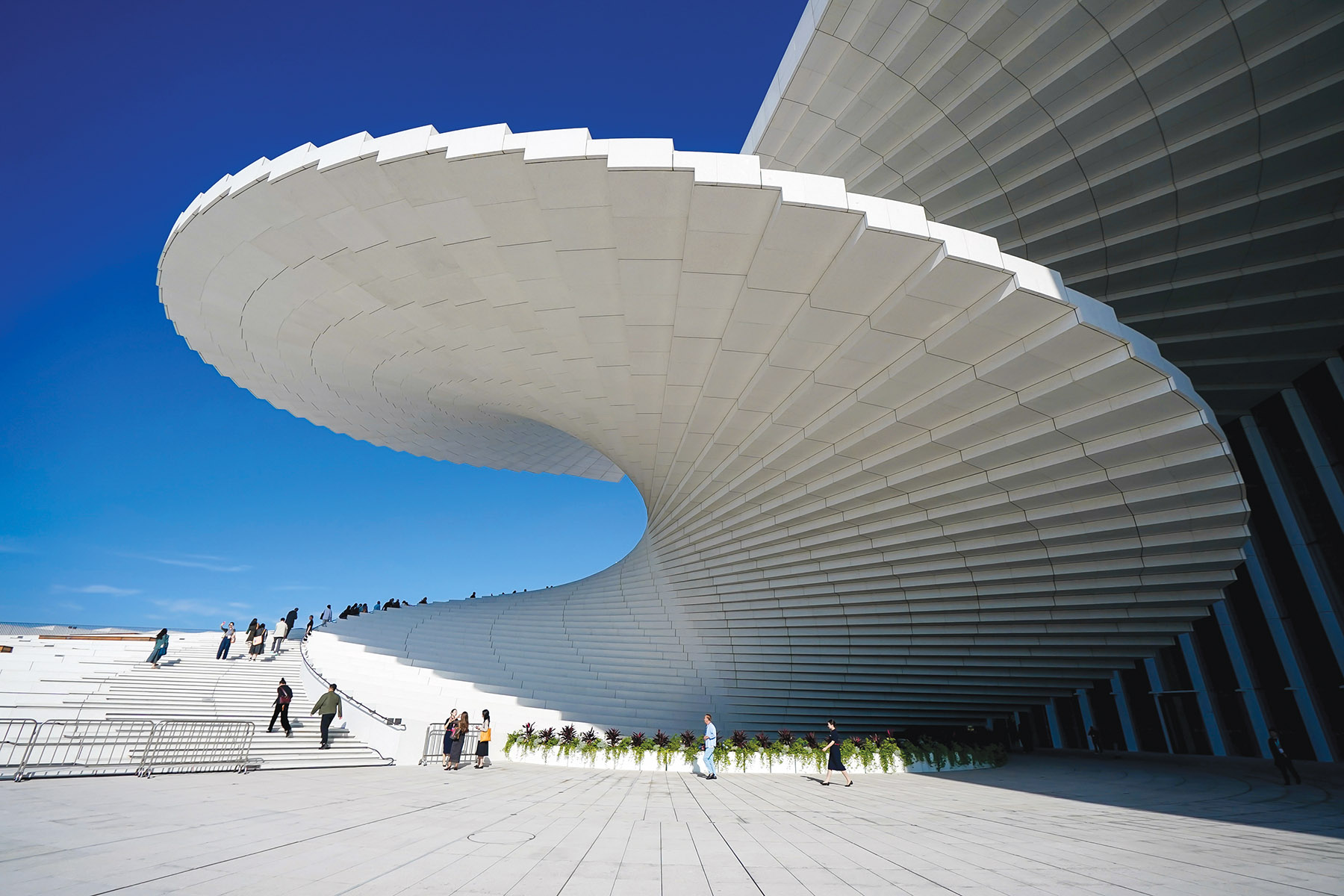
Zhang Xiaoding, general manager of the Shanghai Grand Opera House, offered her insights on how to inspire public interest in opera. A new landmark building like the Shanghai Grand Opera House can be a good start, she said.
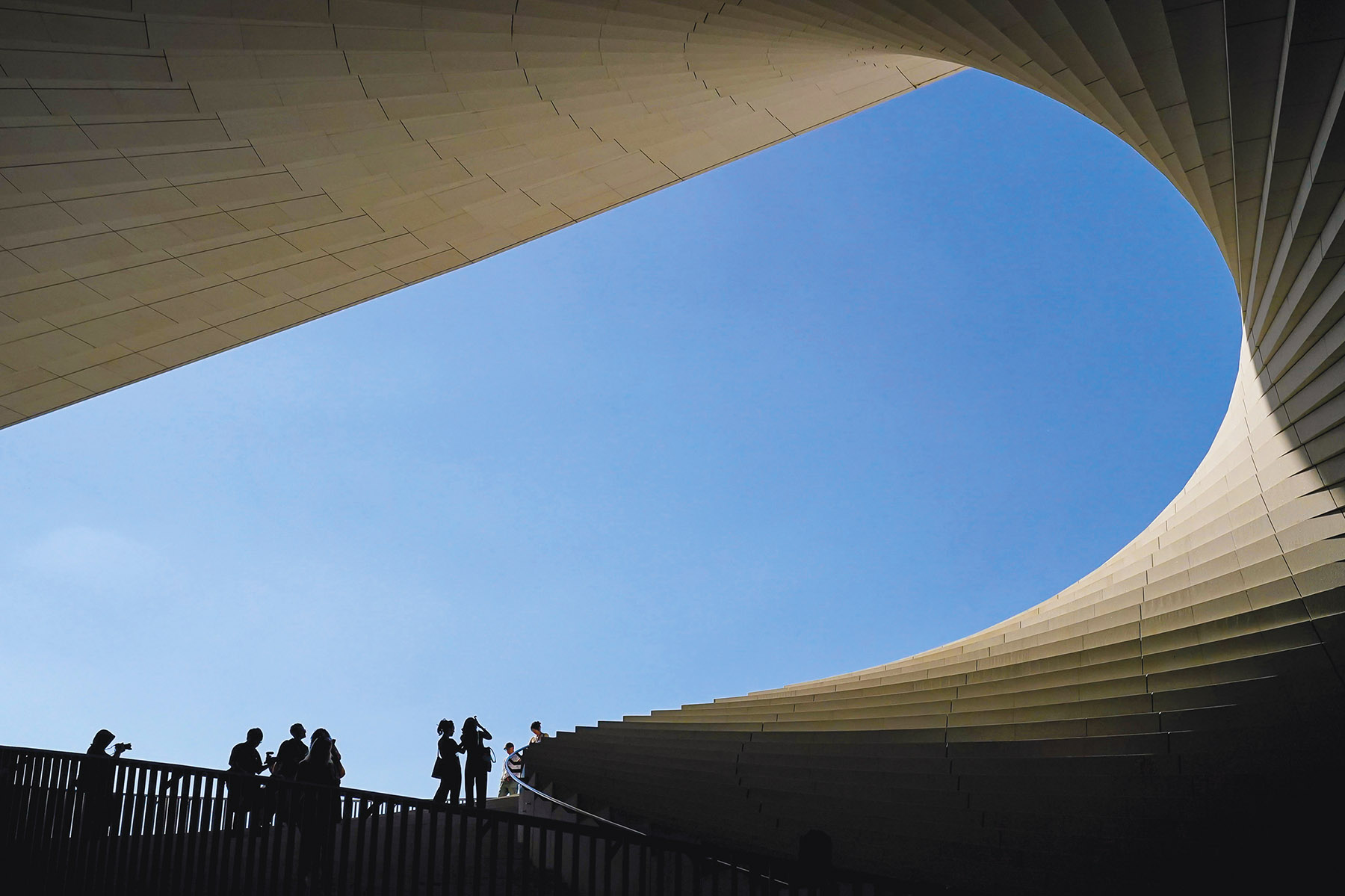
During the National Day holiday in October, before the venue was officially opened, nearly 10,000 people came to look around. The opera house first satisfies people’s curiosity about the Chinese fan-shaped architecture — a curiosity that can grow into an understanding of a theater, and then of an art form, Zhang said.
Zhang also put forward the concept of “Opera House Time”: a performance lasts only two or three hours, but beyond the performance itself, audiences can spend far more time inside the house — meeting friends, visiting exhibitions — turning the theater into a way of life. To draw more people to opera, the venue will also host a permanent exhibition offering a panoramic view of opera’s 400-year evolution and of how productions are made.
The Network of Silk Road Arts Festivals, an integral part of the CSIAF, held its annual conference in Shanghai on Oct 17.
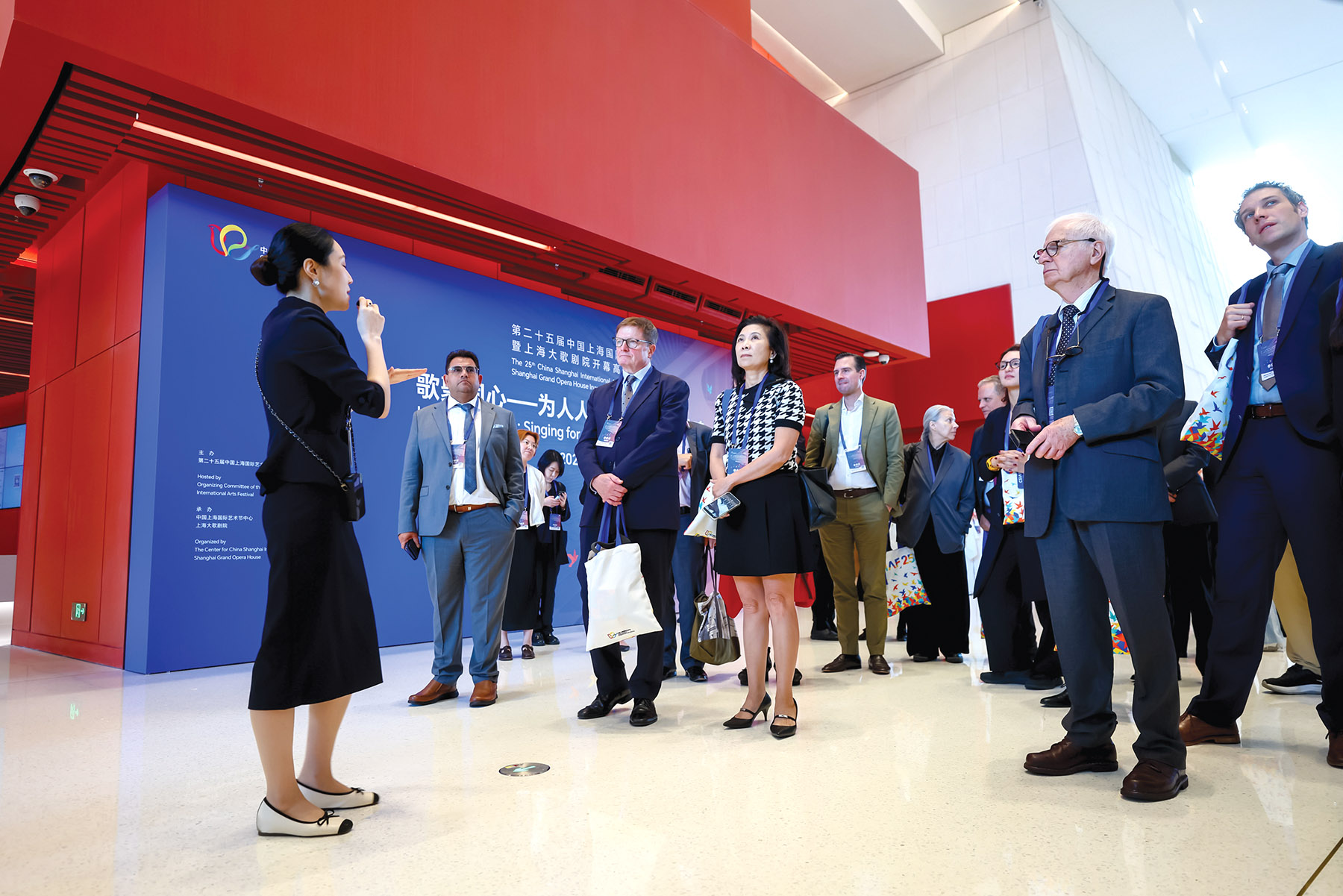
A platform committed to establishing an open, diverse and accessible network and an international exchange and cooperation mechanism that benefits all members, the Network was founded by the CSIAF in collaboration with international partners in 2017. It encourages collaborative programming, co-commissions and co-productions, education, and training programs.
This year, with 20 new members, the Network has expanded to 216 members from 53 countries and regions, further strengthening its global representation and regional coverage.
The Network has played a strong role in promoting cultural exchanges among the member countries, according to Li Ming of the Center for the CSIAF.
This year, 25 Chinese productions have traveled abroad through the Network’s channels: SNO, a neoclassical group centering on ACG music, played in Montenegro in May; Guangzhou, Guangdong province’s Nanguo lion dance troupe took the lion dance — a Chinese intangible cultural heritage — to the Sibiu International Theater Festival in Romania in June; and Chinese pianist Song Siheng toured North Macedonia in August.
A highlight of this year’s conference was the official launch of the recruitment plan for the CSIAF Academy, a global training program for performing arts talent management. Open to performing arts professionals worldwide, the program focuses on five core areas, including artistic creation, stage operation and festival management.
Its first cohort is scheduled to open in Shanghai during next year’s CSIAF. Priority admission is open to Network members and professionals from Belt and Road countries. Future editions will be hosted on a rotating basis in Belt and Road countries — marking a shift in the Network’s cooperation from project exchange to institutionalized talent development.
The conference saw the signing of more than 10 bilateral cooperation agreements, including both renewed and new agreements.
Contact the writers at zhangkun@chinadaily.com.cn
