

 Factories from the 1960s coexist against the backdrop of new, shiny chrome and glass structures in Kwun Tong in a neighborhood of contrasts. (CALVIN NG / CHINA DAILY)
Hong Kong used to be a major supplier of electrical appliances and plastic toys to the rest of the world, and at least 20 percent of those everyday items were manufactured in the factories of Kwun Tong. To house the growing populations who worked on those shopfloors, the government started building public housing in the 1960s, and in less than a decade Kwun Tong became one of the city’s most densely populated localities.
Although much of the manufacturing activity has since moved to the Chinese mainland, many of the industrial buildings from the ’60s still stand, with company names displayed on the facades in giant letters. For years, the local government has been encouraging developers to revitalize these erstwhile sites of manufacturing activity, and make them functional and habitable with facilities on a par with today’s urban living standards. It is not uncommon to emerge from a cargo elevator and enter a maze of corridors behind which might yield an artist’s studio or a theater company rehearsing a play.
Creative types like Kwun Tong. The area has one of the city’s largest concentrations of street art, and pillars holding up flyovers are filled with colorful graffiti. The Kwun Tong promenade, where a giant illuminated sculpture pays homage to the neighborhood’s manufacturing history, is a favorite of local music bands.
Kwun Tong is firmly placed on a path to renewal at the same time as its bond with history remains intact.
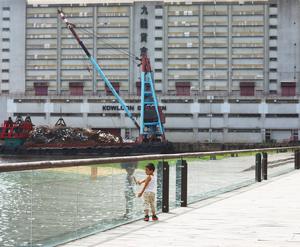 A child looks out across the waters of Kowloon Bay. (CALVIN NG / CHINA DAILY)
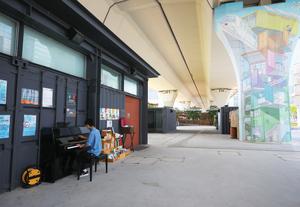 Playing the piano under a flyover in Kwun Tong. (CALVIN NG / CHINA DAILY)
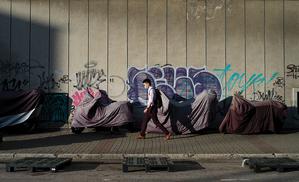 Kwun Tong’s concentration of street art is among the highest in Hong Kong. (CALVIN NG / CHINA DAILY)
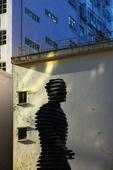 A giant sculpture outside an industrial building in Kwun Tong. (CALVIN NG / CHINA DAILY)
 Jams are an everyday occurrence on Kwun Tong’s congested streets. (CALVIN NG / CHINA DAILY)
 Messages fill a factory wall in How Ming Street. (CALVIN NG / CHINA DAILY)
