

UN climate conference ends without deal amid divisions over fossil fuels
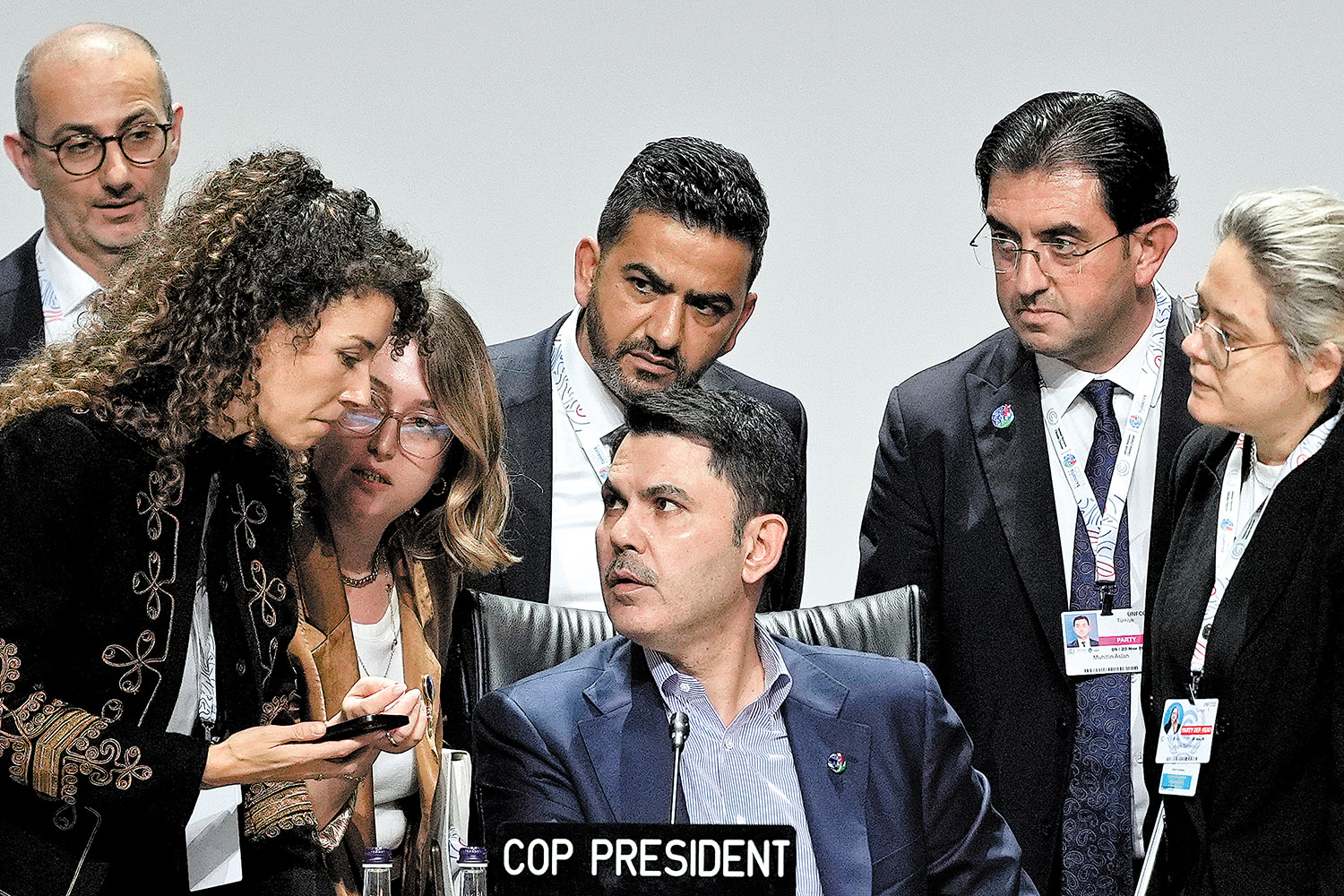
The 31st session of the Conference of the Parties to the United Nations Framework Convention on Climate Change (UNFCCC), or COP31, failed to reach consensus on the Antalya Pact on Nov 22 in Antalya, Turkiye.
After more than two weeks of negotiations went two days into overtime, COP31 President Murat Kurum said at the closing plenary that he could see there was no agreement, confirmed he would not advance any new text, and left the stage during speeches by country representatives.
“There is nothing to do, we did all that we could. Since there are 196 countries, they will make the decision, and we will respect their decision,” he said.
The last time UN climate talks failed to see a deal adopted by all was in Copenhagen in 2009.
While a blow to efforts to ratchet up international action, the failure to agree on a political declaration in Antalya does not erase the obligations agreed upon by previous summits or remove the technical and legal frameworks governing multilateral action against climate change.
Many delegates from developing countries arrived in Antalya hoping that COP31 would deliver stronger support for mitigation and adaptation. However, as the negotiations dragged on, those hopes increasingly gave way to frustration.
The mood was already visible at the Nov 20 plenary session, which began after 9 pm, more than an hour late. Shortly after the session opened, a protester interrupted Kurum.
Standing on a chair with a red noose around his neck and wearing a shirt that read “You are killing the future”, the protester shouted: “There’s no money. The Global South cannot wait,” and “You are doing nothing, nothing at all.”
Security officers escorted the protester from the hall. The scene reflected the deep divisions among participating countries over fossil fuels, climate finance, and the direction of global energy transition.
Some NGOs warned that the conference risked becoming one of the most disappointing COPs in recent years.
In an open letter to Kurum and Chris Bowen, COP31 president of negotiations, dozens of nongovernmental organizations worldwide said: “The Global South is being abandoned.” They accused developed countries of blocking progress and coming to the conference without new financial commitments.
“Without finance, communities on every front line will be sacrificed,” they said.
Finance remained one of the most difficult issues. An earlier draft included language on tripling adaptation finance to at least $120 billion a year by 2035. But the second draft removed the explicit target, while the last proposal failed to provide a clear baseline or detailed delivery pathway for adaptation finance.
Developing countries had demanded greater clarity on how much money would be provided, by whom, and on what terms.
The last draft also showed how the presidency sought to avoid confrontation over fossil fuels. It retained a proposal to raise electricity’s share of global final energy consumption to 35 percent by 2035.
Under the UN climate convention, parties must periodically assess the adequacy of the landmark 2015 Paris Agreement goal of holding warming below 2 C while pursuing efforts to limit it to 1.5 C above preindustrial levels.
The review is intended to consider the latest science, observed climate impacts, and progress in implementing commitments. According to the UNFCCC, the review should take place at least every seven years.
Addressing the Nov 20 plenary session, China expressed serious concern that some parties were seeking to weaken or end the mechanism in the name of streamlining and efficiency.
It said the review was an established process and called on parties to discuss the timing and modalities of the third review at COP32, while drawing on the latest scientific findings and avoiding duplication with the global stocktake — a comprehensive assessment of progress in achieving the Paris Agreement goals.
Speaking for the Arab Group, Saudi Arabia warned that efficiency and complementarity must not become a justification for abandoning an established process. The group called for agreement on the continuation of the third and subsequent reviews, with their modalities and timeline to be discussed at the next COP meeting.
Contact the writers at houliqiang@chinadaily.com.cn
