

When senior United States Treasury officials met with executives from leading American financial institutions in Hong Kong on the sidelines of the APEC Finance Ministerial Meeting 2026, the gathering highlighted a striking contrast between political rhetoric and economic reality. While Washington often speaks of “de-risking” and “strategic competition”, policymakers continue to engage Hong Kong as a critical vantage point for understanding regional capital flows, financial conditions and business sentiment.
 Yet the debate over Hong Kong’s future often focuses on what the city stands to lose from a more fragmented world. Less attention is paid to the reverse question: What would the US lose if Hong Kong ceased to function as one of Asia’s leading international business hubs? The answer helps explain why, beneath recurring political frictions, economic engagement remains remarkably resilient.
First, the trade surplus America values. Hong Kong occupies a distinctive position in America’s global economic relationships. Unlike many of Washington’s major trading partners, it is one of the few economies with which the US consistently enjoys a substantial merchandise trade surplus.
The relationship remains strong in 2026. According to US Census Bureau data, the US recorded a goods trade surplus of $37.7 billion with Hong Kong in the first nine months of the year, already exceeding the full-year surplus of $28.5 billion in 2025.
This surplus reflects more than accounting outcomes. Hong Kong remains an important market for high-value American exports, including agricultural products, medical equipment, luxury consumer goods, aerospace-related products and professional services. At a time when trade deficits dominate political debate in Washington, Hong Kong continues to generate tangible commercial benefits for American exporters and workers.
The resilience of bilateral trade is equally noteworthy. Hong Kong’s exports to the US rose 63.4 percent year-on-year during the first eight months of 2026, while the US remained Hong Kong’s second-largest export market.
These figures suggest that, despite friction, businesses on both sides continue to find value in economic engagement. Yet trade alone does not explain Hong Kong’s enduring relevance. Its greater importance lies in the institutional functions it performs for the broader Asia-Pacific economy.
Second, the financial interface America needs. If trade provides the foundation of the relationship, finance forms its strategic core. Hong Kong hosts 13 licensed and restricted-license US banks and 20 US-controlled insurance companies, while cumulative US direct investment exceeds $53 billion. Their continued presence reflects confidence in the city’s deep capital markets, common law system, free capital flows and world-class professional services.
The critical question is not whether alternative financial centers exist. It is whether another city can replicate Hong Kong’s unique combination of institutional strengths. In an increasingly fragmented global economy, Hong Kong serves as an interface between different legal systems, regulatory regimes and business cultures, allowing companies to operate across jurisdictions with greater efficiency and certainty.
As businesses diversify supply chains and expand across multiple Asian markets, this role becomes more valuable. For many international firms, Hong Kong is no longer merely a gateway but a trusted financial interface linking different markets, regulatory systems and pools of capital across Asia. For Washington, reduced engagement with Hong Kong would mean diminished visibility into one of the world’s most dynamic economic regions.
Third, the headquarters hub American business chooses. Perhaps the strongest evidence of Hong Kong’s continuing relevance comes not from governments but from businesses themselves. Approximately 1,400 US company offices continue to operate in Hong Kong. According to the American Chamber of Commerce in Hong Kong’s 2026 Business Sentiment Survey, 92 percent of respondents reported no plans to relocate their headquarters or operations elsewhere during the next three years. Confidence in Hong Kong’s rule of law rose to 94 percent, up from 83 percent a year earlier, while more than half expressed optimism about the business outlook for the year ahead.
These findings matter because they represent revealed preference rather than political rhetoric. Businesses make decisions based on profitability, competitiveness and long-term opportunity. The persistence of American corporate presence suggests that Hong Kong continues to offer advantages that firms are unwilling to abandon.
The increasingly popular “China+1” strategy illustrates the point. As companies diversify production across Southeast Asia and other emerging markets, they still require a sophisticated headquarters economy capable of overseeing dispersed operations and managing cross-border complexity. In many cases, diversification increases the need for such a hub rather than reduces it.
Hong Kong’s future role therefore lies less in being a traditional gateway and more in serving as the headquarters hub from which multinational companies coordinate investments, supply chains, talent and risk management across Asia.
However, the resilience of US economic engagement with Hong Kong should not breed complacency. Structural importance does not automatically guarantee future relevance. In an era of growing competition among global cities, preserving existing strengths is no longer enough. If Hong Kong wishes to remain indispensable to international business, four priorities stand out.
First, expand practical city-to-city cooperation. Federal-level disagreements need not prevent cooperation where mutual economic interests remain strong. Hong Kong should deepen engagement with major US cities, business associations and state-level economic actors through regular dialogues focused on finance, innovation, sustainability and urban development. Such channels can help insulate commercial cooperation from broader political differences while strengthening business links.
Second, strengthen Hong Kong’s role as an institutional and data bridge. As commerce becomes increasingly data-driven, Hong Kong has an opportunity to become a trusted platform for cross-border data governance, compliance management and regulatory coordination. In a world characterized by competing rules and standards, the ability to bridge different systems may become one of Hong Kong’s most valuable competitive advantages.
Third, consolidate its position as a global capital safe haven. Hong Kong’s commitment to monetary stability, free capital flows and open financial markets remains one of its greatest strengths. At a time of heightened global uncertainty, these characteristics continue to attract international capital seeking both opportunity and security. Protecting these institutional advantages is essential to maintaining long-term confidence.
Fourth, become the command center for regional supply chains. Supply chains are becoming more geographically dispersed but also more interconnected. Rather than viewing diversification as a threat, Hong Kong should position itself as the headquarters economy that helps multinational companies coordinate production, logistics, financing and risk management across Asia. Its professional services ecosystem and international orientation make it well suited to play that role.
Taken together, these trends point to a window of opportunity. While politics often focuses on differences, economic actors continue to respond to incentives, efficiency and institutional strengths.
For the US, Hong Kong remains more than a market and more than a financial center. It remains a critical platform through which American capital, corporate networks and commercial interests engage with Asia.
The question, therefore, is not whether Hong Kong still matters to America. The evidence suggests it does. The more important question is whether Hong Kong can build on that foundation and strengthen the unique role that no other city easily replicates: connecting capital, commerce and corporate decision-making across Asia’s increasingly fragmented economic landscape.
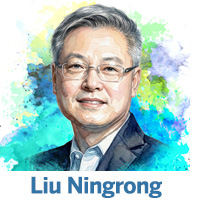
The author is deputy vice-president (international strategy) and professor of globalization and business at City University of Hong Kong.
The views do not necessarily reflect those of China Daily.
