

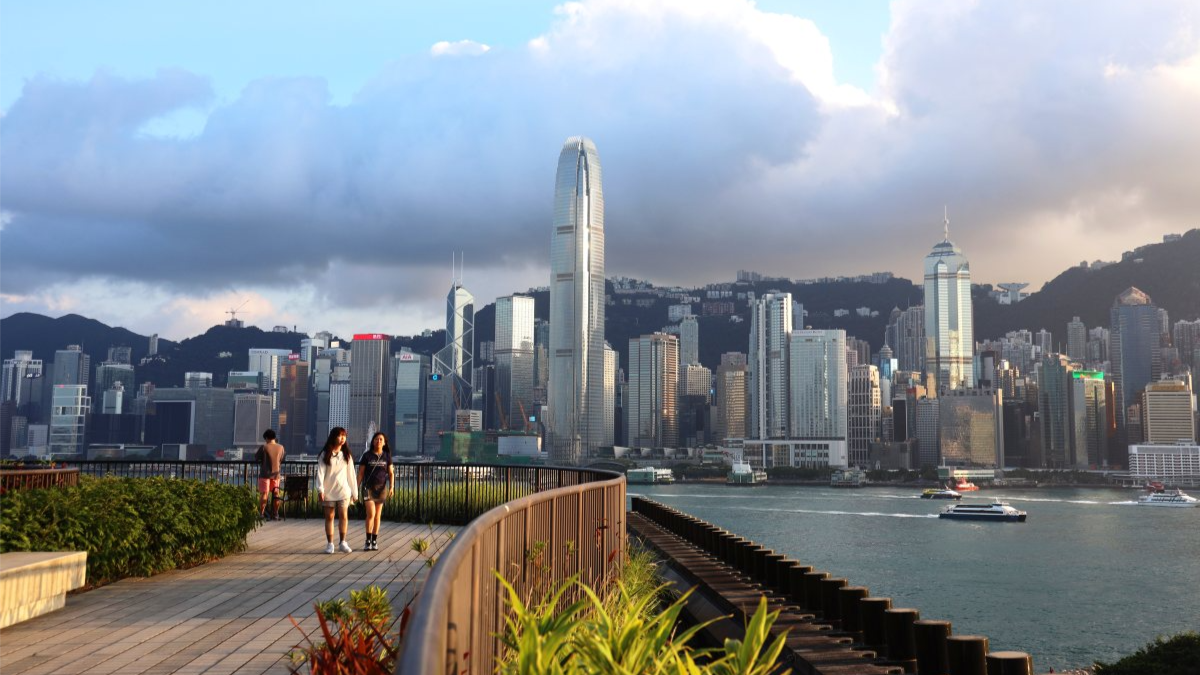
Hong Kong-based diplomatic missions of countries involved in the Belt and Road Initiative (BRI) have hailed the city’s landmark first Five-year Plan for Economic and Social Development (2026-30) and the 2026 Policy Address, saying the blueprints have charted a clear roadmap for the city to leverage its advantages under “one country, two systems”.
They said they’re ready to strengthen ties with the special administrative region in offshore renminbi transactions, professional services, higher education and other sectors.
The inaugural five-year and the Policy Address, delivered by Chief Executive John Lee Ka-chiu on Sept 16, clearly set out the SAR’s direction for leveraging the unique advantages of “one country, two systems” with the motherland’s support to link up with the world. This includes deepening high-quality cooperation under the BRI and making Hong Kong a preferred partner and cooperation hub for economies taking part in the initiative.
READ MORE: Chan: HK tapping into bay areas to help boost Asia-Pacific growth
In a written reply to China Daily, the Consulate General of Pakistan in the HKSAR called Hong Kong’s steps “visionary, practical and firmly grounded” in the city’s unique strengths under “one country, two systems”.
The SAR’s integration into China’s overall development would strengthen its continuation as a global innovation and talent hub, it said.
The mission noted that Pakistan is teaming up with Hong Kong in key sectors like finance, logistics, shipping, information technology, and digital assets. It believes that measures to strengthen the SAR’s offshore renminbi platform, world-class professional services, and international capital markets will win global confidence.
“Hong Kong’s focus on building a Muslim-friendly environment is also commendable,” it said, reiterating that the plans can enhance the city’s competitiveness, create opportunities for all and contribute toward shared prosperity.
Vietnam’s Consulate General in the HKSAR expressed strong interest in deepening cooperation with Hong Kong. It said the blueprints have more specifically defined Hong Kong’s role in connecting with the Chinese mainland, the Guangdong-Hong Kong–Macao Greater Bay Area and the world.
It said this represents a notable shift in Hong Kong’s approach to development planning, with the government taking a more proactive role in promoting development and addressing social issues.
ALSO READ: Wong: HK can turn global cooperation vision into action
On Hong Kong shifting its focus from “volume to value” in logistics and maritime services, the consulate general said Vietnam and Hong Kong have many complementary strengths. For instance, Vietnam has significant demand for infrastructure development, technology, logistics, and stronger innovation capacity, while Hong Kong possesses advantages in research, finance, professional services, international logistics, and connectivity with the Greater Bay Area, the Association of Southeast Asian Nations and wider global markets.
It said Vietnam is accelerating its shift toward an innovation-driven economy by prioritizing artificial intelligence, semiconductors and digital transformation alongside major infrastructure investments in railways, airports and seaports -- key areas in which Hong Kong and Vietnam share strong complementary strengths.
The Indonesian Consulate General said it’s closely monitoring how Hong Kong’s new blueprints can deepen its economic relations with Southeast Asia, including its plan to advance connectivity with ASEAN’s Single Window mechanism to boost digitalization of trade documents.
READ MORE: Bay areas initiative will foster deeper regional ties
Bank Indonesia, the Hong Kong Monetary Authority and the People's Bank of China signed a memorandum of understanding in June this year to establish a cooperation framework aimed at promoting bilateral transactions in Indonesian rupiah and offshore Chinese renminbi.
The Indonesian consulate general said it’s ready to support existing bilateral agreements in the financial sector, adding that Hong Kong’s reputation as an international financial center, as well as its world-class higher education institutions, have attracted talented Indonesian youths to the city.
“We’re keen to see stronger people-to-people contacts in the field of research and academia as the Northern Metropolis University Town continues to develop, and the annual quota for fellowships, as well as scholarship programs, are increased,” it said.
Contact the writer at atlasshao@chinadailyhk.com
