


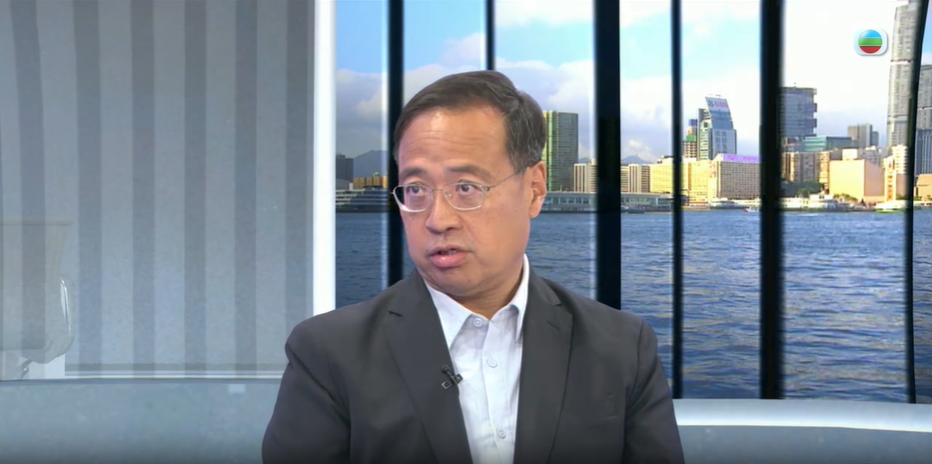
Michael Cheng, president of the Hong Kong, China Tennis Association, is on the show this week, to talk about the future of tennis development in Hong Kong and how we can build a tennis destination.
Check out the full transcript of TVB’s Straight Talk host Eugene Chan’s interview with Michael Cheng:
Chan: Good evening, and welcome to Straight Talk. I'm Eugene Chan, and our guest this week is Michael Cheng, president of the Hong Kong China Tennis Association. Cheng is a lawyer by profession, with more than three decades of expertise in the financial and legal sectors, including senior legal roles at PIMCO and Morgan Stanley Investment Management. But beyond finance, he has been a driving force behind Hong Kong's tennis development. He serves on both the Elite Sports Committee and the Kai Tak Sports Park Advisory Committee, and has been instrumental in bringing international tennis tournaments to Hong Kong.
Michael, welcome to Straight Talk for the second time.
Cheng: Thank you for having me, Eugene.
Chan: I think last time we had a chat on the Victoria Tennis Center, and today now we're at the TVB studio, and I'm sure you're gonna tell us a lot more about the new development coming up soon. But before that, I want to congratulate you being the president of the Hong Kong China Tennis Association because it has been around for more than 100 years.
Cheng: Right.
Hong Kong’s tennis ambitions
Chan: And now we are hosting more than 10 events per year that is being internationally recognized. So, the title of the show tonight is “How Far is Hong Kong Away from a World's Top Professional Tennis City?” Am I asking too much, or we are very close?
Cheng: You're not. I think if you want to think about a tennis city, a tennis destination, tennis is actually a credibility sport, as I say. There are a couple of ingredients that you need to think about. Do we have infrastructure? Do we have recognizable events? Do we have a system in place to build players? And do we have a local hero? And if you think about all that, if you put it together, that's the system and the methodology that we need to apply. I think if you apply the right methodology, we can be a very recognizable tennis capital of Southeast Asia for sure. So, I think it is close and also it depends on how we apply the methodology to succeed.
Chan: Right, Michael, I mean, I've known you for a while, and I found that you have a very strong ambition to bring tennis to a high standard in Hong Kong. You’re very keen. But when we talk about world leading cities in tennis, you think of Melbourne, London or even Shanghai. And, and you're very keen. Um, but when we talk about world's leading cities of tennis, we think of Melbourne, you think of London, or even Shanghai. So, what do you think Hong Kong can do to stand out from these cities so that can be more unique, especially we have a first five-year plan for Hong Kong?
Cheng: I think a lot of these cities have a head start, for sure. Some of these are Grand Slam nation and Grand Slam destinations. That being said, within the annual calendar, in tennis the question mark is about what do we need in order to build that tennis narrative and the tennis content? To me, it means that we need to have a very sound and robust curriculum to build players. You want to attract talent to be competing in Hong Kong at all levels. Obviously the pinnacle is to have ATP and WTA events. But that's just the sort of the icing on the cake. If you really want to build a destination, a sound tennis narrative, I think you need to build from ground up. So, meaning that the foundation has to be there. You need to have a method to be, bring up players, and then you need to have a very clear pathway to building bigger events. And that bigger events bring the narrative and the vibe of the city, and you bring them back into contributing to the foundation.
But ultimately, as a federation, a lot of federation talks about the mission. It's all about more players and better players. But I actually think of it as a little bit differently, because if you think about the Hong Kong regulatory construct, if you think about social responsibility, I think there's a lot a federation, a lot more a federation can do. I think tennis as an international sport can be a life skill. It's the problem-solving skills, the narrative of being able to have worldly views, right? So, you actually think ... I should, I think about the Hong Kong Tennis Association almost like an educational platform to build a better generation. So, that's my second pillar. The third pillar for me is that, can we use tennis as a credibility sport to grow on the credibility of Hong Kong as a destination image?
Chan: Right. As a metropolis, as an Asia world city, where can tennis contribute?
Cheng: But if you think about all the financial hubs around the globe, be it London, Shanghai, Tokyo, Singapore, Paris – they all have a very rich tennis content, and I think that is where I need to be.
Chan: Just now I can kind of identify the three issues you have talked about hosting good tournaments. We have developed some elite players and more importantly, building a complete tennis ecosystem. So, do you think we can realistically achieve all these three?
Cheng: I think so. I think Hong Kong is not short of resources. I think what we need to think about is whether we have the right method to apply. And that's my job to be able to research what is the global standard and apply a local identity, and make it work, both on the pathway in building players …
Chan: Right.
Cheng: … and also in terms of tennis content and building professional events. But I do think that we have the resources to be able to do it, and then what's left of it is about the execution competence.
Chan: Right.
Cheng: And, we need to work that out.
Chan: Right.
Building a world-class tournament city
Chan: President, I mean, being a keen top tennis fan myself, I remember watching Jimmy Connors and John McEnroe many years ago in Hong Kong, in the many Opens. But then for various reasons, a lot of the tennis tournaments has left Hong Kong. And it's only under your presidency that the tournaments now has expanded, as you said, from WTA women 25 and 250, as well as the Bank of China ATP 250.
Cheng: Right.
Chan: I want to thank you wholeheartedly so we can see some great players in Hong Kong. With all these tournaments, with attracting all the high-profile players, do you see this helping Hong Kong to establish ourselves more internationally than before?
Cheng: Yes, I do think so. It is a process. Building players takes eight years, from the age of 10 to 18, building professional events, it's a long-term undertaking. If you think about Shanghai, Beijing, it takes two decades to build, and I think that we need to be patient in our execution. If you think about 2013, we had no professional tournaments in Hong Kong, so we started with one, and a couple of years later we started winning awards. And three years ago, we started having ATP. And the narrative there is, if you think about Asia having both men and women event, we are the third city behind Beijing and Tokyo, having both men and events in the same city, right? So that's a progress. And last year, we also introduced UTS, which is almost like a live version of tennis. So, if you think about that, a men's and a women's and a UTS in the same city, there's only London and Hong Kong.
Chan: Right.
Cheng: But my ... The point I wanted to make is that it takes time to build a tennis narrative. One thing is about building good events, but the other thing is about building destination image. People think about Hong Kong, a certain part of the year. People think about Hong Kong in delivering a very, a sound, clear brand of tennis. But now people think about Hong Kong as the season opener. People think about coming to Hong Kong before the break, for the season and coming back in December again, right? People think about Super October. People think about Hong Kong doing something. There are a few guys there trying to be a bit novel, bring in different tennis content, and just to be a thought leader in the tennis world.
Chan: Right.
Cheng: We're never gonna be a Grand Slam nation, but we can be a very, very thoughtful, novel tennis capital of Asia.
Chan: Right. When you say that, being a very novel capital, tennis capital of Asia, what is the tournament that we have to hold? Is UTS, I mean, the one? Or we have to develop actually our own tennis tournament? Because when you said ... I mean, all the viewers will know the Grand Slam.
Cheng: We have the Australian Open, Wimbledon, US Open, and the French Open. I mean, we can't have that. So, UTS is a start. Can Hong Kong develop such an open that’s being the best in the world? Or can Hong Kong develop such an open that it's been the first in the world? Try to benchmark against other major financial hub. Trying to benchmark against other major financial hubs, I think the aspiration is that we really need to upgrade our events, both on the men's side and the women's side. But we also need to think about the infrastructure, and that is the reason why we've been working very, very closely with the government in developing a plan to redevelop the current sort of tennis stadium. That is hugely novel. If you think about Causeway Bay as a tennis facility in the middle of the town. Try research - Is there another tennis facility right in the mid, located in the middle of the town? There really isn't.
There are about five in the world, but if you apply the lens of being in a financial hub in a major financial city or Asia world city, there's really only Hong Kong having very, very major tennis facility right in the middle of the town. To me, that is a novelty, and that's the brand of Hong Kong, and that is the reason why top players remember coming to Hong Kong. They want to come back to Hong Kong. So we need to bring out the themes. The reason why tennis is a fermented sport to start with, it gives us the ability to be able to grow the Hong Kong tennis brand. Okay. How do we profile Hong Kong's novelty? And Hong Kong's novelty is that we have something right in the middle of the town …
And we have the competence and the aspirations to do a lot more. And what we want to aspire to is to deliver very good events at multiple events, and that contribute to the Hong Kong tennis season.
Chan: Right. Michael, let's take a break now. We'll be back with more Straight Talk.
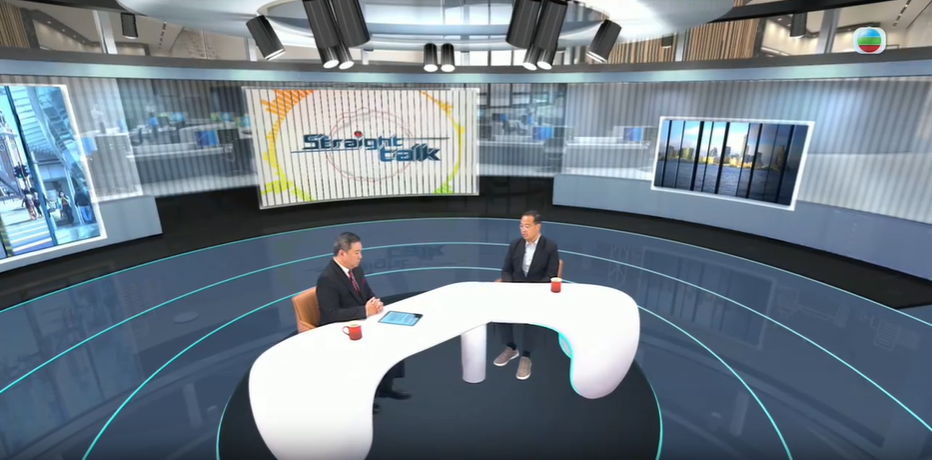
Chan: Welcome back, viewers. Michael Cheng, president of the Hong Kong China Tennis Association, is in the studio this evening, sharing his vision for Hong Kong to be a distinctive international tennis destination.
Producing HK’s next tennis stars
Chan: So, Michael, I mean, at the last part of the … part one of the show, you have categorically said that Hong Kong is very special, that we have a tennis center right in the middle of a financial center like Hong Kong compared to other places. I was gonna ask you, I mean, if you wanna do more for Hong Kong, even for more novelty, you need infrastructure. And I read in the news that, Secretary Rosanna Law (Shuk-pui) and actually your good self has mentioned we're gonna have a new tennis center. To me, it's quite a pleasant surprise because with Kai Tak, which is a game changer, we see a lot more tournament happening over there. And people are very thrilled, and the whole of Hong Kong is very happy. Why suddenly tennis has the blessing of doing this? I'm sure you have worked very hard, but share with the viewers what are your narrative behind it. I mean, why would the government suddenly want to also develop tennis on top of Kai Tak?
Cheng: Well, I think there are a couple of reasons. I talked about Causeway Bay right in the middle of the town, and in fact, if you couple with the Causeway Bay precinct, there's a lot of tennis clubs there. If you put it all together, that narrative is that you have a tennis vibrant community in the middle of the town that contribute to that international event. And we really should be thinking about Victoria Park not just as a competition hub, but also a training hub, and a training hub to attract top talent to be training in Hong Kong. So that would be the first point. Now, if you think about Kai Tak, it's a success story from a tennis infrastructure perspective.
I mean but if you start comparing with major cities in Japan, Beijing, Shanghai, London, you will see that there are indoor facility and also outdoor facility. You always benefit both from having an indoor capability and also outdoor capability. Take London, for example. You have the O2 Stadium, you have the Wimbledon. In the US, in New York, you have Madison Square Garden and also Flushing Meadows. I think we really need to sort of try to copycat this to ... and try to reverse engineer what is the success story and what is contributing factor to those success stories. And you try to mimic the points and apply local identity, and that's why we have Kai Tak, and that's why we have Victoria Park Tennis Stadium.
Chan: Right.
Cheng: But … Just a wild thought. You mentioned in the Causeway Bay precinct is where the tennis has been very vibrant over the last many decades. It makes me think of the Chinese Recreation Club, which has many, many tennis courts.
Chan: Yeah.
Cheng: Have you thought of combining that together in support of the tennis center that makes this a real special place in, I'm sure, even amongst the GBA? And I'm sure that that's something that we need to think about, because it's not just about Chinese Recreation Club. There are a couple of clubs, within that precinct. If you add all these courts together, probably you are by per capita within a very short … small gross area, you realize that there's a lot of courts, and there are a lot of clubs contributing to that narrative.
And I think it's just that, to me, I call it the tennis campus. Somebody call it the tennis precinct. But I do think that from a competition venue perspective, training perspective, sharing perspective, community engagement, the leagues, engaging local schools, you put it all together, it's a very, very robust tennis program if you do it right. And I think this is where we're heading.
Chan: So, are we doing it right now?
Cheng: We are going to do it right. I think it's a work in progress, but we're heading in the right direction.
Chan: Right. And just now, I mentioned the term GBA, I mean, the Greater Bay Area, which we all often mention it on Straight Talk. How will you see Hong Kong now amongst all the GBA cities in terms of tennis? Are we way in front, or are we ... can we lead them along, or can we work together with them?
Cheng: I think GBA is a narrative where we should be working together with each other, right? So, Hong Kong is part of the China tennis season, and GBA has a couple of professional tournaments. I think we should be working together.
Chan: Right.
Cheng: We should cross-pollinate, cross-fertilize, and work with each other in not just on the event side, but also on the training side, where the national team would be training in Nan Sha, for instance. We should be collaborating and cross-training with the national team. And I think by being not exclusive, but being inclusive and working with each other, you stand a better chance of producing better events and also better athletes.
Chan: Michael, I'm sure the viewer's going to be thinking, I mean, if we're gonna do a lot of good tennis events in Hong Kong, which is fantastic, but each event only lasts for a week. So far, we have like three to four major events that only last count to four weeks of the 52 weeks we have in a year.
Cheng: Yeah.
Chan: How do you see that we can have a lasting value so that everything can be sustained? Because we all know that we have to be realistic. Apart from sports, apart from the fun, they need to be financially viable. The corporate has to be able to sort of have some profit from this. So how do you see all that sort of work together?
Cheng: That's a very good question, Eugene. When you think about events, yes, it's a one-week event, but there's a lot of lead-up. There's actually a technical term for it in the tennis world, we call it festivalization. Right? So how you build events, but at the same time, there are lead-up to the events, and there are lead-up training events, and other activation that lead up to the pinnacle and the final stop of the calendar, right? So, we shouldn't be thinking about just one event, but you should be thinking about the whole lead-in from a community engagement perspective, from a junior competition perspective … cross-pollination.
Chan: Sure.
Cheng: Conferences. So, I'll use WTA 250 as an example, because that's the event coming up in two weeks' time. We have players coming through earlier to train. We are collaborating with Guangzhou because there's the event, which is the week before. We actually have international conference, a coaching conference happening at the same time. We're working with the WTA on collaborating and promoting female coaches, and having conferences and workshop at the same time. You put it together, that's what I mean by the ball boys collaboration, our students, our kids all contributing, coming to support the events. You put it all together, this is what I mean by a tennis campus.
Chan: Right, let's move on to another area that you've mentioned, that in order for Hong Kong to be successful, we need a local hero. It looks like we have one now.
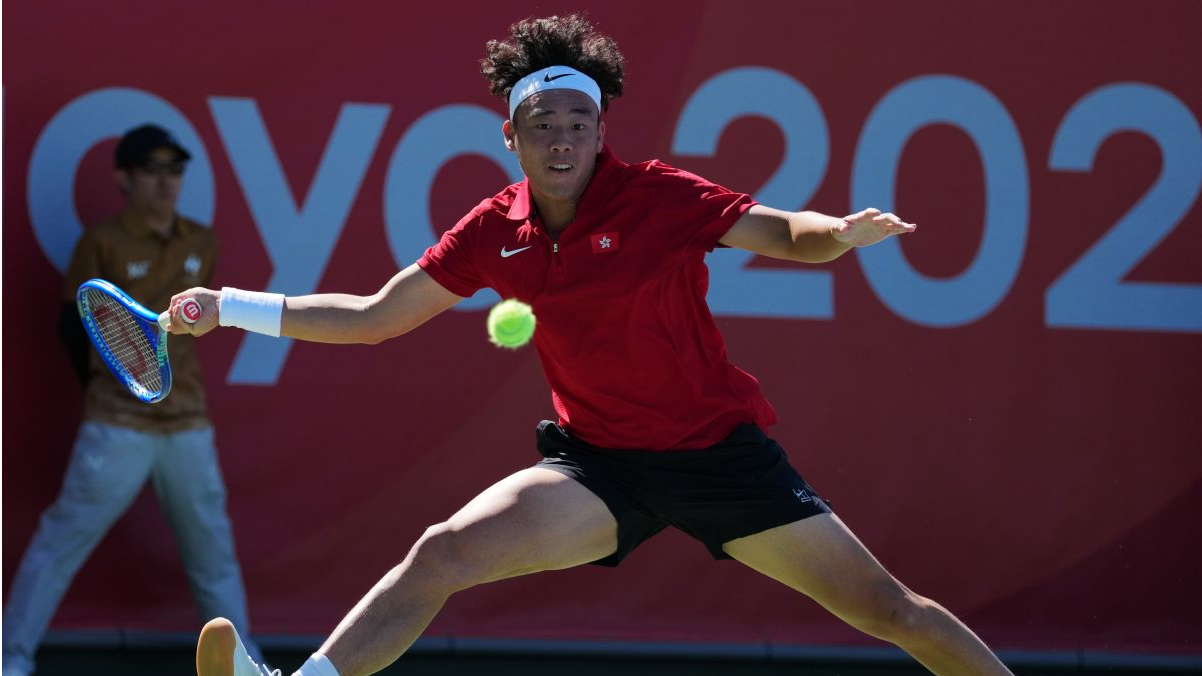
Cheng: Yeah. Coleman Wong, I mean, local born and bred in Hong Kong. He makes history by cracking into the top 100 in the ATP ranking in July. And just earlier this month, he became the …
Chan: … the first Hong Kong player to win gold medal at the 2026 Asian Games.
Cheng: Yeah.
Chan: Before we talk about Coleman, we must pay tribute to many good tennis players in Hong Kong, like Ip Koon-hung, Kelvin Inge. A lot them have done great marks for Hong Kong, but this time looks like he has caught a lot of attention for Hong Kong.
Cheng: Sure.
Chan: So, do you see this possible replication of another Coleman in years to come?
Cheng: I think, it's a very good indication that the Tier A structure, which we got into about 10 years ago, that with additional support from the government, and 10 years on, we have the result that we have today. I don't think it's a coincidence. In 60 years, we only won two medals, for instance. And in the last 12 months, eight players from the Hong Kong CTA won four medals – two at the international games and two at the Asian games. It coincides, if you just back paddle that and look at the entry into the Tier A, and that was back in 2013-'14, right? So, 10 years on, we start producing. And I think there are points that we could learn from the last 10 years and we'll try ... whilst we try to work out what we should be doing in the next 10 years, and try to reverse engineer what components are contributing to that success story.
Chan: … and we try to build a pipeline, having one Coleman is great.
Cheng: I think to prove that we really have a sound and robust pipeline, we should be aiming for having junior participating and competing at Junior Grand Slam every year.
Chan: Right.
Cheng: That's what I mean by a production pipeline, and we need to have a system in place to be able to do that.
Chan: Right. So, what will be the major challenges there? Is it going to be funding, opportunities, corporate sponsors, or even coaches? Because I know that Coleman is training by the Rafael Nadal's training, not in Hong Kong. So, we have all that to do what, what would you like to do in competition in the Junior Grand Slam?

Cheng: Well, at the beginning of the show, we talked about methods and system, and this is exactly what I mean. I think as a federation, you really need to have a very robust curriculum, making sure that players are ready technically by the age of 14. So, I think our responsibility, between eight and 14's super important, that you build the great foundation.
At the age of 14, you really need to send players away to be competing with the best and to be in that environment. And I think that's part of the success story of Coleman, that he went away. And he was in Spain from the age of 14 and start competing with all the pool. The clay court helps, the sunshine helps, without the rain. And competing with a pool of competitors, which is very, very strong helps. And I think this is where we're heading. A lot of federations start thinking about decentralization. I think tennis is a sport where we need to have the conviction and confidence to say that we can provide a good program, but at the same time, we're very supportive of supporting ... players to be decentralized and to be in that environment. I think that environment should be ... should be 14 almost to the 18, but before 14, I think Hong Kong has the curriculum to be able to deliver, technically very, very sound players.
Chan: Right. Michael, I'm gonna ask you a last question. I need a very brief answer. Hong Kong is getting very popular with pickleball. Is pickleball helping tennis to develop further?
Cheng: It's a derivative sport. I think it is, because ... you're able to bring pickleball into the campus, and from the campus, you're able to pick talent, and then you start playing pickleball and tennis.
Chan: We'll definitely have you back for pickleball soon. Anyway…
Cheng: Look forward to that ...
Chan: Thank you, Michael, for sharing your vision with us. Hong Kong already has the international connections and a growing tennis profile to build on. Can we turn our sporting ambition and successful tournaments into lasting opportunities for our athletes, our economy, and the next generation of tennis players?
Thank you for watching Straight Talk. I'm Eugene Chan, and good night.
