

Visiting journalists and experts from Asia-Pacific highlight homegrown innovation, AI and clean energy as engines for regional growth
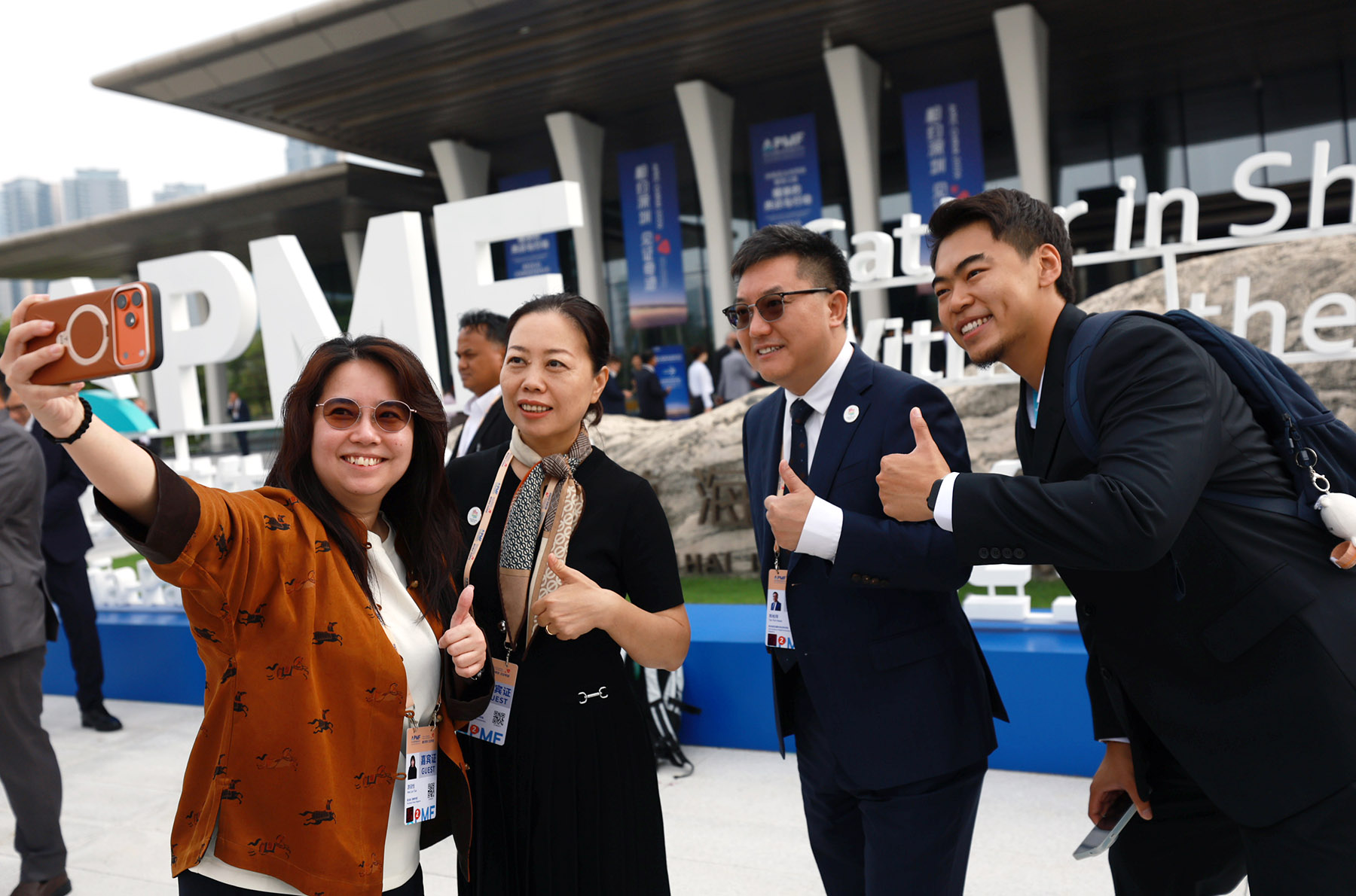
Outside China, headlines often frame the country's rapid technological rise as a looming threat or a "China Shock 2.0". On the ground in the Guangdong-Hong Kong-Macao Greater Bay Area in South China, however, visiting journalists, scholars and officials from across the Asia-Pacific say they are seeing a different story — one defined by automated ports, AI-powered grids and replicable sustainable urban development.
Hosting forums and field tours alongside this year's APEC Economic Leaders' Meeting, Shenzhen in Guangdong province has become a testing ground for how firsthand exposure stacks up against longstanding narratives.
Yasiru Ranaraja, founding director of the Belt and Road Initiative Sri Lanka, joined a recent visit to Guangzhou, capital of Guangdong, and a key hub in the Greater Bay Area.
READ MORE: Shenzhen ready to welcome Asia-Pacific leaders
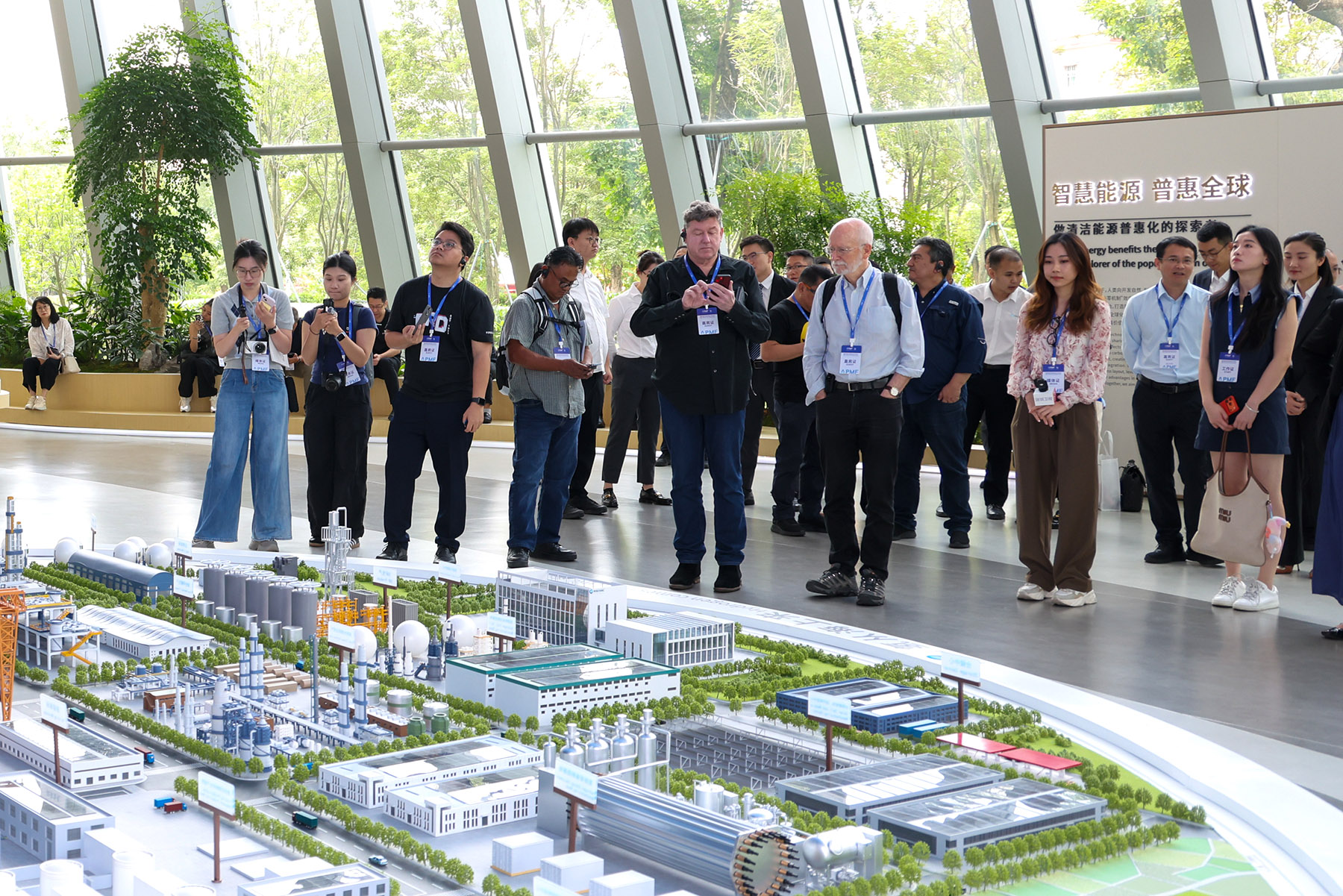
Touring the Nansha Port Phase IV Fully Automated Terminal and the Guangzhou Nansha International Logistics Center, he examined how integrating technology and logistics into international trade creates broader opportunities across the Asia-Pacific and beyond.
"It is a very modern arrangement they have done here, because in this supply-chain cargo business, what is most important is time, because the ship cannot wait for a long time, so whoever can do it very efficiently can win the market capacity," he said.
Ranaraja noted that other countries should study these China-developed management models to see if they can be implemented locally, because "the benefits will go to the people of that country and the world".
"That is what is important. You can get the lower prices in products, and then eventual benefit will come to your people," he said.
After touring Shenzhen, Ranaraja said he was also struck by the city's public spaces, including its well-furnished parks, museums and brisk riverbank walking lanes.
"Here, what I see in Shenzhen is that many people actually go out from their homes to walk in the parks. It is a good way to help on their anxiety, the pressure that they have on work, to relax," he said.
"That is something good that your policymakers and the government officials are doing — making the public spaces much more efficient."
The economic backdrop is hard to ignore. Shenzhen's annual trade with APEC economies has surged more than tenfold over three decades, climbing from 267.5 billion yuan ($40.1 billion) in 1996 to 3.13 trillion yuan last year, according to the Shenzhen Special Zone Daily. For international observers touring the region, the numbers are now matching the street-level reality.
Aman ul Haq, controller of international relations at Pakistan Television Corporation, pushed back against the "China Shock 2.0" narrative when his Chinese hosts asked him whether Chinese manufacturing represents a shock or an opportunity.
"You can say it is 'shocking' when we see this modernization, but it is an opportunity for the world. It is very important to replicate these things," he said during a recent tour of the Greater Bay Area.
China takes an inclusive approach, he noted, advancing the Belt and Road Initiative and the China-Pakistan Economic Corridor to drive development not just in the Asia-Pacific, but across other parts of the world as well.
"There are many issues for different countries, they have different political structures, different systems, but at least they can learn from the development of China," he said.
"In future, you will see that the whole region will develop from this Chinese experience," he added.
Mark Beeson, an adjunct professor at the Australia-China Relations Institute at the University of Technology Sydney, is a frequent visitor to China who goes by the Chinese name "Bi Sheng", meaning "surely will win".
Having first visited China in 1990, Beeson called the scale and speed of its development astounding. When he toured Shenzhen in September, he described the city as "amazing", noting it "has come from nowhere" in roughly 40 years to become "this huge city with modern architecture".
Calling China's broader trajectory "impressive", he pointed to its success in lifting tens of millions out of poverty, tackling climate change and transitioning to green energy.
"They are all things that I think China should be applauded for, because it is doing the world a favor, as well as for China," he said.
Witnessing originality
United States tech observer Rebecca Fannin, founder of Silicon Dragon Ventures, has watched firsthand how today's Chinese tech giants built themselves from scratch.
While attending the Asia-Pacific Media Forum in Shenzhen in September, she toured local high-tech exhibitions on the sidelines, where Chinese reporters asked for her take on the sector. Speaking on camera, she immediately pointed to global household names like smartphone maker Oppo and new energy vehicle giant BYD.
"I remember when Oppo was a baby, and now is an adult; same thing with BYD time ago … Now BYD is getting much more of a global presence," she said.
"I'm happy to say that I was there from when all this was starting. China is very effective in the business models. We are definitely seeing this becoming a much bigger story internationally," she added.
She also noted that the overnight sensation surrounding DeepSeek's launch "was a surprise to people in the West".
"They didn't expect that China could do that and make a large language model that was very efficient and cost-effective," she said.
"It used to be that China was 'only good at copying', and there was a lot of skepticism about China's innovation. There is a new respect for China's innovation that we didn't see even 10 years ago," she added.
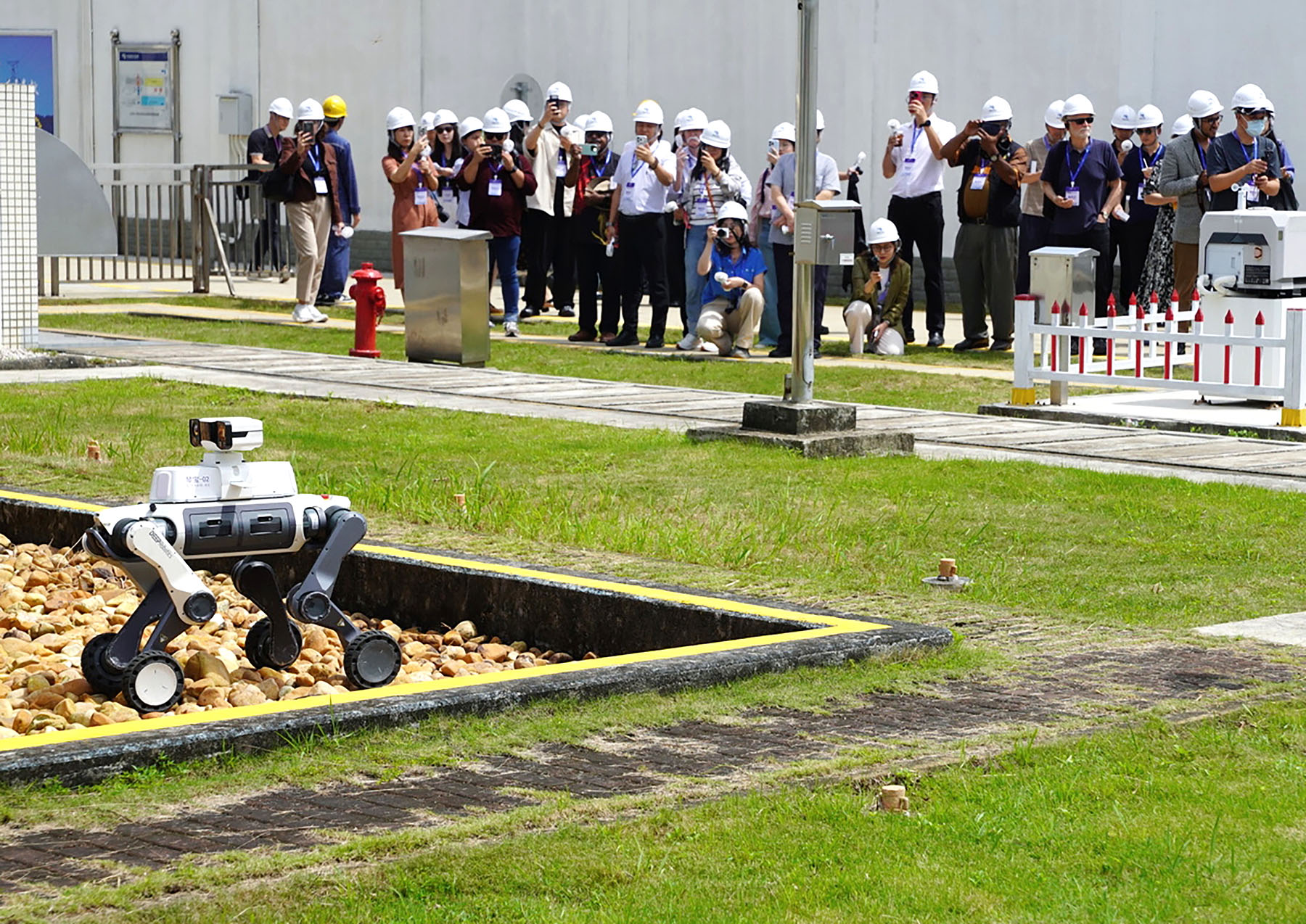
In neighboring Zhuhai, Anish Chand, managing digital editor at The Fiji Times, was drawn to an AI-powered inspection robot dog during a visit to the Qinyun smart substation — a key power hub linking Guangdong and the Macao Special Administrative Region. He stopped to snap photos on his phone before squatting beside the robot for a picture with a thumbs-up.
"I have seen robots on YouTube videos, but this is the first time I have seen one live," he said.
"We don't have it in Fiji, where I come from — far away from here — so it is very interesting to see things like this," he said, adding that introducing such technology could significantly boost industrial development back home.
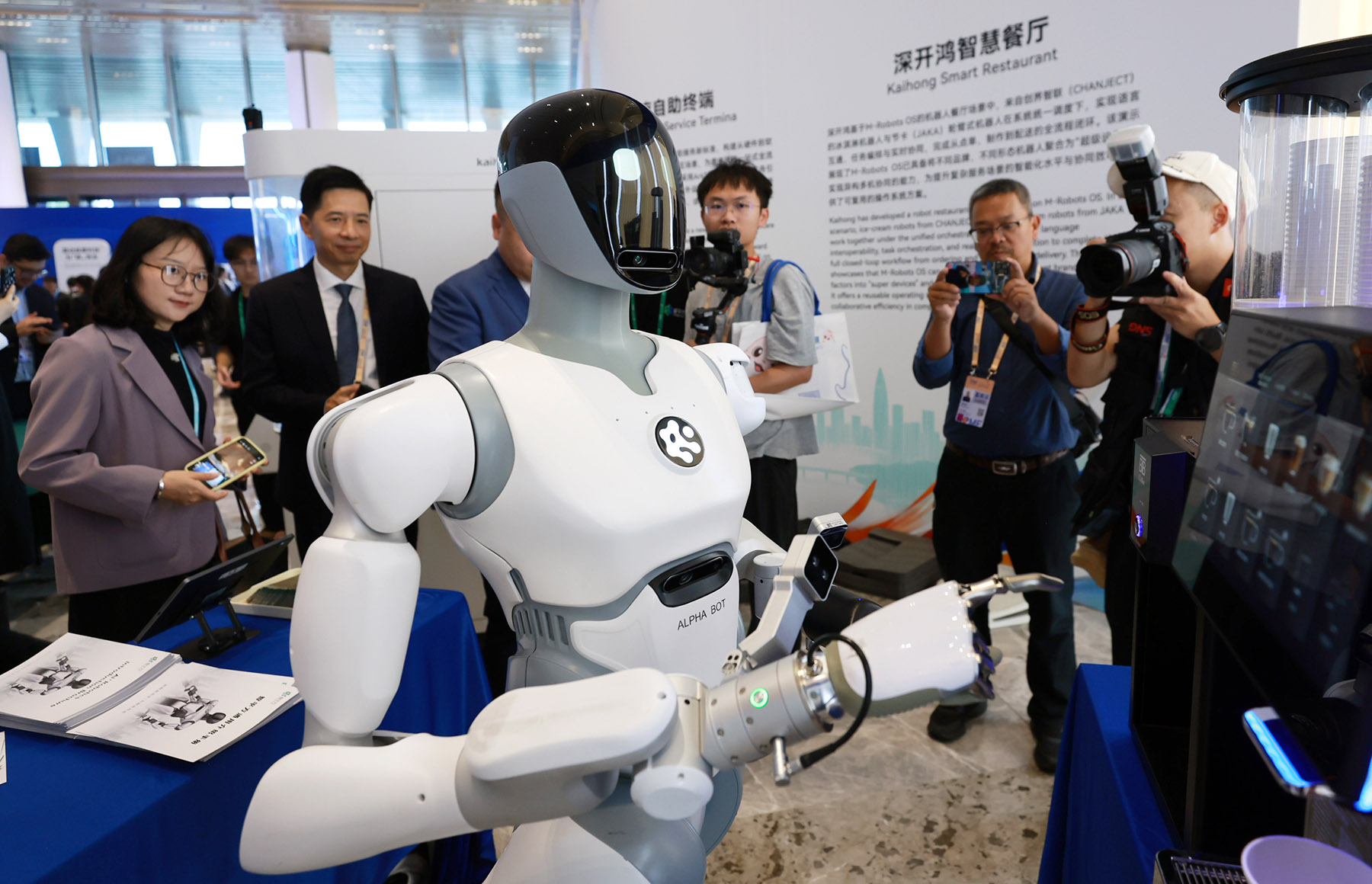
Muhammad Zahir Shah, director of news at Pakistan's Bol TV, made his first visit to China this year and called its AI-hybrid engagement "revolutionary".
"High-tech and AI innovation is being practiced in southern China. Seeing is believing," he said.
"Especially the green ecology, I think the same green ecology and low-carbon industry experiment can be duplicated in Pakistan. Pakistan can benefit a lot," he added.
Shah also praised the cultural exhibitions he saw during his stay.
"It is a very important thing to place all these things under one roof that people can watch, and when they go back to their countries, they can better promote China, tell people what China is like," he said.
Breaking division
John Wallace, senior adviser at the Asia Pacific Journalism Centre and a former president of the Journalism Education Association, began his career with the Australian Broadcasting Corporation and has spent the past 20 years leading professional development programs for regional journalists.
During a recent visit to Guangdong, he said: "The thing about coming to China is you can see the genuineness and the enthusiasm of people here, to do the right thing as a global citizen — and that is a terribly important message to convey to other countries.
"Unfortunately, there is a lot of effort in Australia given to China as a 'big country' that is developing and is threatening to the world, a narrative that gets quite a lot of space in the media in Australia," he noted.
Wallace stressed the value of "bringing people together, providing opportunities for people from other countries to see what China is doing and how genuine it is".
This also "involves the Western media being a little bit more real about China", he said. "Because China is not going away no matter (how much) some people would like. It is developing, it is going to continue to develop, and it is an influential part of the world system of governance."
He added that people need to recognize that and work with China to get the best result and not keep China at a distance.
At the Asia-Pacific Media Forum in September, Prak Thaveak Amida, under secretary of state of the Ministry of Information of Cambodia, warned that misinformation now crosses borders effortlessly as digital technology evolves and audiences rely on interconnected platforms.
"This reality requires stronger communication, mutual learning and practical cooperation among media organizations, governments, think tanks, academic institutions and technology partners," he said.
ALSO READ: Asia-Pacific Media Forum opens in Shenzhen
He called for deeper regional media cooperation through professional exchanges, journalist training, dialogue on emerging tech and cross-border opportunities for young reporters.
This region should strive for "a regional media environment that values trust over sensationalism, dialogue over division, cooperation over confrontation and self-progress over narrow interests", he said.
"The Asia-Pacific region is one of the most dynamic and diverse regions in the world. Our diversity should not be regarded as an obstacle. Rather, it should be the source of strength, providing us with a different experience, perspective and idea from which we can learn," he said.
Dylan Walker and Xinhua contributed to this story.
Contact the writers at zhangyunbi@chinadaily.com.cn
