

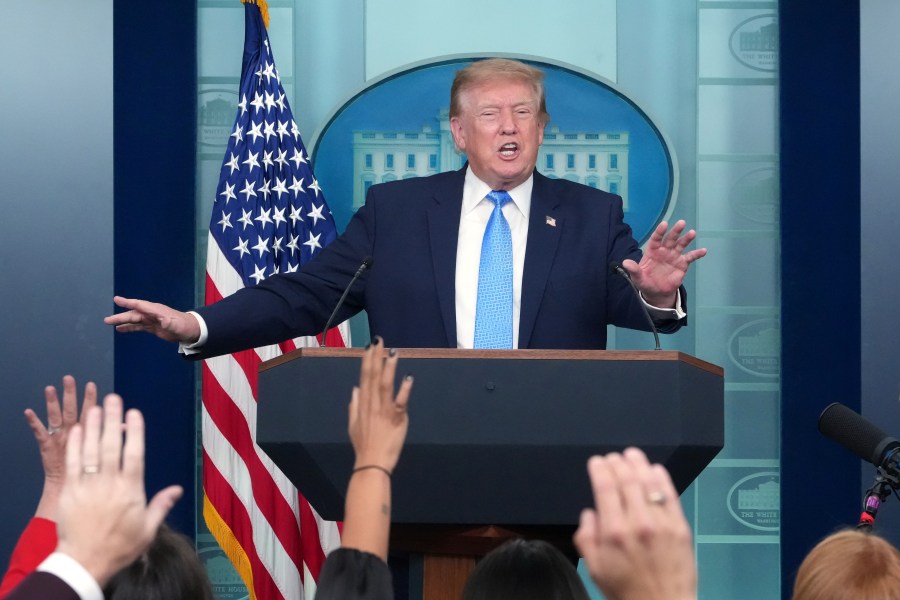
WASHINGTON/NEW YORK/TEHRAN/ANKARA – There is a "positive momentum" toward ending the US-Iran conflict, US President Donald Trump said on Monday after meeting with Qatari Prime Minister and Foreign Minister Sheikh Mohammed bin Abdulrahman bin Jassim Al Thani at the White House.
Qatar, Saudi Arabia, the United Arab Emirates, Bahrain, Kuwait and other regional countries favored maintaining the current US naval blockade of Iran alongside the newly launched Operation Iron Gate, which seeks to restrict Iran's land-based supply routes, Trump wrote in a post on his Truth Social platform.
All these countries "would prefer the status quo," he wrote, adding that they all agree that Iran cannot have a nuclear weapon, which he called "non-negotiable."
Iran has repeatedly maintained that its nuclear program is solely for peaceful purposes.
Meanwhile, Trump warned that US forces remain ready for further military action though the possibility of renewed military strikes on Iran is low.
"Should there be any change with respect to developments in the Middle East, the United States of America is 'locked and loaded' and ready to go," Trump said. "At this point, however, that seems to be quite unlikely."
"We are seeing positive momentum toward an end to this Conflict," Trump said, offering no details.
RELATED ARTICLES
- Trump says renewed strikes on Iran ‘highly unlikely’ if talks progress
- US Senate democratic leader says to end Iran war
- Iran shoots down 2 US drones as Trump announces ‘minor’ strikes
- Tehran says reignited conflict would benefit no one
- Qeshm Island in Iran comes under attack
During a White House press conference on Monday, Trump also said that "Iran, militarily, is effectively over. We're just keeping it the status quo."
"At this point, taking the military action doesn't seem to be a very necessary thing.”
US Secretary of State Marco Rubio said earlier on Sunday that diplomatic efforts had made little progress and that a breakthrough was not imminent.
On Feb 28, Israel and the US launched joint attacks on Tehran and other Iranian cities. Iran responded with waves of missile and drone attacks targeting Israel and US bases and assets in the region, and tightened its grip on the Strait of Hormuz.
A ceasefire was achieved between the warring parties on April 8. On June 18, Iran and the United States signed a memorandum of understanding on ending the war in the region on all fronts.
Under the MoU, the two countries were scheduled to hold negotiations within 60 days, ending on Aug 17, to reach a final agreement on Iran's nuclear program and the removal of sanctions. However, they failed to make sufficient progress toward a deal as tensions continued to escalate.
Trump: Renewed Iran strikes unlikely
Crude oil futures fell by more than 5 percent at one point during Monday morning trading amid easing geopolitical concerns in the Middle East.
The West Texas Intermediate for December delivery touched $86.19 per barrel at one point, down 5.11 percent, on the New York Mercantile Exchange. Brent crude for January delivery fell to $92.80 per barrel, down 5.61 percent, on the London ICE Futures Exchange.
In a phone interview with CNN on Sunday, Trump said that renewed military strikes on Iran were "highly unlikely" as long as negotiations made progress, but did not rule out further military action.
EBW AnalyticsGroup said it remains skeptical that US-Iran discussions will yield fruit. Nevertheless, if regional crude exports remain stout, the US may have less reason to restart an active military campaign.
The global oil market recorded a surplus of 1.1 million barrels per day (bpd) in September and 1.4 million bpd in October, driven by recovering Middle Eastern oil flows, rising output from other producers and weak demand, according to a recent report by JPMorgan.
Iran: 2-day plan to reopen Hormuz still on table
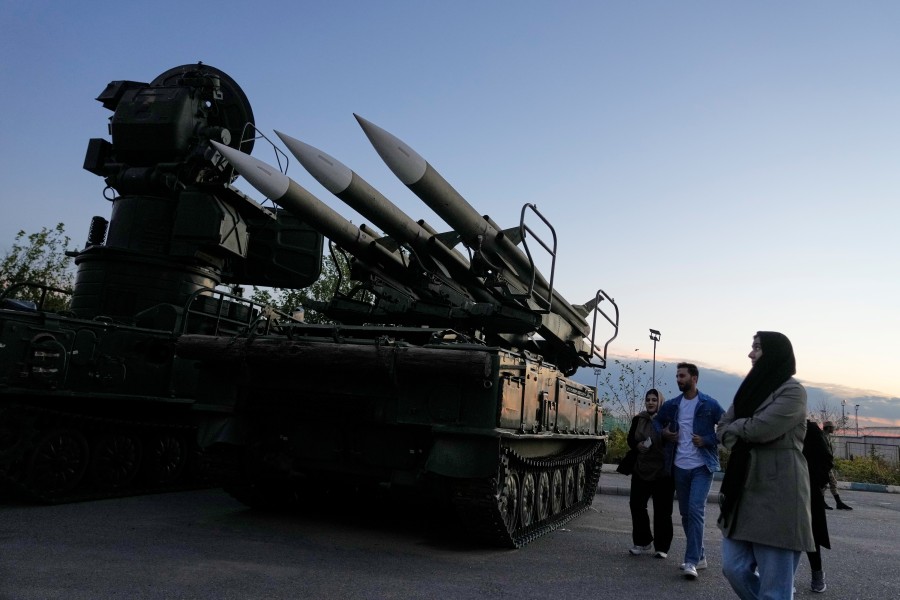
Iran's Foreign Ministry spokesman Esmaeil Baghaei said on Monday that the country's two-day plan for the reopening of the Strait of Hormuz is still on the table.
"Our position regarding the negotiations is completely clear and transparent. Iran's two-day plan per se is indicative of the country's utmost good faith," Baghaei said at a weekly press conference in Tehran.
The plan is the "most logical proposal" available, he said, stressing that if the US meets Iran's demands, the West Asia region will witness the unfolding of positive events within two days and security will be restored.
He emphasized that the US should really make its decision "if it has correctly understood its people's message."
Iran conveyed to the US a seven-day proposed plan in September to cease hostilities and reopen the Strait of Hormuz. The country later voiced its readiness to reduce the proposal's implementation period to two days should Washington meet Tehran's conditions.
Erdogan warns against new attacks on Iran
Turkish President Recep Tayyip Erdogan said Turkiye opposes any renewed military escalation against Iran, adding that he had raised his concerns during a phone conversation with President Trump, the state-run TRT broadcaster reported on Monday.
"We do not want to see the launch of a new wave of attacks against Iran or our region being dragged into further instability," he told journalists aboard his return flight from Azerbaijan, warning that further conflict would have repercussions far beyond the Middle East.
"We are doing everything in our power to prevent this," Erdogan said, adding that he discussed these issues with Trump and explained his concerns.
Erdogan stressed that Ankara continues to advocate dialogue and diplomacy as the only viable path to resolving regional disputes, reaffirming Turkiye's readiness to contribute to initiatives aimed at reducing tensions and preventing further escalation.
Additional conflict would impose heavy costs not only on the parties directly involved but also on neighboring countries and regions, he added.
