

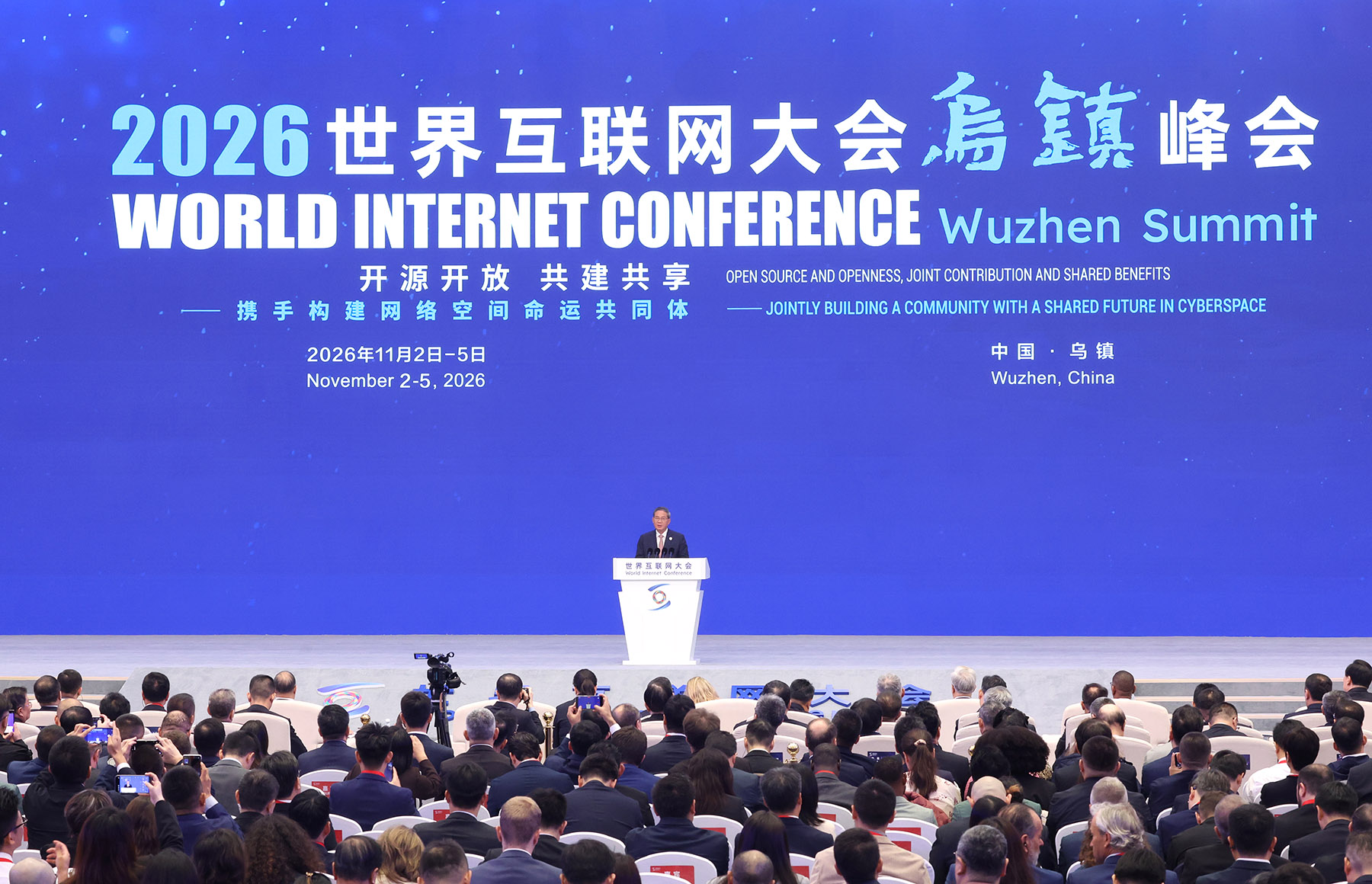
With the digital divide intensifying socioeconomic inequalities, China is using the ongoing 2026 World Internet Conference Wuzhen Summit to advocate openness and cooperation for the shared development of the internet, in order to jointly build a community with a shared future in cyberspace.
In a keynote speech at the opening ceremony of the summit on Tuesday, Premier Li Qiang highlighted the nation's commitment to working with other countries to build an open, inclusive and dynamic digital innovation ecosystem.
China will continue to embrace open innovation and promote technology transfer and knowledge sharing, he said.
Li underlined the need to adhere to inclusive and balanced development of the internet to allow digital dividends to be shared by all.
READ MORE: Tech, AI key to cyberspace action plan
China will actively implement the Global Development Initiative, supporting countries of the Global South in building digital infrastructure and enhancing digital technology capabilities, he said.
Highlighting the importance of building a digital security shield to enable the technology to be reliable and controllable, Li said that China respects the legitimate cybersecurity concerns of all countries, and is committed to working with other nations to address security challenges. However, he added that China opposes the overstretch of the concept of national security and the creation of a "digital iron curtain".
Li also called for upholding open dialogue and improving the multilateral cyberspace governance system.
China remains committed to extensive consultation and joint contribution for shared benefits to advance global cyberspace governance toward a more just and equitable direction, he said.
The WIC Wuzhen Summit, an international event organized by China in Wuzhen, Zhejiang province, every year since 2014, is a milestone effort by the country to advance the building of a better, cleaner and safer cyberspace.
President Xi Jinping proposed the vision of building a community with a shared future in cyberspace in a keynote speech at the second edition of the summit in December 2015.
This year's summit is themed "Open Source and Openness, Joint Contribution and Shared Benefits — Jointly Building a Community with a Shared Future in Cyberspace". Around 1,800 participants, including government officials from multiple countries, leaders of international organizations, representatives from global internet companies, experts and scholars attended the opening ceremony of the event, which runs through Thursday.
In his speech, the premier also emphasized a people-centered approach to the development of the internet, saying that the internet should promote the well-rounded development of humanity.
"Our initiative to build a community with a shared future in cyberspace aims to ensure that internet-related technologies strengthen people's capabilities, expand people's choices, affirm human value, and improve people's well-being," he said. "Humans should not become subordinate to technology, nor should technology exacerbate divisions in human development."
As cyberspace faces growing imbalances and inequities, the country has rolled out initiatives to improve global cyberspace governance.
ALSO READ: Innovation thrives on openness, cooperation
In July, China submitted the Position Paper on Global Cyber Governance in the Digital Intelligent Age to the United Nations' global mechanism on information and communication technologies, advocating respect for digital sovereignty and joint efforts to promote inclusive development.
Zhu Keli, founding director of the Beijing-based China Institute of New Economy, said that open cooperation is crucial for driving technological progress and industrial application, warning that isolated AI development not only leads to redundant investments and wasted resources, but also risks creating fragmented standards.
Fan Yuan, chairman of DAS-Security, a leading cybersecurity company in Hangzhou, Zhejiang, said that the open-source supply chain may amplify risks, yet it presents unprecedented opportunities for the security industry, adding that AI security governance has generated a vast array of new demands, from large model evaluation to agent protection.
Zhang Chenyang contributed to this story.
Contact the writers at caodesheng@chinadaily.com.cn
