

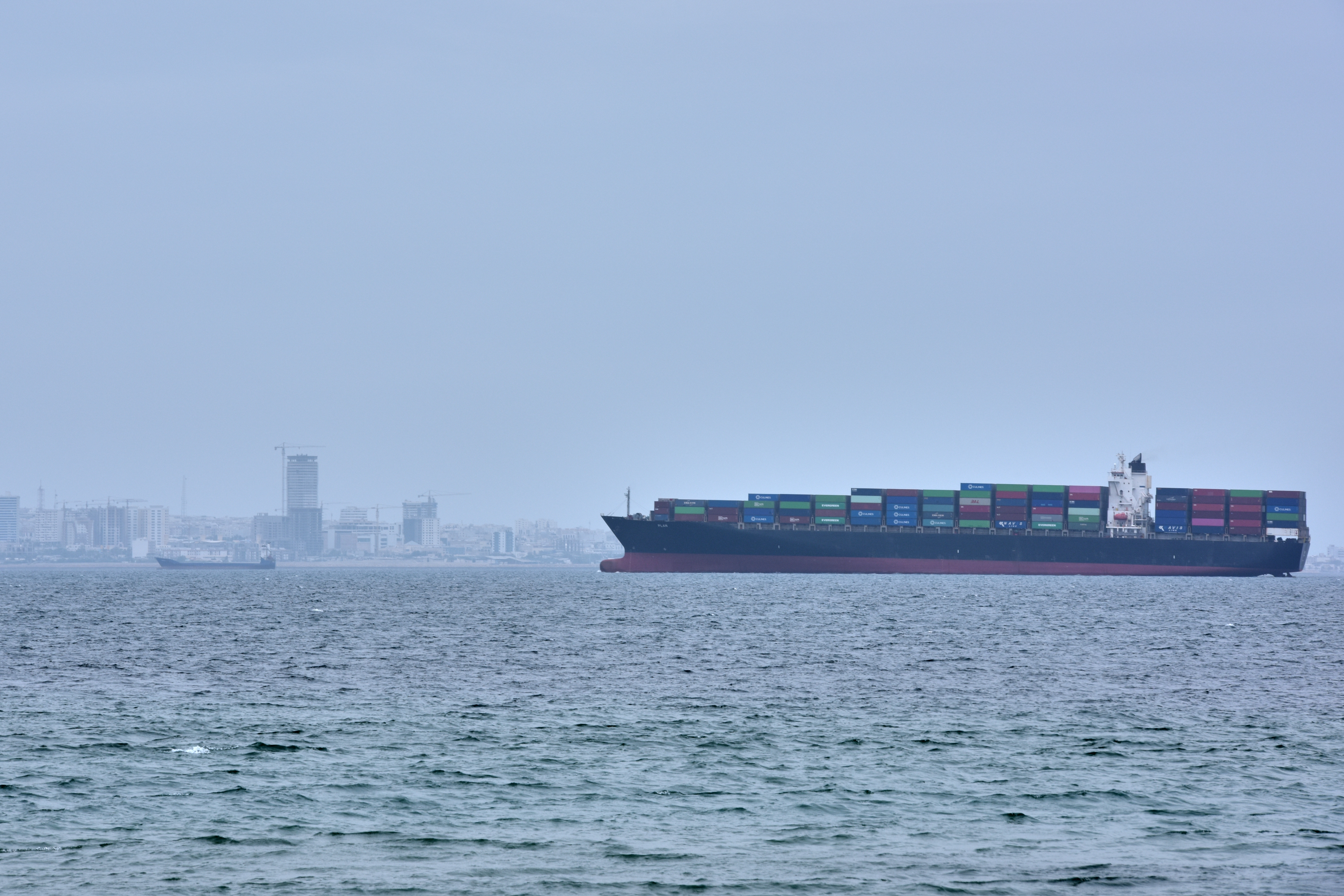
TEHRAN/WASHINGTON/LONDON – The United States attacked Iran's strategic Qeshm Island in the Strait of Hormuz on Monday, The Wall Street Journal reported, citing US officials.
The attacks were the latest in "a series of limited strikes Washington has secretly carried out against the country in recent weeks as President Trump touted the possibility of a diplomatic deal", the report said.
The United States has been conducting smaller-scale strikes against Iran for several weeks, with explosions reported on social media around Qeshm Island on Monday, according to the report. Some US officials described the attacks as defensive operations aimed at preventing Iran from freely attacking commercial vessels in the Strait of Hormuz.
Unlike earlier in the conflict, the United States has not publicly announced the attacks, the report said. Washington has deliberately kept the campaign under wraps to avoid signaling any intention of resuming major combat operations, one US official was quoted as saying.
Trump said that he was "in no rush" to decide whether to resume military action against Iran. "One way or the other, we will do something, but there is no rush. We crippled them financially. They have no money, no gasoline and their people are getting very tired of it," he said in a phone interview with Axios on Monday.
The US midterm elections are seen as a turning point for Trump as he decides whether to launch a major bombing campaign against Iran to try to bring the conflict to an end, Axios reported. It added that the president appears to be pursuing two tracks simultaneously, allowing diplomatic efforts to continue while preparing to resume military action if he determines that a deal is out of reach.
"Oil Prices are dropping like a rock, down almost 10 U.S. dollars a barrel, a record, because people feel that there will not be a war with Iran. Iran wants a settlement, as soon as possible. It could happen," Trump wrote Monday in a post on Truth Social.
Hormuz to reopen 'if US meets Iran's demands'
Also on Monday, Iran's Foreign Ministry spokesman Esmaeil Baghaei said Iran has reduced the period for implementing the seven-day plan proposed by Tehran in September to two days, in good faith.
He noted, "We have announced that if Iran's demands are met, the possibility will exist to restore security to the Strait of Hormuz and start the negotiation process in a short period of time," stressing that all these depend on the American side's decision on how to proceed regarding the future of the process.
Meanwhile, Iran's Foreign Minister Seyed Abbas Araghchi said consultations mediated by Qatar and Pakistan have become "extremely intensive", involving frequent delegation visits, phone conversations and message exchanges.
Reaffirming Iran's readiness for both diplomacy and defense, Araghchi warned that any further military escalation by Washington would draw a "far more bitter and severe" response.
Iran rejects surrender to 'enemies'
Speaking at a meeting with the country's governors and mayors in Tehran on Monday, Iran's President Masoud Pezeshkian said his administration will work to resolve problems created by the "enemies" through dialogue, according to the Iranian president's office.
Pezeshkian noted that Iran's Supreme Leader Mojtaba Khamenei has granted the government certain authorities to pursue diplomatic solutions.
ALSO READ: Iran warns of wider, longer conflict as Trump renews threats of strikes
He stressed that no one benefits from war, adding that the "enemies" will not be able to make Iran surrender.
Pezeshkian accused the United States of attempting to disrupt Iran's cross-border trade with neighboring countries, vowing to "foil the enemies' plot with the people's cooperation and companionship".
IMO: Hormuz shipping lanes remain unsafe
Separately, International Maritime Organization (IMO) Secretary-General Arsenio Dominguez on Monday declined to confirm that mines had been cleared from the Strait of Hormuz, warning that passage remained unsafe.
During a Q&A session at IMO headquarters in London, Dominguez reiterated the organization's advice against transiting the strait amid conflicting Iranian and US accounts of the mine threat.
Iran has repeatedly claimed that vessels struck mines after entering "unauthorized" routes. The US Central Command has denied those accounts and said it had cleared mines from the strait's international shipping lanes.
Responding to a question from Xinhua, Dominguez said he had received no confirmation that the traffic separation scheme, the designated shipping lanes through the strait, had been cleared of mines.
"There's no confirmation that there are no mines in the region. So I cannot guarantee that it's safe," he said. "That's why we're not recommending anyone to go through the Strait of Hormuz."
The IMO-established traffic separation scheme is currently not in operation. Vessels still transiting the strait have been using alternative routes to the north through Iranian waters under Iranian control, or to the south near the Omani coast with US naval escorts.
READ MORE: Iran designates Britain's navy, air force, MI6 as 'terrorist, hostile' entities
Dominguez said the IMO has not adopted these arrangements, so the organization can not guarantee safe passage.
