

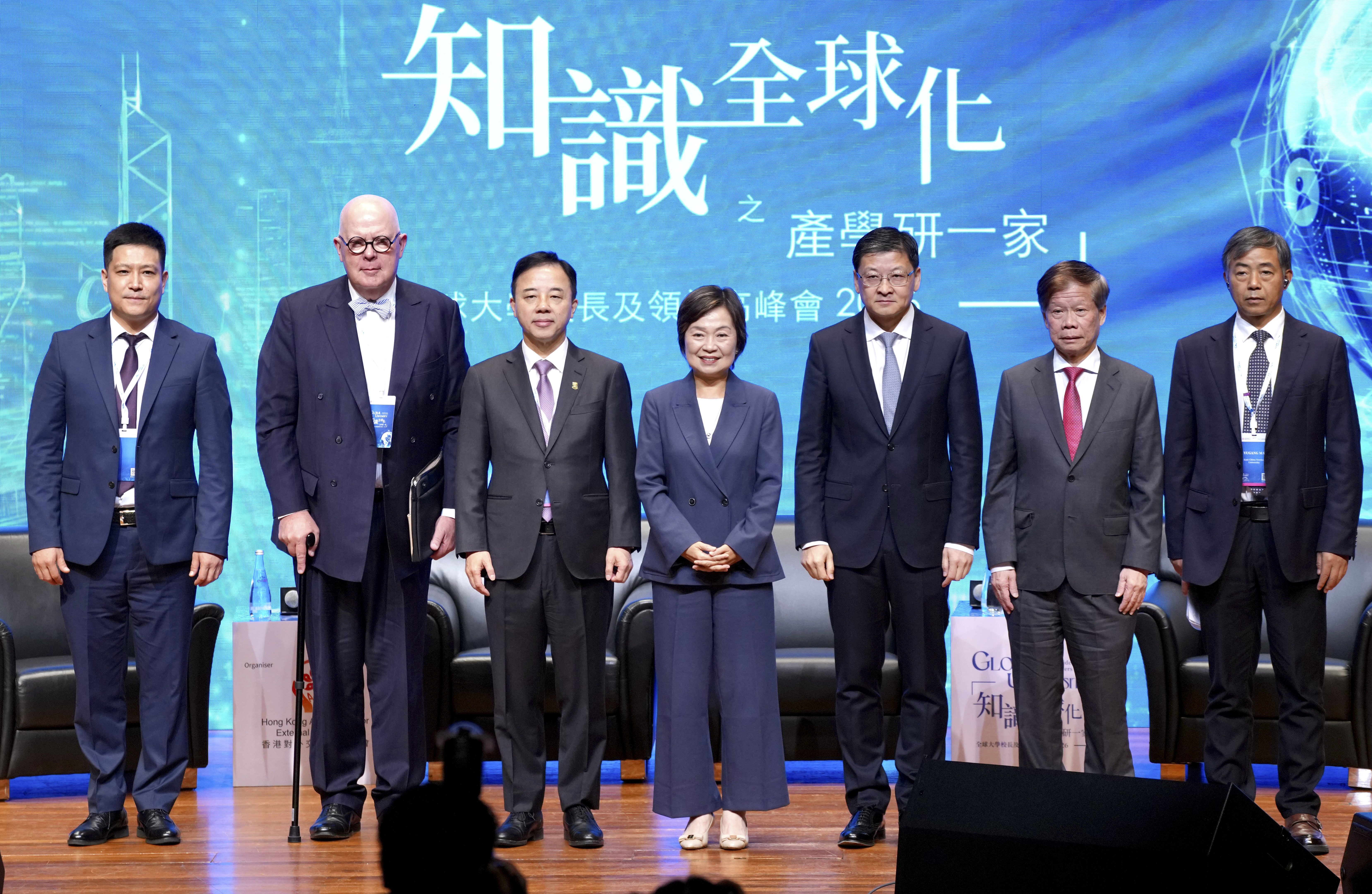
Global university heads and leaders have been encouraged, during a high-level dialogue on Tuesday, to participate in Hong Kong’s mega university town projects, in a bid to establish an ecosystem that brings university research to market.
The invitation came at the opening of the two-day Global University Presidents and Leaders Summit 2026 at the Hong Kong Convention and Exhibition Centre, with the first day topic centered on Hong Kong’s proposed Northern Metropolis University Town, a project comprising three university towns.
Launched in 2024, the regional flagship education summit returned for its second edition to promote Hong Kong as an international education hub.
It was organized by the Hong Kong Association for External Friendship (HKAEF), a non-profit dedicated to promoting international ties, with full backing from the University Grants Committee, the SAR government’s higher education funding and strategy adviser.
Under the theme “Globalization of Knowledge — How University Education Should Respond to Rapid Global Development and Community Needs”, this year’s summit attracted senior university governors and academic leaders from 10 universities in Hong Kong and more than 50 universities from across over 20 countries and regions.
ALSO READ: How University Town can future-proof HK’s next generation
In keeping with the theme, organizers said the summit would also help advance the Northern Metropolis University Town, where development is well underway to create a hub linking higher education, industry and research.
The development project anchored the summit’s first two main discussions, which explored stronger university-industry ties and opportunities for international education and public-private partnerships.
The Northern Metropolis University Town — a key part of the Northern Metropolis, Hong Kong’s major strategic development project bordering Shenzhen in Guangdong province — has a combined core campus area of about 300 hectares; its wider footprint, including industrial, logistics and ecological conservation areas, will exceed 1,000 hectares across the San Tin, Hung Shui Kiu and Ta Kwu Ling areas, spanning the city’s Yuen Long, Tuen Mun and North districts.
The San Tin University Town will focus on innovation sectors such as medicine, life and health sciences, artificial intelligence and microelectronics; the Hung Shui Kiu University Town on smart manufacturing and international talent training; and the Ta Kwu Ling University Town plans to combine arts and ecology to connect industry and academia.
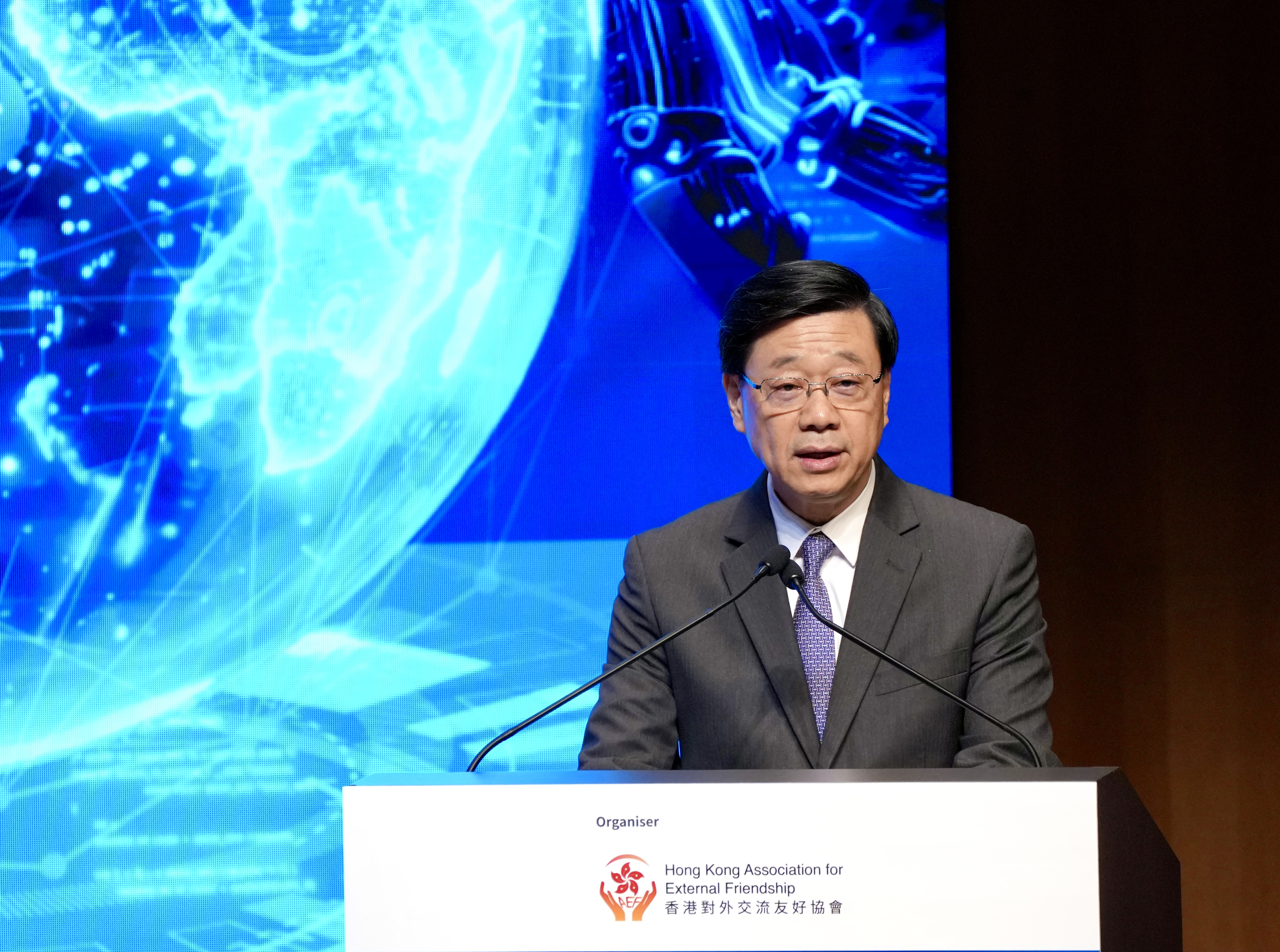
Speaking at Tuesday’s opening ceremony, Chief Executive John Lee Ka-chiu said the three university towns were intended to woo “the world’s finest scholars and students” and bring research and industry closer together so that they can “complement and reinforce one another”.
“We will invite institutions to establish basic research institutes and large-scale shared research platforms, including high-performance computing centers, joint laboratories, and interdisciplinary research centers,” said Lee. “The towns are also designed to empower industry.”
Lee invited guests to help develop the university towns after detailing the government’s plans: “I invite you all to find your partner and join us in Hong Kong at the northern metropolis and its university towns.”
Priscilla Leung Mei-fun, founding president and CEO of HKAEF, said this year’s emphasis on closer ties among policymakers, industry, academia, researchers and investors represented a step forward for the summit.
“We are aware that scientific discovery must not remain within laboratories. Knowledge must not stay behind the four walls of universities”, Leung said. “An innovation must serve people and society, not vice versa”.
ALSO READ: Global universities to converge in HK to shape the future of education
Yuan Mindao, vice president of the Chinese People’s Association for Friendship with Foreign Countries (CPAFFC), credited the summit’s effort with helping Hong Kong develop into an international innovation and technology hub and the wider Guangdong-Hong Kong-Macao Greater Bay Area into a talent highland.
It also fostered exchanges and partnerships among universities at home and abroad, added Yuan, helping more young people appreciate “how friendship between nations and regions begins with their people”.
Following the previous edition’s arrangements, the summit invited overseas institutions taking part to bring one student with their delegation, allowing students to explore Hong Kong’s universities and development opportunities firsthand.
Yuan pledged that CPAFFC would continue to actively support youth exchange between Chinese and overseas universities in emerging fields, such as AI, green development, bio-medicine and the silver economy, and facilitate faculty and student exchanges, joint research and course development.
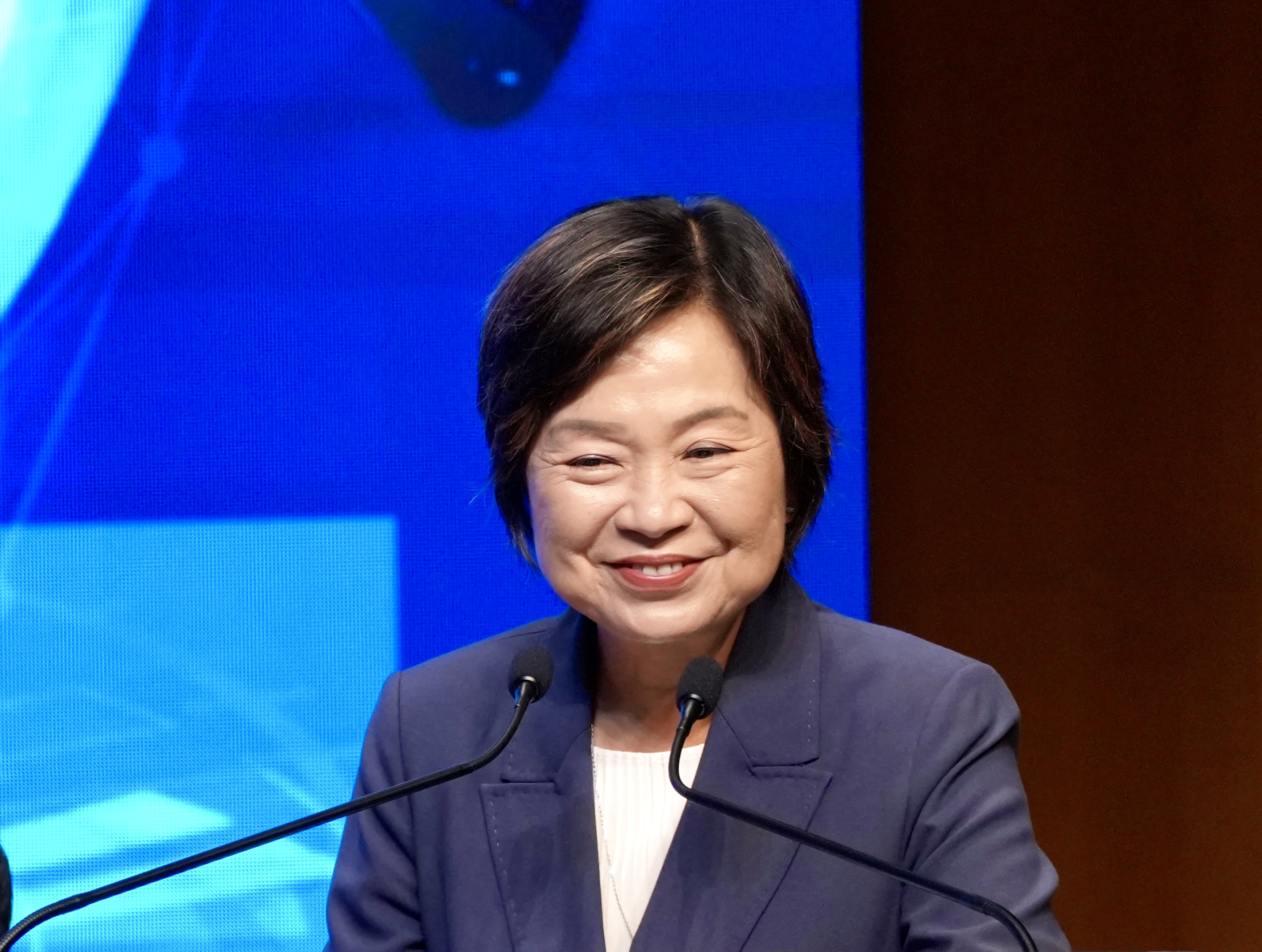
Opening a panel on proposed industry-academia partnerships in the Northern Metropolis University Town, Secretary for Education Christine Choi Yuk-lin reaffirmed the SAR government’s backing for education as a key engine for Hong Kong’s high-quality development and global competitiveness.
She pointed to education expenditure exceeding HK$102 billion ($13 billion) in the 2026-27 financial year, equivalent to nearly one-fifth of government recurrent expenditure.
“Looking ahead, a cornerstone of our long-term education strategy … is the development of the Northern Metropolis University Town,” said Choi.
“The message is loud and clear,” she said. “To overseas university leaders, we warmly welcome you to explore new frontiers with our institutions, from joint research and faculty exchanges to strategic partnerships with your counterparts in this city.”
The summit’s agenda also covered innovation governance, intellectual property protection and industry collaboration, and curricula shaped by industry needs.
On Wednesday, the summit will turn to modern education’s response to technological change, with discussions on talent development in the era of big data and the implications of demographic shifts for future skills. Sessions will also address AI ethics, values and social responsibility in high-tech innovation, and universities’ role in meeting community needs in the AI era.
Contact the writer at wanqing@chinadailyhk.com
