

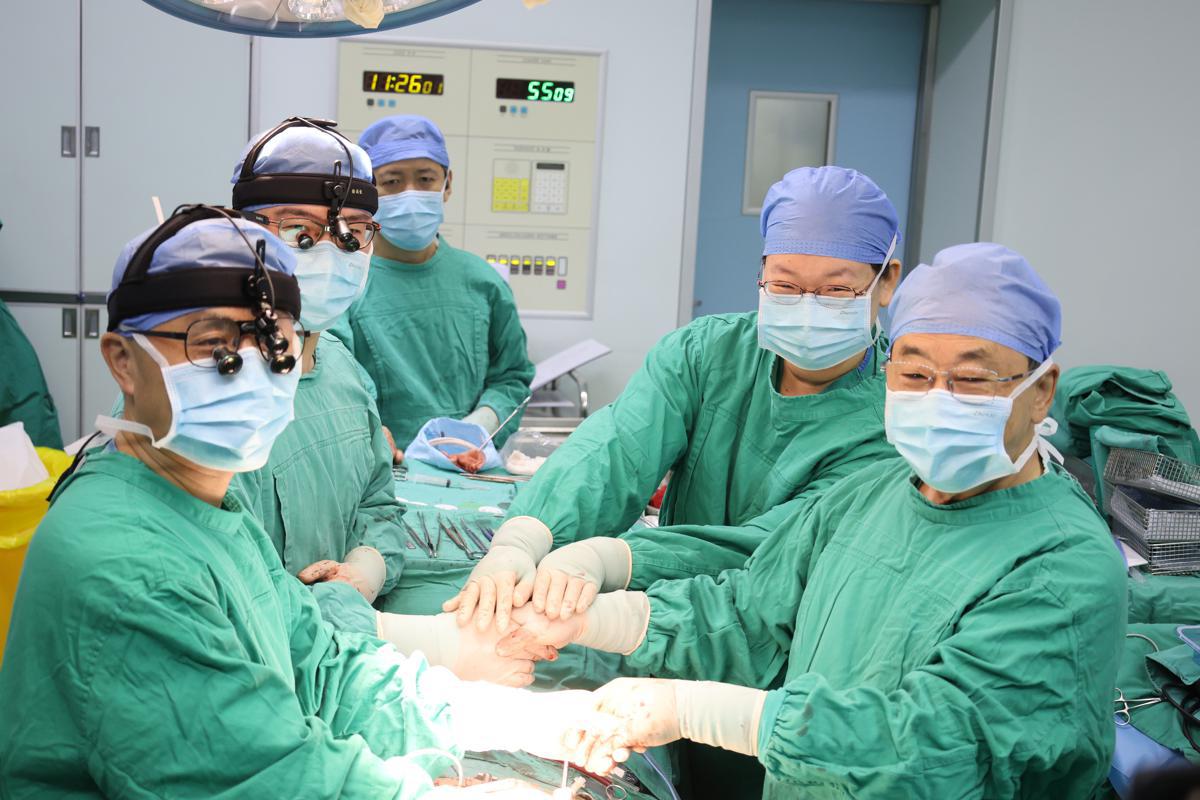
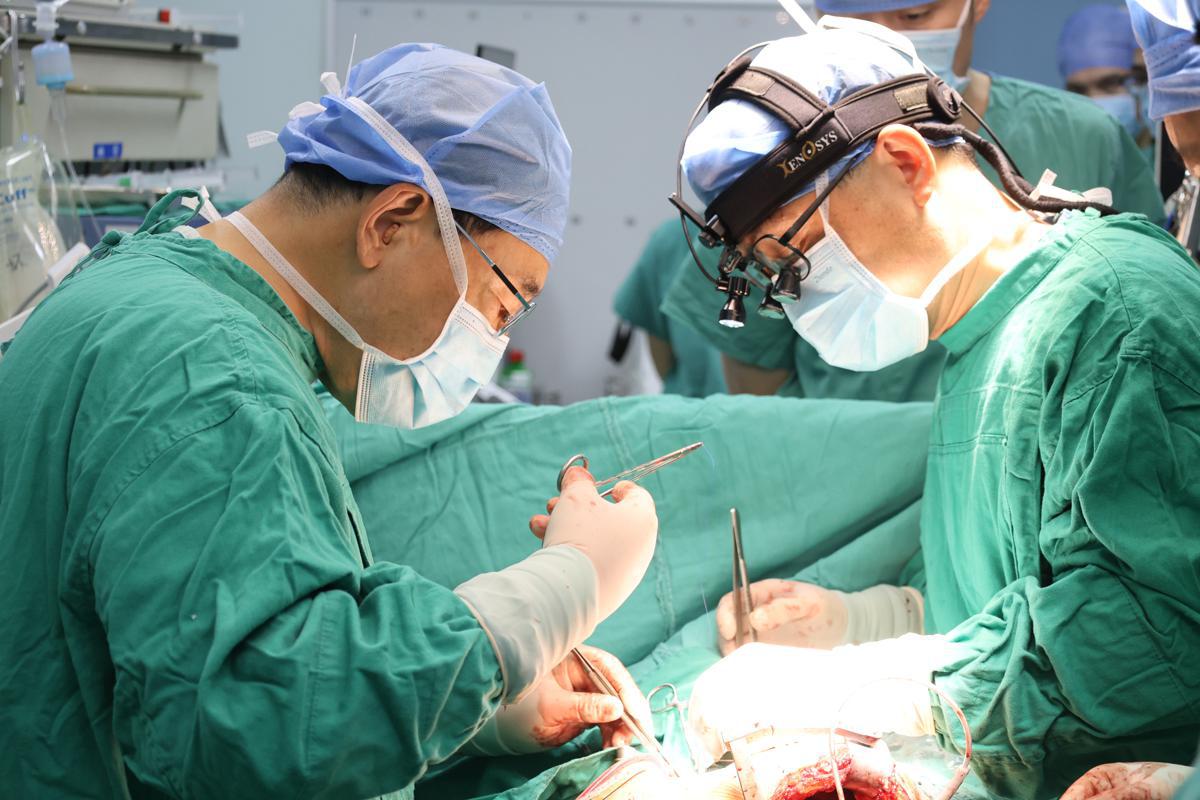
A team of surgeons completed a high-risk minimally invasive artificial heart implantation last week at Henan Provincial Chest Hospital in Zhengzhou.
Led by Professor Liu Xiaocheng, president of Tianjin's TEDA International Cardiovascular Hospital (TICH), and Ge Zhenwei, director of cardiac surgery at the Henan hospital, the team implanted the domestically developed HeartCon ventricular assist device, nicknamed the "Rocket Heart", into a 57-year-old patient with end-stage ischemic cardiomyopathy.
The patient had suffered from chest pain for 14 years. About six weeks ago, his condition deteriorated to end-stage heart failure after a life-threatening arrhythmia episode. With drug therapy offering little benefit, an artificial heart became his only viable option.
"LVAD implantation is the most effective treatment for such patients, as it boosts the heart's pumping capacity," Ge said. "The patient is expected to resume normal daily life in about one month."
ALSO READ: Rocket Heart 2.0 fills global gap in market
Commonly mistaken for a full heart replacement, the HeartCon is actually a left ventricular assist device. It takes over between 60 and 80 percent of the heart's pumping workload, allowing damaged muscle to rest while maintaining blood supply to vital organs. It fills the critical treatment gap between medication and heart transplantation, serving either as a "bridge to transplant" or as lifelong support for patients ineligible for transplantation.
Behind the breakthrough is 17 years of cross-disciplinary research led by Professor Liu. The scholar studied in Australia in the 1980s, shortly after the start of China's reform and opening-up. He vowed to bring advanced cardiac care back to his home country after witnessing the gap between domestic and international treatment levels.
China has more than 12 million heart failure patients, but fewer than 1,000 heart transplants are performed each year due to donor shortage. "Donor scarcity is a global challenge, but China's huge unmet demand means we must build our own artificial heart industry," Liu said.
In 2009, he began a collaboration with the China Academy of Launch Vehicle Technology, combining medical expertise with aerospace engineering. The fully domestic HeartCon, with complete independent intellectual property rights, was approved for clinical use in 2022.
As of this month, TICH has performed 132 HeartCon implantations on patients aged 5 to 76. The three-year survival rate reaches 82.6 percent, above the 72.9 percent global average reported by the Interagency Registry for Mechanically Assisted Circulatory Support in its 2026 report.
READ MORE: Chinese doctors implant world's smallest, lightest artificial heart into boy
TICH has trained over 1,000 medical staff from 31 hospitals nationwide and guided 268 implantations. It has also established a 24/7 multidisciplinary team care model, a key factor behind its superior survival outcomes.
Witnessing the operation left a deep impression on He Ru, editor-in-chief of Nordic Times, who traveled from Sweden to attend the 7th Overseas Chinese New Media Forum. "I saw first-hand the solid strength of China's medical innovation and Chinese doctors' commitment to saving lives," he said.
The upgraded HeartCon 2.0 is the world's smallest magnetohydrodynamic levitation artificial heart, weighing only 75 grams. As the first design without an active magnetic bearing or position sensor, it delivers a maximum flow rate of 10 liters per minute, with a hemolysis index far better than international benchmarks, according to TICH.
Liu revealed that HeartCon 2.0 has completed 56 clinical trial cases with positive results, and is on track to gain national market approval early next year. "We also hope to cooperate with institutions like Sweden's Karolinska Institutet to bring Chinese medical technologies to global patients," he said.
Meng Jiarui contributed to this story.
