

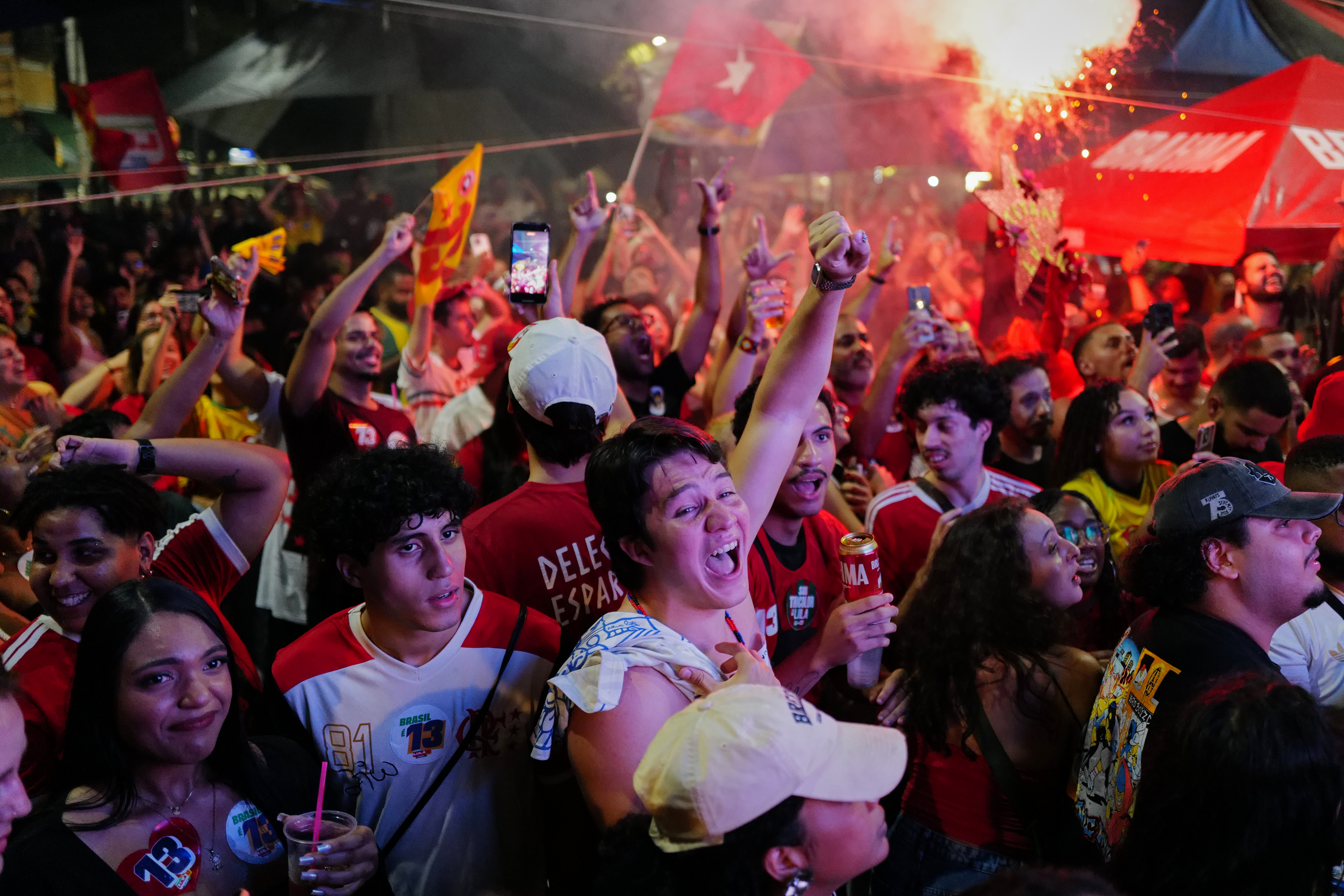
Brazilians reelected President Luiz Inacio Lula da Silva on Sunday, handing him 51.75 percent of the votes, compared to 48.25 percent for challenger Flavio Bolsonaro.
Lula's victory goes against a shift to the right in recent elections across South America, and will be his fourth term as president.
Lula was president from 2003 to 2010 and later spent 580 days in prison on corruption convictions, which were annulled by Brazil's Supreme Court in 2021. He went on to defeat then-president Jair Bolsonaro — Flavio Bolsonaro's father — who was convicted and jailed on charges of orchestrating a coup.
ALSO READ: Brazil heads into presidential runoff with LatAm's political balance at stake
Bolsonaro headed into the final ballot as the front-runner, having won 47.03 percent of the vote to 45.16 percent for Lula in the first round of voting this month. Since neither candidate secured a majority of votes, a runoff was held on Sunday.
Election issues included crime and economic stagnation.
In images similar to President Javier Milei of Argentina, who often posed with a chainsaw to symbolize cutting government waste, Bolsonaro branded a pair of giant scissors as he promised $40 billion in cuts to public spending.
Under Lula, Brazil managed to withstand many of the effects of US President Donald Trump's tariffs, and unemployment remained low, but the population was unhappy with rising food prices and household debts.
ALSO READ: Brazil's Lula seeks to rally nonvoters ahead of presidential runoff
South American governments have recently been shifting to the right, with Abelardo de la Espriella winning Colombia's presidential election in June, Keiko Fujimori winning Peru's runoff weeks later, Jose Kast's victory in Chile in March.
Javier Milei was among the first to start the rightward shift by winning the presidency in Argentina in December 2023.
READ MORE: Lula campaign asks Brazil's electoral court to probe US consular service suspension
Many of those governments agree with Trump's policies on security and drugs, but Lula's victory pushes back against the US president's influence in the region.
Voting on Sunday was extended after disruptions in numerous areas, including buses being prevented from leaving municipal garages, and heavy rainfall in the south of the country.
Voting is mandatory for most Brazilians ages 18 to 70.
