

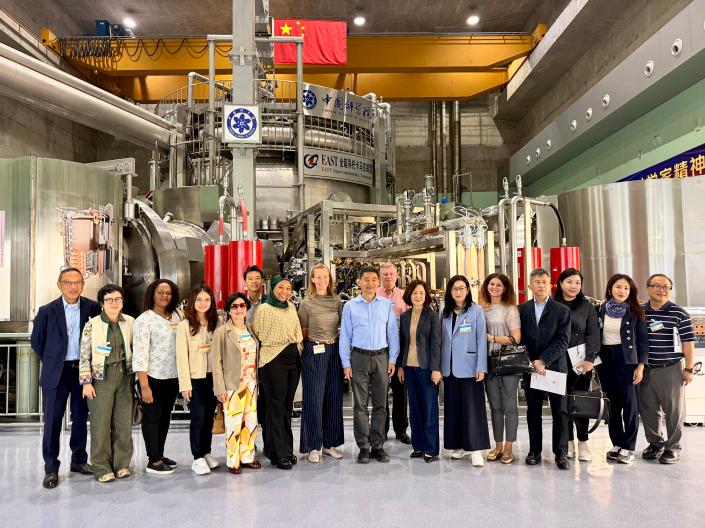
In Hefei, the capital of East China’s Anhui province, a delegation of foreign consular representatives and business leaders from the Hong Kong Special Administrative Region explored frontier technologies that could help shape the industries of the future on Thursday.
An experimental nuclear fusion facility known as China’s “artificial sun” drew in many delegates for a closer look on Science Island.
The Experimental Advanced Superconducting Tokamak (EAST) resembles a giant metal chamber, with nearly 1 million components working together inside. The facility prompted a stream of questions from the delegation, with several members keen to know what scientists hope to achieve with the “artificial sun”.
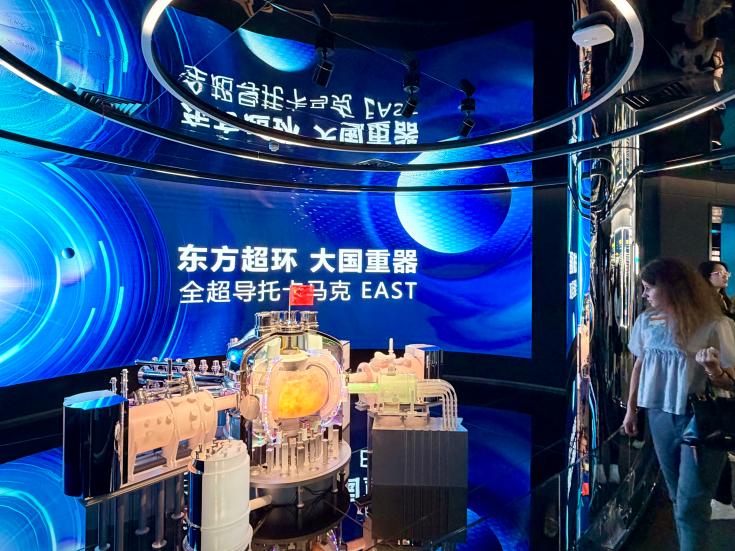
Researchers explained that EAST is designed to study controlled nuclear fusion, with the long-term goal of harnessing fusion as an energy source on Earth. Building on EAST, scientists are also developing the Burning Plasma Experimental Superconducting Tokamak, which is expected to be completed by the end of 2027 and is designed to bring fusion research closer to power generation.
Andrew Tsui, associate director of international and mainland relations at the Hong Kong Trade Development Council, said he is impressed by advanced technologies such as the “artificial sun” in Hefei.
He said that Hong Kong, already established as an international financial and trade center, was also strengthening its role as an international innovation and technology center. He said these strengths complemented Anhui’s technological and industrial capabilities.
Tsui said that Hong Kong also has, in addition to international capital and professional services, strong universities, creating more opportunities for talent exchanges and providing further support for Anhui companies expanding overseas.
“We hope to deepen exchanges with Anhui and explore more business opportunities together in global markets,” he said.
