

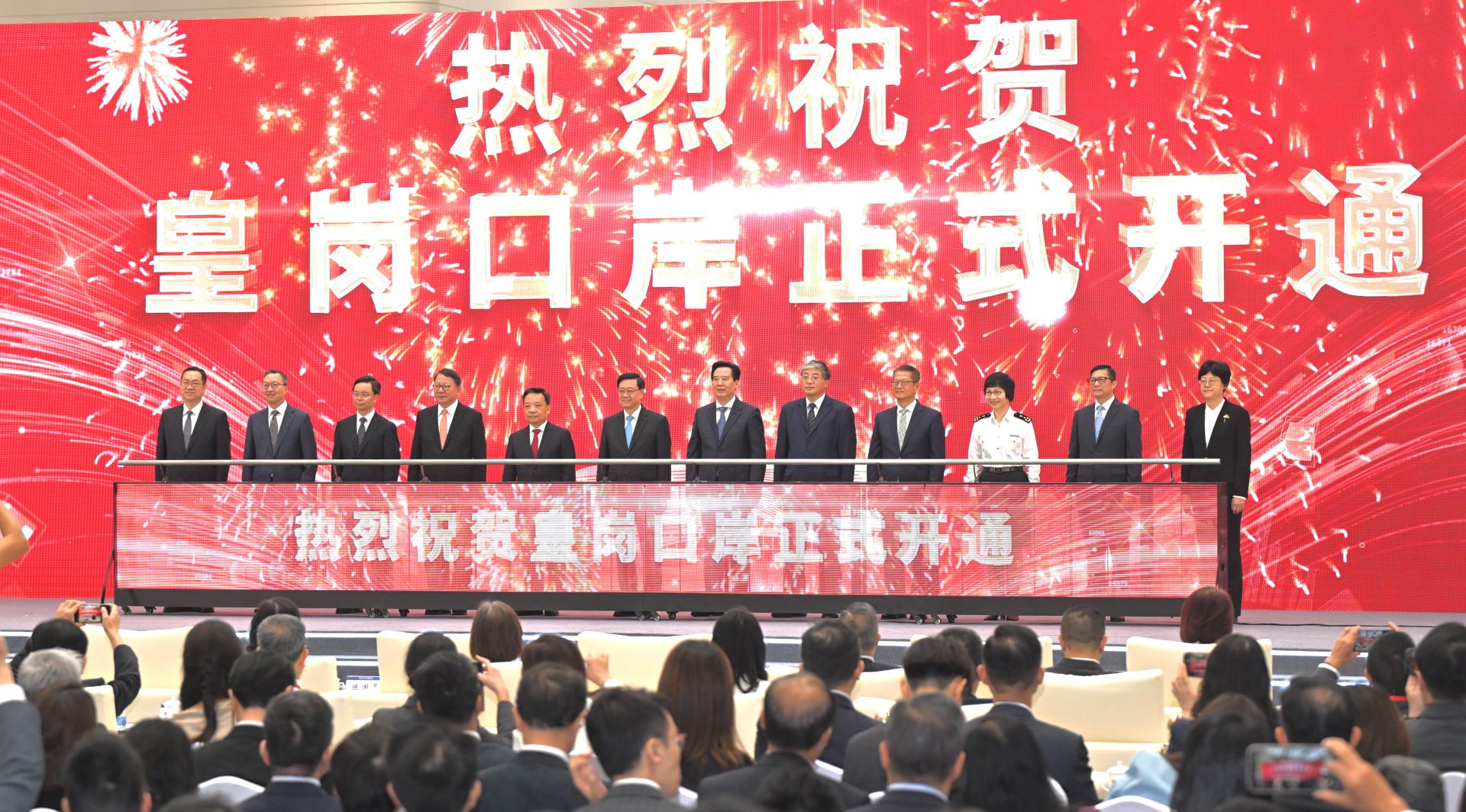
The rebuilt Huanggang Port -- a 24-hour boundary crossing between Shenzhen and Hong Kong with significantly enhanced customs clearance efficiency and capacity -- will provide strong support for deeper connectivity and cooperation within the Guangdong-Hong Kong-Macao Greater Bay Area, officials said at the port’s commissioning ceremony a day before its opening.
The revamped port -- the world's largest land border-crossing complex -- will start operations from 6:30am on Monday, providing round-the-clock clearance services for passengers and passenger vehicles. In the initial phase of operation, it’s expected to handle 50,000 to 100,000 passenger trips per day.
Operating since 1989, Huanggang Port is the nation’s first and the only boundary crossing between Shenzhen and the Hong Kong Special Administrative Region to offer 24-hour passenger clearance, witnessing the vigorous development of cooperation between the two places, Shenzhen’s Party secretary Jin Lei said at the ceremony on Sunday.
ALSO READ: Finishing touches
After seven years’ renovation, the port building has been transformed into a modern complex that will eventually link up with five rail transit lines. Its designed daily capacity will rise from 50,000 passenger trips to 200,000, with the potential to reach 300,000 over the long term. With the port’s innovative “collaborative inspection and joint clearance” model, the clearance times for passengers will be cut from 30 minutes to about five minutes.
Jin hailed the efforts made as a novel exploration of cross-boundary rules alignment and mechanism integration that will further facilitate the movement of people and provide strong support for connectivity in the Greater Bay Area.
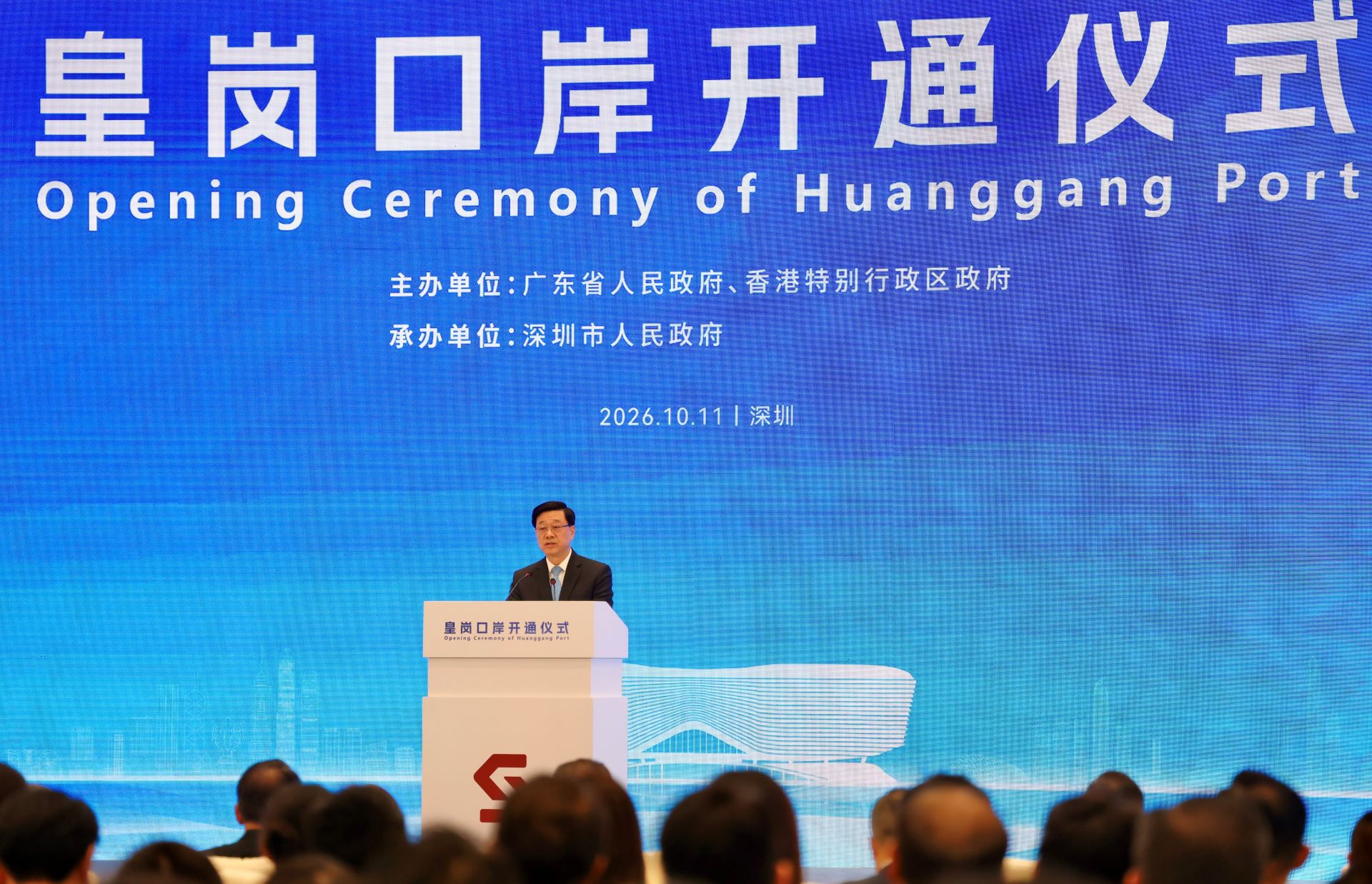
Highlighting the port’s role in empowering technological and economic development, he notes it connects Hong Kong’s Northern Metropolis and the Shenzhen-Hong Kong Science and Technology Innovation Cooperation Zone in the Hetao Area, radiating major innovation platforms, such as Hong Kong Science Park, San Tin Technopole, the Qianhai cooperation zone and Guangming Science City.
In the future, Shenzhen will continue to optimize the port’s service system and fully leverage its potential to promote cross-boundary collaboration in technology innovation, trade and finance, culture and tourism, as well as other industries, Jin said.
Huang Chuping -- chairman of the Standing Committee of the Guangdong Provincial People’s Congress -- said Guangdong Province currently has 50 Class I boundary crossings, including water, land, air and rail ports, accounting for about one-sixth of the national total.
ALSO READ: New Huanggang Port to open at 6:30 am on Monday
Passenger and vehicle trips at Huanggang Port account for more than 70 percent of the Chinese mainland’s total. The value of goods imported and exported through the crossings makes up over one-fifth of the mainland’s total, and has ranked first nationwide for 40 consecutive years.
In the long run, Huang hopes the nexus can be developed into a benchmark for modern international ports, helping Guangdong to expand the pathways and advance integrated development with Hong Kong, and apply its experience to foster broader cross-boundary innovation.
HKSAR Chief Executive John Lee Ka-chiu expressed his gratitude to the Guangdong Provincial Government and the Shenzhen Municipal Government for their support in the port’s reconstruction, noting that the Shenzhen government has covered the project’s design and construction costs.
READ MORE: New Huanggang Port to aid single-document travel
For more than 30 years since it began operation, Huanggang Port has served hundreds of millions of cross-boundary travelers, witnessing the deepening interactions between the two sides.
As a landmark project of Shenzhen-Hong Kong collaboration, the crossing’s reconstruction also aligns with the goals set out in the nation’s 15th Five-Year Plan (2026-30) and the HKSAR’s first Five-Year Plan, deepening the Greater Bay Area’s integration and fostering Hong Kong’s participation in national development, Lee said.
Xue Huaming -- a division director at the Shenzhen Municipal Government’s Office of Port of Entry and Exit – said he expects a surge of visitors to experience the revamped facility in its initial opening stage. He pledged that the authorities on both sides will coordinate to ensure a smooth operation during peak hours.
In addition, a one-stop service center will provide information on transportation, tourism, payment services and policy consultations, as well as multilingual translation devices, to assist domestic and overseas travelers, he said.
Contact the writer at bingcun@chinadailyhk.com
Chen Hong contributed to the story.
