

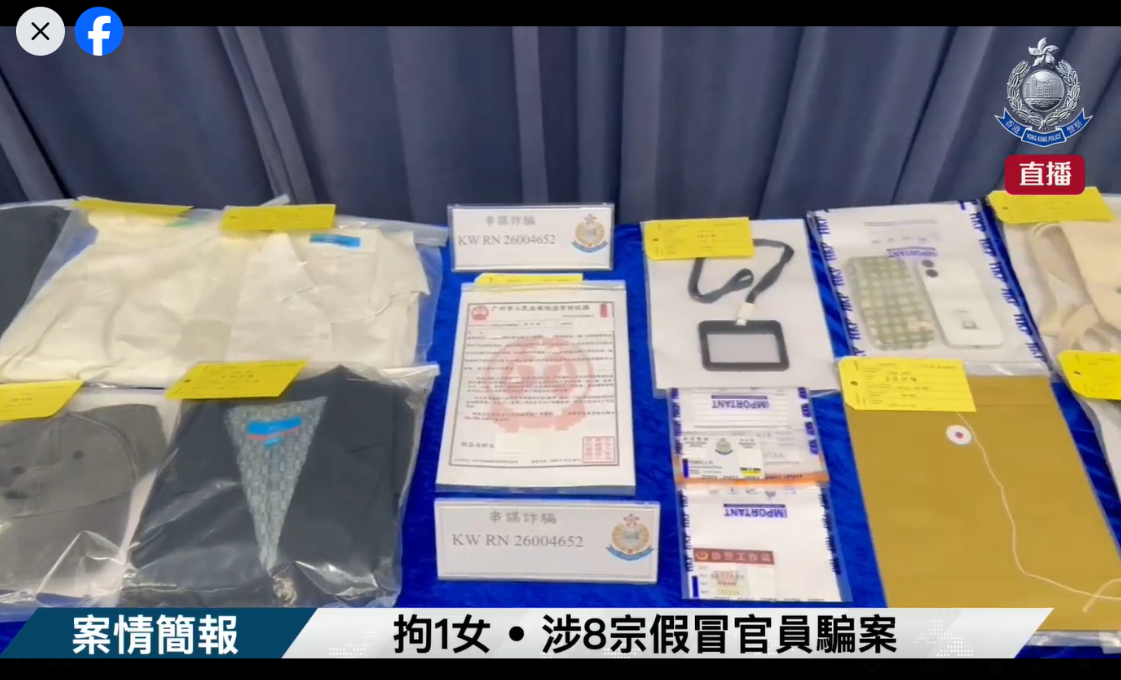
HONG KONG — A 22-year-old local woman has been arrested in Hong Kong on suspicion of involvement in eight fraud cases in which victims were allegedly told to hand over deposits to “prove” their innocence in money-laundering schemes.
At a press briefing on Thursday, Wai Chun-to, senior inspector of the Kowloon West Regional Crime Headquarters’ Technology and Wealth Investigation Unit, said the woman claimed she was a “secret agent” by presenting a forged police warrant card, and she delivered counterfeit documents to victims.
The case dates back to a report received on Sept 19. In the alleged scheme, scammers posed as Hong Kong immigration officers and mainland police officers, telling victims they were being investigated for money laundering and directing them to transfer HK$650,000 as a “deposit” to prove their innocence.
ALSO READ: 71-year-old woman loses HK$2.9m in online romance scam
Following the investigation, officers detained the woman on Tuesday on charge of obtaining property by deception. Police said a forged police warrant card and fake “confidentiality agreements” were found among her belongings.
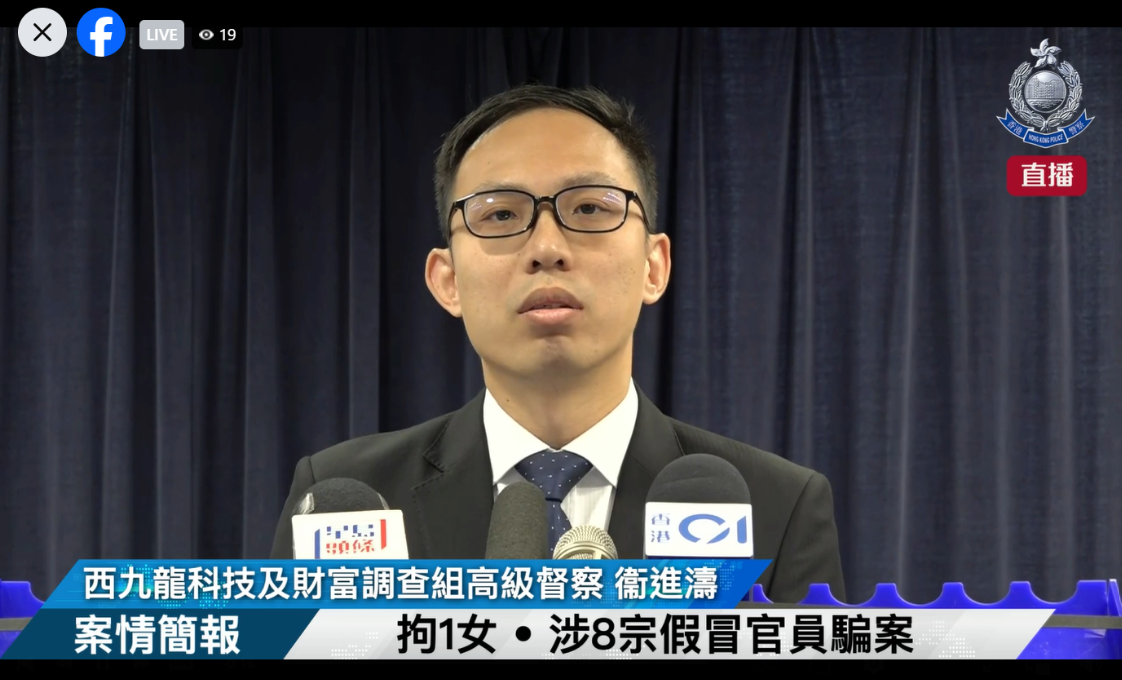
Using the case to issue fresh warnings to the public, Wai said police officers never ask members of the public to transfer money or provide bank PINs to prove their innocence. There is no such thing as a “confidentiality agreement” in police procedure, he added.
He also warned people not to fall for the pretext “to reduce one’s punishment by cooperating with the authorities.” Even if individuals receive no reward, anyone who provides assistance to a scam operation is treated as complicit and can face criminal liability, added Wai.
