

Talent, research platforms, investment and long-term planning to drive growth
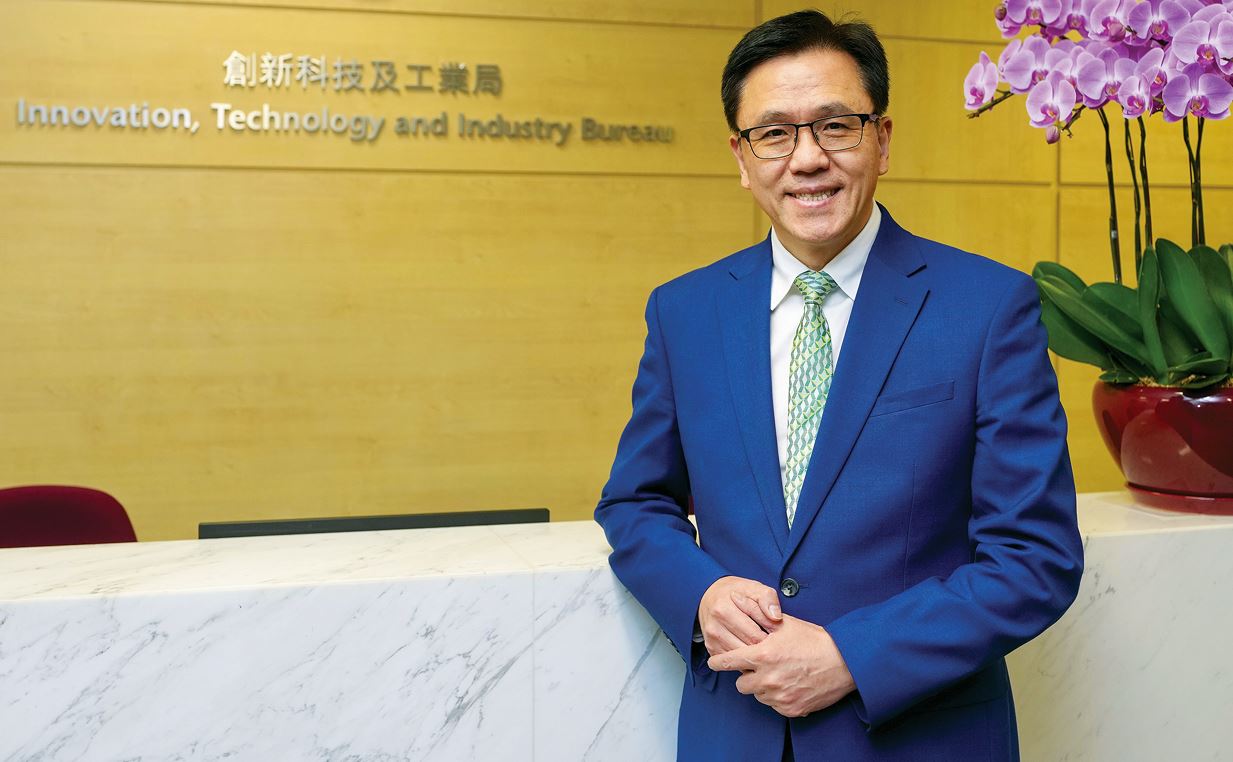
Hong Kong’s innovation chief said the city is entering its “best period in history for innovation and technology development”, buoyed by a deep talent pool, outstanding research platforms, mature capital channeling, and a forward-looking five-year plan.
In a recent interview with China Daily, Sun Dong, the city’s secretary for innovation, technology and industry, said the special administrative region government will continue giving full support to inno-tech growth.
On Sept 16, the SAR released its first five-year plan for economic and social development and its annual Policy Address. Both include concrete measures to develop the city as an international innovation and technology hub, as part of its “four centers, one hub” core strategy.
Hong Kong is now in its best-ever period for innovation and technology development and is the world’s best place to invest, Sun said. With comprehensive support in place, the city is ready to welcome global partners, he added.
The sector’s “golden period” will bring tangible benefits and more opportunities to residents, especially the next generation, Sun said.
He stressed the paramount importance of talent in driving innovation, saying Hong Kong will not only keep attracting global talent but also provide a platform for them and ambitious local talent to showcase their abilities.
He said multiple talent programs and dedicated funds are recruiting top researchers worldwide and supporting young researchers pursuing inno-tech careers in Hong Kong. Sun said that the Frontier Technology Research Support Scheme, launched in September 2025, has funded nearly ten scientific projects in its first round, many led by Nobel laureates and top-tier academicians from premium institutes.
To give these scientists more opportunities beyond universities, the city is developing a series of major innovation platforms. These include research parks like Hong Kong Science Park, Cyberport, the Hong Kong Park of the Hetao Shenzhen-Hong Kong Science and Technology Innovation Cooperation Zone and San Tin Technopole, as well as research and development bodies, such as the Hong Kong Productivity Council, the Hong Kong Applied Science and Technology Research Institute, and three new research institutes specializing in microelectronics, artificial intelligence and life sciences.
Sun also said that InnoHK, the government’s flagship international innovation initiative, has attracted more than 30 top universities and leading R&D institutions from 12 economies worldwide, gathering around 3,000 local and overseas researchers.
ALSO READ: Sun: HK emerging as one of the world's most dynamic I&T centers
The authorities are also actively encouraging leading firms like Huawei to set up research facilities in Hong Kong, creating more research jobs for talent, he said.
“With talent, we drive technology; with technology, we guide industry; and with industry, we attract talent,” Sun said.
Sun said that inno-tech development requires capital in addition to talent.
He said that Hong Kong has a mature ecosystem connecting government, industry, academia, research, and investment. Under this system, the government has rolled out various guiding and matching programs to mobilize market investment. For example, it set up the HK$10 billion ($1.27 billion) Innovation and Technology Industry-Oriented Fund to leverage government funding and channel more private capital into relevant industries.
Sun said that for every HK$1 the government invests in the sector, an additional HK$3 in investment is hoped for from the private sector.
Long-term planning
Another key to Hong Kong’s inno-tech ambition is its first five-year plan, which sets out forward-looking policies to build the city’s inno-tech ecosystem and clearly chart its long-term direction, he said.
Such early planning is important, as technological breakthroughs do not happen overnight, and they require stable medium- to long-term policies, he added.
Sun said the plan aims to upgrade traditional industries with technology while growing emerging sectors — especially life and health tech, AI and robotics, advanced manufacturing, and new energy and materials. It also seeks early positioning in future industries such as brain-computer interfaces by fostering research and application platforms. The city is also considering attracting advanced firms, including quantum technology companies, to speed up related industry growth, he said.
Sun cited as an example one measure in the new Policy Address: a new Task Group on Frontier Technology to be set up by his bureau. The agency will pool government departments and industry to study global tech trends and national strategic fields over the next five to 10 years and beyond, helping Hong Kong better plan ahead for inno-tech development, he said.
Given the fast-changing nature of inno-tech, the government will respond quickly to the sector’s new advancements and promptly review existing policies, Sun said.
He said that in 2023, generative AI emerged and rapidly made huge advances. Starting that year, the SAR government aimed to strengthen Hong Kong’s computing infrastructure, and later set development goals for the Sandy Ridge Data Facility Cluster — a hub that can provide computing power capacity of 150,000 peta-floating point operations per second by 2032, equivalent to 36 times the city’s current capacity.
“Hong Kong will keep perceiving, responding to and pursuing change,” Sun said.
ALSO READ: Sun: HK offers open ecosystem for innovation to thrive
Sun said promoting innovation is not simply about pursuing technological progress; it is also about driving high-quality economic growth so that residents can truly benefit through improved daily lives, higher incomes, and better job opportunities.
He cited one key performance indicator in Hong Kong’s first five-year plan — striving to raise the ratio of GDP contributed by manufacturing and new industrialization to 5.5 percent after 2030, an average annual increase of about 10 percent.
Sun said he believes this will drive simultaneous growth in trade, logistics, finance, professional services, R&D, design, testing and certification, and other producer services, creating many new jobs for the younger generation.
Contact the writer at amberwu@chinadailyhk.com
