

Renowned educator’s return stresses value of people-to-people contacts for building Sino-US connections
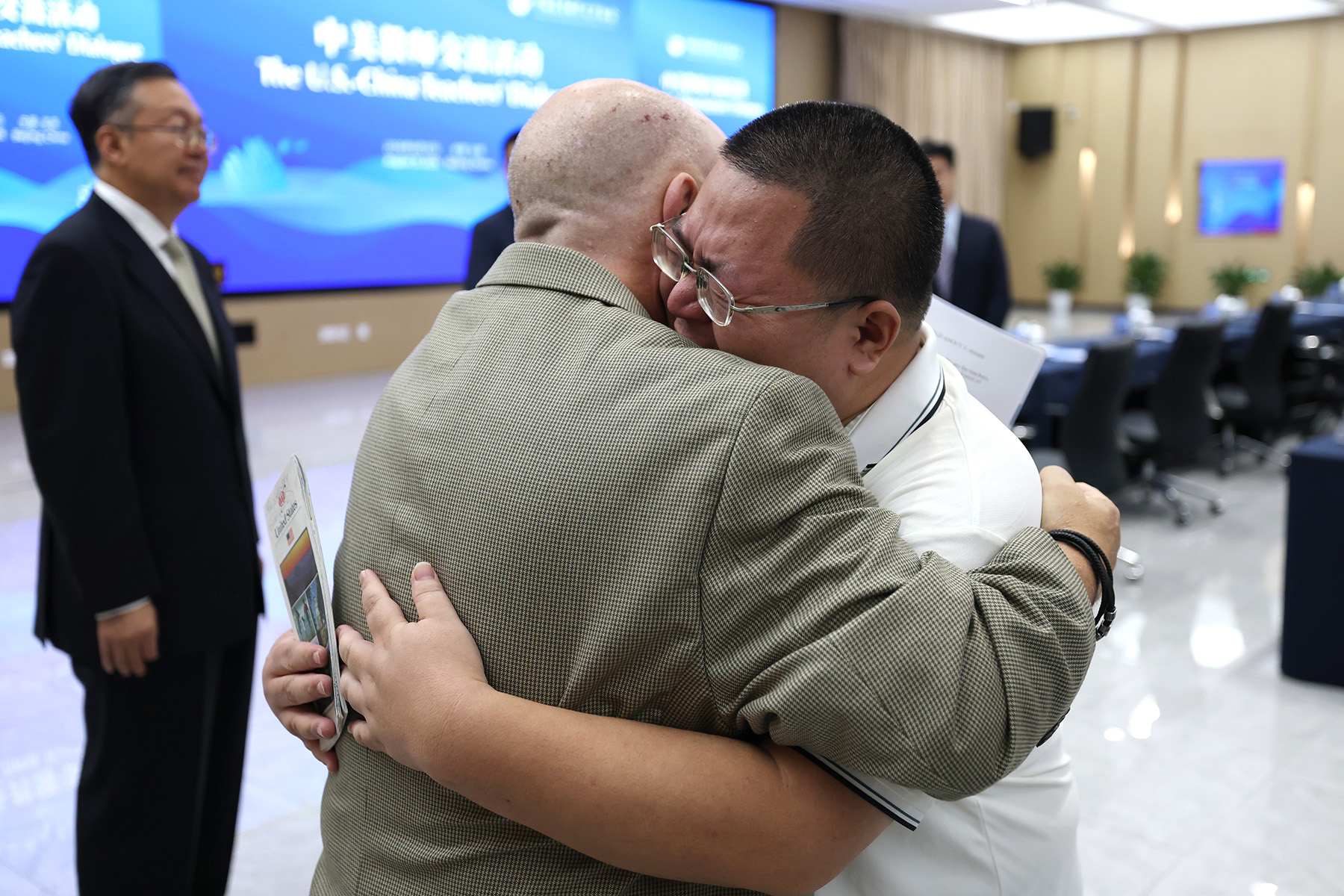
When Ronald Sakolsky walked into a conference room in Beijing recently, he was immediately greeted by a former student he had not seen in 26 years.
The embrace that followed — captured by cameras and shared across social media — became yet another symbol of the enduring power of people-to-people connections between China and the United States.
Sakolsky, a retired history teacher from Pennsylvania, was in China for a 10-day visit from Aug 23 to Sept 1, at the invitation of the China Education Association for International Exchange.
His journey — from Beijing to the Inner Mongolia autonomous region and Henan province — brought together the threads of a story that began in 1999, when he first arrived in Henan’s Luoyang, through a teacher exchange program that would ultimately transform hundreds of lives on both sides of the Pacific.
The US-China Teachers Exchange Program operated from 1996 to 2014 — jointly run by the China Education Association for International Exchange and the American Council of Learned Societies, which was later replaced by the National Committee on US-China Relations (NCUSCR).
During those 18 years, the program sent 332 Chinese teachers to schools across the US and brought 117 US teachers to Chinese classrooms.
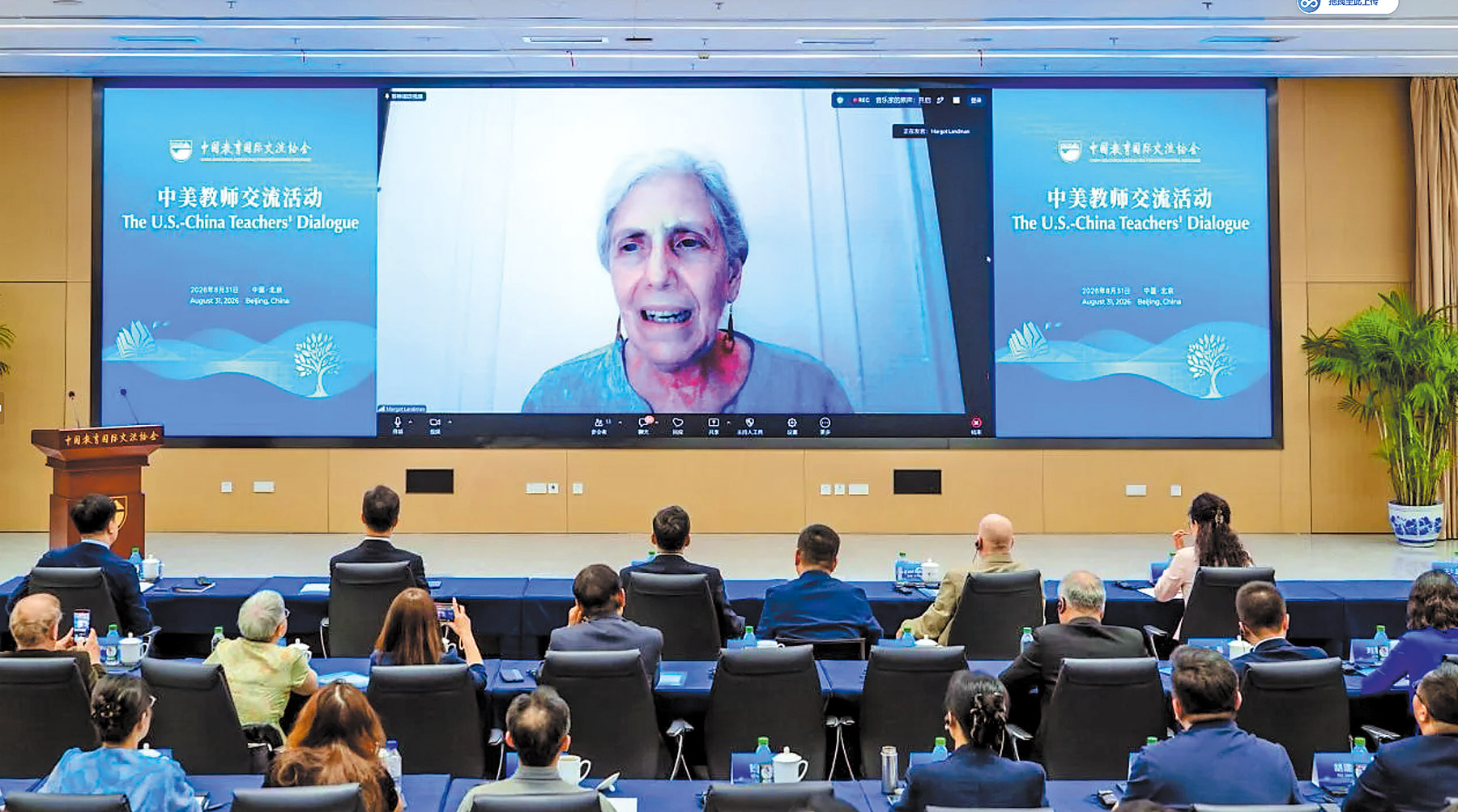
Margot Landman, former program director and deputy vice president of the NCUSCR, said what began as “a crazy idea, unclear in the details” grew into a bridge of understanding that continues to bear fruit long after the formal exchanges ended.
Sakolsky’s story is perhaps the most famous example of the program’s lasting impact.
In 1999, while teaching English at Luoyang Foreign Language School, now called Luoyang Foreign Language Junior Middle School, he saw a television report about Yin Yuzhen, a woman in Inner Mongolia’s Maowusu Sandy Land who had devoted her life to fighting desertification. Moved by her determination, he raised $5,000 through a US charity to support her tree-planting efforts.
Yin used the money to buy tens of thousands of saplings. Today, those fragile seedlings have grown into a forest of more than 50,000 trees.
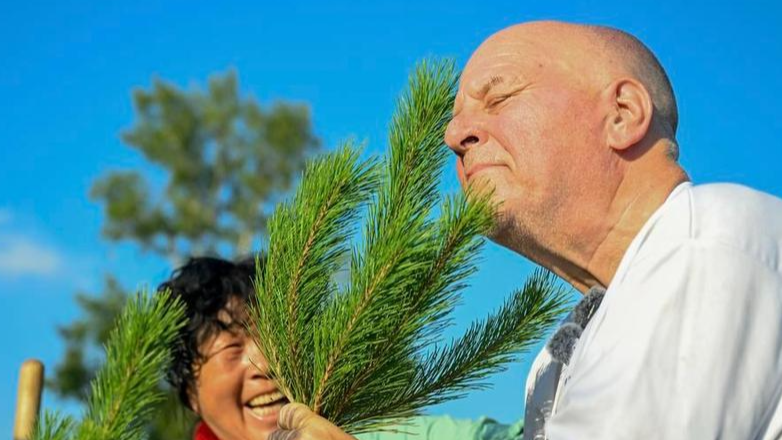
When Sakolsky returned recently to the Maowusu Sandy Land and stood before the grove named after him, the barren landscape he remembered had become a green oasis.
“She proved me wrong and made it possible,” Sakolsky said in an interview with China Daily. “She’s the one who carried the trees on her shoulder, dug into the sand to plant them, and watered them; she’s the hero.”
The two had lost touch over the years. In May, Yin launched a public campaign to find her old friend from the US. Tens of millions of Chinese internet users joined the search — and within 48 hours, the two had found each other again. Their reunion some 26 years later struck an emotional chord with millions of people and sparked an outpouring of admiration.
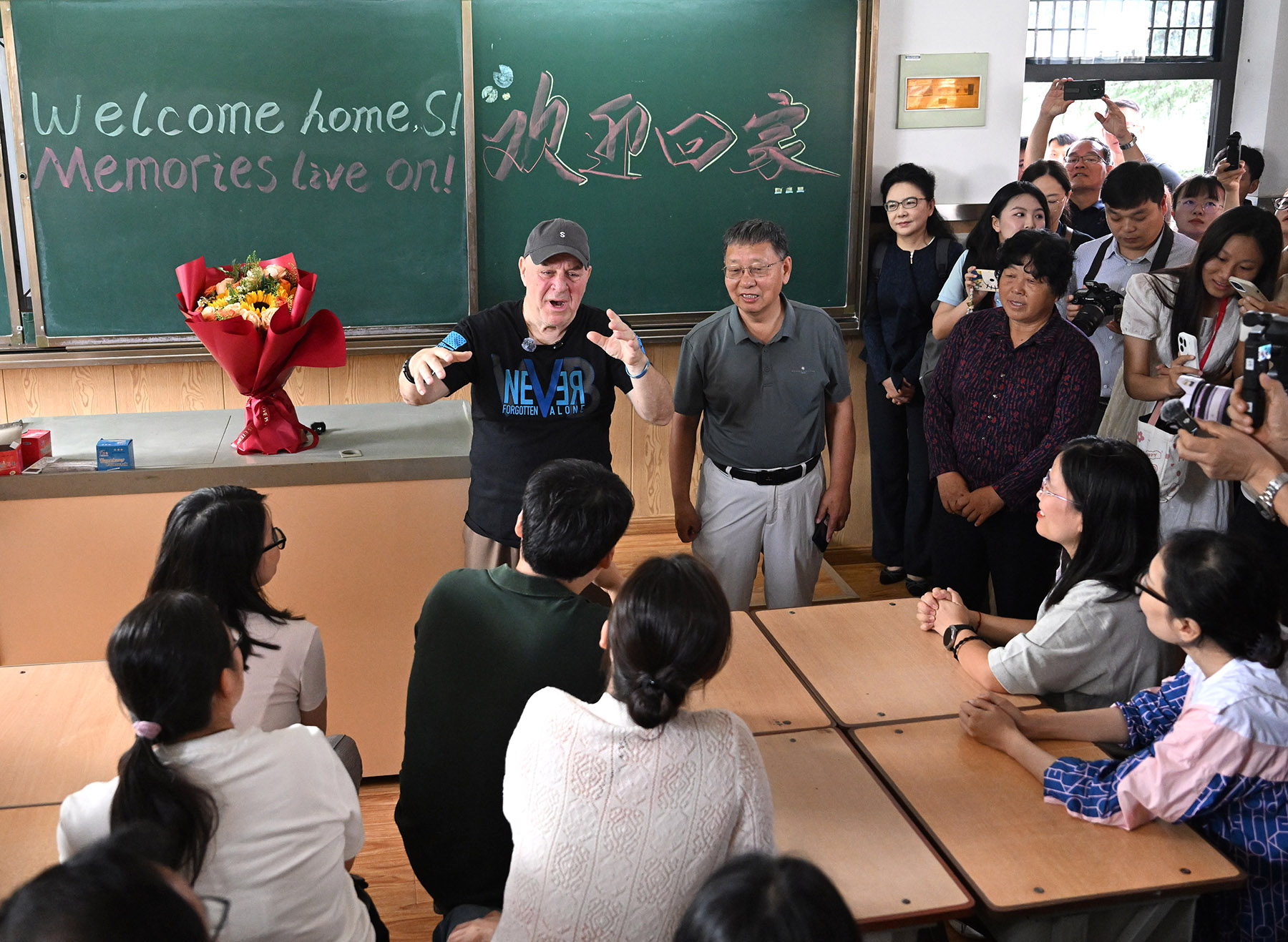
For Sakolsky, the most memorable moment of his return visit was not only Yin and the forest, but the former students he reunited with in Luoyang on Aug 29. “There are professors, doctors, entrepreneurs, bankers, and teachers. I was so proud of them,” he said.
One student, Zhao Weijing, who attended the Beijing event on Aug 31,
had kept a map of the US that Sakolsky signed and gave him in 1999.
“It’s just a map, but it meant more to him than just a map. You could see it in his eyes and his tears,” Sakolsky recalled. “I handed him America. He kept it.”
Zhao, now a faculty member at the Civil Aviation University of China, had struggled with English as a student and was afraid to speak. Sakolsky noticed and constantly encouraged him. When he learned that Zhao loved geography, he gave him the signed map as a gift.
“Looking back on my journey, Mr Sakolsky is one of the people who influenced me the most,” Zhao said.
Sakolsky repeated his catchphrase “students first” on stage, drawing laughter and applause from the attendees.
“A good teacher consumes himself or herself to light the way for others,” he told the audience.
“The love of students and giving to others comes from the heart. And the reward comes years later, when they still call you coach, when they remember your quotes, when they tell you it was because of you.”
While Sakolsky’s story captured hearts, the exchange program also produced remarkable outcomes for the participants.
Chris Fray, a Chinese language teacher at Staples High School in Westport, Connecticut, spent the fall of 1998 at Yangzhou Middle School in Jiangsu province. He recalled a 13-year-old student who left an impression on him.
“Little Linda spoke excellent English,” Fray said. Over the years, he wrote recommendations for her as she pursued her education. She eventually attended a key school in Nanjing, Jiangsu, then a US university.
She told him she wanted to become a doctor to help her country address health challenges. Linda went on to medical school, completed her residency at Duke University, and today is a surgeon at Johns Hopkins University.
“When I think about the impact of this 30-year relationship, I don’t think primarily about numbers or programs. I think about relationships,” Fray said. “You never know where the impact of one teacher or one student might be.”
Fray’s own career was also transformed. He started the first Mandarin Chinese program at Staples in 2004, which eventually expanded amid student demand. “Learning Chinese let me create a program that connected hundreds of students to the language and culture they might otherwise never have been exposed to.”
Adrienne Fazzolara, a social studies teacher from Michigan, spent the 2001-02 school year in Beijing — a year that coincided with the Sept 11 attacks. That experience deepened her understanding of cross-cultural solidarity.
“Being away from home, not being able to talk to our families — and then finding our people in China who took care of us, and were kind and understanding,” she recalled. “That kind of worldview — we’re all humans working together, taking care of each other — when something so tragic happens, those borders dissolve. We all want to make the world better.”
Todd Parker, now a principal in Pennsylvania, spent the fall semester of 1997-98 in Yangzhou. “Everyone I interacted with was extraordinarily kind and welcoming,” he said.
He learned to boil milk, make dumplings, and navigate daily life in a rapidly modernizing city — stores went from having no refrigerators to offering pasteurized milk during his stay. As a history teacher, he said it was fascinating to witness such rapid development firsthand.
Parker later developed global learning modules for elementary students and speaks annually with second graders about his experience in China.
“The Yangzhou feeling was a formative experience in my life. It gave me the opportunity to learn from others, appreciate different perspectives, and develop skills that shaped my professional path for decades. Most importantly, it showed me the power of building relationships across cultures,” he said.
Bai Fan, principal of the Luoyang No 2 Foreign Language School Education Group, who participated in an exchange in 1998-99 with a high school in Wisconsin, said the experience changed his vision of education.
Upon returning, he founded a school with just 25,000 yuan ($3,721) and staffed by 27 teachers on a plot of farmland. Today, it has grown into a modern education group with six campuses, 1,000 teachers, and 10,000 students.
The school never reduced its education budget, even in the hardest times, and never stopped opening up, Bai said. Teachers brought international perspectives into classrooms, he added.
Zhou Xiangli, an English teacher from Beijing Huiwen Middle School, spent the 2000-01 school year in Pittsburgh and lived with Sakolsky’s family.
She said the significance of grassroots people-to-people exchanges lies not in grand narratives, but in the everyday lives of ordinary people breaking down regional barriers and cognitive biases. “What both sides see is real people and real lives — not stereotypes,” she said.
Former program director Landman, who was involved with the exchange from the start, said the initiative has succeeded beyond expectations.
“People truly learned about themselves and about others, gained new perspectives and insights, and developed friendships that lasted for decades,” she said. “They also passed on the knowledge they gained to generations of students.”
Tian Xuejun, president of the China Education Association for International Exchange, stressed the program’s historic role in building mutual understanding.
Thirty years ago, the program was the prelude to non-governmental, systematic two-way teacher exchanges between China and the US, he said.
It not only provided a platform for teachers to learn from each other, but also built a bridge of trust and sincere friendship at the grassroots level, Tian said.
“These stories fully demonstrate that education is the most direct and lasting way to bring our two peoples closer together,” he said.
Looking ahead, Tian reaffirmed CEAIE’s ongoing commitment to implementing the consensus of the two heads of state and working with friends across sectors to promote openness, inclusiveness, and mutual learning.
Yang Jun, vice-president and secretary-general of the CEAIE, said even though we live in a time when almost everything is reachable online, the trust between people and the warmth of in-person contact cannot be digitized.
Over the past decades, even in challenging times, US‑China educational exchange has sustained, he said. “The simple act of kindness of Mr Sakolsky 26 years ago has resulted in a lifetime friendship. We hope the seeds we plant today will grow into millions of such relationships,” he added.
Shen Xuesong, minister counselor of the Chinese embassy in the US, said that mutual respect, sustained exchanges, and investing in the next generation are key.
“Though our cultures and systems differ, people in both countries share kindness, hospitality, and a common aspiration for a better life,” she said. “Despite ups and downs in bilateral relations, the friendship between our peoples has never ceased.”
She noted that from the teachers who crossed the ocean 30 years ago to the 50,000 US youngsters who have visited China recently, young people in both China and the US are becoming a vital force in promoting China-US friendship.
“They experience each other’s countries firsthand and gain a true picture of the lives of the people. This most authentic understanding comes from face-to-face exchanges and heart-to-heart communication,” she added.
Contact the writers at zoushuo@chinadaily.com.cn
