

Museum, competition showcase development of vocational training
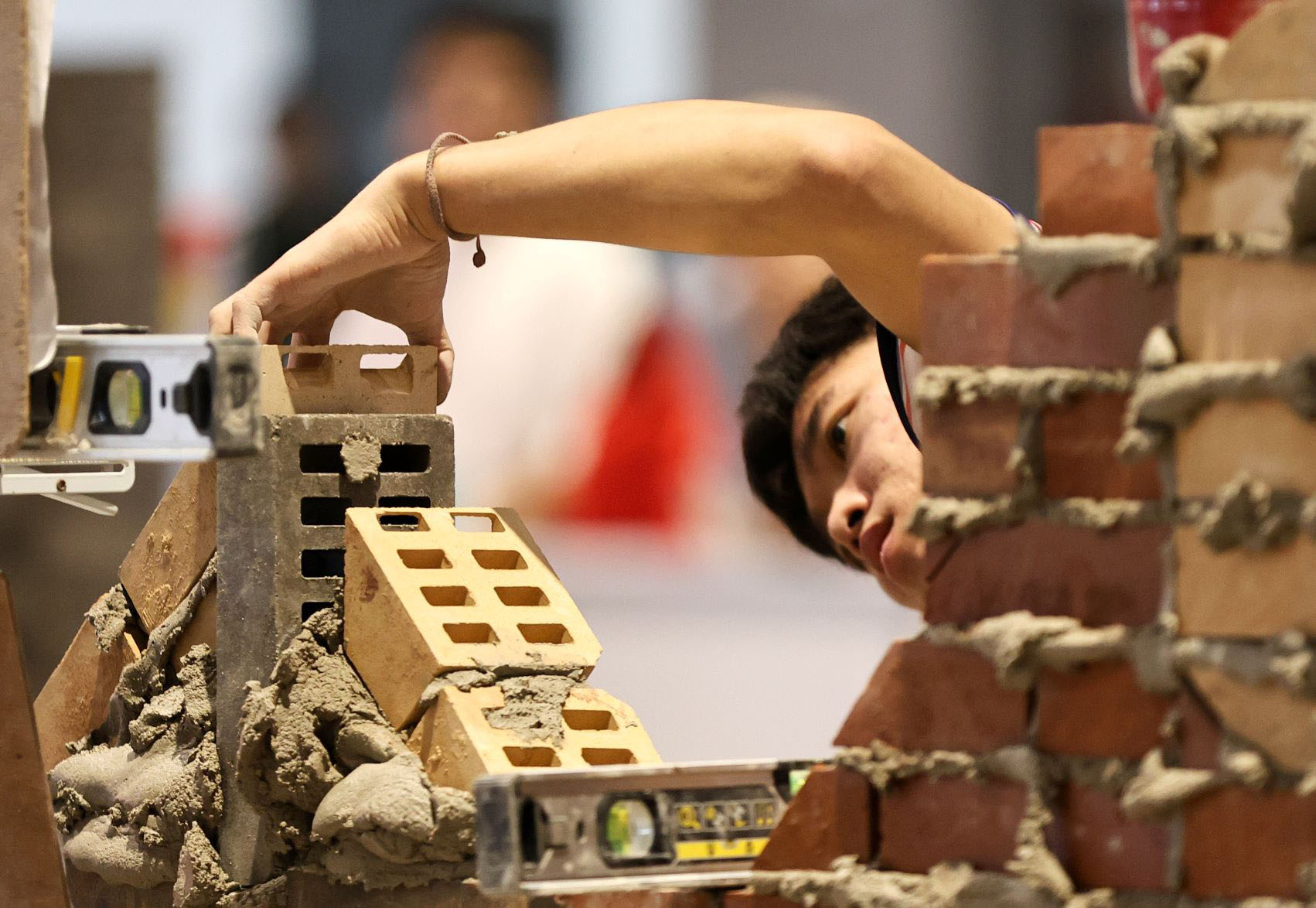
For those who had planned to visit WorldSkills Shanghai 2026 during the Mid-Autumn Festival holiday but missed the registration window, the WorldSkills Museum was a welcome consolation. Yang Xu, a Shanghai resident, was among those who made the most of a visit to the museum.
"I was amazed by the craftsmanship of different industries demonstrated across the four-floor museum. The special exhibition Blanc de Chine is a must-see. It is really hard to believe that those exhibits that look like fabric or gauze are actually made of Chinese white porcelain," she said.
Although the museum opened to the public in November 2023, it had not occurred to Yang to pay a visit until the WorldSkills Competition took place from Tuesday to Sunday.
READ MORE: China tops medal tally as skills contest ends
According to Zhai Tao, deputy director of the Ministry of Human Resources and Social Security's department of vocational capacity building, the museum has received more than 1 million visitors so far. As the world's only museum of its kind, it has played a pivotal role in demonstrating the importance of skills, he said.
The WSC is about much more than the museum. At the 2026 WorldSkills Conference Shanghai Skills Development Forum held on Sept 24, a catalog for the mutual recognition of overseas vocational skills was released, aiming to open up channels for the mutual recognition of skills across borders and facilitate local adaptation and adoption of advanced international skills.
In line with the latest arrangement, nine Shanghai vocational colleges, including Shanghai University of Engineering Science, paired up with nine overseas vocational institutions, including Federation University Australia, and signed agreements to cooperate in learning mechanisms for artificial intelligence, healthcare, creative arts and elderly care.
The Ministry of Human Resources and Social Security, the Shanghai municipal government and WorldSkills International signed a letter of intent on Sept 24 to jointly build an international innovation center for skills, aiming to accelerate industrial service implementation, build an ecosystem for various resources and further advance international vocational skills training.
These recent developments backed the words of Shanghai Vice-Mayor Chen Jie, who in June said Shanghai will seek deeper cooperation with partners through the WSC and introduce "advanced equipment, authoritative teaching materials and high-quality mentors".
According to Chen, Shanghai is now home to over 4 million skilled workers. More than 35 percent of them are certified high-skilled talents, a segment that is expanding at 10 percent a year. The WSC is expected to further fuel this growth and benefit more industries, he said.
A good example was highlighted in this year's painting and decorating skill competition. According to Ling Min, technical support manager for the skill, the competition will help promote higher industry standards and improve the overall skills of home decoration professionals, who already make up a large workforce in China.
Acknowledging that robots are increasingly being deployed in high-risk tasks such as spray painting, which involves harmful, irritating and toxic gases, Ling said home renovation involves more individualized layouts, an area that is still being explored. The competition will help advance the integration of robots with human individuality, he said.
Ling's words address a broader trend: the job market is facing challenges posed by new technologies. According to Lee Chang-hee, director of the International Labour Organization Office for China and Mongolia, the fundamental challenge is the mismatch between the skills currently possessed by human beings and those required by emerging industries.
Against that backdrop, vocational training serves as a pivotal bridge connecting current jobs with future opportunities, said Lee.
Companies, however, have already taken corresponding steps. Starting in 2019, JPMorgan Chase has partnered with the ILO in China to build a greener and more inclusive vocational training system in the country. The initiative launched the first national guides on skills for the economy's green transition and shared its approach with multiple government agencies and vocational institutions across the country.
ALSO READ: Skills event in Shanghai showcases young talent
Continued efforts have been made in the public sector. According to data released by the Shanghai municipal government, the city provided subsidized vocational skills training to 725,900 person-times in 2025, exceeding the target of 650,000 set by the Ministry of Human Resources and Social Security. Last year, Shanghai trained an additional 71,700 highly skilled talents at the senior worker level or above.
Vocational training features prominently in national policy. China's 15th Five-Year Plan (2026-30) calls for efforts to strengthen coordination between industries and the job market. New professions and jobs should be cultivated, while the lifelong vocational skills training system should be refined.
"By leveraging the WSC, China will invest more in people and refine how skilled talents are cultivated, employed, evaluated and incentivized. By opening up pathways to skill-based employment and higher incomes, we can let exquisite craftsmanship take root in industry and let the strength of craftsmanship uphold people's well-being," said Yan Qinghui, vice-minister of human resources and social security.
Contact the writers at shijing@chinadaily.com.cn
