

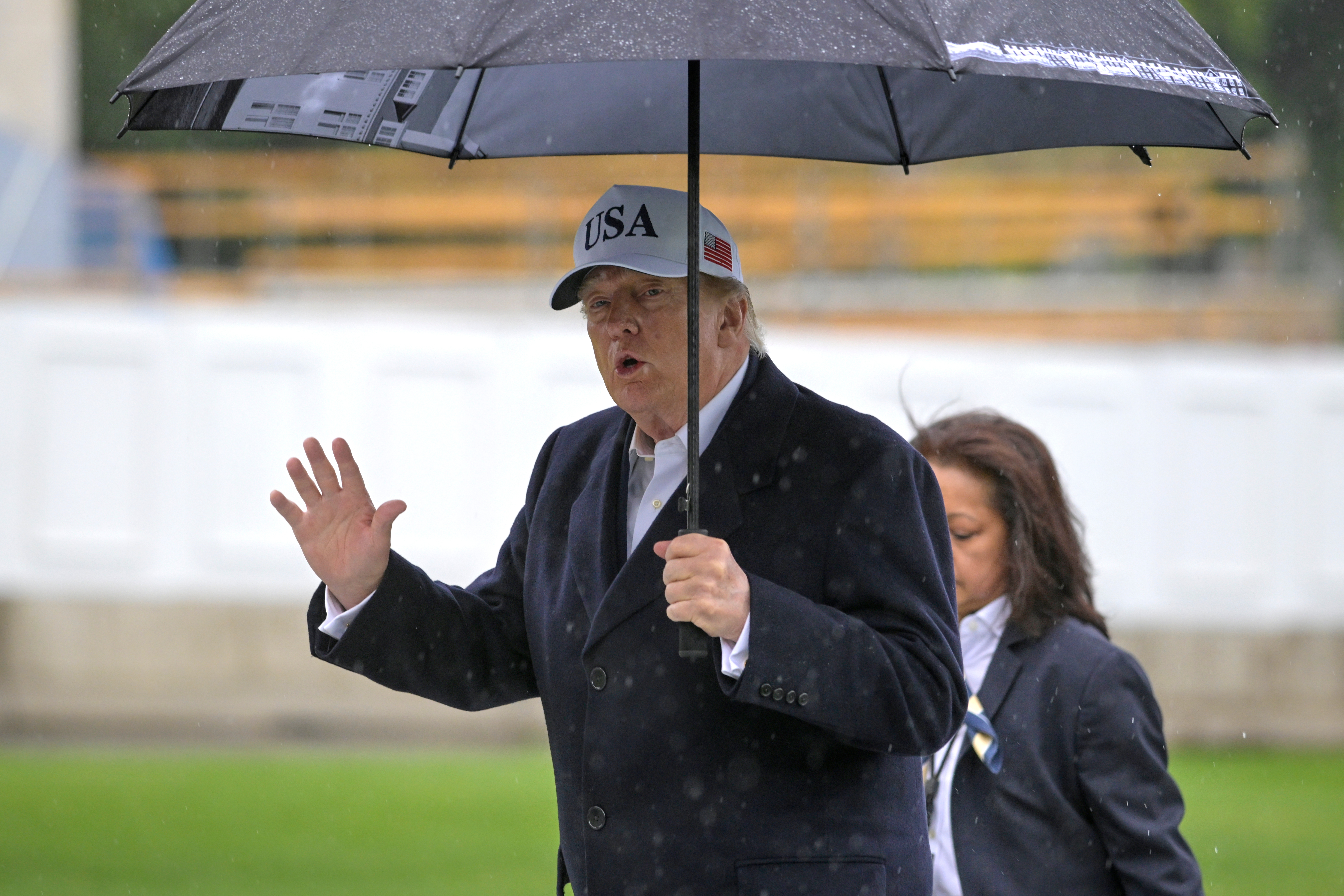
WASHINGTON/TEHRAN/UNITED NATIONS – US President Donald Trump said Saturday that he has rejected a conditional proposal by Iran concerning the reopening of the Strait of Hormuz.
"We have total control of the Hormuz Strait. Massive amounts of oil are coming out of the Hormuz Strait. Last night, we had 29 ships come out," Trump told journalists at the White House.
"They want to make a deal, and I think that's fine. I like making a deal too, but that deal would not be acceptable," he added.
On Friday, Iranian Foreign Minister Seyed Abbas Araghchi told reporters at the United Nations (UN) Headquarters in New York that Iran had conveyed to the United States through Qatar a "concrete" plan under which the strait can be reopened within seven days if necessary conditions are met.
The seven-day timeline will start as soon as Washington accepts it, he said.
Under the plan, the United States would need to take certain actions that Iran believes may take four or five days, said Araghchi, adding that on day six, the strait would be open. "And on day seven, the talks with the US will be started for the final deal on mutually agreed subjects," he said.
He further said the actions the United States should take are not new, as they are already included in the memorandum of understanding (MoU) signed in June.
Araghchi: Over 5,000 people killed in US, Israeli attacks
Araghchi has said more than 5,000 people, including hundreds of women and children, were killed in the US and Israeli "aggression" against Iran, Iranian media reported early Saturday.
In his remarks at a press briefing in New York, Araghchi listed some of the civilian targets struck in the US and Israeli attacks as residential areas, schools, hospitals, energy facilities, sports and cultural complexes and transportation infrastructure, according to the semi-official Fars news agency.
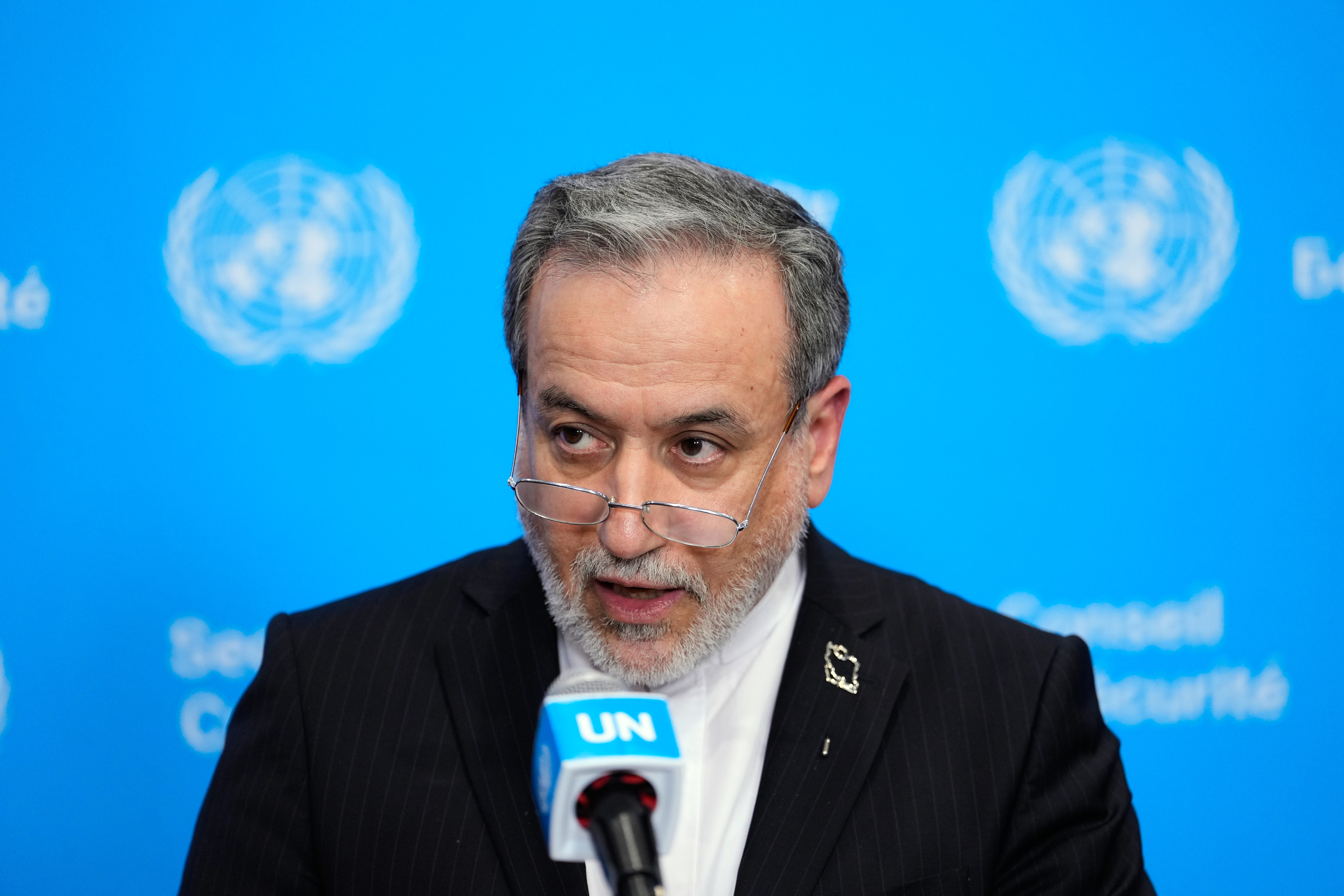
Araghchi emphasized that the assassinations of Iran's former Supreme Leader Ali Khamenei and a number of the country's senior political and military officials were "flagrant crimes and in violation of international law," said the report.
On Feb 28, Israel and the United States launched joint attacks on Iran's capital Tehran and other cities. Iran has since tightened its grip on the Strait of Hormuz.
On June 18, the United States and Iran signed an MoU on ending the war in the region on all fronts, including Lebanon.
Under the MoU, they were scheduled to hold negotiations within 60 days, a deadline that expired on Aug 17, to reach a final agreement, but the talks' fate remains unclear amid recent escalations.
Tehran urges promoting cooperation, trust
In separate meetings with his Saudi counterpart Prince Faisal bin Farhan Al Saud and Arab League Secretary-General Nabil Fahmy, in New York on Friday, Araghchi has called for the promotion of cooperation and trust among regional countries to ensure security in West Asia, according to statements released by the Iranian Foreign Ministry.
Araghchi briefed the Saudi foreign minister on the understanding reached between Iran and Oman to designate routes for safe shipping in the Strait of Hormuz, and voiced Iran's determination to strengthen trust, especially within the framework of security mechanisms based on interaction among regional countries.
ALSO READ: Iran: Conditions for 'reviving diplomacy' conveyed to US through Qatar's mediation
The two sides also exchanged views on relations between Tehran and Riyadh and on the importance of making joint efforts to improve ties in areas of common interest, according to the foreign ministry.
Speaking to Fahmy, Araghchi said Iran is resolute in developing trust among regional states, describing security as an "integrated and indivisible" concept that requires an understanding of responsibilities and constructive interaction to ensure it.
Fahmy, for his part, hoped that mutual trust and cooperation among regional countries would be strengthened through collective efforts and further dialogue and engagement.
Riyadh calls for Strait of Hormuz to return to pre-Feb 28 status
Also on Saturday, the Saudi foreign minister stressed the importance of restoring the situation in the Strait of Hormuz to its pre-Feb 28 status without the imposition of any fees or restrictions.
Speaking during the general debate of the 81st Session of the United Nations General Assembly, Faisal called for freedom of navigation in international waterways, highlighting the Strait of Hormuz, Bab el-Mandeb Strait, Red Sea and Gulf of Aden, and rejected their use by any party as an instrument of pressure or threat.
READ MORE: Trump hails 'very good' talks as Iran conveys 'decisive positions'
He said the security of the Gulf region is part and parcel of the security of the region and the world at large, adding that stability in the Gulf is directly connected to global energy security, international trade and supply chains.
He noted that Saudi Arabia supports efforts and initiatives aimed at de-escalating tensions in the region and stressed the importance of ensuring that the entire region remains free of weapons of mass destruction.
Iran denies plans for military retaliation over aviation curbs
Meanwhile, the Secretariat of Iran's Supreme National Security Council (SNSC) denied in a statement on Saturday that Iran would take military retaliatory action in response to the recent aviation restrictions imposed on the country, the semi-official Tasnim news agency reported.
The SNSC issued the statement in response to certain "misleading" interpretations and quotes from recent remarks by its Secretary Mohsen Rezaei regarding the air transport issue, which have given rise to questions and ambiguities.
It said the claim that Iran would resort to military retaliation in response to recent aviation restrictions was rejected, adding that negotiations with relevant countries were being pursued seriously to remove certain "illegal" aviation restrictions.
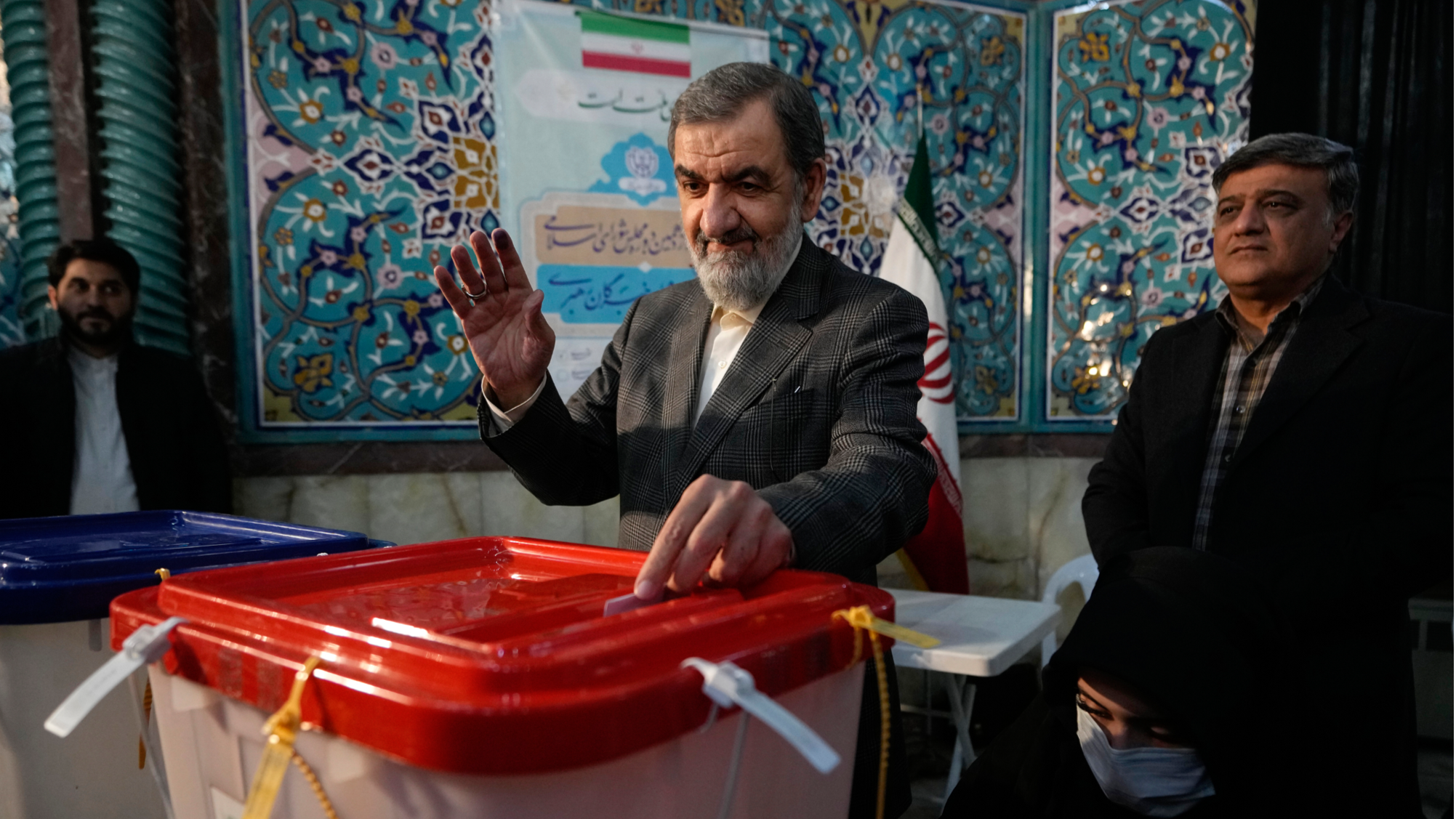
The SNSC underlined that there were numerous non-military ways to retaliate against those complying with the restrictions, which could be applied to certain airports if necessary, while expressing hope that the situation would not reach that point.
On Monday, US Treasury Secretary Scott Bessent said that "all the Iranian airlines will be shut down around the world" from Wednesday, threatening to impose secondary sanctions on companies that provide them with aviation services.
He told broadcaster CNBC that when Iranian carriers land at an airport, "you cannot provide them with fuel, you cannot provide them with landing services, you cannot sell them tickets, or you will be knocked out of the dollar system."
In an interview with state-run IRIB TV on Wednesday hours after the US sanctions on Iranian airlines took effect, Rezaei called on countries, especially Iran's neighbors, not to join the US "adventurism" as it would soon be doomed to failure.
