

Andy Burnham said his UK government’s upcoming budget would be “challenging,” a marked change in tone from the prime minister, who’s sought to project optimism during the early weeks of his new administration.
Burnham and his chancellor, John Healey, had been hoping to deliver a low-key budget on Oct 28 focused on easing the cost of living, cutting costs for businesses and fleshing out plans for further devolution. But deteriorating market conditions as conflict in the Middle East pushes up energy prices and fuels wider inflation has changed their messaging.
“It is going to be challenging, because the picture around the world is challenging,” Burnham said on Wednesday, after UK inflation rose to a five-month high ahead of the Bank of England’s interest rate decision on Thursday. “We will take difficult decisions to make sure the economy remains on track,” he said.
Burnham’s more pessimistic message contrasts with the boosterism he’s displayed since becoming prime minister in July, pledging on his first day in office that this would be “the moment we bring back hope.” His ascent to power has given the governing Labour Party a bounce in the polls, moving it ahead of Nigel Farage’s Reform UK in some surveys.
But Burnham and Healey now face a growing budget black hole as the Iran war and now also Saudi Arabia’s conflict with the Houthis in Yemen pushes up energy prices and stokes a rise in borrowing costs. Earlier this month, Bloomberg Economics estimated the surge in gilt yields would knock about £12 billion off the government’s £23.6 billion buffer against its fiscal rules.
“It’s not the case that we aren’t going to take difficult decisions,” Burnham said. Nevertheless, “we won’t take risks with people’s living standards or with the economy as a whole.”
ALSO READ: Burnham’s strategy against a fractured right is coming into view
The main opposition Conservative party went on the attack on Thursday, with Shadow Chancellor Andrew Griffith warning in his first major speech in the job that Labour are “squeezing small businesses dry” by “taxing them too much,” according to pre-briefed remarks.
Tory leader Kemi Badenoch, meanwhile, accused the government of being unwilling to make spending cuts and of pretending “that every difficult choice can be avoided by asking taxpayers for a little bit more.” In an article late Wednesday in the Express, she also said that a country “cannot TikTok its way out of bond market crisis,” adding that Burnham and Healey are “gearing up” to raise taxes at the budget.
That echoes comments by former Bank of England chief economist Andy Haldane, who told LBC that “the market now suspects that this is a traditional tax-and-spend socialist government with better TikTok videos.” Burnham rejected that characterization.
“Our determination to deliver growth in every postcode continues,” Healey said in response to Wednesday’s inflation figures. “Despite this serious global uncertainty, our UK economy is proving resilient.”
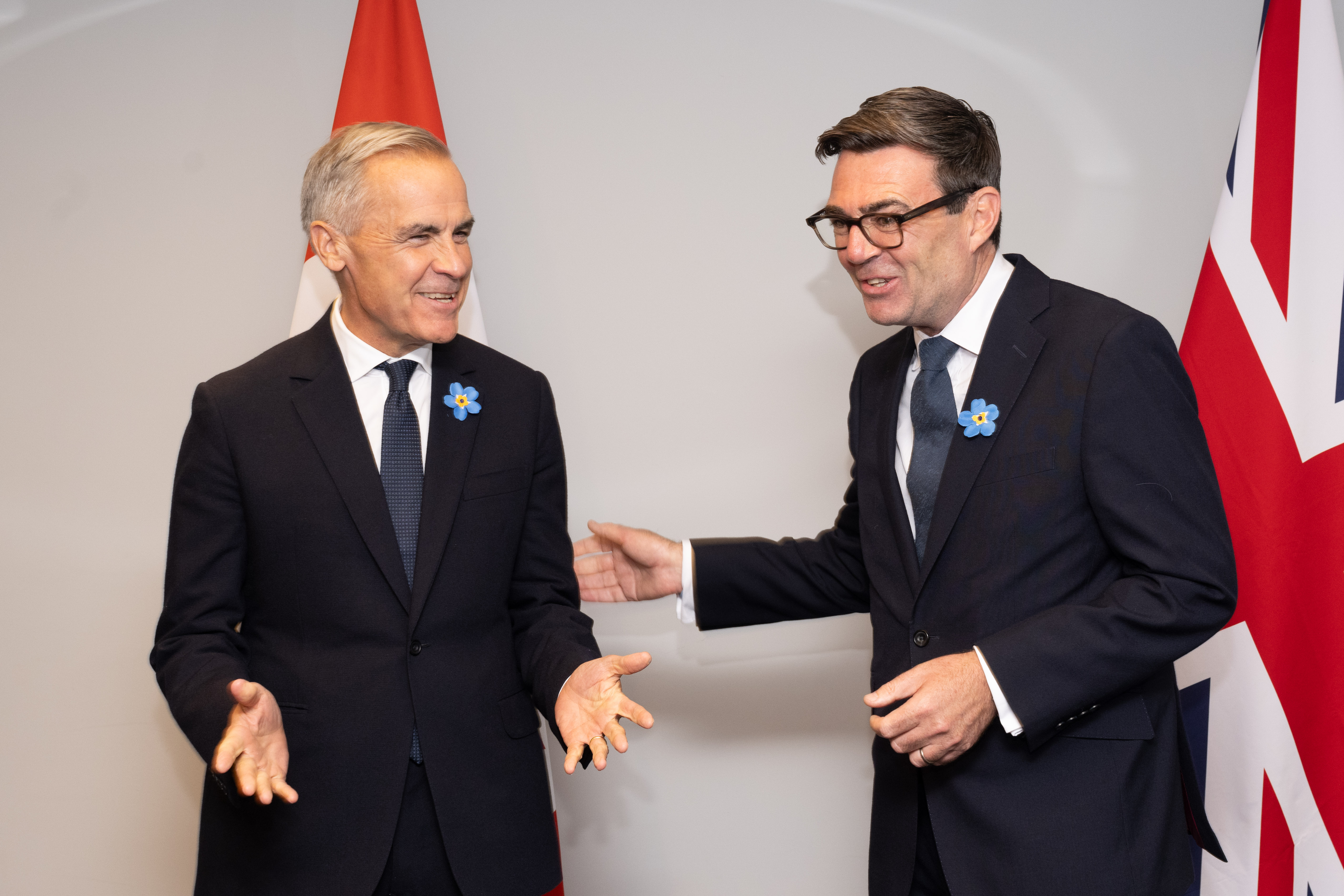
On Wednesday evening Burnham met Canadian Prime Minister Mark Carney. The two premiers discussed AI, trade with Europe and defense, before watching their football club, Everton, play in Liverpool. Carney then applied for Canada to join the UK-led Joint Expeditionary Force, whose 10 members conduct joint military exercises and can act collectively in crises.
