

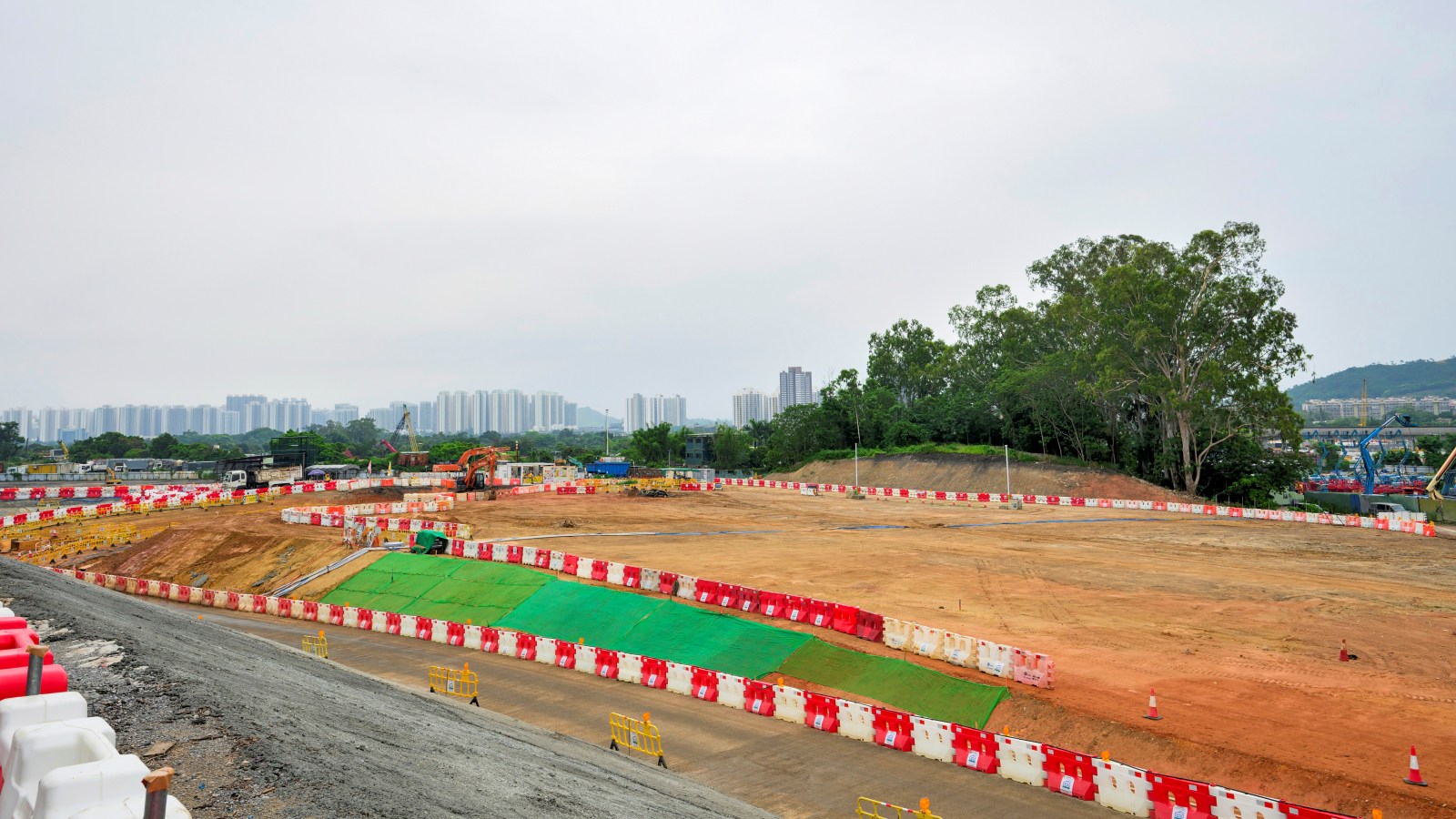
Experts and stakeholders are pushing for expanded roles for the mega Northern Metropolis project and its innovation hubs — University Town and the Hetao Shenzhen-Hong Kong Science and Technology Innovation Cooperation Zone — ahead of the unveiling of Hong Kong’s inaugural five-year development plan and the annual Policy Address today.
Priorities include closer university-industry collaboration, efficient transportation, cross-boundary flow of research production factors and a coordinated division of labor within the new town.
Tim Cheng Kwang-ting, vice-president for research and development at the Hong Kong University of Science and Technology, suggested that the city take a leaf from leading global practices by integrating top universities and companies, or establishing on-campus innovation parks to facilitate industry-university-research collaboration.
He told China Daily that universities used to send research outcomes that were ready for commercialization to industrial sites. But he said he hopes that, in the Northern Metropolis, closer university-industry exchanges happen at the source — while research is still underway.
“We need to create, in the new town, an ecosystem to enable daily and deeply interdependent interactions between the academic and industrial sides,” Cheng said.
He cited Silicon Valley, fueled by first-class institutions such as Stanford University and the University of California, Berkeley, as a prime example of talent pools and research powerhouses.
Other cases in point include the Swiss Federal Institute of Technology in Lausanne, which received government land specifically for student-enterprise collaboration in innovation, and some German institutions that have set up on-campus innovation parks to strengthen industry ties.
Cheng said he believes that fostering closer university-industry collaboration is also a key factor in the government’s approval process for land applications at University Town.
He also highlighted the need for smooth transportation links among the three sites — Hung Shui Kiu/Ha Tsuen, Ngau Tam Mei, and the New Territories North New Town — to maximize the cluster effect of University Town.
ALSO READ: CE stresses national integration, core system in HK's 1st 5-yr plan
These sites are expected to be in use in 2026, 2028 and 2030 respectively.
Local think tank, One Country, Two Systems Youth Forum, called for an industry demand-driven collaboration mechanism at University Town — a model in which “enterprises set the questions and universities answer them”. It said the special administrative region’s five-year development blueprint and this year’s Policy Address should adopt a consolidated approach in planning University Town land, focusing on large facilities beyond the capacity of individual universities or enterprises, such as shared laboratories and pilot testing platforms.
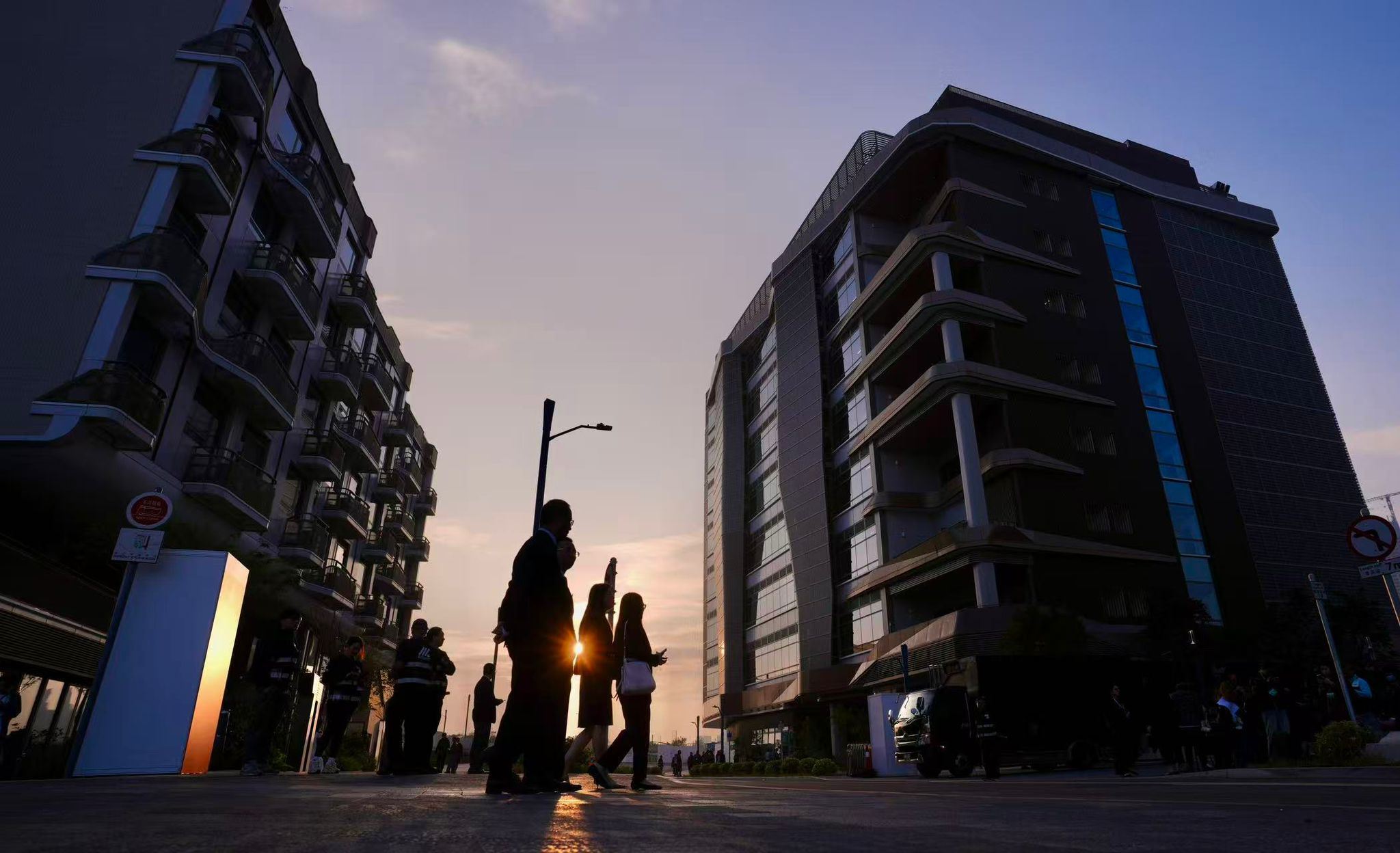
For the Hetao cooperation zone, strengthening institutional innovation should be a top priority, said Victor Kwok Hoi-kit, deputy research director of Our Hong Kong Foundation, one of the city’s largest think tanks.
Noting the strong market response to the Hetao zone’s Hong Kong Park, he said the main bottleneck concerns cross-boundary flow mechanisms for key research factors — talent, bio-samples, data and capital — which have yet to be fully established.
He said that the Northern Metropolis Development Bill, gazetted in July and on track to be passed this year, authorizes regulations to facilitate specific cross-boundary flows. However, the first batch of subsidiary legislation covers only the movement of authorized personnel for Hong Kong Park.
Kwok urged the SAR government to clarify cross-boundary flow mechanisms for key research and production factors in the new Policy Address and five-year plan, with a clear timetable.
READ MORE: Northern Metropolis university town tender to open
He pointed out that Hetao alone cannot support a complete industrial chain, and proposed coordinated roles for Northern Metropolis innovation projects — Hetao zone for research and pilot testing, San Tin Technopole for prototype manufacturing and mass production, and Hung Shui Kiu Industry Park as an advanced manufacturing and logistics hub.
Contact the writer at amberwu@chinadailyhk.com
