

Following ecological restoration, tourism flows upstream with boat routes that give passengers different views of the city, Yang Feiyue reports.
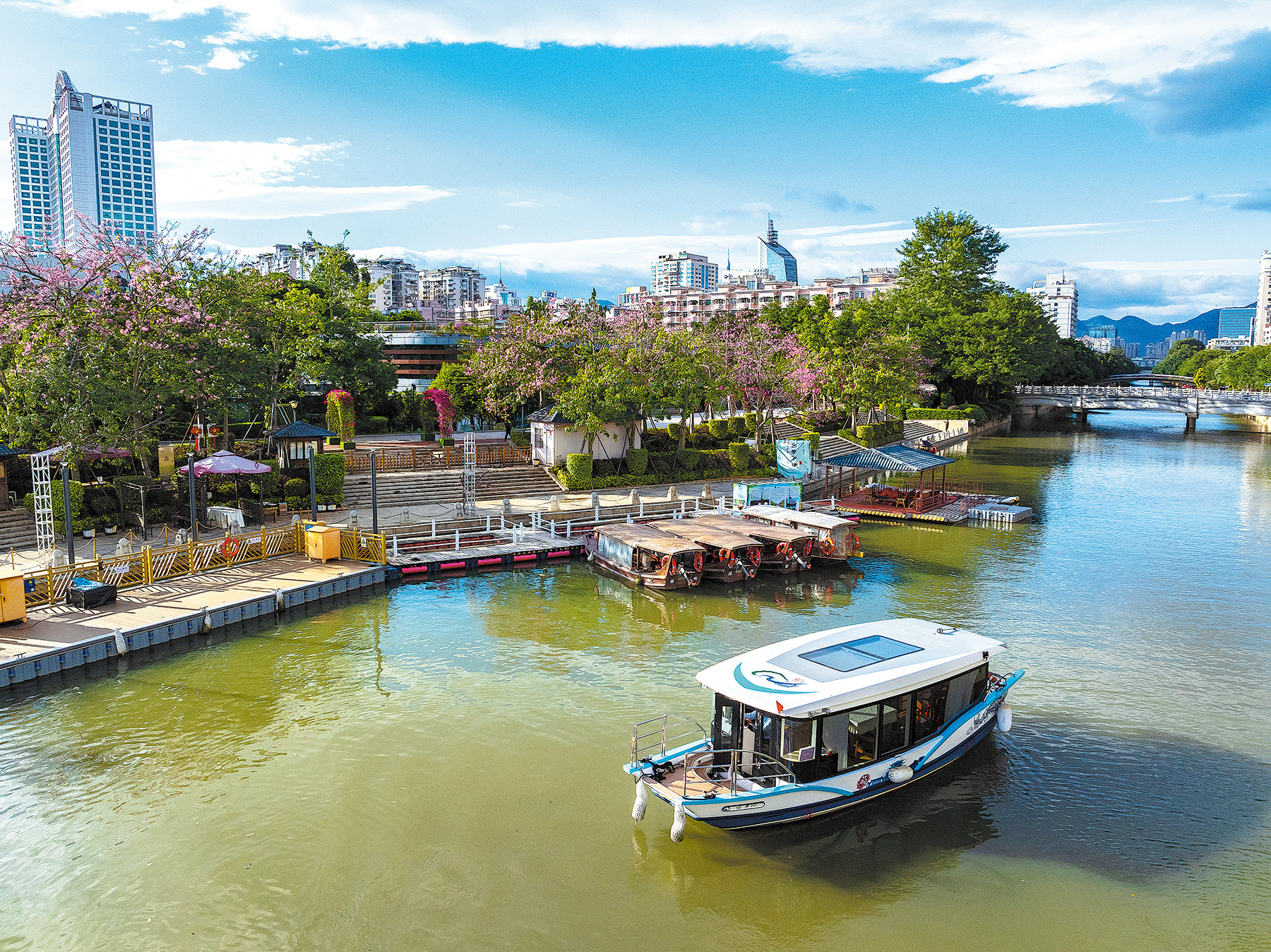
Before each departure, boat captain Xiao Jianfeng checks the river's water level, the weather and the clearance under the bridges ahead.
For passengers, the low bridges along Fuzhou's Jin'an River, in Fujian province, are simply part of the scenery. For Xiao, they are landmarks he must know by heart.
"The boat does not have brakes like a car. You have to consider the water flow, wind direction and the boat's momentum," he says to his first group of visitors in late August.
He then gently turns the wheel and guides the sightseeing boat forward. Soon, a bridge decorated with colorful murals comes into view.
"There are more to come," he says.
Xiao knows the river almost bridge by bridge. Each one offers a different angle of Fuzhou, its history, the people, and the way the city has grown around the water.
READ MORE: Giving old streets a fresh scent
Further downstream, he slows the boat beneath Liuyixie Bridge, where colorful murals depict Wang Shenzhi, who led a group south during a tumultuous period and established the Min Kingdom in the early 10th century in what is now Fujian.
For many Fuzhou families, the story is more than history. "Some families have shared stories with me about their ancestors who made that journey," Xiao says.
Gesturing toward the high-rises along the bank, he recalls a time when this stretch was still countryside.
For Xiao, a Fuzhou native, the river is a front-row seat to the city's transformation.
Overcoming challenges
Fuzhou is shaped by water.
The provincial capital has 139 inland waterways stretching more than 295 kilometers. Historically, these rivers supported transportation, trade and everyday life, while also carrying the city's cultural memory.
Yet, rapid urban development brought challenges. Some waterways became disconnected from residents' lives, with pollution affecting the relationship between the people and the rivers.
Xiao remembers hearing an old saying that captures how Fuzhou's rivers changed over the decades. In the 1950s, people could wash rice and vegetables in them; in the 1960s, they were still used for washing clothes and irrigation; by the 1970s and 1980s, pollution had made the rivers increasingly unusable.
He also remembers the waterways from his working years.
"When I was here in the 1990s, some sections were really dirty. The water was almost black," he says.
In recent years, Fuzhou has carried out comprehensive water-system treatment through dredging, pollution control, ecological restoration, and riverbank improvement.
The city has completed the treatment of 121 waterways and built 680 km of riverside greenways, creating a network of public spaces along the water.
The difference today is visible from the boat.
Along Jin'an River, trees line the banks, residents walk through riverside parks, and birds rest near the water.
"We often see three types of birds here — egrets, night herons and Chinese pond herons," Xiao says.
Their presence is one small sign of how the river has changed, he adds.
Since 2022, Fuzhou Water Cultural Tourism Co has turned the city's restored waterways into sightseeing routes under the Fushui Fuchuan (Fuzhou Water, Fuzhou Boats) brand.
The company has opened 29 sightseeing routes totaling more than 75 km, of which 10 run regularly.
The 6.8-km Jin'an River route starts at Wenquan Park near the heart of Fuzhou and follows the river through the city toward Guangminggang. Along the way, it passes attractions including the Fuzhou Hot Spring Museum and an exhibition center on Fuzhou's waterway system.
But the most memorable sights are often found between the destinations. For Xiao, every bridge tells a story.
Many locals can relate to the murals beneath Liuyixie Bridge, which detail how Wang Shenzhi and his followers moved south before establishing the Min Kingdom.
Further along, another bridge turns Fuzhou's traditional crafts into public art, with murals depicting bodiless lacquerware and cork paintings.
The bridges have become open-air cultural displays, allowing passengers to learn about the city without leaving the river, Xiao observes.
Wang Xiaolan, deputy general manager of Fuzhou Water Cultural Tourism Co, says this is also the philosophy behind the city's water tourism development.
"Our goal has always been that the water flows, waterways connect, boats can pass, stories are told, and scenery is seen," Wang Xiaolan says.
She believes tourism could only develop after the ecological foundation was restored.
"Water treatment came first. Only after the waterways improved could people truly experience the achievements of ecological restoration," she adds.
Urban experience
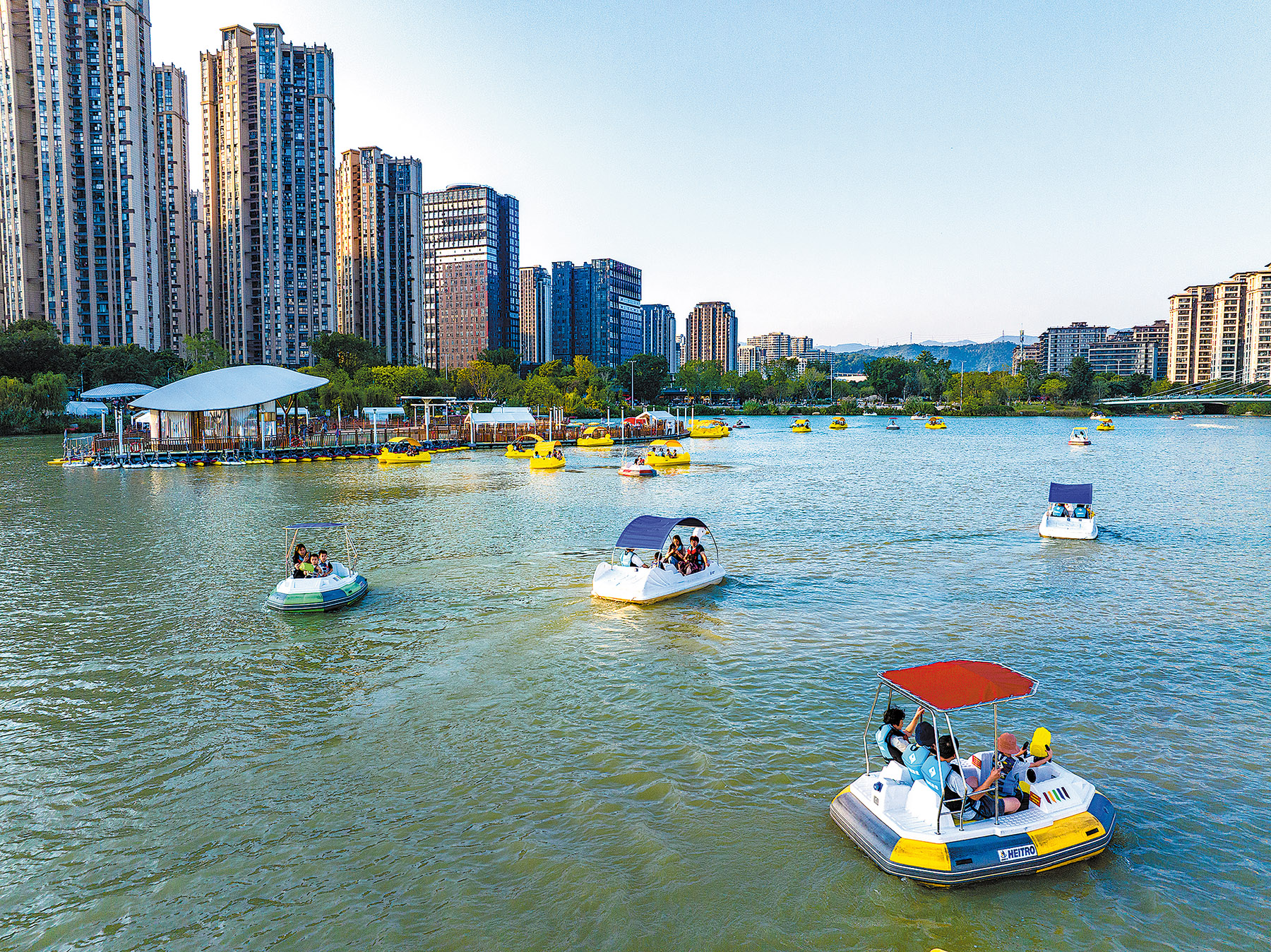
Among Fuzhou's most popular water routes is the West Lake-Baima River route. As the city's first lake-river-connected sightseeing route, it links West Lake Park to historical destinations, including Sanfang Qixiang, a neighborhood known for its traditional lanes and ancient residences.
The route has become particularly popular among younger travelers.
Wang Xiaolan says many visitors from outside Fuzhou discover the route through Chinese social media platforms and add it to their travel plans.
To meet changing visitor expectations, the company is upgrading the experience both on and off the water. It has added riverside photo spots, streamlined ticketing and tailored onboard narrations for different visitor groups. It is also expanding its "boat-tour-plus" offerings, pairing cruises with attractions and experiences around the city.
Visitors can combine cruises with hot springs, museums, a panda theme park, and other local attractions.
Onboard, cultural products and local handicrafts provide another way for visitors to connect with Fuzhou traditions.
The approach has helped transform a simple boat ride into a broader urban experience, she says.
Even the summer season, traditionally quieter due to Fuzhou's heat, has seen growth.
"Passenger numbers this summer were more than 50 percent higher than the year before," she says.
Traditional customs
At Guangminggang, the river becomes wider, and the scenery opens up.
Along the banks, dragon boats remind visitors that Fuzhou's relationship with water is not new.
For generations, local communities have maintained dragon boat traditions. Some villages keep their own boats along the river, while residents continue to practice and pass down related customs.
Xiao says that decades ago, Guangminggang was a place where traditional dragon boat activities attracted crowds. Today, dragon boat culture continues through community events and organized competitions, he adds.
ALSO READ: Reuniting a forgotten foreign community
Since the launch of the Fushui Fuchuan, Fuzhou's inland-waterway tourism has attracted more than 900,000 visitors and generated more than 80 million yuan ($11.9 million) in related consumption, according to local authorities.
From the river, Xiao now sees a city that has begun to live with its waterways again.
After years of working in a factory, he decided to become a boatman, a career change that has given him a very different working life. His office now moves with the current, from Wenquan Park to Guangminggang and back.
"It's close to home, the environment is good, and I feel quite comfortable driving the boat here," he says.
Contact the writer at yangfeiyue@chinadaily.com.cn
