

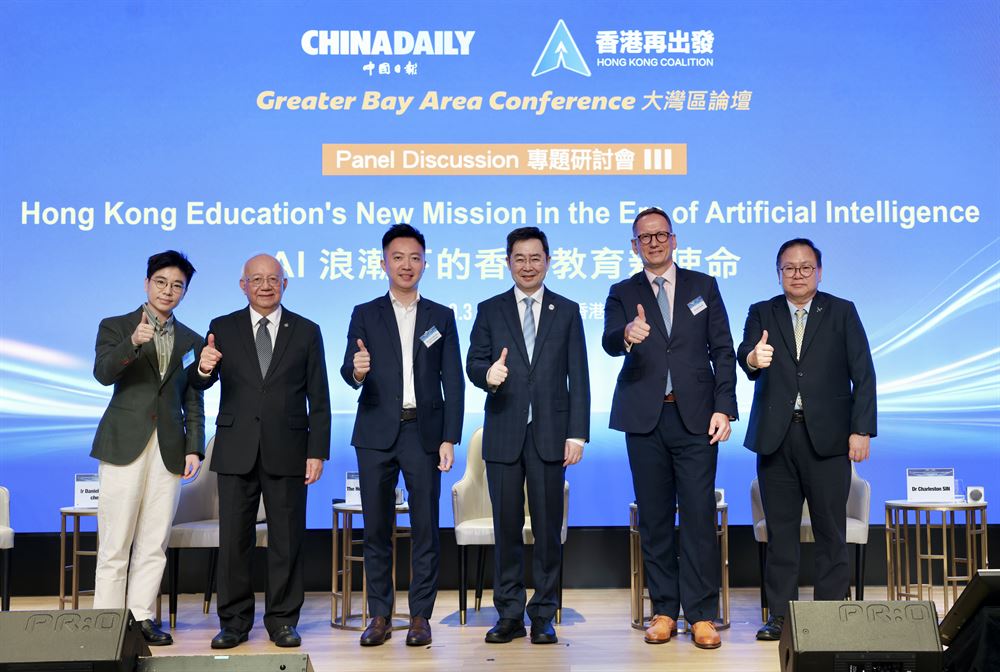
Legislators, technology executives and regional innovation advisors in Hong Kong on Thursday called on the city’s education sector to move decisively on artificial intelligence — via digital literacy drives, backed by policy levers — to retool teaching goals, reshape classroom practice, and groom AI-savvy talent attuned to the demands of the regional and the broader international markets.
To give Hong Kong’s education brand and talent pool greater regional and global heft, they said, the city’s stakeholders need to sharpen their approach to wooing, grooming and holding on to talent — both from within and beyond its borders — while reinforcing partnerships with other cities across the Guangdong-Hong Kong-Macao Greater Bay Area in schooling, scientific inquiry and industry.
Panel speakers at this year’s Greater Bay Area Conference — co-hosted by China Daily and the Hong Kong Coalition — engaged in a spirited exchange over the city’s new educational callings to meet the transformative realities of the AI era.

“AI should not be one’s first degree; it should be like a second language; it’s a tool”, said Peter Helis, an independent strategic advisor on Greater Bay Area innovation and government affairs whose portfolio includes advising multiple foreign multinational enterprises on their regional entry and expansion strategies.
He noted top global companies are placing their bets on cross-disciplinary talent who can marry AI know-how with traditional subject expertise.
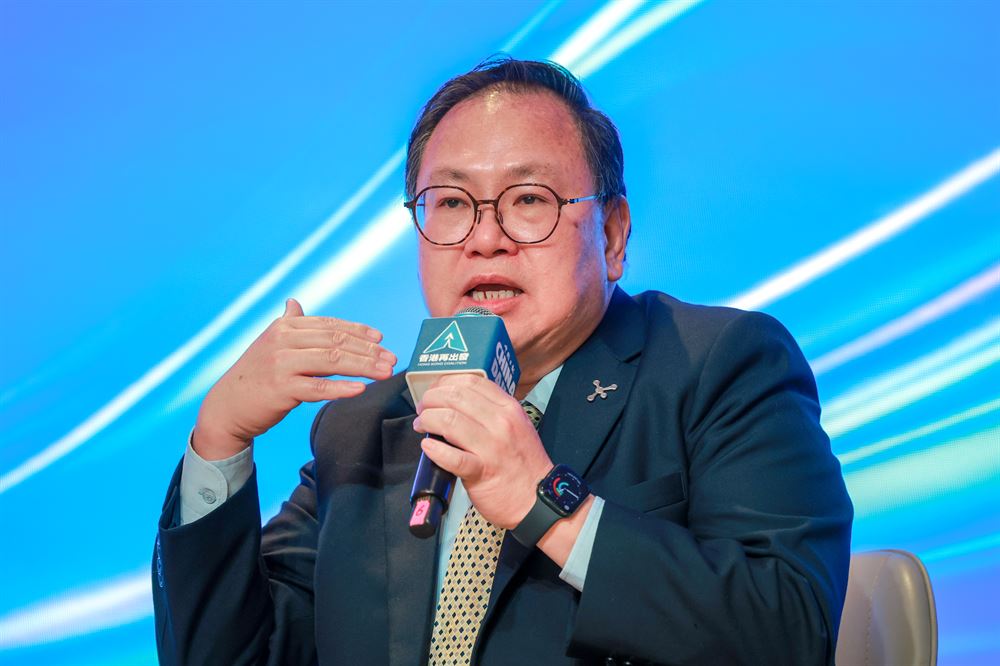
Amid the current technology boom, said Charleston Sin Chiu-shun — head of AI and Data at the Hong Kong Science and Technology Parks Corp, the statutory body behind Hong Kong Science Park — the focus for the education sector should be helping young people to grasp “how to use AI for learning”, and crucially, “how to work collaboratively with machines”.
He outlined a learning agenda: mastering the craft of prompting AI chatbots, synthesizing scattered information into insightful knowledge, and developing computational thinking — the ability to break down complex problems into steps clear enough to put into practice.
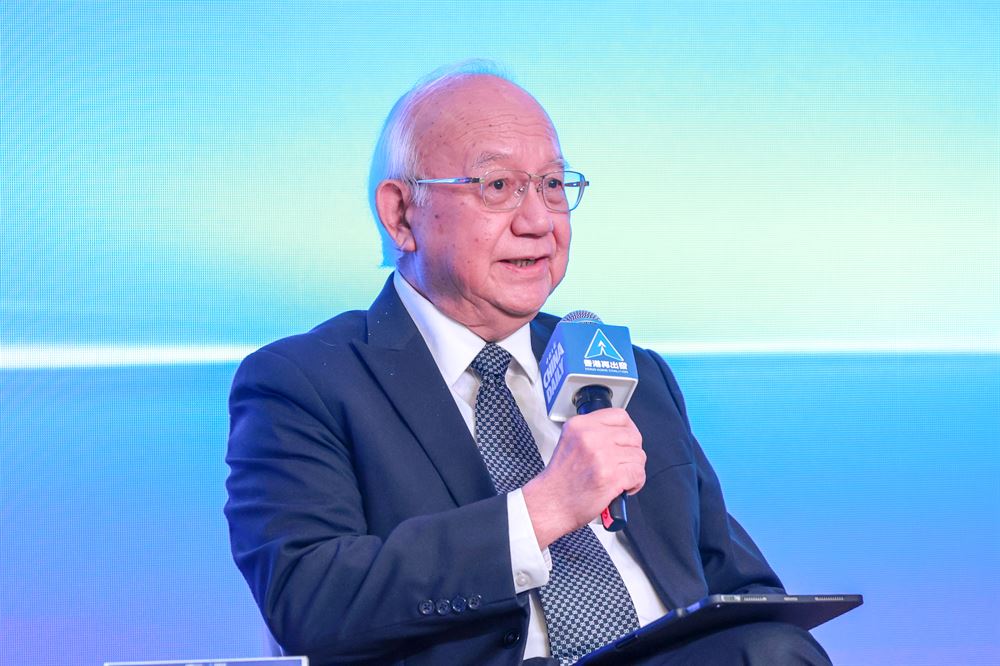
Daniel Lai Sik-cheung — program director of JC GoAI Project and Coolthink@JC, a computational thinking initiative set up and funded by the Hong Kong Jockey Club Charities Trust — stressed that AI education will be a “cornerstone” in laying an enduring groundwork for Hong Kong’s future technology talent strategy.
He proposed that the city establish a coherent talent pipeline in computational thinking and AI, one that gains early traction in primary and secondary schools.
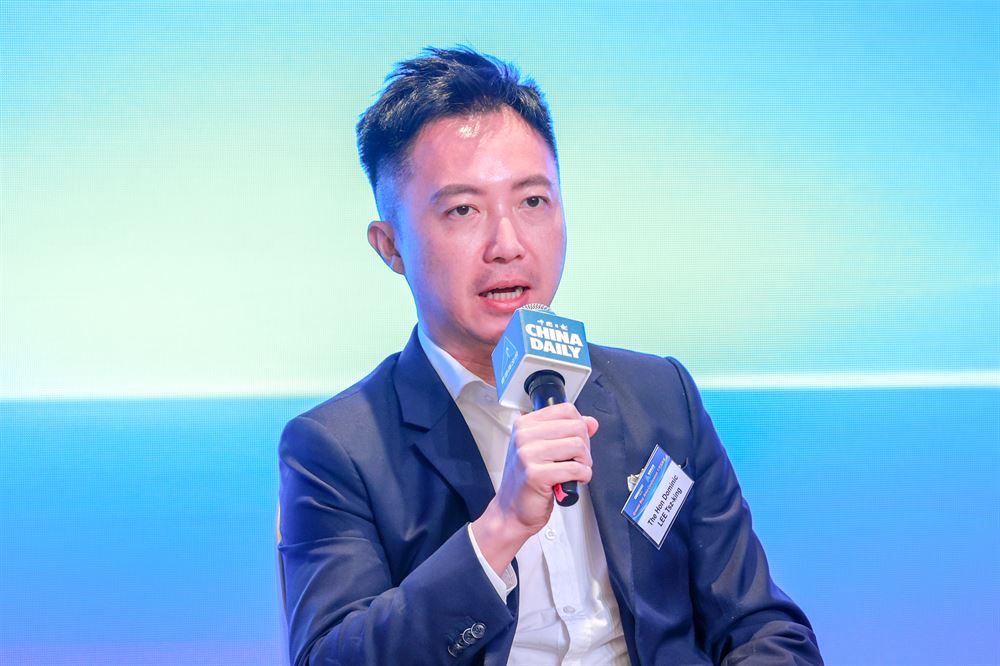
Dominic Lee Tsz-king, a Hong Kong legislator, said the SAR government must provide additional policy backing and further coordinate resources — potentially through dedicated funds — to ensure every community and school gets fair, high-quality access to relevant education resources in the face of the AI transformation.
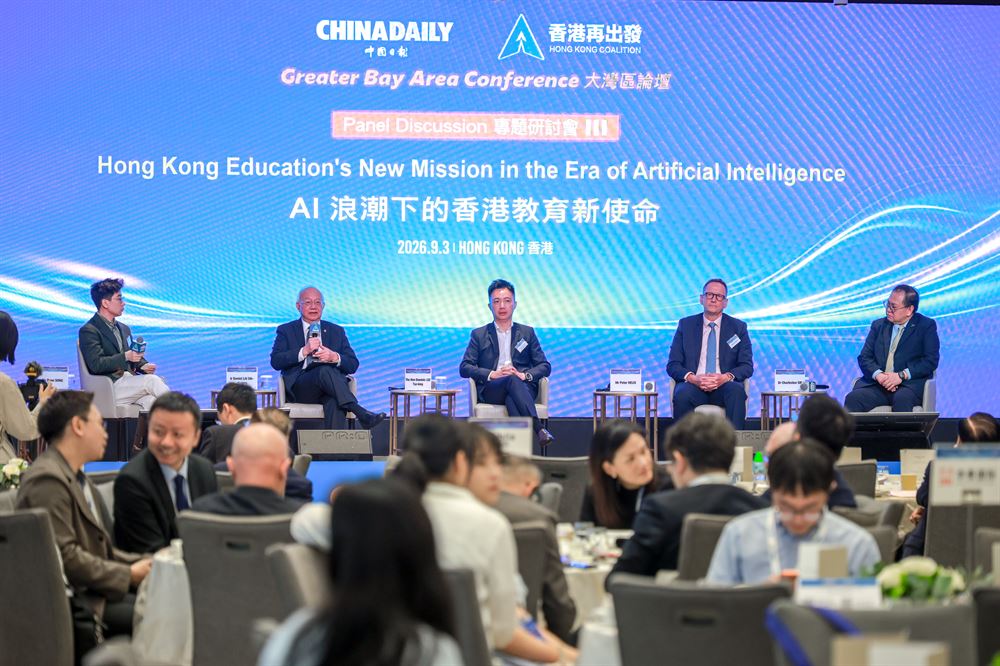
Panelists also delved into how Hong Kong can persuade students and professionals to stay for the long run.
Helis argued that an integrated pitch jointly put forth by Hong Kong and its neighboring Chinese mainland cities would give the region a potent edge in competing for high-caliber international youth and expatriate professionals.
He noted that there are still some institutional frictions that currently hamper deeper cross-border exchanges between Hong Kong and other Greater Bay Area cities. The hurdles must be ironed out before the city and its mainland neighbors can realize the full potential of their education and wider partnerships, he said.
Sin recommended that local businesses ramp up internships and high-value job offerings to keep homegrown and overseas talent firmly plugged into the city’s tech ecosystem, pointing to the Hong Kong Science Park’s internship and early-career programs as success cases worth replicating.
Lee stressed that local policymakers must add emphasis to enhancing housing affordability, education for newcomers’ children and career-matching support that turns arrivals into long-term stayers.
ALSO READ: GBA conference: Leaders champion connectivity for GBA, global growth
Lai expressed confidence that Hong Kong’s experience in rolling out AI-themed education possesses the scalability to be adopted by international schools and education systems not only across the Greater Bay Area, but also in Asia-Pacific and economies engaged in the Belt and Road Initiative further afield.
Contact the writer at wanqing@chinadailyhk.com
