

Venezuelan artist seamlessly combines contemporary European techniques while remaining true to his Latin American traditions, Deng Zhangyu reports.
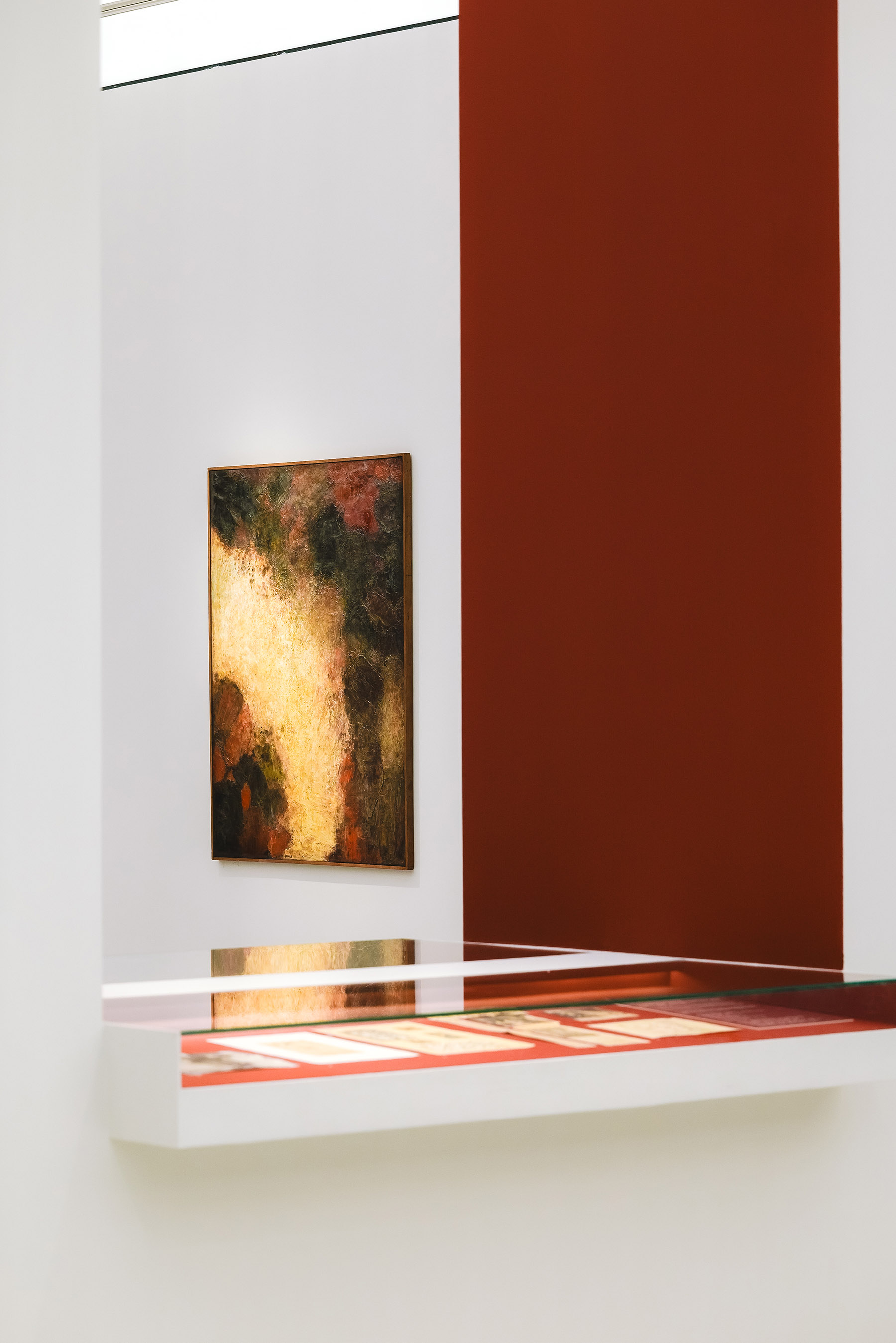
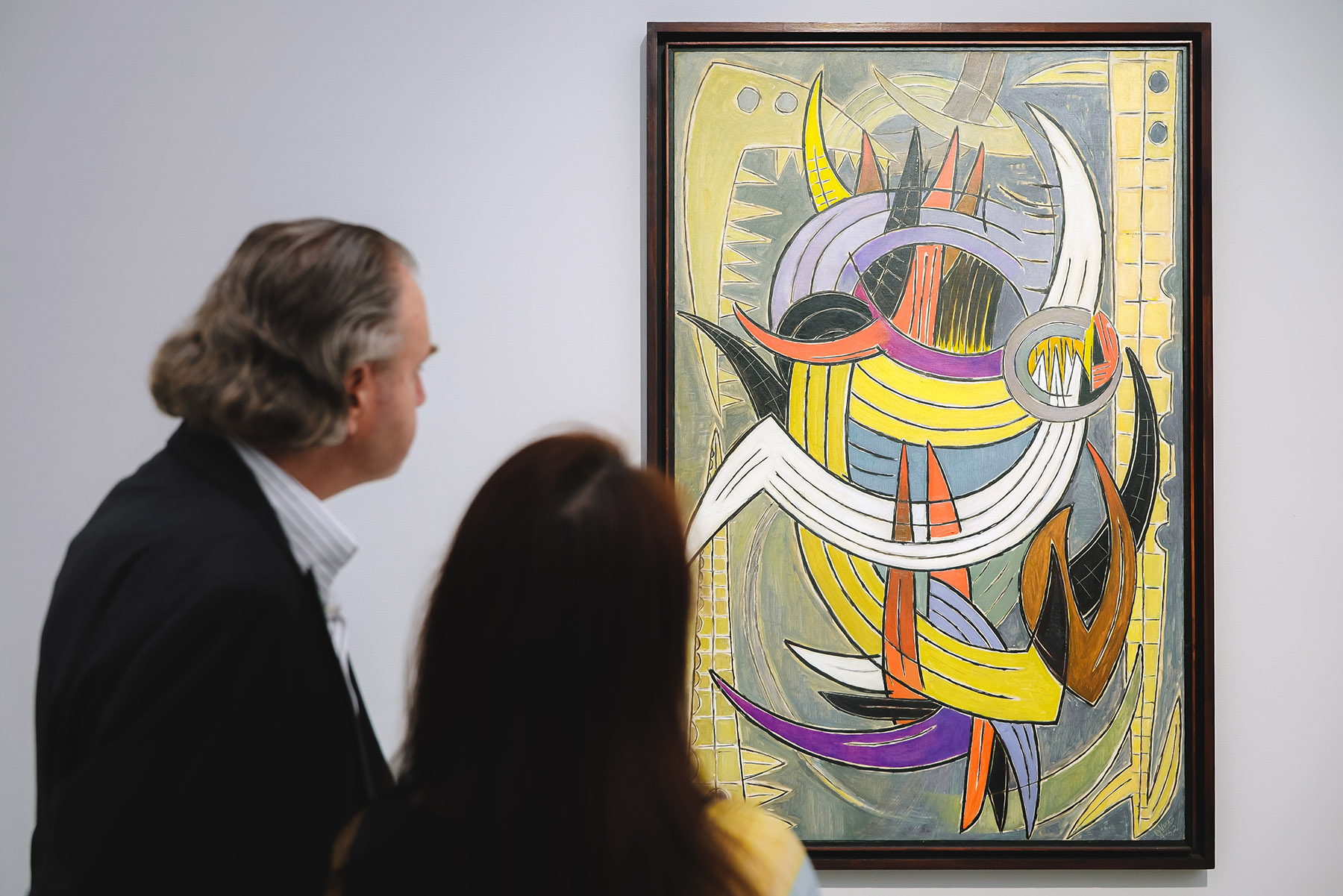
Walking into the Guangdong Museum of Art in Guangzhou, Guangdong province, one immediately notices intense, vivid colors in the works of Venezuelan artist Oswaldo Vigas. The elongated, distorted figures on the canvases are human, yet not quite — they appear as life forms imagined from plants, stones and ancient totems. This is one of China's first large-scale exhibitions of Vigas, a towering figure in Latin American modern art.
Vigas' retrospective exhibition Reality Is What I Imagine showcases a selection of monumental works spanning the artist's seven-decade career, offering a comprehensive view into his life's work — an ongoing process of questioning and reimagining the world through the living heritage of his homeland.
The exhibition is jointly curated by Gabriela Rangel, a Venezuelan curator based in the United States, and Jiang Jun, a curator from China. Together, they have created a platform for cross-Pacific dialogue, contributing to the ongoing narrative of the contemporary Global South. The show will run through Nov 22.
ALSO READ: Bathing Beijing in watercolor
Vigas was born in Valencia, Venezuela, in 1923, and studied medicine in his early years. At 26, he joined the artist collective Free Art Workshop in Caracas. In 1953, he went to Paris to study art.
During this period, he encountered the most avant-garde artistic language of European modernism. He connected with eminent modernist figures such as Pablo Picasso, Wifredo Lam, Victor Vasarely, Jesus Rafael Soto, and Alejandro Otero.
Vigas passed away in Caracas in 2014.
Throughout his life, he devoted himself to addressing a single question: when the standards of modern art are mainly derived from major cities in Western culture, such as Paris and New York, how can an artist from Latin America express modern art while remaining true to his own traditions?
In Jiang's view, the exhibition's Chinese curator, Chinese artists who went to Paris to study art in the 20th century face this very question. And when those Chinese artists returned home, they were challenged by the same topic: after learning from the West, how do you come to understand your own tradition anew?
"Vigas' creative path merged international language with the indigenous spirit of South America. He moved fluidly between the Western art system and local culture, drawing on multiple sources while remaining true to himself," says Jiang.
The artist did not merely occasionally borrow a few motifs from ancient art; instead, he made "returning to his homeland sources" a lifelong method.
Wang Shaoqiang, director of the Guangdong Museum of Art, says: "He neither blindly followed the universal narrative of European modernism, nor clung to a nostalgic, provincial imagination. Rather, he carved out a completely new creative form between the two."
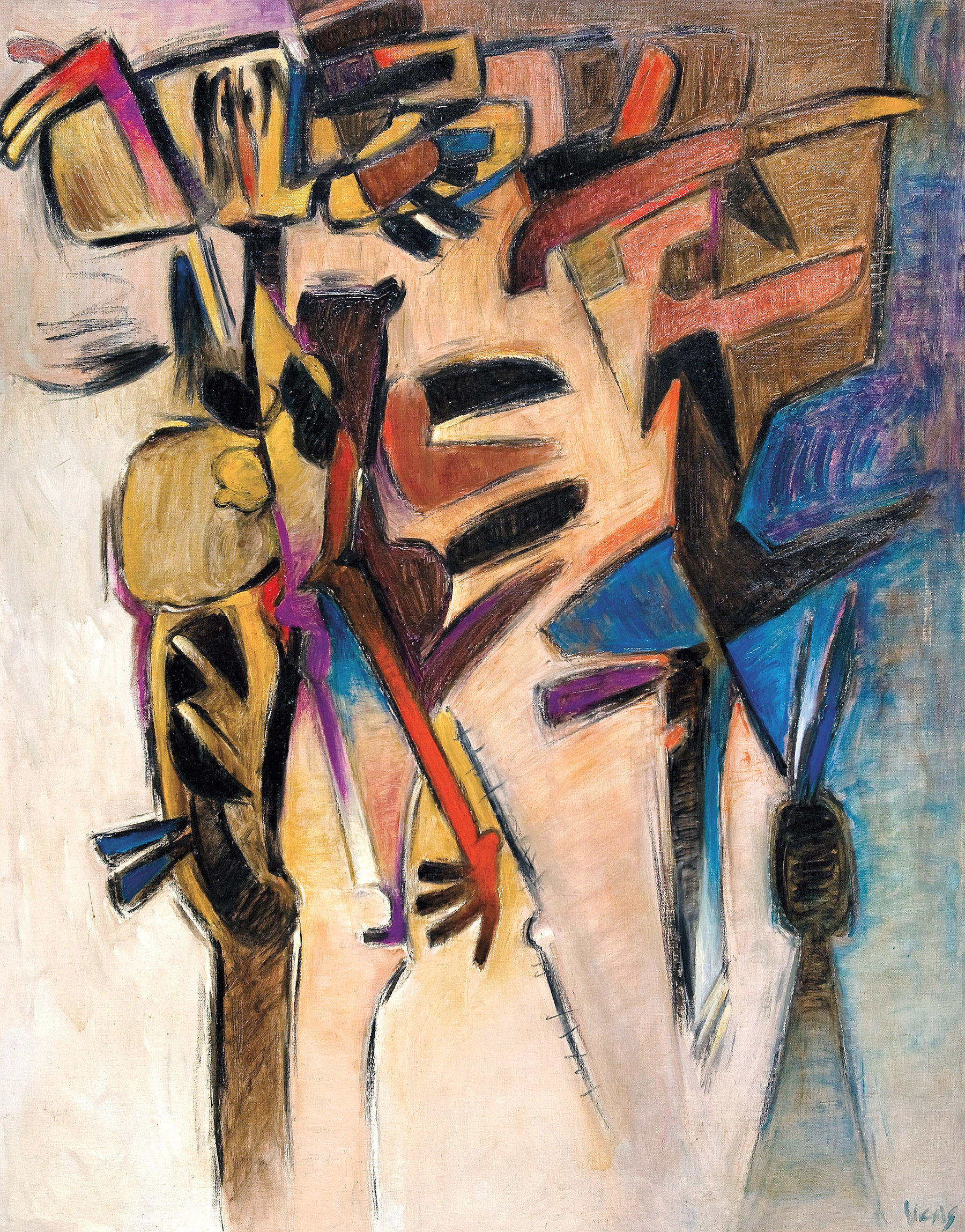
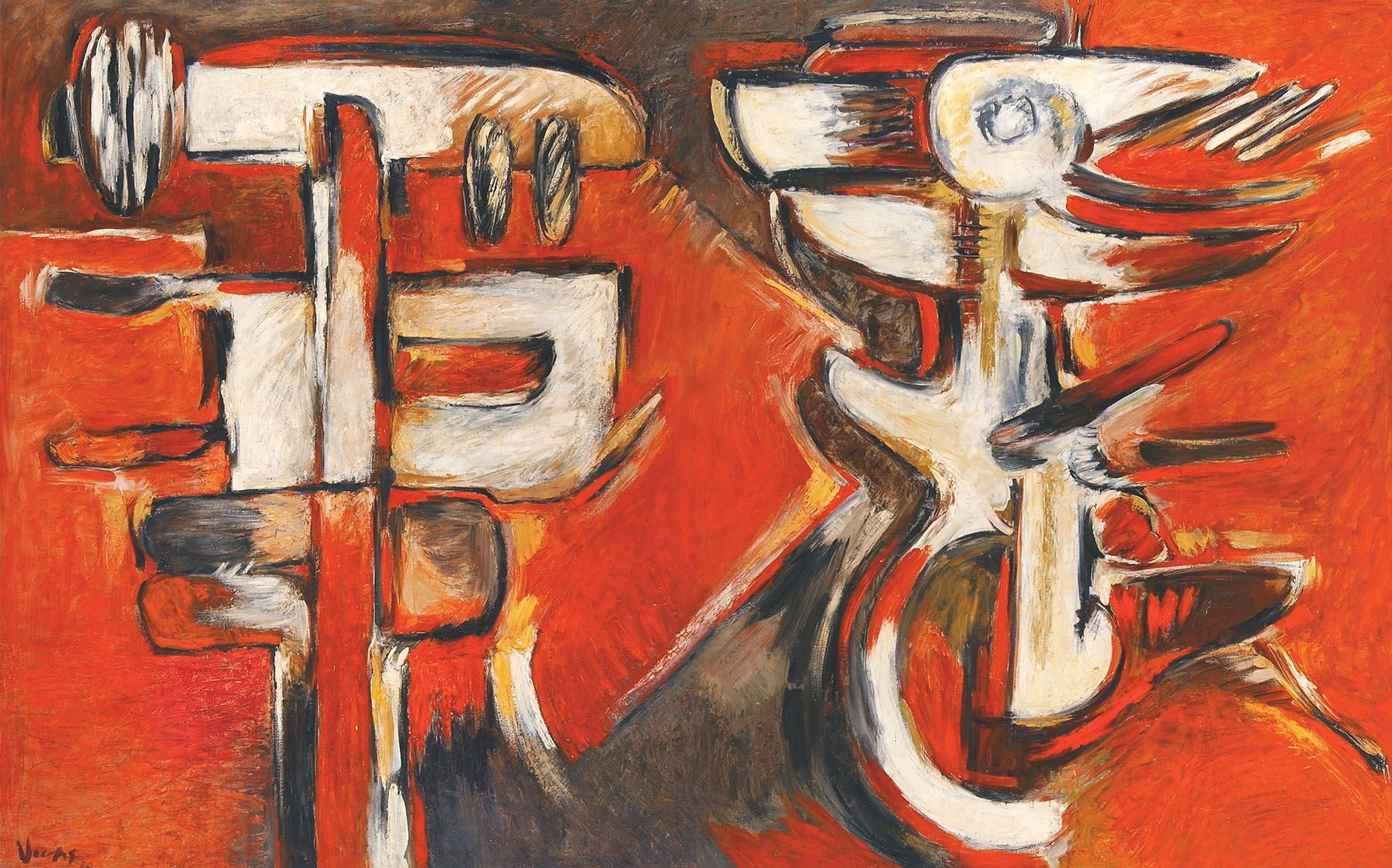
The exhibition traces the artist's stylistic evolution in chronological order across four periods. From 1942 to 1952, while Vigas was in Caracas studying medicine, he experienced a stylistic awakening. He delved deeply into pre-Columbian myths and imagery, creating the iconic Brujas (witches) series that would run throughout his entire artistic life — figures that exist between human, beast, plant, and mineral forms, embodying a traditional worldview and ancestral wisdom.
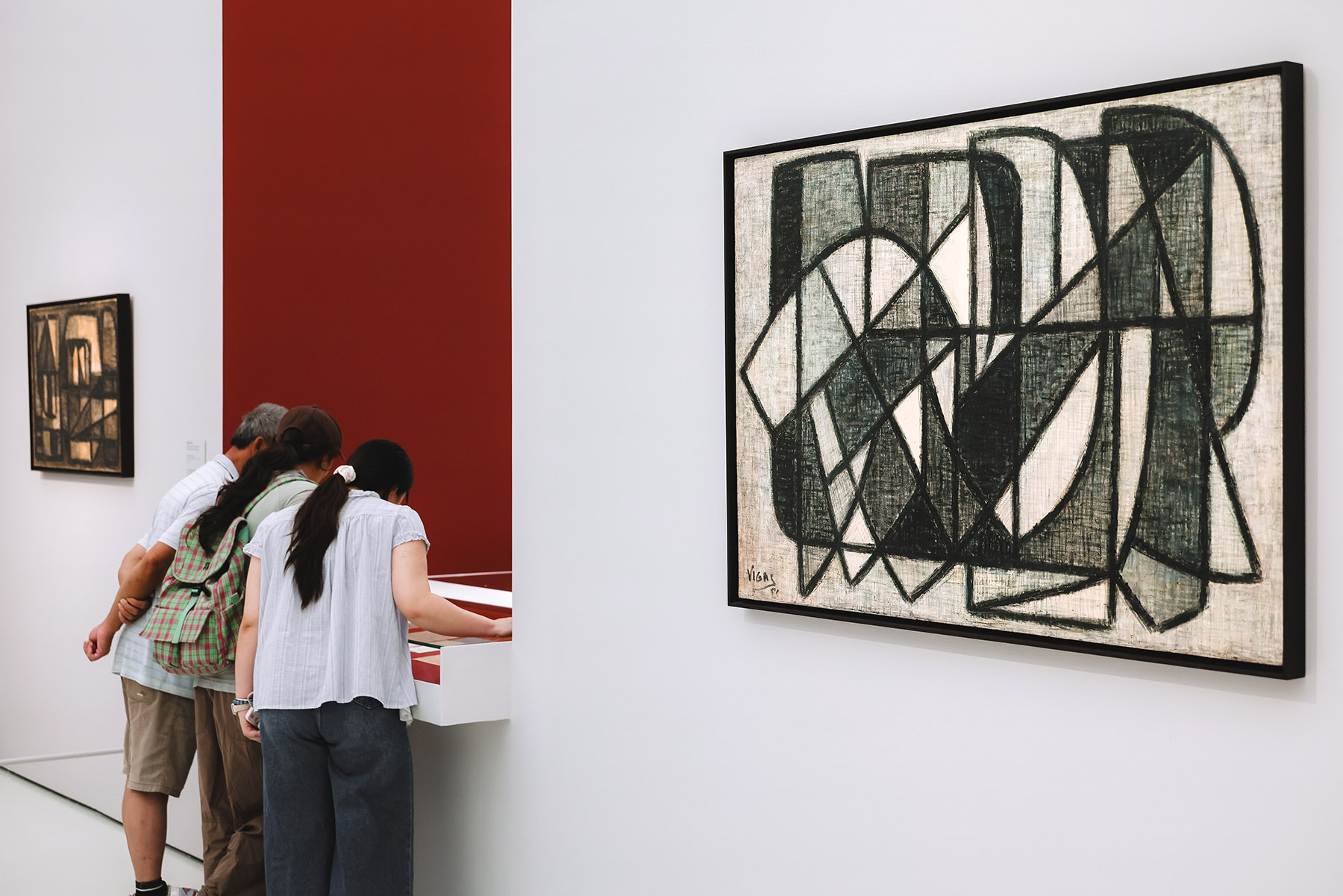
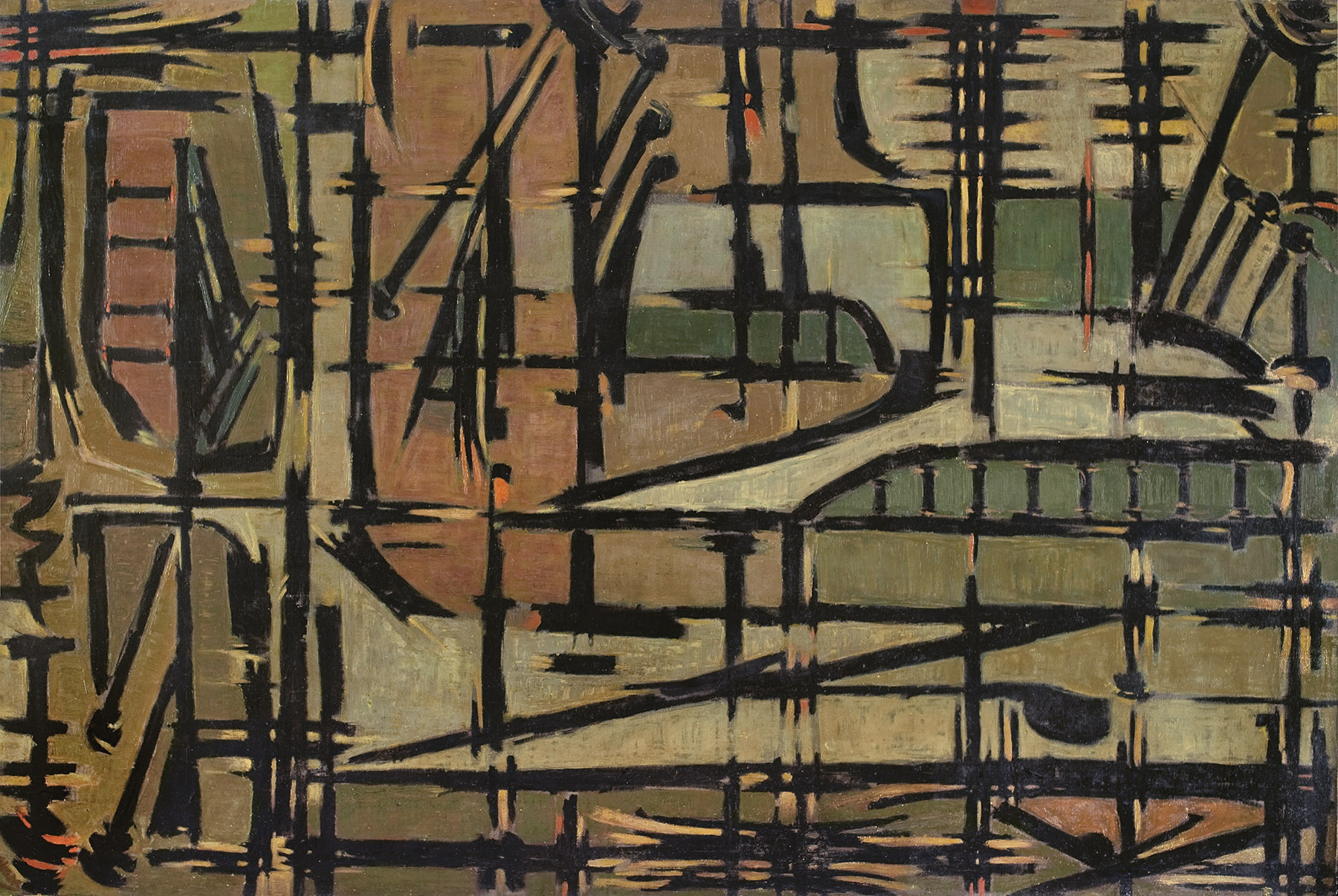
During his time in Paris, Vigas engaged in diverse cultural exchanges, which prompted him to reflect on his Latin American identity while also absorbing the influence of his contemporaries. Jiang explains that the works from this period first bring to mind Mondrianesque geometric structures. Still, their graphic sources may also point to ancient Venezuelan ruins, rock paintings and primitive stone carvings.
In the 1960s, Vigas returned to Venezuela and reintroduced human figures, animals, Latin American mythology, and folklore into his works, while continuing to use the modernist formal language he had mastered.
Catherine Kwai, founder of Kwai Fung Hin Art Gallery, a co-organizer of this exhibition, believes that Vigas truly matured only after experiencing the West and returning to his roots.
"His artistic language is highly international, yet it preserves a very strong local culture, and the combination does not feel traditional or closed off," says Kwai.
In the artist's last two decades, his paintings became increasingly simple, with more direct lines. Animals, humans, and certain unnameable life forms reappeared. At times they resemble monsters casually drawn by children; at other times, they evoke figures on cave walls from tens of thousands of years ago.
According to Kwai, in Vigas' later years, the artist achieved a kind of freedom in which he no longer needed to prove anything — he became like a child, full of playfulness and humor.
ALSO READ: History amid the mountains
Jiang says that introducing Vigas' works to a Chinese audience fosters a cultural synthesis that reflects both global and localized perspectives.
Vigas' son, Lorenzo Vigas, says that his father had always admired China and was an enthusiastic student of Chinese history and traditional culture.
"My father felt that there is a connection between Asia and South America that people have not truly recognized. Through observing and studying ancient Chinese traditions, he could see many commonalities with Latin American traditions."
Contact the writer at dengzhangyu@chinadaily.com.cn
