

From Monday to Friday, Japanese Defense Minister Shinjiro Koizumi visited Australia and India, where he talked up strengthening Japan's so-called "counterstrike capabilities" and promoted exports of Japanese defense equipment.
Analysts said that Japan's ruling authorities are aggressively pursuing a "diplomacy of military expansion," stepping up efforts on two fronts: expanding arms exports and broadening the scope of military activities. In doing so, they are steadily chipping away at the constraints on Japan by the postwar international order and legal frameworks.
One agenda, two tracks
According to analysts, the topics on the agenda of Koizumi's latest visits showed that Japan is accelerating its "remilitarization" push abroad along two tracks: expanding arms exports and broadening the scope of military activities.
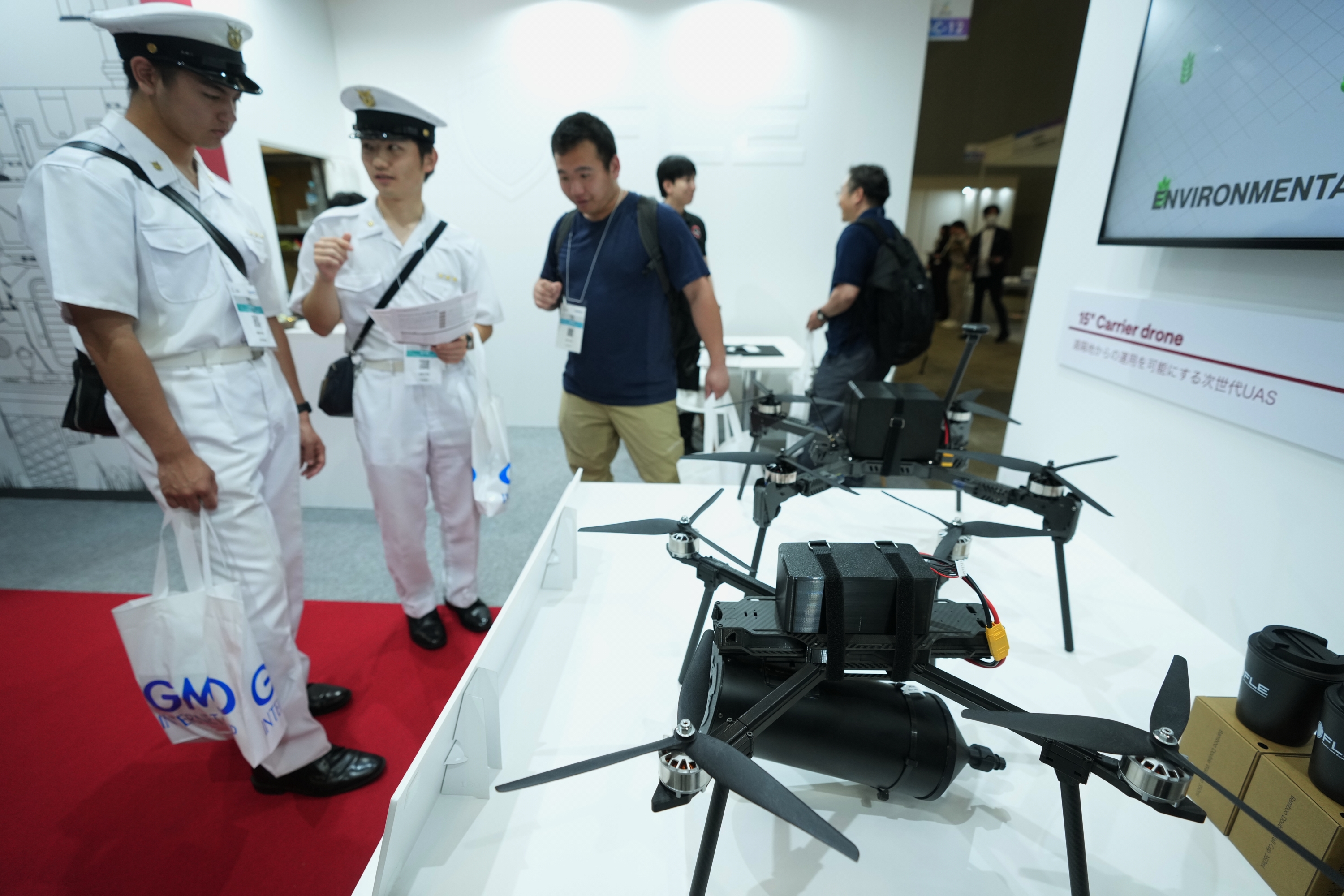
On arms exports, the administration of Prime Minister Sanae Takaichi has doubled down on efforts to market Japanese weapons and defense equipment overseas since it revised the "three principles on transfer of defense equipment and technology" and their implementation guidelines in April, lifting restrictions on exports of lethal weapons. Recently, it has been actively advancing the transfer of Japan's Abukuma-class destroyers to the Philippines.
During his latest visits, Koizumi also sought to facilitate exports of the country's upgraded Mogami-class frigates to Australia, and the transfer of Unicorn communication antennas, which are installed on Japan Maritime Self-Defense Force destroyers, to India.
Experts pointed out that the Takaichi administration's push to expand arms exports is not merely aimed at opening up markets for the domestic defense industry. It also seeks to forge closer ties with arms-buying countries on weapons systems, maintenance support, and parts supply, thereby further strengthening Japan's military influence overseas.
On military activities, the Takaichi administration has accelerated efforts to expand the Self-Defense Forces' operational presence abroad, including sending a large contingent of combat personnel to the Philippines for joint military drills for the first time.
ALSO READ: KCNA: Japan's 2026 Defense White Paper is 'reinvasion-minded'
During his trip to Australia, Koizumi reached a 10-year agreement with Australia, which will allow the Self-Defense Forces to use test sites in Australia to conduct test launches of long-range missiles to bolster so-called "counterstrike capabilities."
Meanwhile, Japan and India also agreed to further deepen cooperation in joint exercises, with Japan Air Self-Defense Force fighter aircraft set to, for the first time, participate in a bilateral air force exercise in India scheduled for this year.
Analysts said that the Japan-Australia agreement on long-range missile test-firing by the Self-Defense Forces on Australian soil signals a shift toward more sustained and institutionalized Japanese military activity in Australia. Japan's bilateral air force exercise with India, meanwhile, will mark another "dangerous first."
Japan's push to deepen cooperation with relevant countries in maintenance, logistics, weapons development and other areas is, in effect, an attempt to extend its "strategic depth" and military capabilities beyond its borders, a move toward military expansion that runs counter to the principle of "exclusively defense-oriented policy."
A 'highly dangerous' path of military expansion
Since Takaichi took office, military and security issues have assumed an increasingly prominent place in Japan's diplomacy.
While Koizumi was making his latest overseas visits, Takayuki Kobayashi, policy chief of the ruling Liberal Democratic Party, traveled to three Pacific island countries, primarily seeking so-called "security cooperation."
In media interviews, Kobayashi also played up the alleged growing political and economic influence of a "particular country" in the Pacific island nations. Analysts said these remarks amounted to inciting bloc confrontation.
Whether through expanding arms exports, broadening the scope of military activities, or reinforcing "bloc-based security," the Takaichi government's diplomatic moves are all paving the way for its military buildup and rearmament. These moves undermine the postwar international order and violate Japan's domestic legal framework, including its pacifist Constitution, posing a serious threat to regional peace and stability.
READ MORE: China deplores Japan's defense white paper
Tessa Morris-Suzuki, professor emerita of Japanese history at the Australian National University, wrote in an article that Takaichi's desire to remove the peace clause from the Japanese Constitution is something to worry about.
Japanese experts also pointed out that the Takaichi administration's exaggerated portrayal of the so-called "the most severe and complex security environment since the end of World War II" also represents a return to the dangerous militarist rhetoric.
Veteran Japanese journalist and former NHK anchor Tomoyoshi Kimura said Japan once launched wars of aggression under pretexts such as "self-preservation" and "self-defense," packaging military expansion as safeguarding its "own security and national survival."
Today, he added, the Japanese government is once again using the guise of "strengthening defense capabilities" to push military buildup, calling it "necessary for defense." But in essence, it is steadily marching down a "highly dangerous" path of military expansion.
