

Commercial areas seek to give shoppers more emotional value by providing exhibitions, history-inspired characters and learning activities, Li Yingxue reports.
On a weekend evening in August, Chen Ling took her young daughter to Huaxi Live Wukesong in Beijing for dinner. In the square, a mythical beast inspired by the ornaments that adorn Beijing's Central Axis architecture exchanged a fist bump with a round "corn friend".
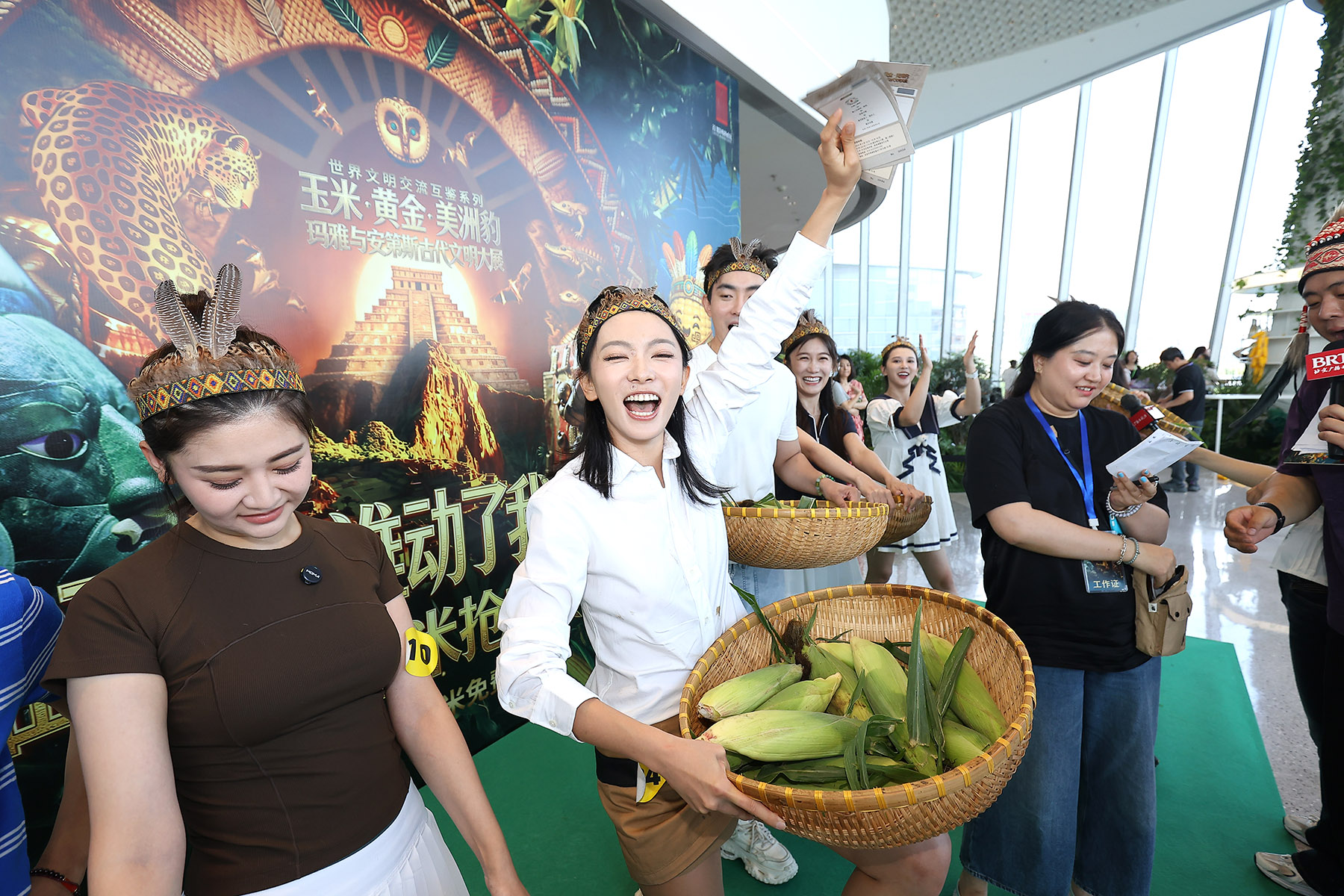
Nearby, a traditional Chinese dance performance and quiz were underway. The host introduced Maize. Gold. Jaguar: A Grand Exhibition of Ancient Maya and Andean Civilizations at the Capital Museum. Chen's daughter answered the quiz question accurately and won a commemorative coin.
The following weekend, they returned to the shopping center, viewed an exhibition of late Qing Dynasty (1644-1911) embroidery, and bought tickets to that "corn" exhibition.
"We saw the sculptures and displays while having dinner at the shopping center. There happened to be an event that day, and that's how we learned about the exhibition," Chen says.
This is the experience Beijing's "One Exhibition Across the City" initiative seeks to create: Rather than waiting inside museums, exhibitions enter people's daily lives.
Launched in July by Beijing Radio and Television Station, in partnership with the Capital Museum and the Beijing Cultural Heritage Exchange Center, the initiative has extended exhibition elements into nine areas, including Tongzhou MixC, Solana shopping mall and Huaxi Live Wukesong.
Installations, relic displays, pop-up stores, and activities enter commercial settings, turning shopping centers into cultural gateways.
Nine auspicious mythical beasts inspired by Beijing's Central Axis architecture "walk out" of historic buildings and into shopping centers, where they meet corn figures representing the ancient civilizations of the Americas. Some make heart gestures while others offer high-fives or fist bumps. Once solemn architectural ornaments, they have become approachable cultural figures for younger audiences.
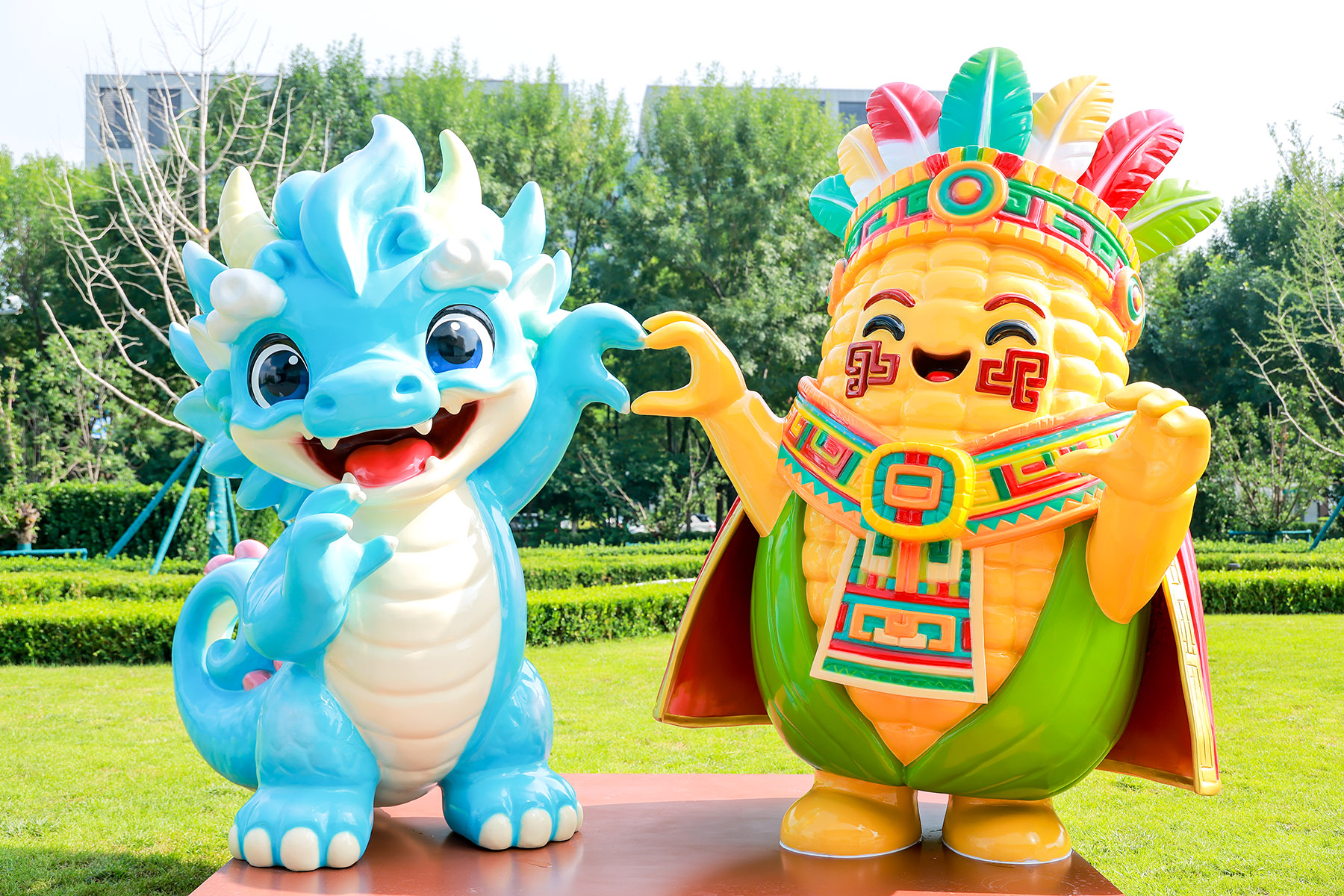
"These figures were not put together simply because they look cute. There is a cultural connection behind them," says Lyu Jing, the project's publicity director. "Maize was the foundation of the Maya civilization, while the mythical beasts are classic symbols of Beijing's Central Axis and traditional Chinese ritual culture. It is a dialogue between two ancient agricultural civilizations across time and space."
"Our principle was clear: Keep the roots, but give the form a more contemporary look," Lyu says. "We wanted to attract young people without casually deconstructing traditional culture. We also want to ensure that Chinese and foreign cultural symbols come together naturally."
For Lyu, the initiative is not simply about moving an exhibition into shopping malls.
"To me, a museum without boundaries means breaking down walls, lowering barriers, and becoming part of everyday life," she says. "A museum is no longer just a building, but a public cultural space that can encompass the entire city."
Commercial areas have also introduced artifacts provided by the Beijing Cultural Heritage Exchange Center. The free-of-charge displays allow visitors to encounter cultural objects while shopping.
Bringing cultural relics into busy commercial areas creates preservation challenges. At Huaxi Live Wukesong, installations occupy the outdoor areas, while the relic exhibition is housed in the enclosed Ice Center, which is equipped with 24-hour surveillance and climate control.
"This is a breakthrough for us. In the past, we never really considered bringing cultural relics into a street-level commercial area," says Chang Tingting, general manager of Huaxi Live Wukesong's digital media center.
"From the beginning, we discussed how to reconcile what might seem like a contradiction between protection and openness, and make the two work together in a commercial setting."
Visitors inquire about the exhibition and how to buy tickets, and others arrive after reading about it on social media.
"We often hear consumers asking what the exhibition is, where they can see it, and how they can buy tickets," Chang says. "That shows how the two sides can reinforce and empower each other."
In her view, shopping and dining alone can no longer provide a steady stream of new experiences.
"Many people today are willing to spend money for emotional value," she says. "A shopping mall that only sells things will eventually be challenged by e-commerce, but a space that provides cultural experiences and opportunities for social interaction cannot be replicated online."
Heritage in shopping centers can also lower the psychological barrier to museums. "We hope people can encounter thousands of years of civilization while simply shopping or having dinner — an informal and immersive encounter with culture," Chang says.
Similar efforts are underway at Solana, Fengke Wanda Plaza and Tongzhou Wanda Plaza, where content has been tailored to each venue's audience.
"We matched the content to the customer profiles of the three shopping centers. Fengke Wanda focuses on a cultural relic-themed exhibition; Solana emphasizes interactive installations; and Tongzhou Wanda features a cultural and creative pop-up," says Li Meiling, marketing head of the Beijing division of Zhuhai Wanda Commercial Management Group.
The malls also coordinate exhibition layouts, security arrangements and visitor routes to protect the artifacts and maintain an orderly viewing experience.
Li says she has seen children stop to examine the displays and ask questions, while families have taken part in activities linked to the exhibition.
"Malls are no longer purely places for shopping. They are transforming from places for transactions into places for life and learning," Li says.
"I believe commercial spaces will take on more public cultural functions," she adds. "We hope to work more closely with museums and art institutions to present cultural, substantive and interactive experiences to the public."
Maize provides another link between ancient and contemporary worlds. In Maya mythology, humans were believed to have been created from maize. Modern Beijing is home to the world's largest maize DNA fingerprint database and a national-level germplasm resource bank that preserves more than 4 million maize germplasm samples. Beijing-developed commercial seeds cover about one-sixth of China's maize-growing area.
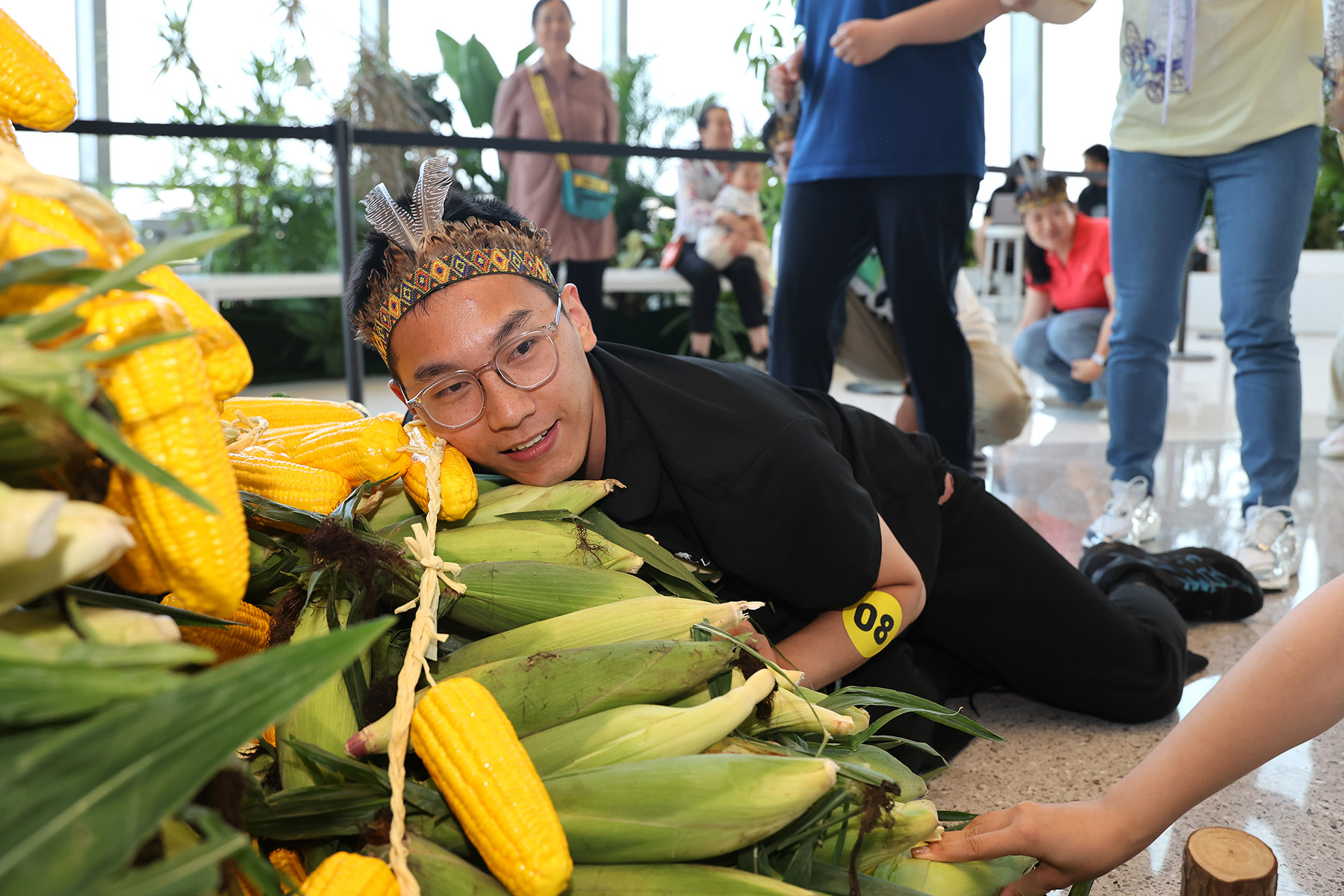
Some shopping centers display live maize plants, leading visitors from ancient beliefs about the crop to contemporary agricultural science.
The initiative also seeks to ensure that engagement goes beyond photos. Bead-art competitions, a "maize blessing wall", dance performances, and quizzes are built around cultural knowledge.
"Every installation has a civilizational narrative behind it, and every activity incorporates educational content," Lyu says. "Taking a photo is not the end. It can be the starting point for people to learn, and share what they have discovered."
For her, museums and commercial spaces benefit each other. "Museums bring cultural quality, visitors and deeper meaning to shopping centers, while shopping centers bring museums new audiences, new settings and new ways to reach people," Lyu says.
She hopes the initiative will become a Beijing cultural brand that integrates museums, heritage and urban life.
When history appears in shopping streets and along the routes people take home, museum boundaries begin to change. Culture becomes part of the city's everyday rhythm — and sometimes an unexpected encounter.
Contact the writer at liyingxue@chinadaily.com.cn
