

WASHINGTON/BAGHDAD/TEHRAN – A senior Iranian lawmaker said Wednesday that a draft plan under review by Iran's parliament to safeguard security in the Strait of Hormuz would bar hostile and espionage vessels from transiting the strategic waterway.
In an interview with state-run IRIB TV, Ebrahim Rezaei, a member of the parliament's national security and foreign policy committee, elaborated on the plan, whose general outlines have been approved by the committee.
The plan stipulates that vessels deemed hostile or involved in espionage activities that could threaten Iran's national security would not be allowed to pass through the strait, Rezaei said.
He added that Israeli military or civilian vessels would also be prohibited from transiting the waterway, with enforcement to be supervised by Iran's General Staff of the Armed Forces.
Rezaei said the plan included provisions for charging passage fees in the Iranian rial or other currencies, as well as penalties for vessels violating the regulations.
"If someone in another part of the world harms Iran's interests or our citizens, we will deal with that government in the Strait of Hormuz," he said, adding that the plan allows for measures including cargo confiscation and higher tariffs against governments that take hostile positions toward Iran.
Rezaei said the Strait of Hormuz had become a national security concern for Iran following US and Israeli strikes against Iran, and that Tehran must maintain control of the waterway to prevent military threats.
The parliamentary committee approved the general outlines of the plan earlier this month, Iran's official news agency IRNA reported.
'Most crushing economic operation'
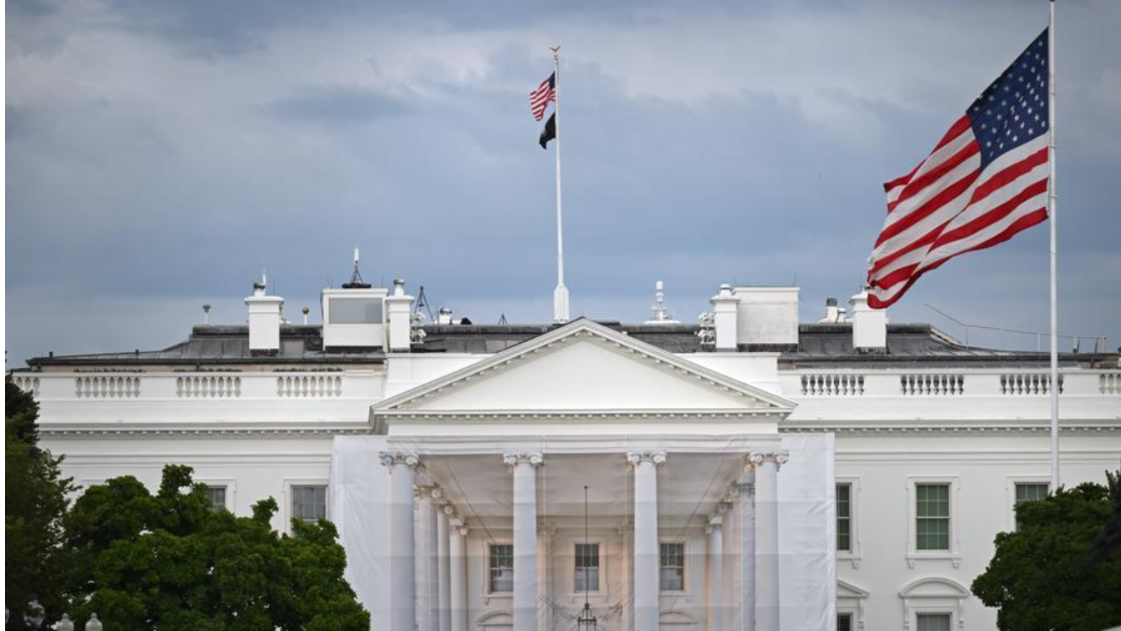
US President Donald Trump announced on Wednesday what he described as "the most crushing economic operation ever taken" against any country providing a lifeline to Iran.
"This will be Economic Warfare and Isolation on an unprecedented scale," Trump posted on Truth Social, accusing Iran of failing to take the opportunity to make a deal.
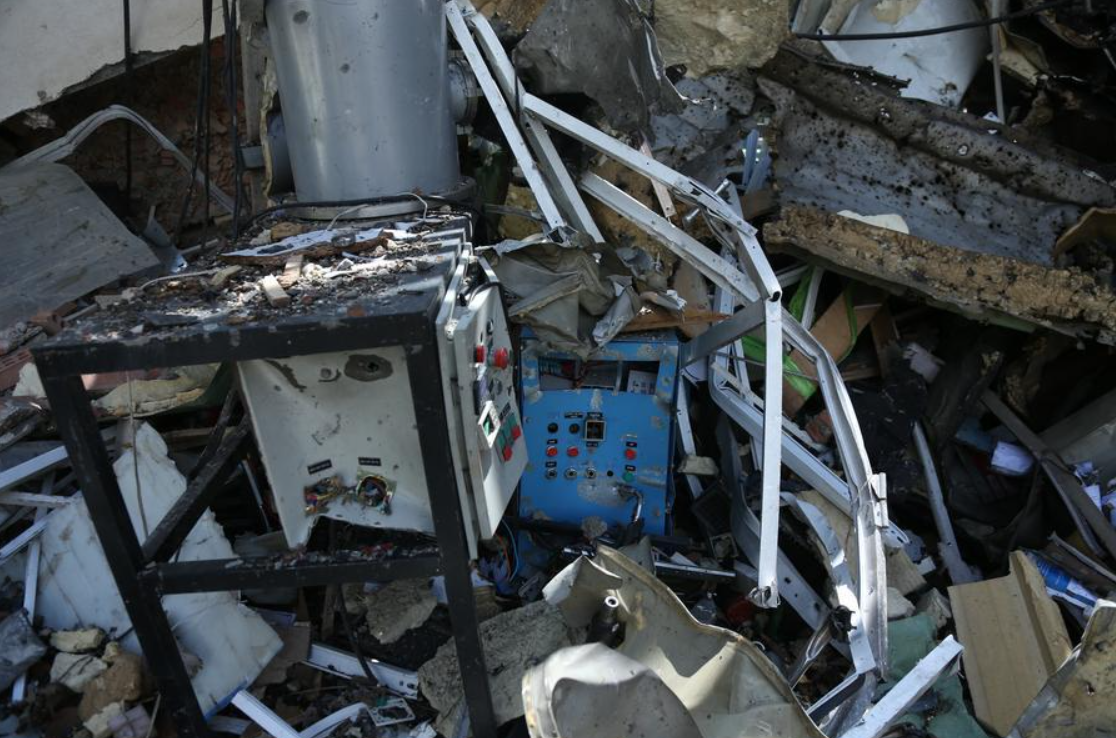
Trump claimed that Iran's navy is gone, its air force is destroyed, its military factories are in rubble, and its currency is worthless. "Their country is hanging by a thread," he asserted.
"Today, I am also announcing that ANY country that allows its financial institutions, businesses, airports, or government entities to provide any type of lifeline to Iran will itself face TREMENDOUS Economic Consequences," Trump warned.
Trump specifically demanded an immediate halt to financial and commercial conduits. Calling the move "an ECONOMIC D-DAY," Trump urged allies to stand with the US to "isolate, and defeat, the Iran threat."
The president's comments came nearly a week after Treasury Secretary Scott Bessent said the US would apply measures that have "never been seen" on Iran.
Bessent said on Aug 13 that the Treasury Department has targeted Iranian "bank accounts, crypto wallets, assets around the world, cutting off payments into both the leadership in the regime and the government itself."
He noted that Washington is stepping up a financial campaign against Tehran that began after Trump reinstated his "maximum pressure" policy last year and intensified it following the launch of military operations against Iran in February.
ALSO READ: US-Iran pact expires with no breakthrough
Trump: Talks with Iran could resume
Also on Wednesday, Trump suggested that talks with Tehran could start again "at some point," claiming the situation with Iran is "so good".
"Right now, I think the situation is so good," Trump told reporters, repeating his claim that the US is in "possession" and in "complete control" of the Strait of Hormuz, which has been effectively closed shortly after the US and Israel launched a massive military campaign against Iran on Feb 28.
Trump also reiterated that Washington's priority is preventing Iran from developing a nuclear weapon.
CNN reported on Tuesday that Trump told his negotiating team to halt conversations with Iran, citing US officials.
Trump announced on social media on Tuesday that there were "no talks or conversations going on, or scheduled" between the US and Iran as the US naval blockade "remains in full force and effect."
Shipping corridor
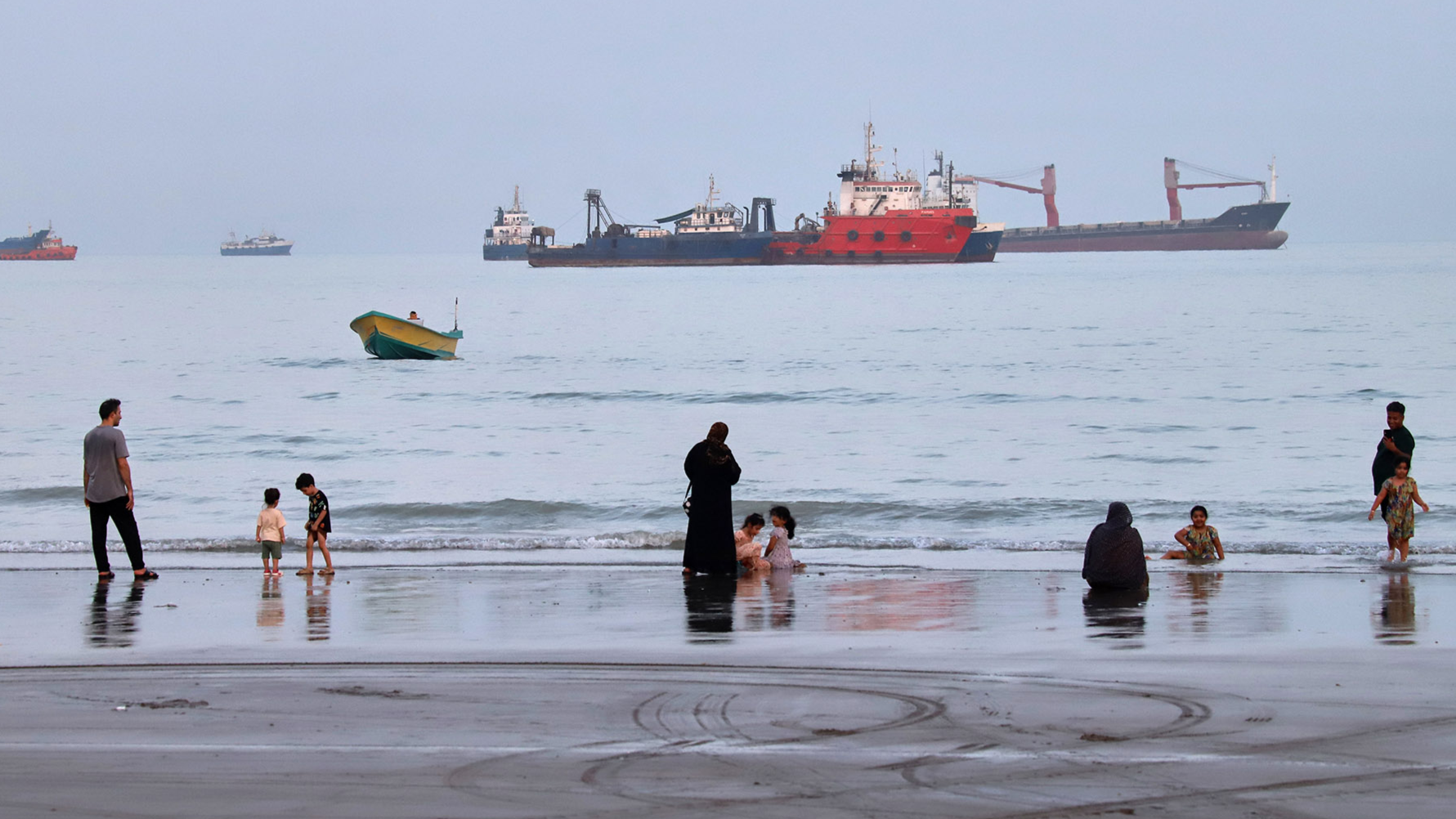
The US military has quietly established a shipping corridor in and out of the Strait of Hormuz to transport millions of barrels of oil each day, US online news outlet Axios reported Wednesday.
The operation has been underway for several weeks, with 15 to 20 oil tankers moving in and out of the global energy waterway each night through a southern channel along the coast of Oman, said the report, citing two US officials, as peace talks between the US and Iran remain at a stalemate.
The average daily exports have been growing and are now close to 10 million barrels, according to the US officials.
"We have been controlling the southern lane of the Strait of Hormuz for two months now. The Islamic Revolutionary Guard Corps can be a nuisance, but they don't control the strait. We do," one of the US officials, who has direct knowledge of the matter, was quoted as saying.
The US Air Force has fighter jets that protect against Iranian cruise missiles and drones, according to the report, adding that some ships have been hit by Iranian attacks, but many were stopped by the US military.
Earlier this week, US forces shot down eight Iranian drones and two cruise missiles, one of the US officials was quoted as saying.
Iraq, Iran leaders hold meeting
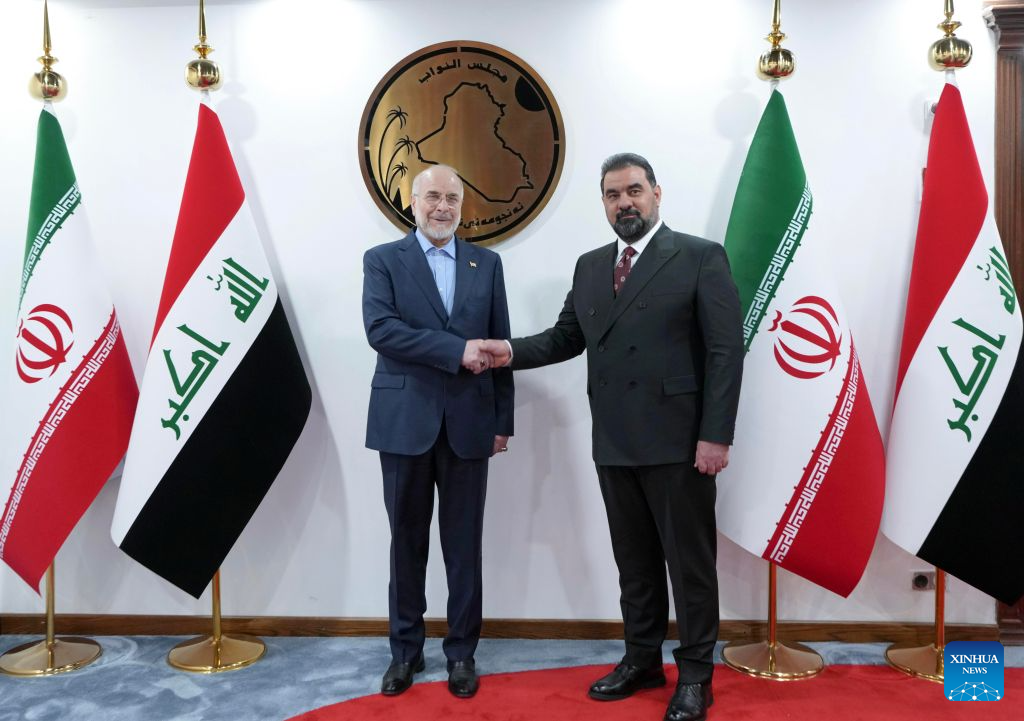
Top Iraqi leaders met on Wednesday with visiting Iranian Parliament Speaker Mohammad Bagher Ghalibaf to discuss bilateral ties and regional tensions, according to official statements.
When meeting with Ghalibaf, Iraqi Prime Minister Ali al-Zaidi affirmed the depth of historical, geographical, and religious ties between Iraq and Iran, and commended Iran's support for Iraq, especially during its war against the Islamic State (IS) group, according to al-Zaidi's media office.
In a separate meeting, Iraqi Parliament Speaker Haibet al-Halbousi stressed the importance of activating friendship committees, strengthening parliamentary diplomacy, and expanding bilateral cooperation, a statement by the Iraqi parliament said.
Al-Halbousi also called for granting Iraq a special status for oil exports via the Strait of Hormuz to safeguard its economic interests, noting that Iraq is among the countries most affected by regional turbulence.
Meanwhile, Iraqi President Nizar Amedi reaffirmed Iraq's support for efforts to end conflicts and resolve regional crises, stressing the need for constructive dialogue and diplomatic channels to address outstanding issues and promote lasting security, development, and stability, said a statement by the Iraqi Presidency.
For his part, Ghalibaf expressed his country's appreciation for the deep historical relations between the two neighboring countries, stressing Iran's keenness on coordination and cooperation with Iraq in various fields.
