

Archaeologists say a 5,600-year-old ritual center reshapes our understanding of China's earliest state, report Yang Feiyue and Wu Yong.
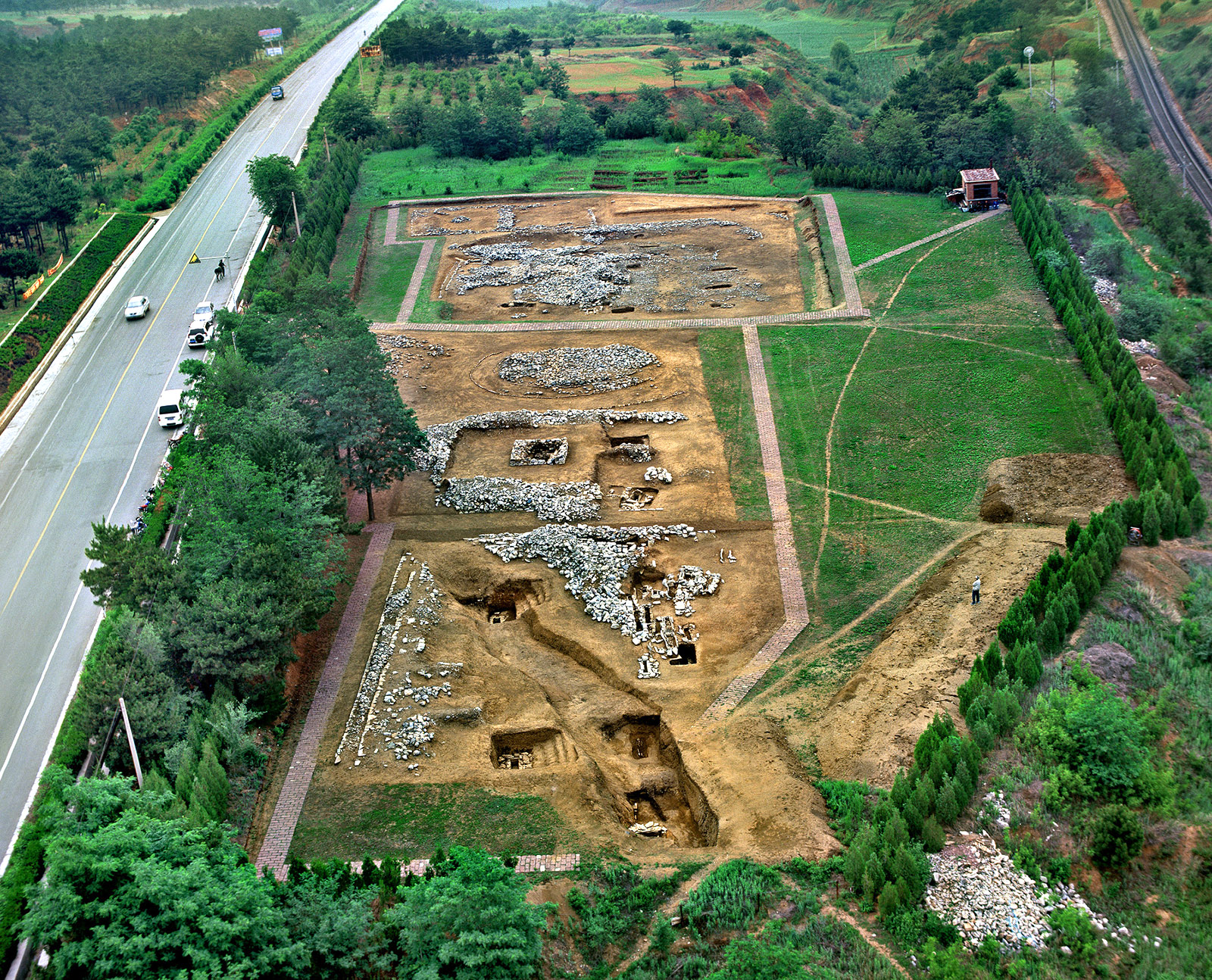
On the green hills of western Liaoning province, a newly excavated platform has revealed that Hongshan people could determine true north and south with remarkable precision 5,600 years ago.
This Neolithic culture tracked the sun's shadow with a vertical pole — a technique known as gui biao ce ying that would become fundamental to Chinese astronomy, surveying and urban planning.
The conclusion comes from Platform No 2 at Locality 1, the northern section of the Niuheliang site in Chaoyang, Liaoning, that was discovered in the 1980s. It is the most important ceremonial center of Hongshan culture that flourished in northeastern China from around 6,500 to 4,800 years ago, spanning parts of what is now Liaoning and Hebei provinces, as well as the Inner Mongolia autonomous region.
READ MORE: Hongshan stakes foundation claim
Renowned for its sophisticated jade craftsmanship and monumental ritual architecture, Hongshan is widely regarded as one of the earliest foundations of Chinese civilization beyond the Yellow River heartland.
The platform is a rectangular structure measuring 64.61 meters north to south and 41.39 meters east to west, one of nine such platforms that archaeologists identified in 2021 as a massive architectural complex at the site.
Its builders used a mix of earth and stone — compacted soil on flat ground, large stones topped with gravel in low-lying areas — a method that combined durability with drainage. The platform sits slightly north of the center of the complex.
The discovery is the latest in a series of findings that have transformed the site from a burial ground into what scholars now recognize as the ritual capital of an early Chinese state, complete with temples, altars, elites' tombs and a north-south axis that echoes that of Beijing.
Feng Shi, an academician of the Chinese Academy of Social Sciences, says the platform's precise north-south alignment reflects mastery of the er sheng system — two perpendicular reference lines running north to south and east to west.
According to Feng, shadow-measuring techniques date back at least 8,000 years.
Clear evidence of the system appears on pottery at sites dated 7,000 years ago, like Liulinxi in Hubei province. By 6,500 years ago, the Xishuipo site in Henan was already laid out along a meridian line. Niuheliang's Platform No 2, he says, is a direct application of this ancient astronomical tradition.
Yet, it lacks what many would consider an essential feature of a capital — city walls.
Guo Dashun, honorary director of the Liaoning Provincial Institute of Cultural Relics and Archaeology, points out that walls are not, in fact, essential.
Yinxu, the last capital of the Shang Dynasty (c.16th century-11th century BC), had no known city walls. Neither did Erlitou, widely regarded as a capital of the Xia Dynasty (c.21st century-16th century BC).
"Yet both are widely recognized as capitals," Guo says.
Recent excavations have further strengthened Niuheliang's claim to that status.
At Locality 1, archaeologists have identified two temples — an upper temple to the north and the famed "goddess temple" to the south. Although the upper temple's above-ground structure has disappeared over five millennia, the finely crafted artifacts uncovered there rival those found in the goddess temple.
From the upper temple southward, past the goddess temple and sacrificial pits, the axis extends roughly one kilometer to Locality 2, where a three-tiered circular altar and burial mounds stand.
The layout is strikingly coherent: temples to the north, an altar to the south and elites' tombs aligned along the central axis.
Guo draws a parallel to Beijing, where the Forbidden City and Imperial Ancestral Temple stand in the north and the Temple of Heaven in the south.
Niuheliang, he says, contains the same core elements — an ancestral temple, sacrificial altar, tombs and a north-south axis — leading him to conclude that it was the capital of the Hongshan ancient state.
A bridge to the divine
In the highest-status tombs at Niuheliang, almost nothing accompanied the dead except jade. Scholars call this practice wei yu wei zang — "jade-only burial".
"Jade was the ultimate luxury, the high technology of its time," says Zhou Xiaojing, a research fellow at the Liaoning Provincial Museum, who has spent more than three decades studying Hongshan jade.
"Rarity made it precious — the difficulty of quarrying, transporting, and crafting it was precisely what made it a marker of status," she adds.
Most Hongshan jade artifacts can be traced to deposits in Xiuyan Manchu autonomous county, Anshan, Liaoning, which supplied the bulk of the culture's jade. A smaller number may have come from areas near Heilongjiang province and Russia's Lake Baikal.
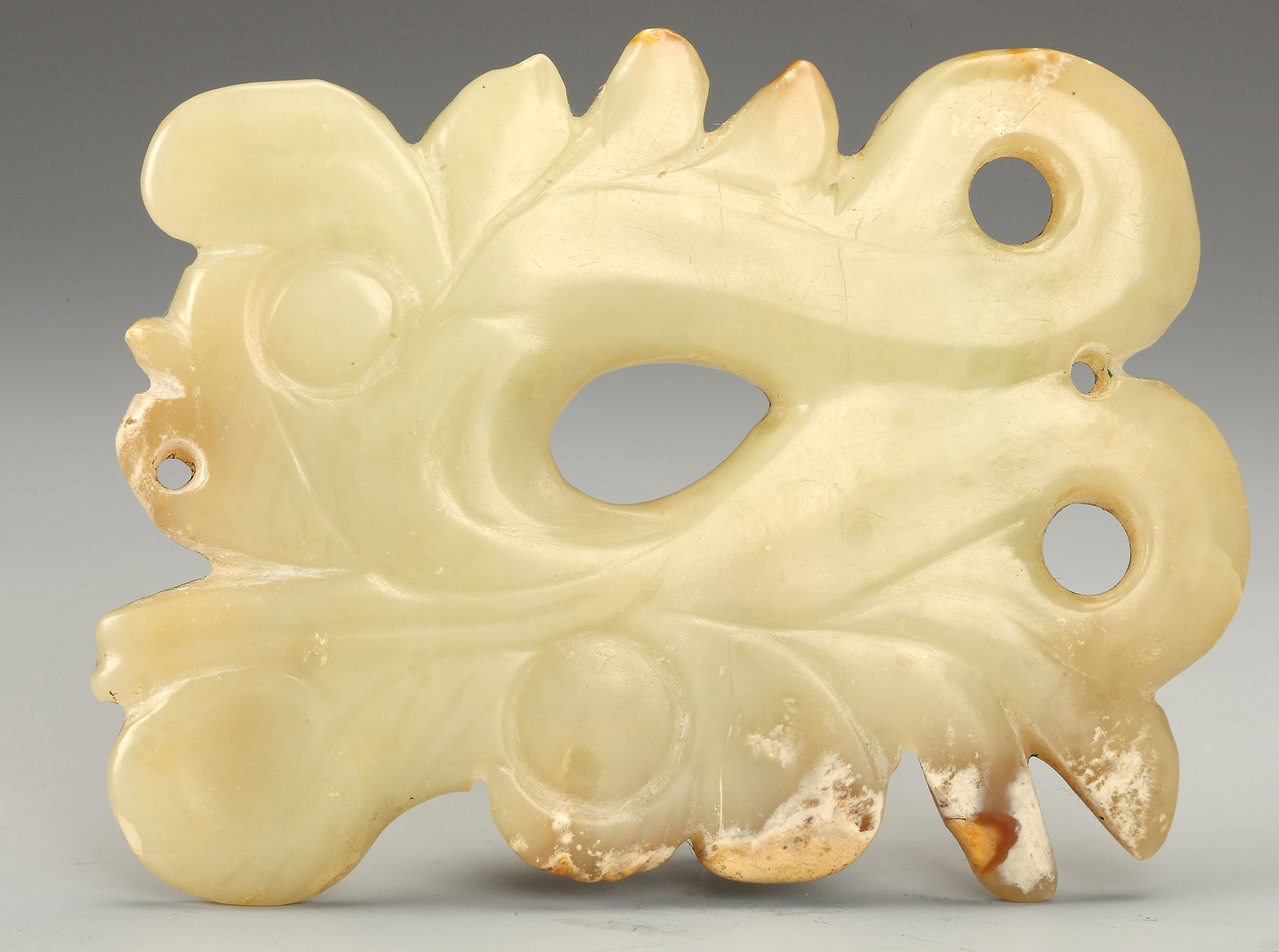
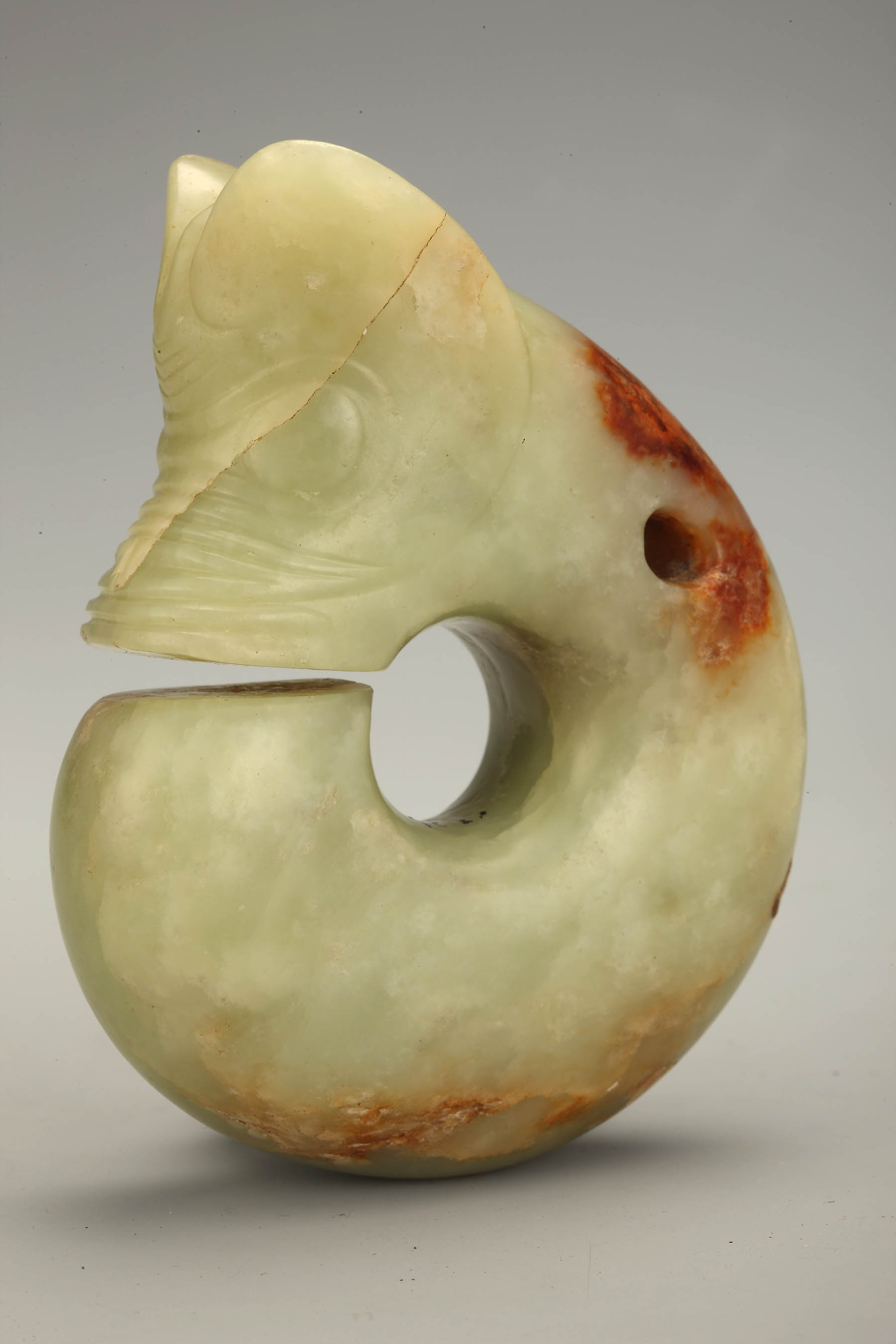
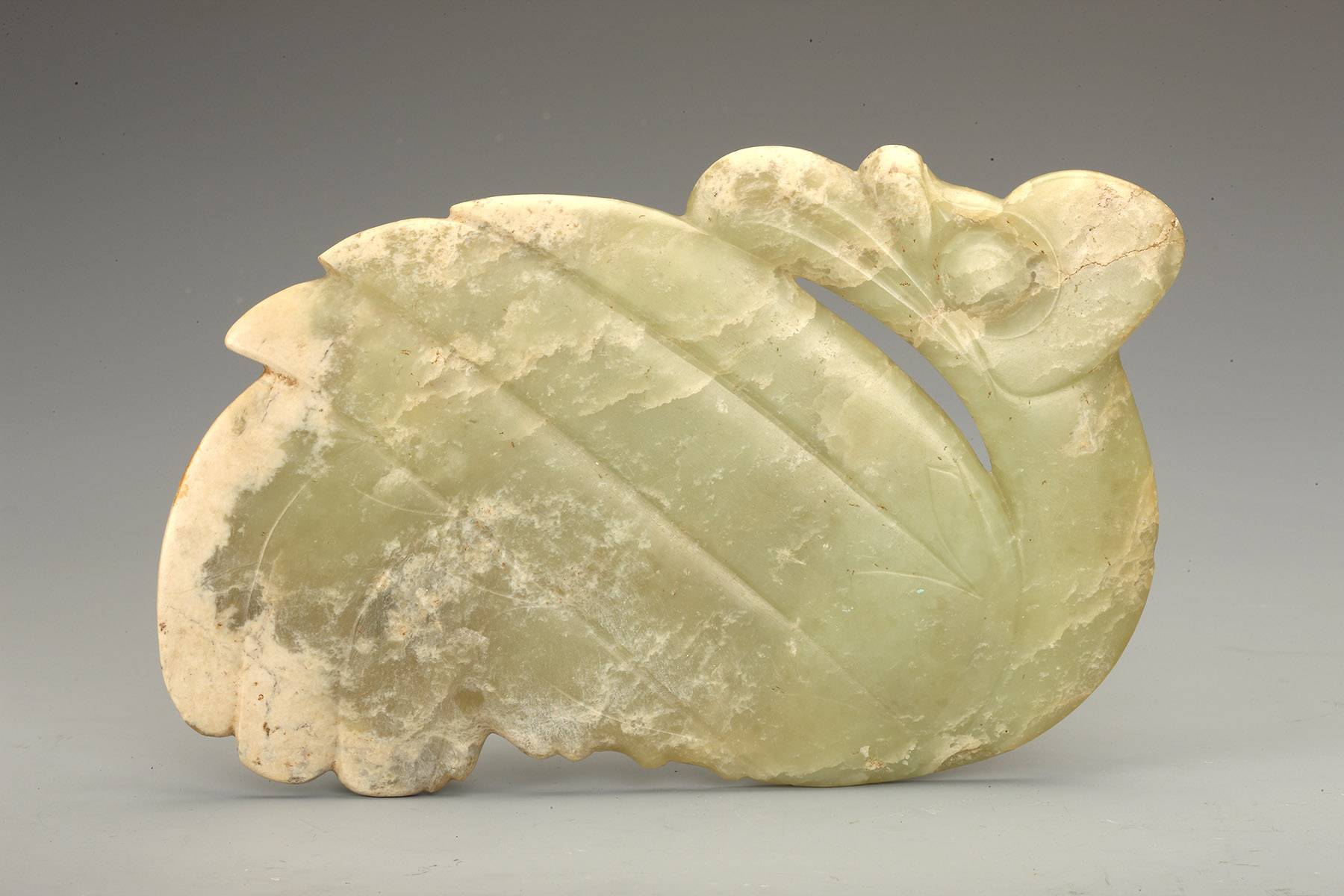
Hongshan jade is renowned for its depictions of sacred animals — dragons, phoenixes, tortoises and silkworms. The jue-dragon and C-shaped dragon are among the most iconic, considered early prototypes of the Chinese dragon totem.
More intriguing, Zhou says, is what these objects reveal about Hongshan beliefs. A tubular jade object found near the head of a burial — the direction associated with heaven — is believed to have served as a medium for communicating with the divine. A large cloud-shaped jade piece placed on the chest likely signified the highest social rank.
Guo, the senior archaeologist, points to a recent discovery at the Yuanbaoshan site in Inner Mongolia, where archaeologists uncovered more than 100 jade objects embedded in a stone mound rather than inside tombs. The practice of "hiding jade in the mound", he says, appears to have been a ritual offering to heaven rather than part of a burial.
Guo believes this reverence for jade endured long after Hongshan culture, eventually finding expression in Confucian thought, where jade came to symbolize moral virtue.
Two peoples, one identity
Zhang Xingde, a professor of archaeology at Liaoning University who has spent more than four decades studying Hongshan culture, believes the reason that jade played a central role in Hongshan society lies in the very composition of the culture itself. It was a story of two distinct peoples who came together and forged a shared material and spiritual identity.
"Although the Hongshan people were relatively less developed in material terms, they also wanted to learn new things," Zhang says.
"And their absorption was not simple 'take-and-use' — it was innovation on the basis of what they took — in today's words, 'upholding tradition while breaking new ground'."
The breakthrough came from pottery. Between 2008 and 2010, the late archaeologist Zhang Zhongpei noticed something striking at the Weijiawopu site, a Hongshan culture settlement in Inner Mongolia. Pottery unearthed from different Hongshan sites had been made using two entirely different techniques.
One — the "clay-ring joining method" — was local to western Liaoning. The other — the "claystrip coiling method" — was characteristic of regions south of the Yanshan Mountains.
"This Hongshan is not that Hongshan," Zhang Zhongpei told her, and urged her to investigate further.
Years of research led Zhang Xingde to conclude that Hongshan culture emerged from the convergence of two distinct populations.
One group was the indigenous people of western Liaoning, descended from the earlier Xinglongwa and Zhaobaogou cultures — the region's earliest farming communities dating back some 8,000 years.
The other consisted of Neolithic migrants from the eastern foothills of the Taihang Mountains. Driven northward by population pressure as agriculture expanded, they entered the Liaohe River basin around 6,500 years ago.
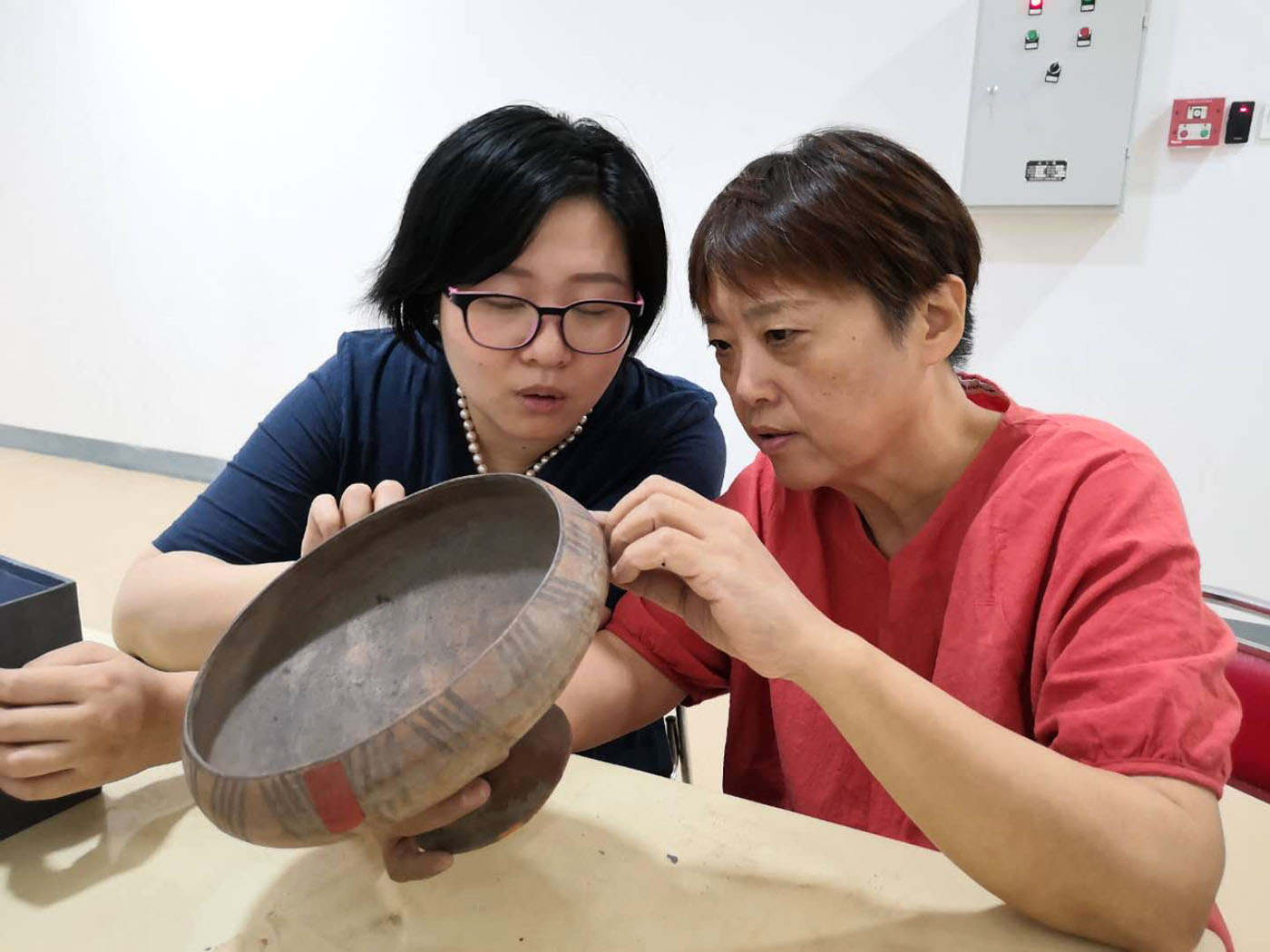
According to Zhang, the two groups initially clashed, even engaging in warfare. The newcomers pushed the indigenous population north toward the Xar Moron River basin in what is now Inner Mongolia, the northern edge of the Hongshan cultural sphere.
It explains why Hongshan culture's early phase had no jade in the southern part of the region, even though the earlier Xinglongwa culture to the north was rich in jade, Zhang says.
Over time, however, the two peoples learned to coexist. They adopted each other's vessel forms while preserving their own pottery-making techniques. At Niuheliang, Zhang says, they built a shared ceremonial center where different communities could worship together.
For her, this cultural fusion explains jade's elevated status. The southern migrants brought no jade tradition, but they encountered a northern people for whom jade was already sacred. In the process of forging a shared identity at Niuheliang, jade was elevated from a regional tradition to the unifying symbol of a new society, invested with new cultural meaning.
ALSO READ: Jade carvings echo through history
Guo, the archaeologist, sees evidence of this fusion in Hongshan painted pottery itself. Hongshan painted pottery bears three distinct patterns — the rose from China's Central Plains, the dragon native to Hongshan and geometric diamond-grid patterns from the vast Eurasian steppe. They testify to a "pottery road" that linked east and west, north and south some 5,000 to 6,000 years ago, with the western Liaohe River basin as a crucible of cultural fusion.
Many scholars in China and abroad have described Chinese civilization as a civilization of continuity, distinct from the cycles of rupture and replacement often associated with the ancient West.
Rooted in northeastern China's traditions while embracing influences from neighboring regions, Hongshan culture exemplifies that enduring pattern, they argue.
Guo believes this openness to outside influences helped shape Chinese civilization and ensured its continuity across millennia.
Niuheliang, he says, proves the continuity of Chinese civilization and is the root of ancient Chinese culture.
Contact the writers at yangfeiyue@chinadaily.com.cn
