

Asian academic aspirants explore options after US visa caps
Editor's note: In this weekly feature China Daily gives voice to Asia and its people. The stories presented come mainly from the Asia News Network (ANN), of which China Daily is among its 20 leading titles.
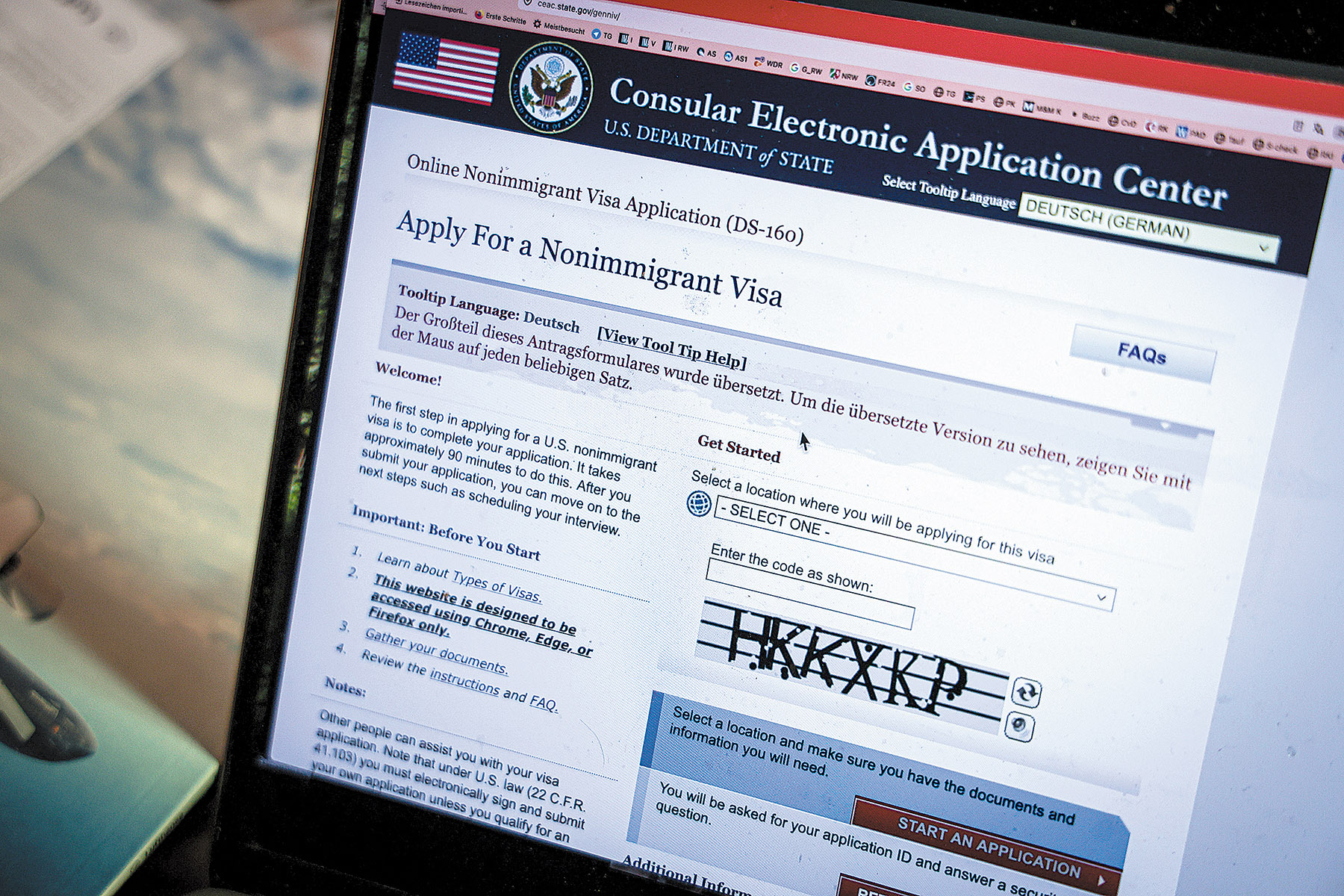
Asian academic aspirants are closely studying the United States' new cap of four years for international students as part of changes introduced to the country's F1 study visa.
The F1 visa is a nonimmigrant visa that allows international students to study in the US.
Prospective students must now recalibrate their optional stays, job searches and trips back home according to shorter timelines and stronger penalties for overstaying.
On July 16, the US President Donald Trump's administration finalized stricter rules for foreign students.
READ MORE: Policy tightening raises concerns
More than 70 percent of international students in the US are from Asia, with most originating from China and India.
The new rules limit their stay to four years, or less, if the course is shorter. Until now, foreign students could stay in the US as long as it took to finish their course if they adhered to other visa regulations.
The new rules will also restrict students' ability to switch programs or transfer between universities and colleges.
The grace period — the period of lawful stay in the US after completing an academic program during which a foreign student may prepare for departure — has also been shortened from 60 to 30 days.
The Department of Homeland Security said the policy, which comes into effect in September, "combats rampant visa abuse and strengthens national security through regular vetting".
"For decades, foreign students have been admitted into the US indefinitely, allowing thousands to abuse our immigration system by perpetually enrolling in courses to avoid having to leave the US," said Homeland Security Secretary Markwayne Mullin.
The Trump administration has been tightening visa rules for work, study and visit, as part of a wide-ranging immigration crackdown.
Students and education consultants in Asia said they have been bracing themselves for this fresh complication with F1 student visas.
Analysts told The Straits Times that the new visa rules are unlikely to have a major impact on foreign students who are already in the US, or those who are set on going there, as the new fixed term of up to four years should cover the duration of most undergraduate and graduate programs.
But PhD students with a longer course duration will have to apply for extensions, ahead of the expiry of their visas, to the US Citizenship and Immigration Services. Earlier, the universities could themselves extend the students' stay.
"With every visa rule change, building a career in the US becomes a harder task," said a 21-year-old data science student from the Indian city of Mumbai who has been applying for a master's and doctorate in the US, which together would take at least six years.
"It's America's loss, not mine," he said, but admitted that "it is unfair that I have to change my dreams due to shortsighted political priorities".
Numbering more than 363,000 — roughly a third of the total number of international students in the US — Indians currently form the largest share of foreign students.
"Earlier, it was the US government's responsibility to find people who were out of their student visa status. The new rule puts the onus on the students to prove more often that they are not out of status," said Nistha Tripathi, founder of 24NorthStar, an overseas career and education consultancy in Gurgaon, India.
While being an attempt to "tighten the noose on immigrant overstays without approval", Tripathi said "its effect on genuine students is not insignificant".
"Students face bigger issues like the more stringent H1-B work visas, shrinking jobs and the falling rupee, all of which hit the return on investment of a US education. The F1 rules add to these existing pressures," she said.
Enrollments drop
New Indian enrollments in the US plummeted in August 2025 by 40 to 45 percent compared with the previous year amid Trump's immigration policy shifts.
Meanwhile, Indian students are exploring other countries, with a 370 percent rise in applications to Germany in early 2026, and a 25 percent increase to Singapore.
New enrollments from China, the second-largest source of international students in the US, have already been falling, from a record about 373,000 in the 2019-20 school year down to less than 266,000 in 2024-25.
The "not-so-friendly" message in the new visa regulations will likely add to the uncertainty that Chinese students in the US already face today, and could also accelerate the falling trend of enrollments, said Xiong Bingqi, director of the 21st Century Education Research Institute, a think tank in Beijing.
While he did not foresee any major issues for PhD students who may need extensions, he added: "There's a concern that if one applies for an extension, the review process will be stricter, which could interrupt one's studies. This has actually happened in the past few years. Students from China were studying abroad, and everything was going well, but then, for various reasons, their visas were denied."
This could benefit universities in other places that have become relatively more popular for students from the Chinese mainland, such as China's Hong Kong, Singapore, Japan, Europe, Britain and Canada, Xiong said.
The high cost of overseas education and the improvement in the quality of Chinese universities mean more Chinese students are also likely to stay home to further their studies.
'No room for error'
"A four-year cap means mid-program extensions, and new restrictions on switching schools or research areas shrink the room for error," said Wei Peiran, an independent educational consultant based in Hangzhou.
He currently works with Chinese students eyeing admissions in the top 30 universities in the US.
"The group hit hardest is that hoping to work in the US after graduating: the post-study grace period has been cut from 60 days to 30, so there's much less time for job hunt after finishing school," Wei said.
South Korean students are also shaken by the new stay limits. Kim Se-hee, a 24-year-old who transferred to a nursing school in Chicago last fall and has three to four years of study ahead before seeking a nursing position at a hospital through optional practical training, or OPT, fears she could be sent back home before getting a chance to launch her nursing career.
"I can't graduate early by cramming my coursework, there's no guarantee I'll pass the NCLEX-RN (US licensing exam for registered nurses) on my first attempt, and I've been told the OPT application process also takes time. Four years really isn't much time," Kim told The Korea Herald.
"I've been working toward building a life in the US, so if I have to go back to South Korea right after getting my US nursing license, it would all be for nothing."
The uncertainty is also weighing on South Koreans pursuing education in the US, with some saying the proposed four-year limit could leave little room for unexpected changes, such as switching majors after discovering another field that better suits their interests.
"I'm starting to wonder whether studying in the US is worth the risk if the rules can change after I get there," one user wrote on Mijunmo, a popular online community for South Koreans interested in studying, immigrating and living in the US.
Still, Wei noted the Trump administration's frequent policy reversals.
"Last year, (the US government) talked tough on Chinese student visas, then months later the president said he welcomed 600,000 Chinese students. My advice to prospective students is always the same: policies change, but your planning shouldn't shift with every headline."
