

Emerging innovative, affordable products shine at Los Angeles gear expo
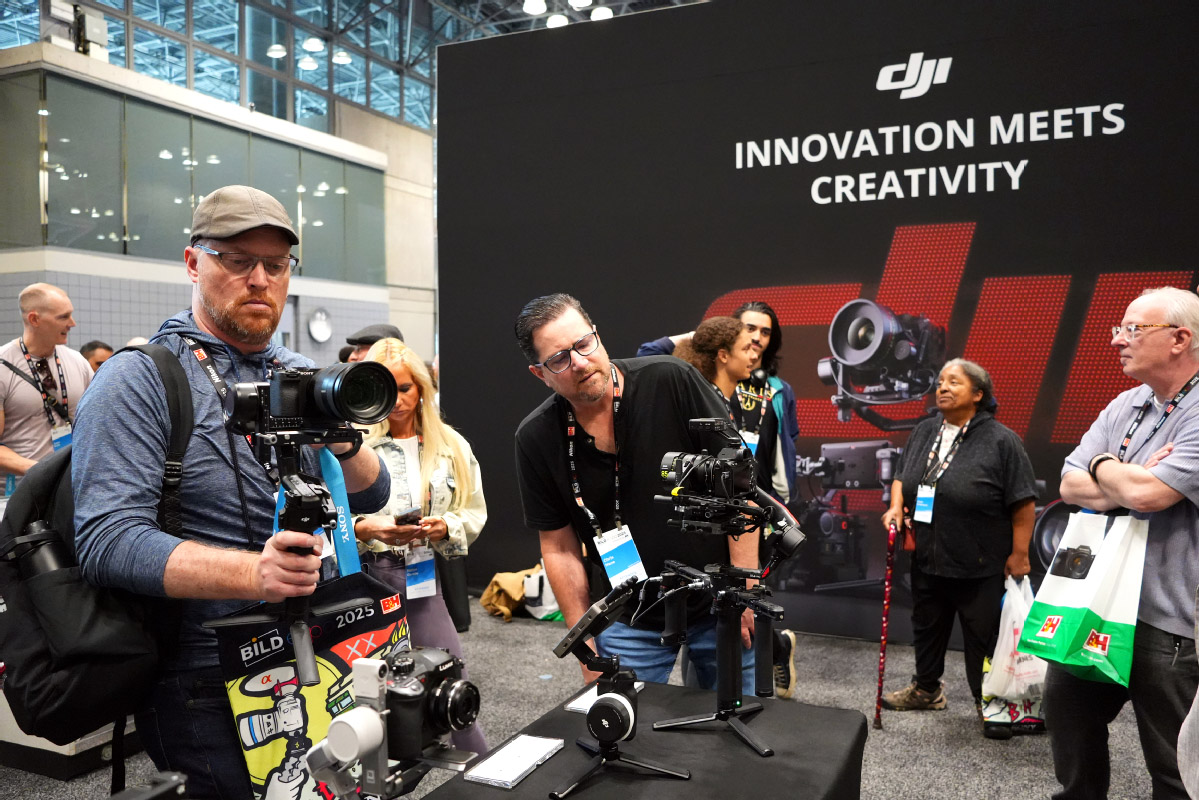
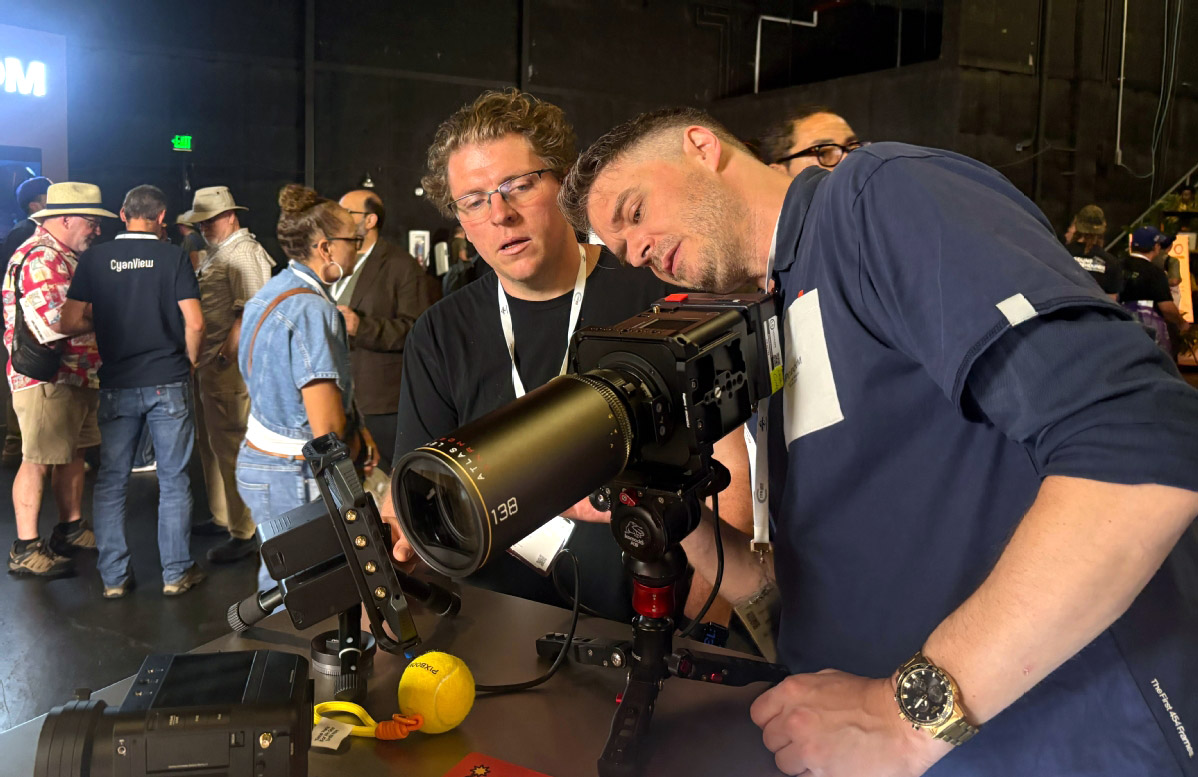
A compact camera made in Shenzhen, Guangdong province, drew one of the biggest crowds at the recent Cine Gear Expo LA on the Universal Studios back lot.
Its striking slow-motion footage offered more than a technology demonstration — it reflected the growing presence of Chinese innovation in Hollywood's film production ecosystem.
Developed by startup Pixboom, the Spark high-speed cinema camera combines a Super 35 global-shutter sensor with professional high-speed imaging capabilities. The company has said it offers filmmakers access to technology once largely limited to six-figure cinema systems, while significantly lowering the cost.
READ MORE: Chinese tech giants democratize global filmmaking
"Our products are suitable not only for the film industry, but also for individual studios and high-end content creators," Jing Qi, the company's chief marketing officer, told China Daily. "High-speed cameras can be extremely expensive. Some of the best-known systems cost more than $100,000, while our price is around $14,000."
The demonstration at Cine Gear Expo LA, which ran from June 5 to June 6, reflected a broader shift taking place across the global film industry.
Once known primarily for manufacturing affordable accessories, Chinese companies are increasingly expanding into the higher end of the filmmaking process — from lighting, rigging and wireless monitoring to robotics, cinema lenses, ultra-high-definition cameras and software-assisted production.
Move into mainstream
For decades, Germany, and later Japan, set the benchmark for professional imaging.
German companies established enduring standards in cinema optics and camera engineering, while Japanese manufacturers including Canon, Nikon, Sony, Panasonic and Fujifilm came to dominate the global camera market. Nikon's acquisition of United States cinema-camera maker Red in 2024 further strengthened Japan's position in high-end digital cinematography.
That leadership has remained. The global digital-camera market remains dominated by Japanese manufacturers, with worldwide shipments rising to 9.44 million units in 2025, according to the Camera & Imaging Products Association.
But the competition surrounding professional camera gear — from lighting and lenses to stabilization, wireless systems and increasingly camera bodies — is becoming more diverse.
At the Cine Gear Expo, Chinese brands including Aputure, Nanlux, Godox, SmallRig, Accsoon, Hollyland, Viltrox, Bosma and Pixboom exhibited their products alongside long-established international names such as Arri, Sony and Red. Thousands of filmmakers, cinematographers and technicians attended the event, which turned a working studio back lot into a testing ground for production technology.
The shift, industry figures said, is no longer simply about lower prices. Increasingly, it is about speed of development, integrated manufacturing, software, design and the ability to translate filmmakers' feedback into new tools.
Cinematographer Shane Hurlbut, whose credits include Terminator Salvation, Act of Valor and Into the Blue, said Chinese lighting equipment had moved from the margins of Hollywood production into mainstream professional use.
"Before, Chinese lights really were never accepted in Hollywood," Hurlbut told China Daily. "Now I'm seeing a massive expansion where China is using so much high tech and coming out with incredible color science. Their lights are really changing the game."
The latest systems offer filmmakers sophisticated color control, motorized positioning and software integration that can reshape how lighting is designed on set. Rather than relying only on fixed white light, cinematographers can reproduce subtle environmental colors, coordinate multiple fixtures and make rapid adjustments without interrupting production.
Better technology
Photography educators and content creators Tony Northrup and Chelsea Mercado have observed a similar transition in still photography and online video production.
Northrup said he gradually realized that much of the equipment used in their own work was now Chinese brands — not because the products were less expensive, but because they often offered more useful technology.
"We gradually switched to almost all Chinese stuff in a lot of our accessories," Northrup said.
"We used to use Canon flashes on our Canon cameras, and we used to use Alien Bees USA-manufactured studio lighting. Then we switched to Yongnuo and Godox — not because it was cheaper, because it was better. It was also cheaper, but the technology was better," he said.
He pointed to DJI's Osmo Pocket 3 as an example of a Chinese product that did not simply imitate an existing product category but altered creators' expectations of it.
"When DJI launched the Pocket 3, we stopped using little Canon and Sony vlogging cameras because it looked completely different, worked way better, and changed the way we work," he said. "At a press event, I can record everything, quickly send it to my phone, edit it and publish it in a way I could not do with another camera."
Mercado said the product "completely shook up the vlogging format" and suggested that Chinese companies bring similar disruption to other imaging categories.
"It's not just hardware that they're excelling at," she said. "They're also excelling in software. I think it could really change the photography software landscape."
Chinese companies first gained visibility in categories related to the camera body — drones, gimbals, lighting and support systems — where smart electronics and rapid product cycles were increasingly important. They are now moving further into cinema cameras, specialized sensors and optical systems.
Northrup linked the change to China's broader industrial-development strategy, particularly Made in China 2025, which was issued by the State Council in 2015 to promote innovation-driven manufacturing and strengthen China's capabilities in advanced industries.
"China didn't want to be just the world's factory anymore," Northrup said. "They wanted to actually design stuff."
Mercado described the emphasis on education, science and research as a long-term investment.
"The money that you put into education and science usually comes back in multiples," she said. "It was a good long-term plan."
'Localized integration'
The scale of China's broader investment in innovation is reflected in official data. China spent 3.93 trillion yuan (about $580 billion) on research and experimental development in 2025, up 8.1 percent from the previous year and equivalent to 2.8 percent of GDP, according to the National Bureau of Statistics.
The World Intellectual Property Organization ranked China 10th in its 2025 Global Innovation Index — its first entry into the global top 10. China also hosts 24 of the world's top 100 innovation clusters, more than any other economy, with the Shenzhen–Hong Kong–Guangzhou cluster ranked top globally.
The evolution of film technology also reflects advances across a broader range of high-tech industries. Innovations in image sensors, precision optics, artificial intelligence, wireless transmission, chip design and advanced manufacturing are increasingly being integrated into cinema cameras, robotic camera systems, intelligent lighting and virtual production equipment.
Franklin Zeng, president and CEO of Bosma, which was founded in Guangzhou, Guangdong, in 2000, said the company entered the professional cinema market after identifying a gap between advanced ultra-high-definition imaging technology and what many filmmakers could realistically afford or integrate into their workflows.
"Our inspiration to enter the professional cinema market stems from a desire to break down these walls," Zeng told China Daily.
To establish its presence in Hollywood, BOSMA has adopted a "product-first, localized integration" strategy, placing its cameras in the hands of working cinematographers, rental houses and broadcast technicians for evaluation in real production environments.
"Hollywood is not only hyper-competitive; it is also an environment that values technical excellence and peer-to-peer reputation," Zeng said.
He said Chinese developers benefit from "comprehensive supply-chain integration and rapid, agile innovation cycles", allowing optics, electronics and artificial intelligence tools to be combined more quickly.
"We view our relationships with cinematographers and production companies not as mere transactions, but as collaborative creative partnerships," Zeng added.
That feedback-driven approach is also central to Aputure, which has expanded from cinema lighting into broadcast and live-event production.
Mitch Gross, the company's director of marketing, said the brand's position in Hollywood came from identifying filmmakers' practical needs — lighter equipment, faster operation, better control and more flexible workflows — and developing technology around them.
"We understand what their needs are, and by understanding that, we are innovators creating new technologies so that we best serve them," Gross told China Daily.
He said Aputure works with Hollywood studios, rental houses and owner-operators and views those users as long-term partners.
"We don't have customers; we have clients because we have an ongoing relationship with them," he said.
Tariffs have reduced profitability on China-made products, Gross said, but the company has sought to maintain pricing and preserve those relationships.
"Geopolitical situations can always affect an industry because they affect how trade happens and what the prices are," he said. "But there's no animosity on the ground between clients and manufacturers. We're just trying to do our work and serve our clients as best we can."
Malcolm Mills, director of business development and technology at Nanlux Americas, said Chinese manufacturers' development speed is particularly important to studios facing rapidly changing production requirements.
"They believe the innovation is very strong from China, and they understand that manufacturers in China are very quick to market," Mills said. "We can develop the research-and-development side very quickly and come to market quickly. That's important for the studios."
He said the company works with major film studios and rental operations and uses platforms such as You-Tube and Instagram to demonstrate new products directly to cinematographers and production crews.
ALSO READ: Chinese film-tech firms gain ground in Hollywood
Also at Cine Gear Expo, Chinese companies such as SmallRig displayed camera cages, handles and mounting systems; Hollyland and Accsoon presented wireless production solutions; and G-Ka robotics further expanded its presence in Hollywood.
Taken together, the companies are building something more consequential than a collection of individual products; they are establishing an increasingly interconnected film-production ecosystem.
Northrup said the expansion could place greater competitive pressure on long-established camera makers, particularly as Chinese lens manufacturers gain access to open camera-mount systems and developers move closer to producing complete camera platforms.
"I think third-party Chinese manufacturers are going to take a bigger and bigger part of the market share," he added.
Contact the writers at renali@chinadailyusa.com
