

Leung Chun-ying, vice chairman of the National Committee of the Chinese People’s Political Consultative Conference and chairman of GX Foundation, recently shared the drone medical assistance project in Vanuatu on social media, once again showcasing the Hong Kong Special Administrative Region’s unique soft power in advancing the Belt and Road Initiative to the world. Founded by Hong Kong people and rooted in Hong Kong, this international charity weaves extensive "aerial lifelines" across Pacific island nations and countries along the Belt and Road, powered by drone technology and medical aid. Its tangible actions embody the profound essence of people-to-people connectivity.
 On July 13, GX Foundation and the Ministry of Health of the Republic of Vanuatu signed the Memorandum of Understanding on the 2026–2027 Vanuatu Health and Disaster Relief Drone Project online, integrating advanced low-altitude technology into the local public health logistics and emergency response system. Speaking at the project launch, Leung said: "During the initial pilot phase, the foundation will supply a full suite of advanced drones to transport life-saving blood products and vaccines, deliver medical samples from remote clinics, conduct rapid search-and-rescue operations post-disaster, and deploy emergency supplies, forming a reliable aerial lifeline." For Vanuatu, an archipelago of 83 rugged islands, this breakthrough means patients in remote communities no longer need to travel for hours or even days to access urgent medical supplies. Drones deliver responses within minutes, reshaping the framework of local medical rescue.
This innovative initiative is not the GX Foundation’s first foray into international humanitarian work. Established in 2018, the foundation has always been guided by the principles of extensive consultation, joint contribution and shared benefits. Its humanitarian footprint spans 10 nations across four continents: Laos, Cambodia, Senegal, Mauritania, Djibouti, Timor-Leste, Honduras, Vanuatu, Fiji and Kazakhstan, delivering support to local populations in eight key medical and public health sectors. Its landmark Cataract Blindness Elimination Project stands out among all programs: Over more than three years, its medical teams have performed more than 12,000 sight-restoring surgeries in Laos and Cambodia, adhering to a complete elimination model that only departs after the last patient receives treatment. Leung once recounted a touching story: "One patient, blind for seven years, rushed home after regaining his sight to see his five-year-old grandson — a child he had touched, hugged and kissed yet never laid eyes on." Each of these over 7,000 sight-restoration stories forms a heartwarming footnote to people-to-people exchanges under the Belt and Road Initiative.
GX Foundation’s practice serves as a vivid demonstration of Hong Kong’s soft power on the global stage. As an international city rooted in the motherland and connected to the broader world, Hong Kong boasts dual unique strengths. On one hand, it draws robust medical resources and technical backing from the Chinese mainland; medical teams from Guangxi, Shanxi, Heilongjiang and other provinces or regions form the backbone of the foundation’s overseas projects. On the other hand, Hong Kong’s extensive international networks, well-established donation culture and professional management capabilities enable this civilian aid mechanism to operate efficiently. All funding of the foundation comes from public donations, with enterprises of all sizes willing to contribute to philanthropy, a testament to Hong Kong’s long-standing charitable traditions and global vision.
More importantly, medical and humanitarian aid as a vehicle for “soft diplomacy” has generated far-reaching influence among Belt and Road partner countries. In September 2025, Cambodian Deputy Prime Minister Neth Savoeun conferred a state medal on Leung on behalf of the Cambodian government, in recognition of his monumental contributions to Cambodia’s healthcare sector. Progress has shifted from infrastructure construction to safeguarding people’s wellbeing, and from economic corridors to humanitarian medical corridors. The GX Foundation’s efforts are deepening interpersonal integration under Belt and Road cooperation.
The Vanuatu drone project unveils a new dimension of Hong Kong’s soft power — it represents not merely the export of capital and medical expertise, but a seamless fusion of innovative technology and human compassion. The project prioritises local technical self-reliance by training local personnel to operate and maintain drone equipment. The philosophy of teaching people how to fish lies at the heart of sustainable development. This model of empowering humanitarian work through technology and earning global respect via professionalism opens a brand-new path for Hong Kong’s participation in Belt and Road development.
The China-red porch of GX Foundation’s global headquarters symbolizes Chinese people crossing oceans from Hong Kong, bearing goodwill, expertise and technology. Under Leung’s leadership, Hong Kong residents prove through concrete deeds that soft power is no abstract concept. It is embodied in every drone transporting vaccines, every sight-restoring surgical procedure, and every medical mission crossing mountains and seas, carrying warmth and kindness across borders. This is the most genuine and touching manifestation of people-to-people connectivity, as well as Hong Kong’s irreplaceable unique value in the country’s Belt and Road Initiative in the new era.
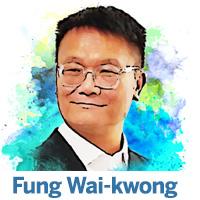
The author is a former information coordinator of the Hong Kong Special Administrative Region government and a member of the Chinese Association of Hong Kong and Macao Studies.
The views do not necessarily reflect those of China Daily.
