

TEHRAN/WASHINGTON/KUWAIT CITY/AMMAN/MANAMA – Iranian President Masoud Pezeshkian said on Monday that his country is engaged in a "full-scale war" with the United States, stressing the importance of maintaining economic stability during wartime.
"Today's war is not a war of merely missiles. The enemy has come to the conclusion that it cannot force the Iranian nation to surrender with military strikes," Pezeshkian said at a meeting of the High Council of the Judiciary in Tehran, according to a statement published on the website of his office.
He said that the "enemy" has waged a "hybrid war" against Iran, describing the economy and the people's livelihood as the most important areas of confrontation with the "enemy," and highlighting the necessity to maintain economic stability and protect social assets as two priorities of "the system of governance during wartime."
ALSO READ: Iran launches new wave of missiles toward ‘enemy targets’
Pezeshkian added that his government "fully protected" Iran's national rights and interests in negotiations with the United States, including in the memorandum of understanding (MoU) signed on June 18.
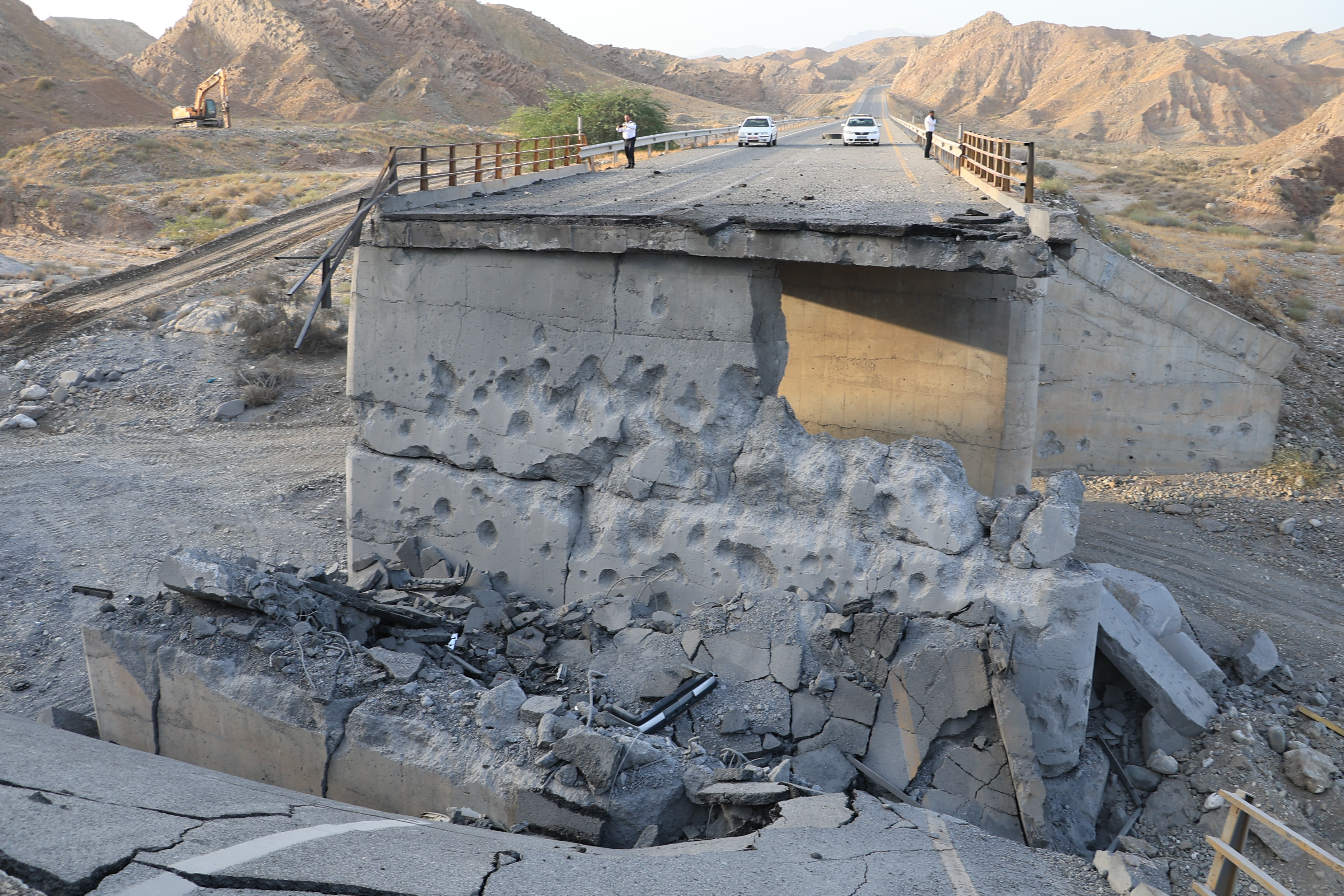
The United States has launched multiple strikes on Iran's southern provinces over the past week, saying they were aimed at "degrading Iran's ability to threaten commercial shipping."
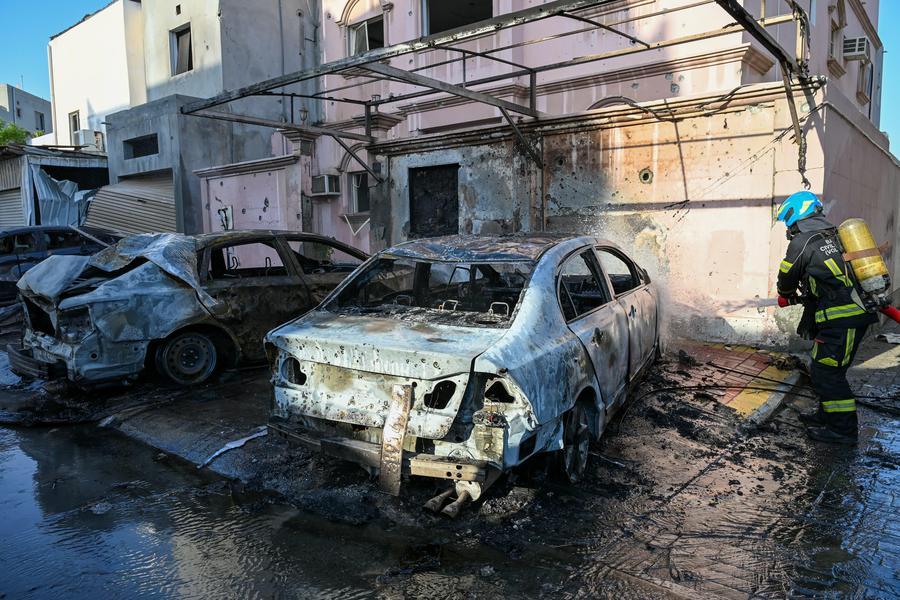
Iran has responded with waves of missile and drone attacks targeting US military bases and facilities in regional countries, including Kuwait, Bahrain, and Jordan.
The escalation comes as the two sides, under their MoU, were scheduled to hold negotiations within a 60-day period to reach a final agreement.
Iran says it launched fresh retaliatory strikes
Iran's armed forces said Tuesday they carried out fresh retaliatory missile and drone strikes against US bases, assets and infrastructure in Bahrain, Kuwait and Jordan following another round of US attacks on Iran.
Iran's Islamic Revolution Guard Corps (IRGC) said in statements carried by its official news outlet Sepah News that its aerospace forces targeted US air defense systems, radar facilities, communications infrastructure and other military assets in Bahrain and Kuwait, as well as US military facilities in Jordan.
The IRGC said the attacks were carried out in retaliation for recent US strikes on Iran and were intended to pave the way for broader missile and drone operations against US military targets in the region.
Separately, Iran's army said it launched missile and drone strikes against several US military facilities in Kuwait and Bahrain, including Camp Arifjan, Ahmad al-Jaber Air Base and Shaikh Isa Air Base.
ALSO READ: US completes another round of strikes against Iran
The IRGC added that it had struck an Amazon data center in Bahrain, saying the attack was in response to a recent US strike on the under-construction Darkhovin Nuclear Power Plant in Iran's southwestern Khuzestan province.
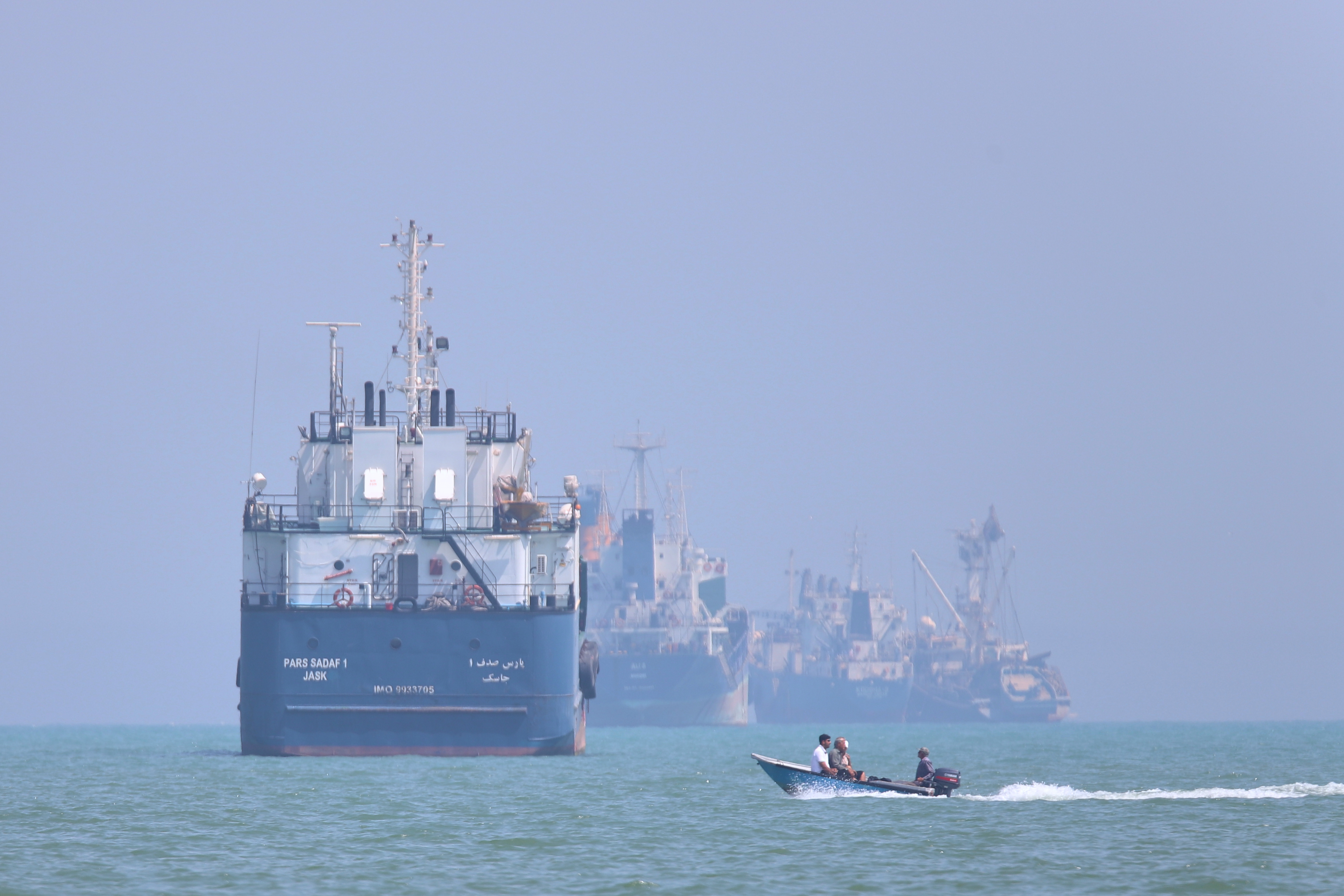
The IRGC also announced that two oil tankers attempting to transit the Strait of Hormuz via what it described as the "dangerous" southern route had caught fire after explosions and were stopped by Iranian naval forces. It warned shipping companies against using the route and reiterated that the Strait would remain closed as long as the United States continued what it called "malicious actions" in the region.
"Two non-compliant oil tankers attempting to pass through the unsafe southern route of the Strait of Hormuz were stopped after explosions caused extensive fires aboard them," the IRGC was quoted as saying in a statement.
Early Tuesday, the US Central Command (CENTCOM) said its forces had completed another round of strikes against Iran, targeting military command centers, missile and drone launch sites, maritime capabilities and air defense systems. It said the operations were aimed at degrading Iran's ability to continue attacking commercial vessels passing through the Strait of Hormuz.
It added that since early May, it has helped approximately 900 commercial vessels and 450 million barrels of crude oil transit through the vital international maritime corridor.
READ MORE: US-Iran tensions escalate with renewed strikes
According to Iranian media reports, blasts were reported on Monday night in the counties of Bandar Abbas, Sirik, Bandar Lengeh and Qeshm in the southern province of Hormozgan, as well as the counties of Chabahar and Konarak in the southeastern province of Sistan and Baluchestan.
Air defenses were activated in the southern port city of Bushehr to "engage with hostile aircraft," the official news agency IRNA reported on Monday night.
Early Tuesday, an explosion was heard in the southern city of Shiraz, and two explosions were heard in the central city of Isfahan, according to the IRNA and the semi-official Mehr news agency.
US issues security alert to citizens
Also on Tuesday, the US Department of State issued the second security alert in three days amid heightened Mideast tensions, advising US citizens to exercise increased caution.
"Due to heightened tensions in the Middle East, the security environment remains complex with the potential for unforeseen escalation. Americans currently in the Middle East should exercise caution and heightened vigilance and should be prepared for possible flight cancellations, periodic airspace closures, and potential travel disruptions," said a notice posted on the Department of State's website.
"US diplomatic facilities, including outside the Middle East, have been targeted. Iran and groups supportive of Iran may target other US interests overseas or at locations associated with the United States and Americans throughout the world," it added.
The alert came after a series of recent American military casualties in the region. Two US service members were killed and one remains missing after Iranian attacks targeted an air base in Jordan on Friday.
One US soldier was killed and another was wounded the following day in an operation in northern Iraq involving the detonation of unexploded ordnance from an Iranian drone, according to CENTCOM.
The Pentagon announced Monday that the number of US military casualties from Iranian attacks has risen to nearly 100 over the last two weeks.
Kuwait says foiled fresh missile and drone attacks
Kuwait's armed forces said on Monday its air defense systems were intercepting "hostile" missile and drone attacks, as explosions were heard in parts of the country.
In a statement on social media platform X, the General Staff of the Kuwaiti Armed Forces confirmed the explosions resulted from air defense systems engaging with "hostile" aerial attacks, urging the public to follow safety instructions issued by authorities.
Jordan says intercepted 3 Iranian missiles, no casualties reported
In Amman, the Jordan Armed Forces-Arab Army said in a statement Monday night that its air defenses intercepted three missiles launched from Iran.
It said the interception caused no casualties or material damage, adding that it remains on high alert and will respond firmly to any threats to national security and sovereignty.
Bahrain: Iranian aerial attacks destroyed
Also on Monday, the General Command of the Bahrain Defense Force said that its air defense systems intercepted and destroyed multiple Iranian aerial attacks against the kingdom.
In a statement, the General Command urged the public to exercise caution, avoid approaching any unfamiliar or suspicious objects left from the attacks' remnants, and report them immediately.
It condemned what it called Iran's "systematic hostile approach," saying the "deliberate use of missiles and drones to target civilians and private property" violates international humanitarian law.
