

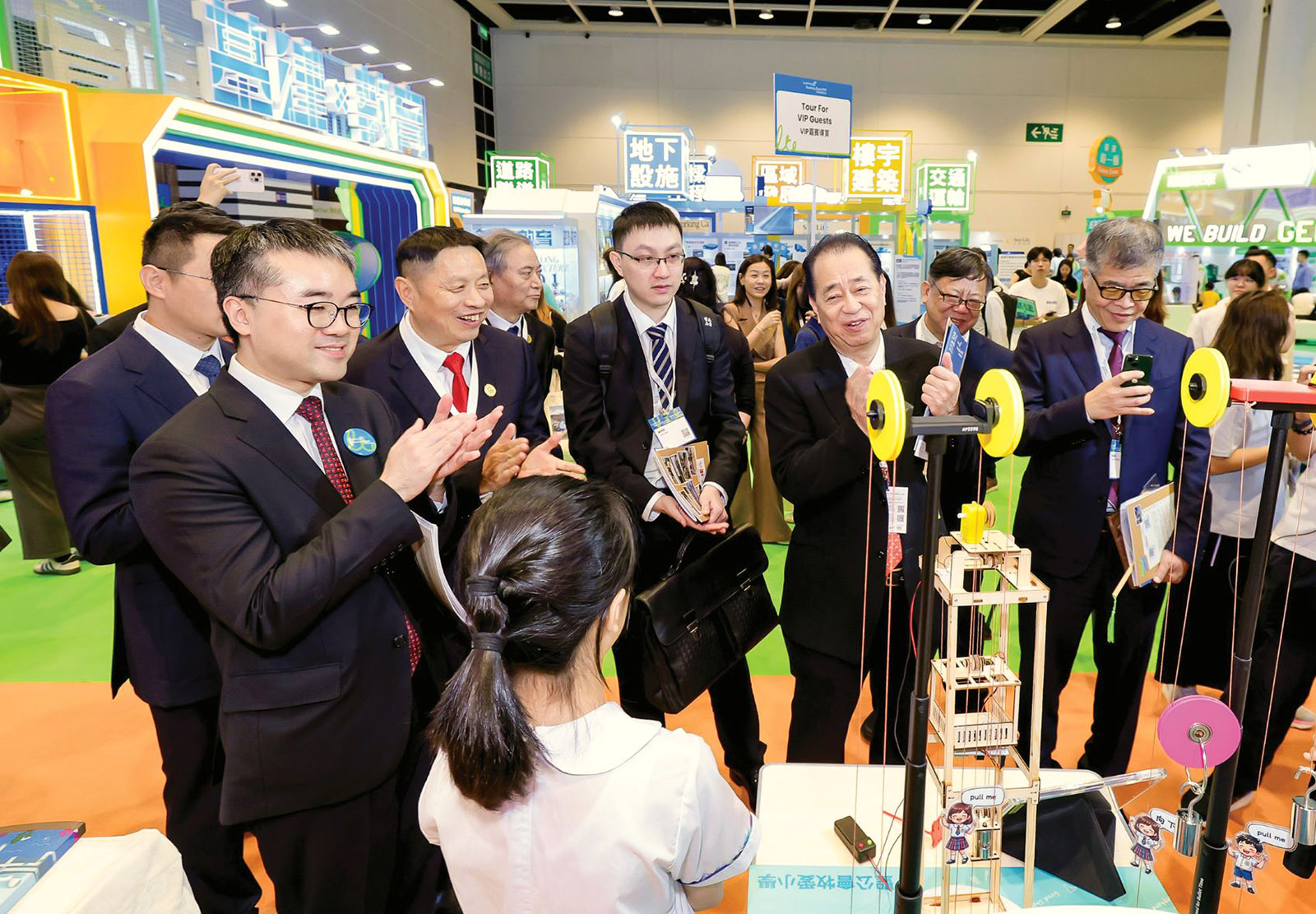
Digital Education Week 2026 recently concluded in the Hong Kong Special Administrative Region in late June, but organizers and participants say its impact is only beginning to unfold.
Beyond the buzz of a packed convention floor, the week left educators, school leaders, and policymakers across the region grappling with a shared set of questions: how schools can meaningfully integrate artificial intelligence into teaching; what different education systems can learn from one another; and how to build an ecosystem for innovation that lasts beyond a single event.
Two flagship programs, one shared platform
Digital Education Week combined two major programs this year: the International Summit on the Use of AI in Language Learning & Teaching 2026 (AIinLT 2026) and the Learning & Teaching Expo 2026 (LTE). Together, the events drew more than 28,000 participants from Hong Kong, the Chinese mainland, and beyond.
AIinLT 2026 brought educators and researchers together to explore how AI can be applied to language learning without compromising pedagogy, ethics, or the needs of individual learners.
READ MORE: AI takes center stage in Digital Education Week
The program then moved to LTE, which featured more than 300 programs and 600 exhibition booths, covering classroom AI applications, assessment technologies, and school management systems. It provided educators with valuable opportunities to compare tools and speak directly with the developers and practitioners behind them.
A standout feature this year was the Chinese Mainland and International Pavilion, where exhibitors from overseas and the mainland made up over one-fifth of all participants — underscoring Hong Kong’s role as both a testing ground and a bridge for education innovation across the region.
“Hong Kong and Macao are education communities we deeply value,” said one mainland exhibitor. “Through this event, we hope to connect more meaningfully with teachers, parents and students here, and share what we have learned.”

Mainland and international voices in dialogue
The expo’s ties with the mainland extended beyond the exhibition hall. A delegation of mainland educators traveled to Hong Kong specifically for the event, taking part in guided tours of the expo and attending a principal’s luncheon that brought school leaders from both sides of the border together for direct exchanges.
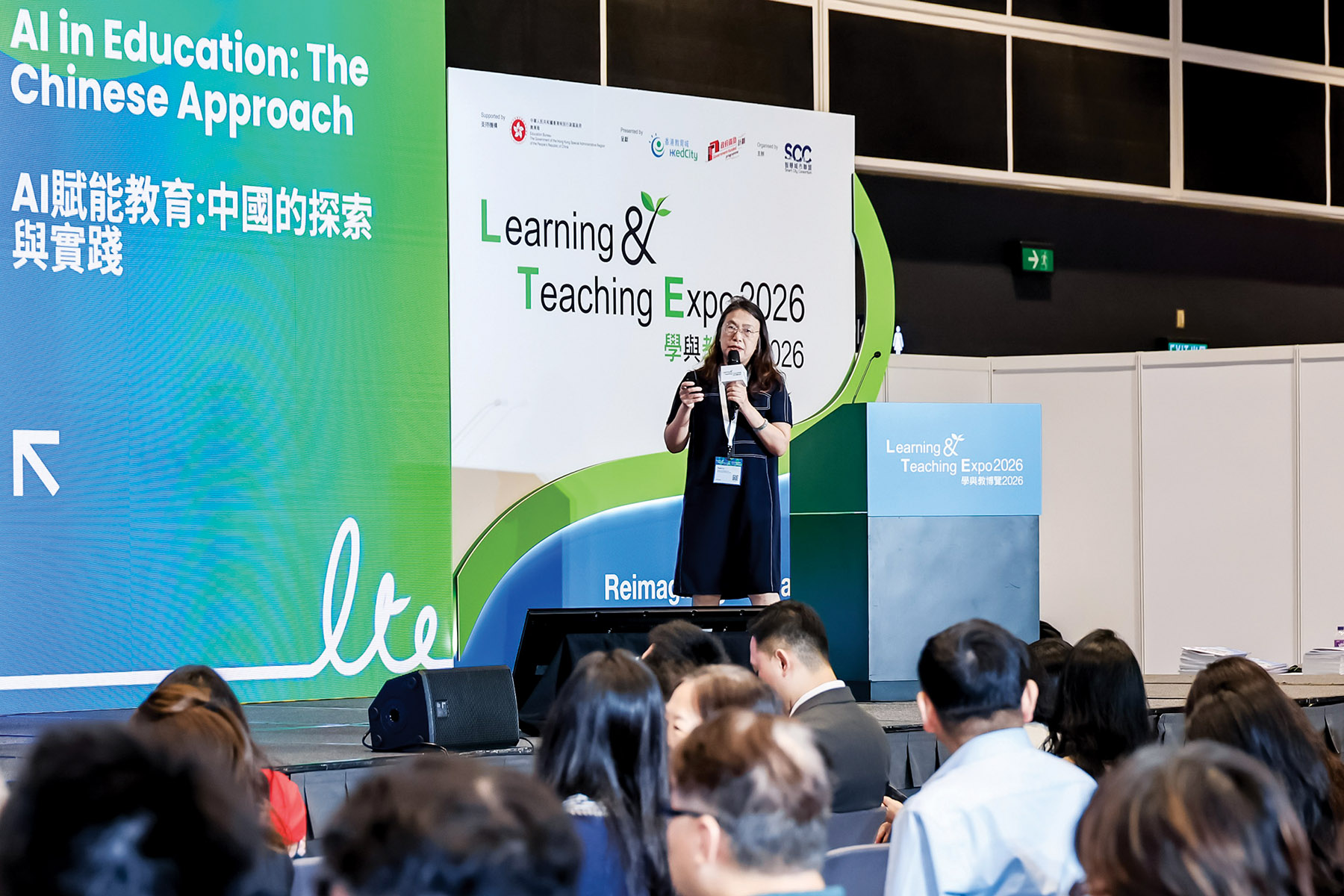
Among the most closely watched sessions was the China Education Forum, which facilitated conversations between mainland experts and educators from Hong Kong and abroad — an exchange organizers say has gained new urgency as AI reshapes classrooms on both sides of the border.
Professor Yuan Li of Beijing Normal University’s College of Education for the Future, with more than 20 years of experience in education technology, offered insights that organizers say encapsulated the week’s central theme.
“I was delighted to share the mainland’s practices and thinking on intelligent education with teachers and experts in the Hong Kong SAR. I spoke from an international perspective about China’s development. It was a wonderful opportunity for exchange between the mainland and Hong Kong SAR,” Yuan said.
She said that AI is already transforming education worldwide, but every country follows its own path, shaped by its particular education system and cultural context. What matters most, she added, is mutual learning — policymakers, industry, schools, and researchers co-designing and building on each other’s strengths, since no single entity can drive intelligent education forward alone.
Professor Alan Cheung, dean of Education at the Chinese University of Hong Kong, echoed this sentiment: “The various forums — whether featuring scholars from Hong Kong, the mainland, or internationally, or frontline teachers — have given us much inspiration. We saw different challenges and how their solutions might be applied in Hong Kong.”
He added, “The expo provided real-world scenarios showing how primary and secondary schools are integrating AI in the classroom, offering us opportunities for deeper research. Theory and practice must be organically combined — that is the ultimate goal.”
Toward a lasting ecosystem
Organizers stress that Digital Education Week is not meant as a one-off showcase. Its goal is to accelerate the development of an ecosystem in which policy, classroom practice and innovation continually reinforce one another long after the exhibition halls close.
EdCity, positioning itself as the education sector’s superconnector, plays a central role in this effort. Its ongoing initiatives include extending AI tools across school subjects, expanding structured professional development for teachers, and launching EdMarket, a curated digital marketplace designed to connect schools with new teaching tools.
The conversation continues
The questions raised at the Digital Education Week 2026 remain very much alive. For schools navigating the practical challenges of AI adoption, the discussions held in Hong Kong offer a useful reference point.
ALSO READ: Chan urges HK youth to embrace AI while pursuing future paths
As AI continues to reshape education systems around the world, Hong Kong’s role as a meeting point for diverse regional and international approaches remains a practical asset — one that the city’s educators, policymakers and partners are actively building upon.
About Digital Education Week
Digital Education Week 2026 was jointly organized by the Education Bureau and Hong Kong Education City (EdCity), and comprised two flagship programs: AIinLT 2026, co-organized by the Education Bureau and the Standing Committee on Language Education and Research at the Hong Kong Polytechnic University; and LTE 2026, supported by the Education Bureau, presented by EdCity, and organized by the Smart City Consortium.
Contact the writers at evanhuang@chinadailyhk.com
