

Hong Kong has always been a city that knows how to stand up after a storm. No matter how the external critics judge it or how narratives shift, Hong Kong people continue to live, work and push forward in their own way. As the city regains stability and moves into a new phase of recovery, the need to tell Hong Kong’s story anew has become increasingly urgent. Equally important is the need to rediscover the city’s attitude because the future of any city is shaped not only by policy and infrastructure, but also by narrative and spirit.
 The city is breathing again after shaking off the aftermath of the 2019 riots and the COVID-19 pandemic. After years of turbulence, order has returned, the economy is stabilizing under Chief Executive John Lee Ka-chiu’s administration, and daily life has gradually normalized. The momentum of the city transitioning “from stability to prosperity” is real, and Hong Kong is preparing for its next chapter. At the same time, the city is undergoing a deeper process of institutional renewal and capacity rebuilding, with new policy tools, governance mechanisms and regional opportunities reshaping its long-term development trajectory. Domestically, these shifts are increasingly recognized as part of a broader effort to reposition Hong Kong for a more complex global landscape.
Internationally, however, a markedly different narrative prevails. Many Western media organizations continue to filter Hong Kong through a narrow, often misleading prism — reducing the city’s institutional depth, economic capacity and social dynamism to a single storyline centered on the national security laws implemented in the city. This selective framing reinforces an image of Hong Kong as weakened, less vibrant and insufficiently future‑focused.
The problem is not that Hong Kong lacks stories, but that it has not projected them effectively. It does not lack strengths, but it lacks visibility. It does not lack spirit, but it needs to reawaken it.
In today’s information-saturated world, a city’s reputation is no longer determined solely by its policies, but by how its story is told and by whom. Singapore’s global image, for example, is not only the product of governance but of a coordinated narrative ecosystem involving government, business, academia and media. Hong Kong needs a similar capability — a form of smart media power that is not about propaganda but about resonance, not about pushing messages but about building understanding.
The next decade is Hong Kong’s opportunity to reposition itself, retell its story and restart its journey. ... If Hong Kong can harness smart media power, tell its story with confidence and reset its attitude with sincerity, it can write a brighter new chapter in the years ahead.
Hong Kong has world-class creative talent, a robust media sector and a unique ability to operate across cultures and languages. These assets, if used well, can bring Hong Kong back into global view. Film and television have long been among Hong Kong’s most influential cultural exports. Beneath the Lion Rock once captured the city’s collective spirit and shaped how generations understood Hong Kong. Today, the city can produce a new generation of stories grounded in everyday life. The experiences of new immigrants integrating into local communities, the routines of teachers and nurses, the aspirations of young innovators building startups in the Northern Metropolis, the realities of cross-boundary families and the warmth of bus drivers, waiters and market vendors all reveal a Hong Kong that is human, resilient and evolving. These narratives are far more compelling than any policy document and far more effective in helping the world understand the city’s transformation.
The Lion Rock Spirit is not a slogan but an attitude rooted in diligence, pragmatism, mutual support and quiet determination. These values helped Hong Kong rise before, and they can help the city rise again.
Storytelling alone, however, is not enough. Hong Kong needs a multiplatform narrative strategy that extends beyond film and television into international media engagement, social-media visibility, short-form video storytelling, music, gaming and podcasts. The city should proactively provide data, expert commentary and policy explanations that international journalists can use, while also appearing more frequently on global stages from the Davos World Economic Forum to the Web Summit. At the same time, Hong Kong must reenter the social-media spaces where global audiences now consume information. Everyday scenes — the efficiency of cha chaan teng (traditional Chinese-style tea restaurants), the punctuality of the MTR, the vibrancy of wet markets, the revival of nightlife, the daily routines of cross-boundary students — can shape perceptions more effectively than official statements. Hong Kong’s bilingual and internationally savvy content creators can serve as cultural ambassadors who explain, contextualize and humanize the city for global audiences.
Cultural expression can also broaden Hong Kong’s reach. The city needs a new soundtrack that reflects its identity today, and its dense urban fabric, hybrid culture and dramatic landscapes are ideal for gaming worlds that could introduce global players to the city. Podcasts offer a platform for explaining complex policies in accessible ways, allowing listeners to understand Hong Kong’s transformation through voices, stories and lived experience.
Telling Hong Kong’s story well is only half the task. The other half is resetting Hong Kong’s attitude. In recent years, some residents and visitors have noted a decline in service culture, a drop in administrative efficiency, a more indifferent social atmosphere, and a lack of trust between long-time residents and newcomers. Visitors sometimes report that Hong Kong feels less warm than before. These are not structural issues but attitude issues, and attitude shapes competitiveness.
Singapore’s success is not only policy‑driven; it is behavioral, rooted in professionalism, courtesy, efficiency and respect for rules. Hong Kong has demonstrated these qualities throughout its modern history, and they remain part of the city’s underlying character. The task now is to reenergize them and to make them visible again.
Cultural products can help reset attitudes. Television dramas, short videos, advertising and influencer content can model positive service culture, cross-cultural understanding and the everyday expressions of Hong Kong’s spirit. Hardware can be copied and institutions can be replicated, but a city’s attitude — its temperament, its way of treating people — is its most irreplaceable asset.
The next decade is Hong Kong’s opportunity to reposition itself, retell its story and restart its journey. Externally, the world needs to see the real Hong Kong rather than a distorted version presented by some hostile Western media outlets. Internally, Hong Kong residents need to see themselves again rather than a city defined by past divisions. If Hong Kong can harness smart media power, tell its story with confidence and reset its attitude with sincerity, it can write a brighter new chapter in the years ahead.
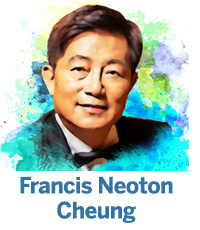
The author is chairman of Doctoral Exchange, a Hong Kong-based think tank.
The views do not necessarily reflect those of China Daily.
