

Technology can process ancient texts at scale, but preserving their meaning still depends on the knowledge and judgment of people.
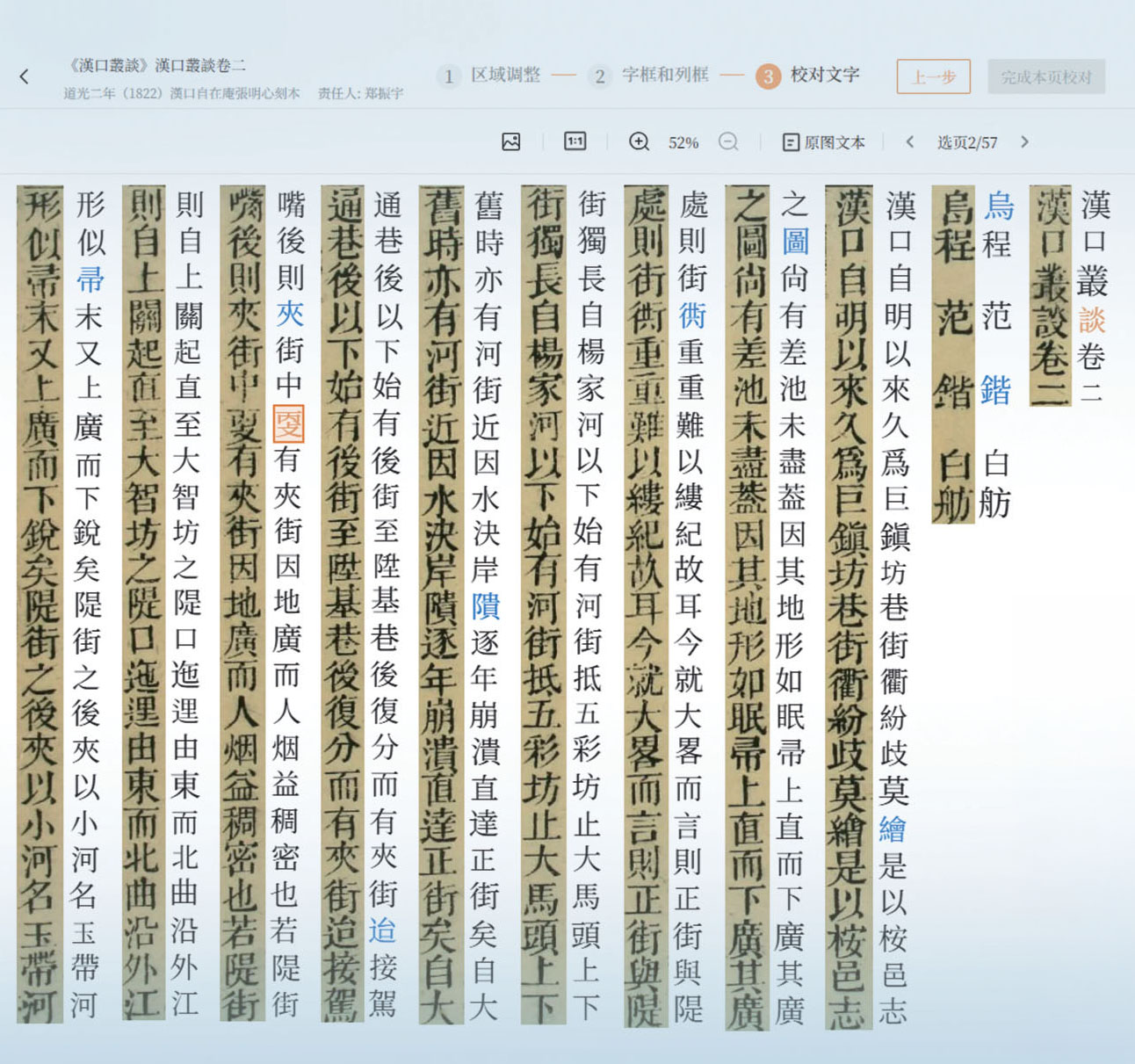
As Xu Heng, a 22-year-old agronomy student at Henan University, examined a scanned page from an ancient Chinese text on his computer screen, he paused over several characters that had become difficult to decipher because of centuries of wear and damaged printing.
He was working with Shidian Guji, an online ancient-text database that uses artificial intelligence to analyze scanned books before human volunteers review and correct the results.
By the time Xu began his work, the system had already done much of the initial processing: recognizing the text, adding punctuation and dividing the passage into paragraphs. His role was to check what the machine could not fully understand.
"AI-powered tools like Shidian Guji have made ancient texts much easier to read," Xu said. "Readers can zoom in on images of the original pages and compare them directly with the digital text, without having to repeatedly flip through bulky printed volumes."
Across China, a growing number of volunteers like Xu are taking part in digital preservation projects that combine AI-assisted text recognition with human proofreading. These efforts are helping make ancient Chinese classics more accessible to researchers, students and the general public.
READ MORE: Breathing digital life into ancient books
Shidian Guji is one of the best-known platforms. The free online database was jointly developed by ByteDance and the Research Center for Digital Humanities of Peking University (PKUDH) as part of a public welfare initiative for ancient book preservation.
Since its launch in October 2022, the platform has expanded rapidly from several hundred titles to nearly 70,000 ancient books now available online. According to ByteDance, the database receives more than 2.4 million visitors each month.
The platform's development has been driven by a large and active volunteer community. More than 60,000 people have signed up to participate in proofreading projects, most of them university students. In 2025, volunteers helped complete preliminary proofreading of about 1.5 billion Chinese characters across roughly 20,000 ancient books.
For Xu, the platform offered something he had long been looking for: a practical way to read and work with classical Chinese texts.
Xu first became interested in ancient Chinese literature in middle school, but for years he struggled to find a reading platform that provided both extensive resources and easy access. That changed in 2024, when he discovered Shidian Guji.
"Many rare books are difficult to buy, and library copies are not always available for borrowing," he said. "But with Shidian Guji, readers can use scanned images, searchable texts and comparison tools to trace references and compare different passages."
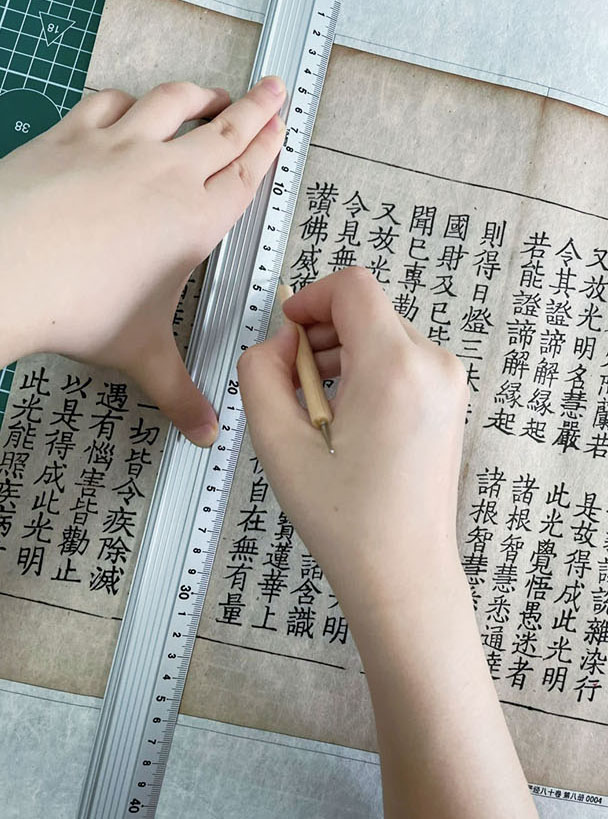
However, proofreading ancient texts is far from a simple process of clicking through corrections. Many classical Chinese texts contain variant characters, damaged pages, irregular page layouts and punctuation problems that require knowledge of both language and historical context.
Zheng Zhenyu, a specialist in ancient-text digitization, joined Shidian Guji in 2023 while looking for a more effective optical character recognition (OCR) tool to support his own research.
"At the time, I was using another paid platform, but the overall experience was not satisfactory," he said.
Zheng later joined Shidian Guji's advanced proofreading teams, working on projects including Sibu Congkan (Collectanea of the Four Categories), a major compilation of classical Chinese literature, and Yongle Dadian (Yongle Encyclopedia), one of the largest encyclopedic works in Chinese history.
Through this work, he found the platform's OCR capabilities to be a significant improvement over similar tools he had used before.
According to ByteDance, Shidian Guji's OCR technology currently achieves an accuracy rate of 96 to 97 percent, though performance still varies depending on the condition of the original materials.
The platform has also introduced additional tools to help standardize variant characters, translate classical Chinese into modern Chinese and assist researchers in organizing and analyzing textual resources.
Yet despite such advances, technology remains only part of the answer.
Yang Hao, an associate researcher at PKUDH, emphasized that technology and culture play different but complementary roles.
"Technology is the shell, while the humanities are the core," he said. "Technology can help culture travel faster, but only people can help culture travel farther."
That view is echoed by many volunteers on the platform, who have found that while AI performs relatively well at basic sentence segmentation, it can still struggle to understand the structure and logic of complex classical Chinese narratives.
Zheng said that in passages involving multiple speakers or indirect quotations — including works such as Sima Qian's Shiji (Records of the Grand Historian) and Mengzi (The Works of Mencius) — quotation marks may sometimes be misplaced or omitted, making it difficult for AI systems to accurately distinguish different voices in the text.
OCR systems also face challenges when handling small print, blurred pages and overlapping handwritten notes, making human review essential.
That is why Zheng believes that the future of ancient-text preservation will require more interdisciplinary talent capable of bridging the humanities and technology.
"Ancient text organization involves processing massive amounts of data. Researchers need not only expertise in literature and history, but also the technical skills to manage information efficiently," he said.
Rediscovering lost voices
For Zheng, the value of digital archives is not limited to academic research. They can also help modern readers rediscover local history and cultural memory.
He has recently been studying historical documents on Wuhan's local life and dialects from two centuries ago, as well as photographic records of the city's devastating 1931 flood. Reading those materials, he said, gave him a more direct sense of how ordinary people in the city once lived, communicated and experienced their daily lives.
"I felt an immediate sense of familiarity and emotional connection across time," Zheng said.
ALSO READ: Preserving ancient books for present and future
Xu has experienced a similar change in perspective. What began as a personal interest in classical texts gradually became a responsibility to help these works reach a wider audience.
For him, making ancient texts readable is just as important as preserving their original images.
"If ancient texts are not carefully organized and preserved, future generations may still see them, but they may no longer be able to truly understand them or draw spiritual nourishment from them," Xu said.
That is why, for volunteers like Xu and Zheng, ancient-text digitization is more than a technological endeavor. AI can scan, recognize and sort texts at a scale far beyond human capability. But the final task — deciding what a damaged character means, where one voice ends and another begins, and why an old text still matters — remains a human one.
Contact the writers at guojiatong@i21st.cn
